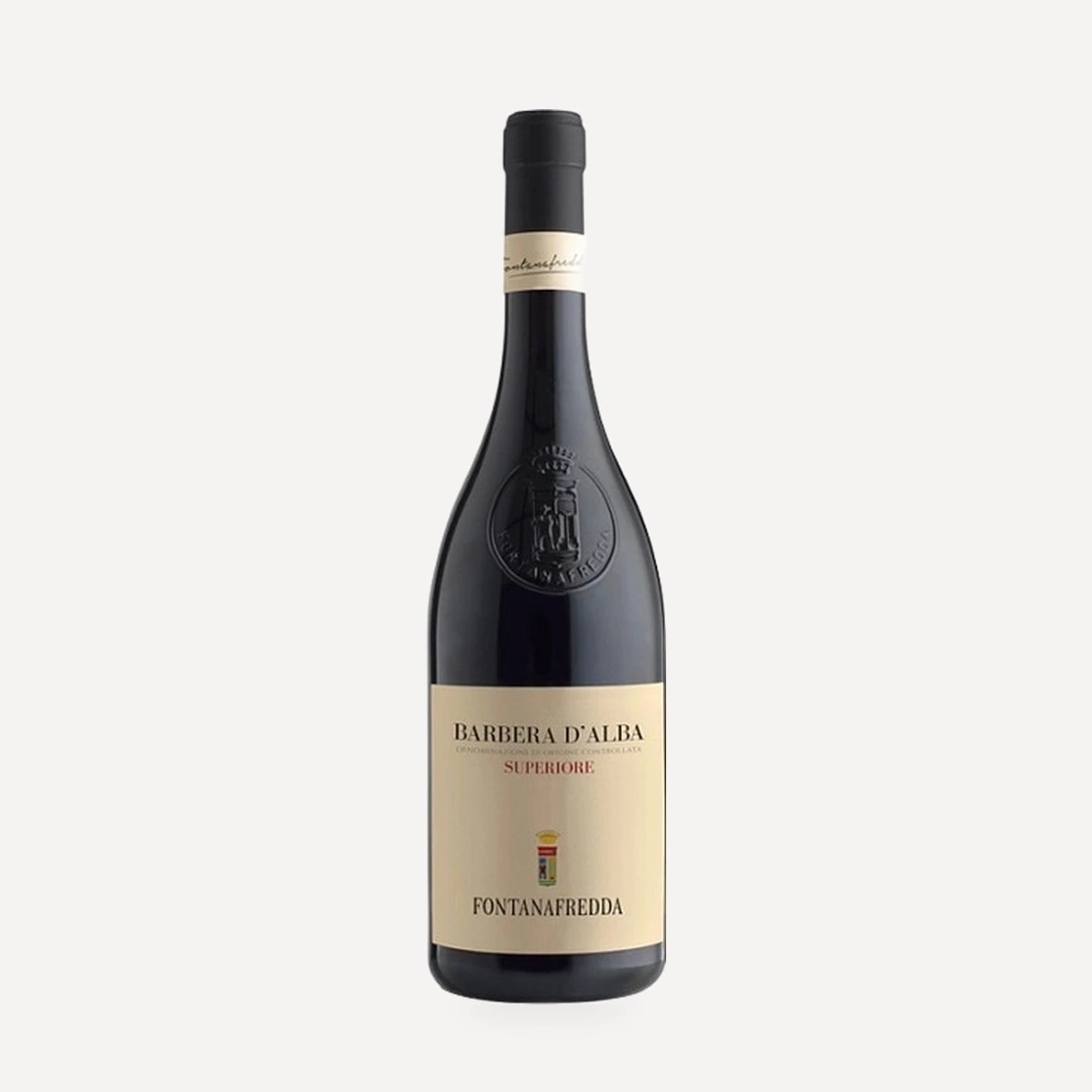
About this wine
Vineyard and terroir
The wine comes from a rolling hillside in the MGA Fontanafredda, in the heart of Serralunga d'Alba. The west-facing vineyard lies at 270–300 metres and is Guyot trained at 4,000–5,000 vines per hectare. Its ancient Serravallian-origin soils contain abundant limestone, a relatively coarse texture, sand and a substantial component of compact, layered Sant'Agata Fossili marl. The geological profile derives from an ancient deep basin subsequently shaped by landslides and strong water currents. Deep-rooting vines draw minerals from these strata, while the marl helps the grapes retain acidity.
Grapes
100% Barbera.
Vinification
The grapes are harvested by hand into small crates between late September and early October and reach the cellar within a few hours. They are crushed in stainless-steel tanks, where alcoholic fermentation begins at 24–25 °C and rises to 28–30 °C. Daily punch-downs encourage varietal expression and polyphenol extraction. After skin maceration, the wine is racked and allowed to rest for several days.
Ageing
Maturation takes place in large oak casks. Bottling normally follows after 12–16 months, once the intended harmony and expressiveness have developed; maturation then continues in bottle.
Technical data
Alcohol: 14.5% vol. Bottle format: 0.75 L.
Tasting profile
Deep ruby red with violet reflections. Ripe plum and cherry dominate the rich bouquet, complemented by cinnamon and clove. The palate is full-bodied and fruit-driven, with soft tannins, vibrant acidity and the mineral structure associated with Serralunga d'Alba. A long, savoury finish leaves an aftertaste of blackberry preserve. Its classical profile combines depth, structure and elegance.
Serving and pairing
Serve at 17–18 °C. Pair with stuffed fresh pasta, flavourful meats, or raw and cooked vegetables including pumpkin, radicchio and fennel. Suggested international dishes include Swedish Kalops, Polish Żurek, Croatian Sarma, French beef pierrade, Vietnamese Pho and Indonesian Gudeg.
Label / history
Papagena takes its name from the character in Mozart's The Magic Flute, reflecting the wine's lively, expressive character.