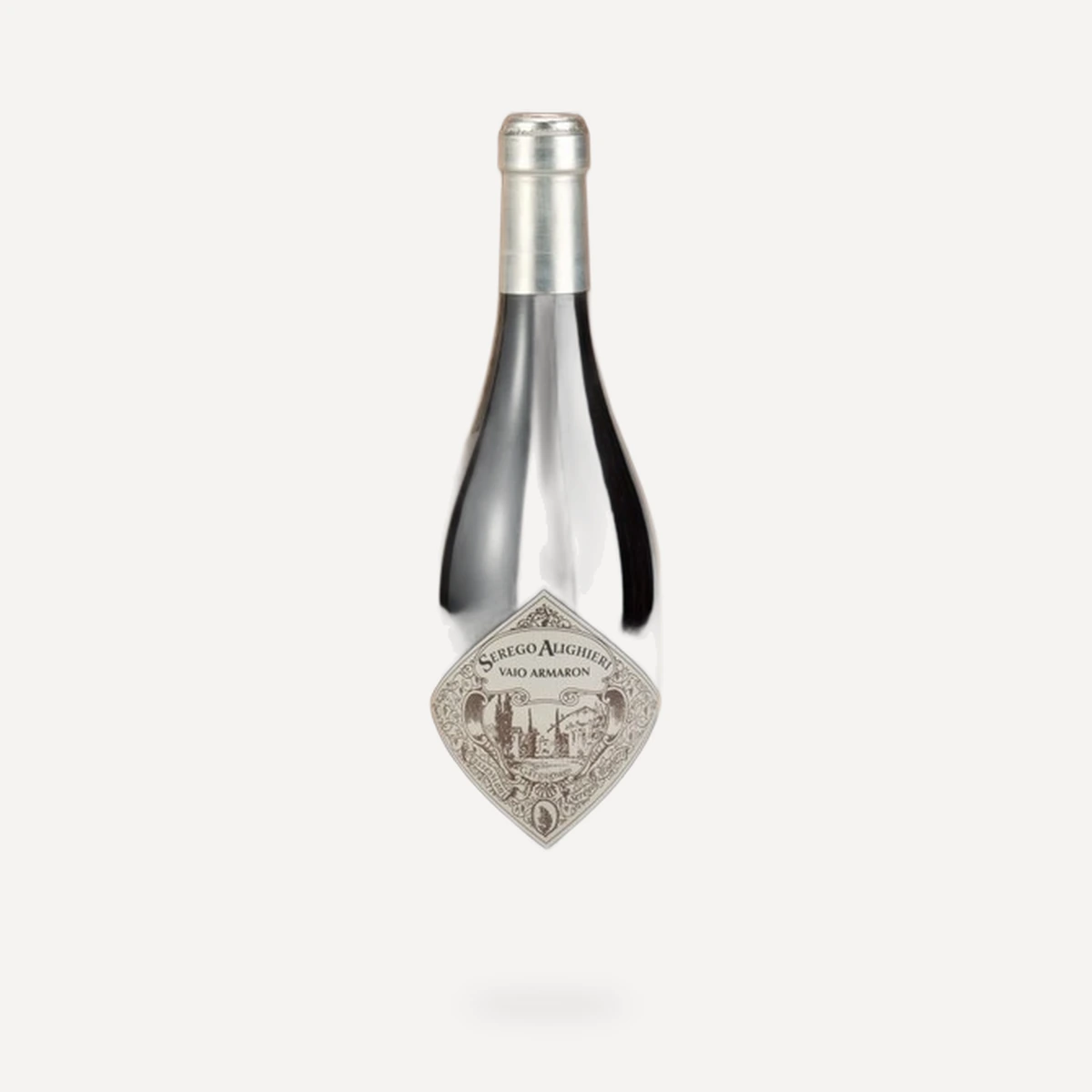
About this wine
Vineyard and terroir
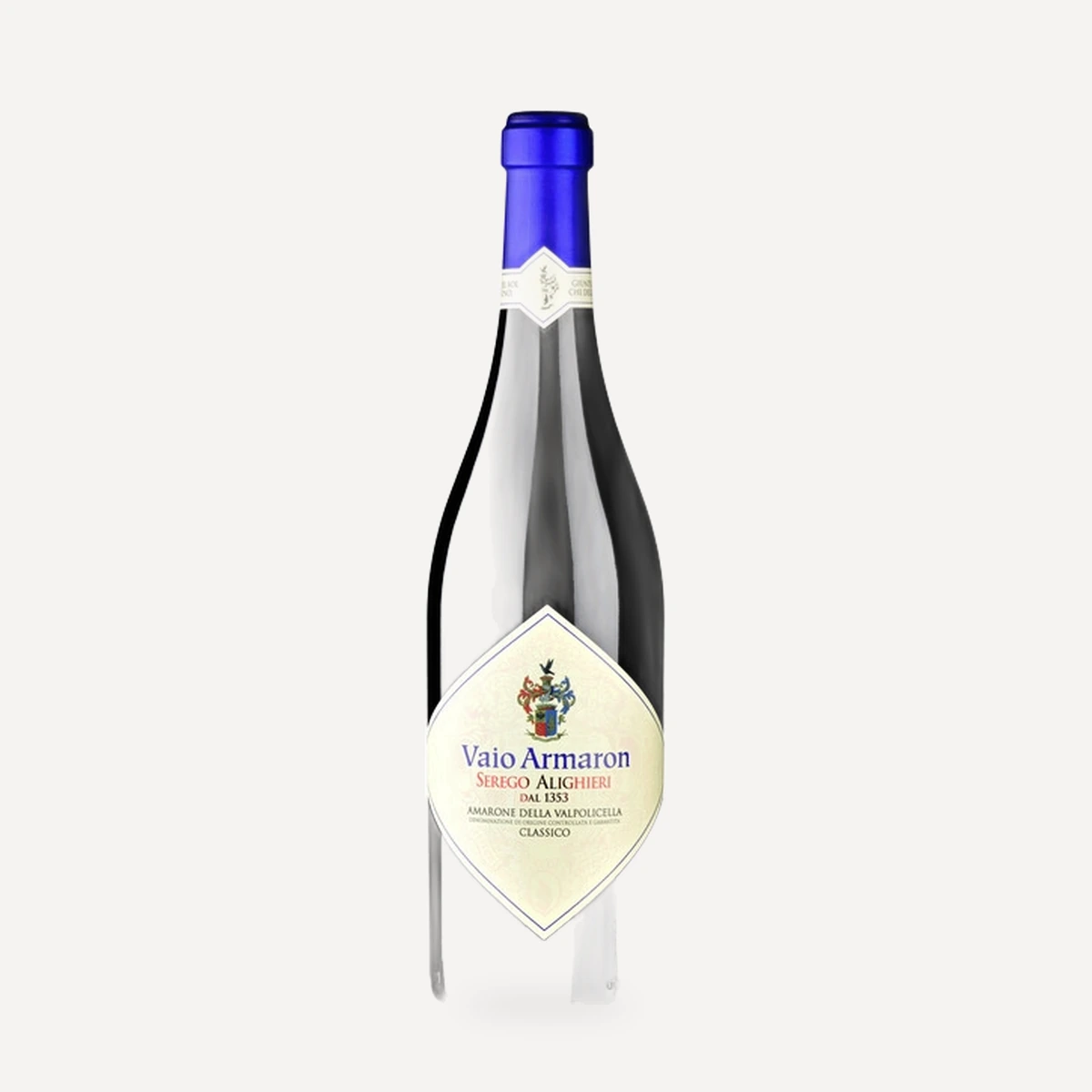
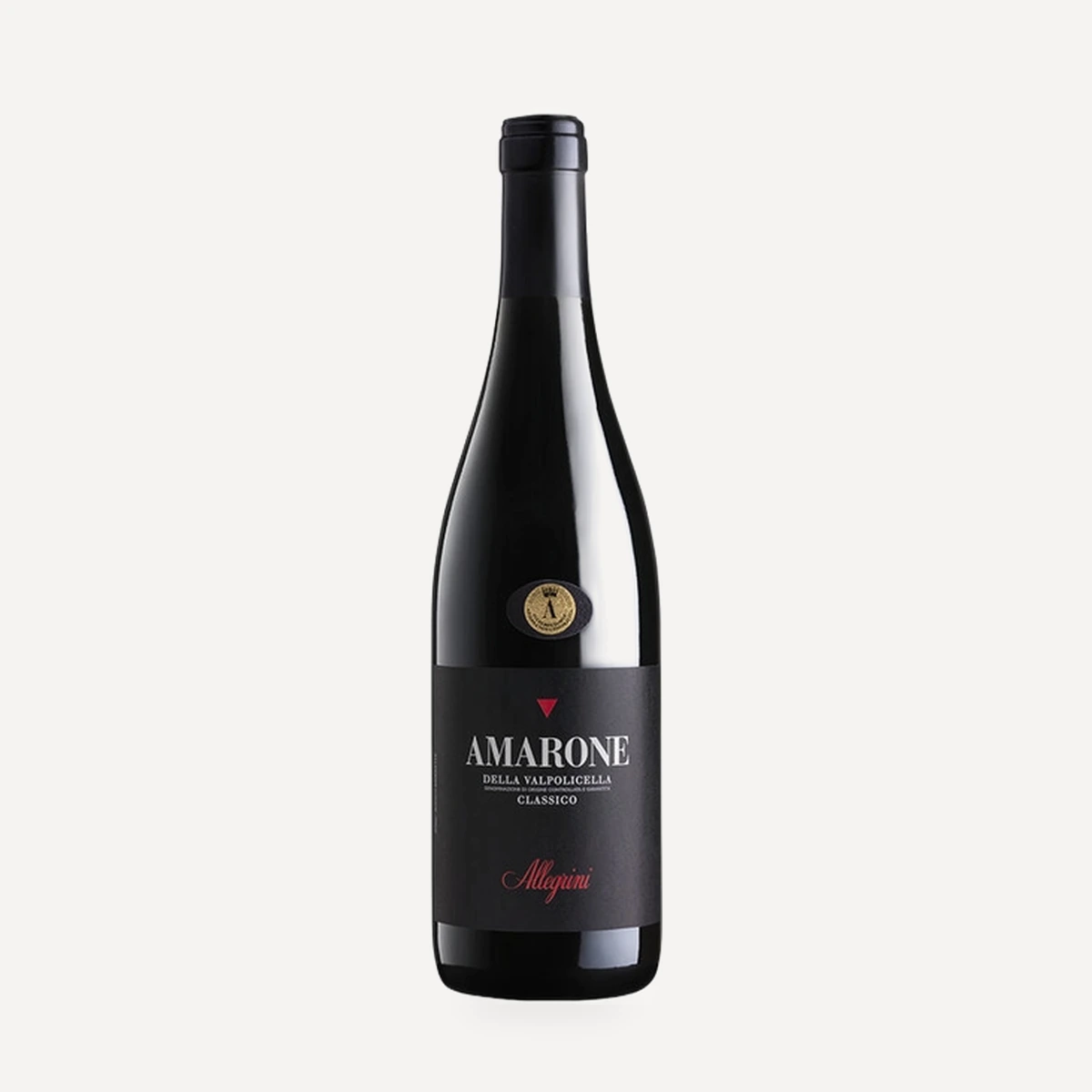
Vaio Armaron is the flagship wine of the historic Serego Alighieri estate. It comes from the vineyard of the same name, which may also be the source of the name Amarone.
Grapes
Corvina, Rondinella and Molinara, using the Serego Alighieri clone of Molinara.
Ageing
Maturation in cherry-wood casks follows a Serego Alighieri family tradition and contributes to the wine’s elegant personality.
Technical data
Alcohol: 15.5% vol. Available formats: 750 ml, 1,500 ml and 3,000 ml. Cellaring potential: 25–30 years.
Tasting profile
Opaque ruby red. The bouquet is intense and elegant, with fruit preserved in spirit, dried plums and cocoa. The palate is structured and balanced, with silky tannins and a long finish marked by ripe cherries and sweet spices. The wine combines the power and complexity associated with Amarone with an elegant profile.
Serving and pairing
Serve at 18°C. Pair with risotto and richly flavoured or spicy pasta dishes. Fine meats are another option, including wagyu or buffalo beef and seared Argentine Angus served with mushrooms or truffles. Mature Parmigiano and Pecorino also work well, as does aged Monte Veronese with walnuts and acacia honey. After dinner, it can accompany pieces of dark chocolate.
Label / history
Dante Alighieri lived in Verona for part of his exile. His son Pietro remained in the area and acquired the Casal dei Ronchi estate at Gargagnago, in the heart of Valpolicella Classica, in 1353. Wine production began there in the 16th century and has continued through twenty generations. The property remains with the Conti Serego Alighieri, direct descendants of Dante.