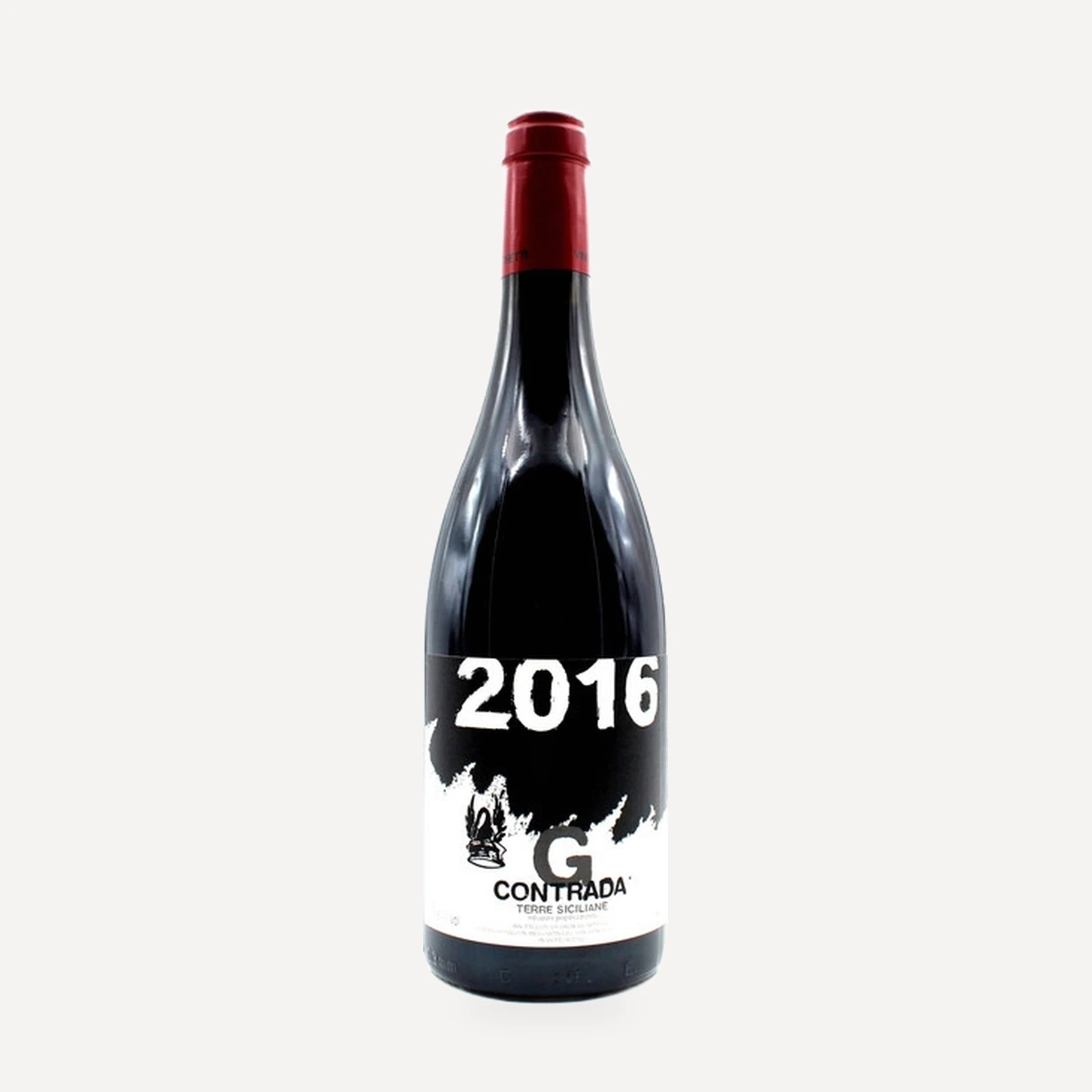
About this wine
Vineyard and terroir
Contrada G comes from Contrada Guardiola on the northern side of Mount Etna, near Castiglione di Sicilia. The historic district rises from approximately 800 to 1,000 m and borders the lava flow created by Etna’s 1947 eruption, which stopped before reaching the old vines. The selected vines lie near the lower edge of the contrada, above Contrada Santo Spirito and just below the winery.
The most recent materials describe approximately 7 ha of Nerello Mascalese in Guardiola, making it Passopisciaro’s largest contrada. Earlier technical sheets record a 2 ha parcel in 2011 and 2.3 ha from 2012 through 2018. The old bush-trained vines now reach approximately 140 years of age and grow at about 800 m on pure volcanic ash: a pyroclastic, post-elliptic soil formed approximately 15,000 years ago. Planting density is 8,000 vines per hectare.
Viticultural treatments have varied by vintage. The 2024 sheet lists clay, propolis, grapefruit-seed extracts, copper and sulphur under organic viticulture. Similar combinations appear in earlier sheets. No fertilization was used in 2011–2020, while the 2021 sheet records manure. The old, century-old Nerello Mascalese vines were not irrigated during the hot 2021 season because their deep root systems supplied sufficient water.
Grapes
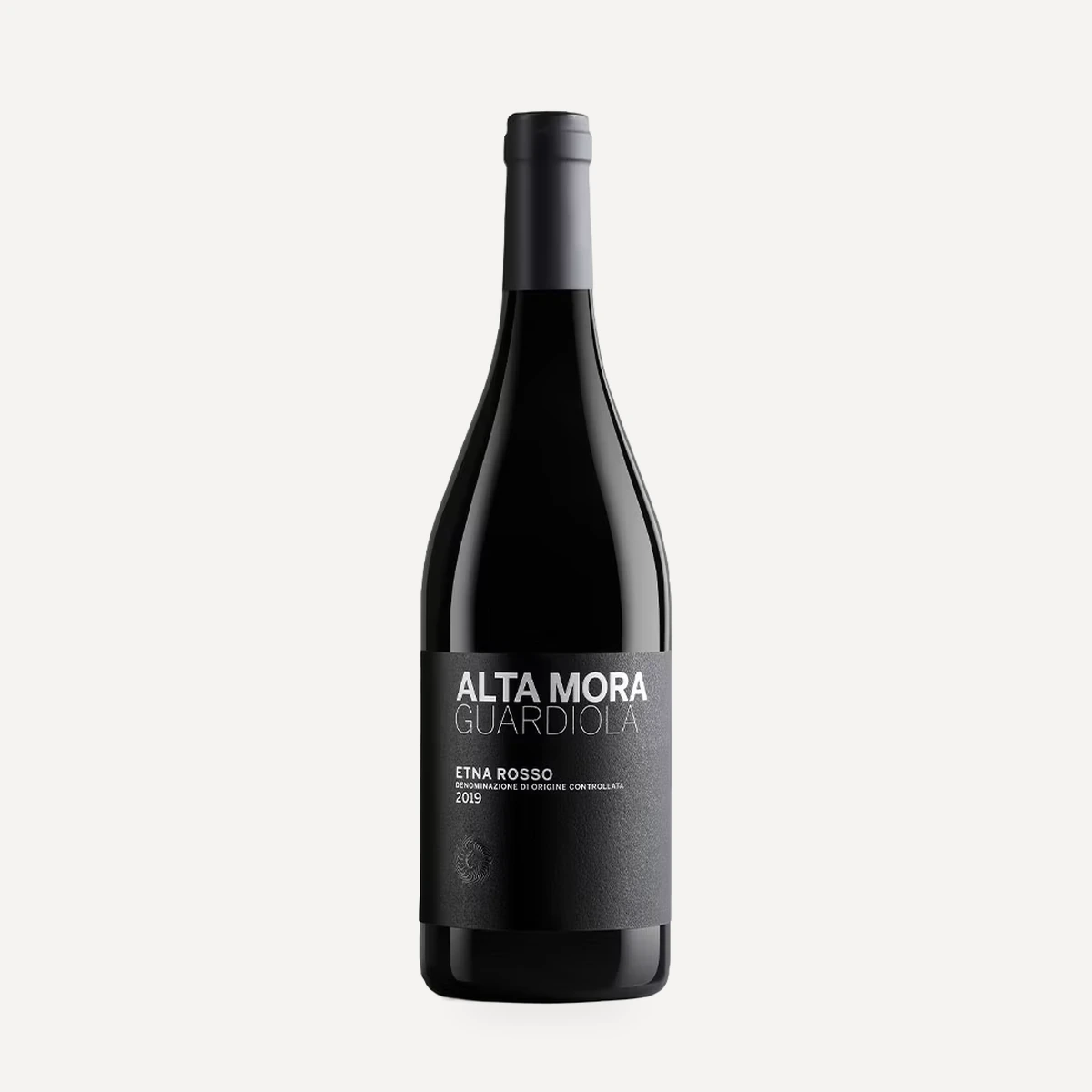
100% Nerello Mascalese, selected from the oldest vines in Contrada Guardiola. The wine was first bottled separately in 2011. From the 2024 vintage it became DOC Etna Rosso and the label changed from the abbreviated Contrada G to the full vineyard name, Contrada Guardiola. Earlier technical sheets identify it as IGT Terre Siciliane.
Vinification
Alcoholic fermentation takes place in stainless-steel vats. The 2011 and 2013–2019 sheets specify 15 days; the 2012 sheet records 10 days. Malolactic fermentation follows before or in the large oak vessels. The approach is deliberately restrained to preserve the distinctions created by Guardiola’s lava, altitude and local conditions.
Ageing
Ageing lasts 18 months in large oak vessels. Sheets for 2022–2024 specify large Slavonian oak barrels, while earlier vintages are described as ageing in large neutral oak barrels. Recorded bottling dates are April 2013 for 2011; the waning moon of April 2014 for 2012, April 2015 for 2013, April 2016 for 2014, April 2017 for 2015, April 2018 for 2016, April 2019 for 2017, May 2020 for 2018, April 2021 for 2019, April 2022 for 2020, April 2023 for 2021, April 2024 for 2022, April 2025 for 2023 and 17 February 2026 for 2024.
Technical data
The 2024 Contrada Guardiola is DOC Etna Rosso, 100% Nerello Mascalese and 14.5% alcohol. Its manual harvest took place on 11 October. The vines are approximately 140 years old, bush-trained and planted at 8,000 vines/ha. Yield was 55 q/ha, and 4,266 bottles were produced.
Production varied substantially by year: 3,000 bottles in 2011; 3,500 in 2012; 2,730 in 2013; 4,000 in 2014; 3,850 in 2015; 4,000 in 2016; 3,750 in 2017; 3,860 in 2018; 3,710 in 2019; 4,000 in 2020; 4,500 in 2021; 3,739 in 2022; 2,610 in 2023; and 4,266 in 2024.
Tasting profile
The recurring Guardiola character is deep and complex, combining red fruit with a pronounced volcanic-mineral register. Earlier descriptions add orange and marzipan, while more recent vintages emphasize graphite, ash, stone, herbs and spice.
The 2024 offers small red fruits and distinct graphite accents. It is full and incisive, with silky tannins and marked tension that gives the palate a vertical shape. The 2023 has a broad, deep bouquet of dark fruit and pronounced spice, persistent minerality, tightly knit tannins, vibrant structure and an almost austere composure. The 2022 is deep and concentrated, with dark fruit, spice and bright minerality; it is tense and well structured, with integrated tannins and alternating fruit and spice.
Across earlier vintages, the wine ranges from the dark, intense black raspberry, ash, sage and saline-mineral profile of 2021 to the tangy redcurrant, balsamic herb, white pepper and ember character of 2020. The 2019 combines raspberry, cherry and red berries with stone, smoke, flowers, iron and herbs, carried by fresh acidity and polished but firm tannins. The cooler, rainier 2018 is floral and graceful, with roses, violets, geranium, strawberry, cherry, smoke and tarry mineral fruit over a silky texture and integrated tannins. The 2017 is richer and more powerful, marked by ripe red fruits, blood orange, pomegranate, camphor and smoky minerals.
The 2016 is medium-bodied and silky, with strawberry, cherry, rose, spice, wet stone, eucalyptus and a long mineral finish. The 2015 is mineral, saline and structured, with high acidity, ripe red cherry, balsamic and floral notes, polished tannins and a long, youthful finish. The dense but soft 2014 shows garnet colour, sandalwood, citrus, camphor, crushed stone, ash, dark berries and spice. The cooler 2013 is lighter but intense, with marzipan, orange, red berries, dried cherry, plum, mineral and pepper notes. The 2012 is lighter-footed and complex, combining abundant red fruit with crushed-stone and flinty mineral tones over a lean, velvety texture. The structured 2011 displays the classic Guardiola combination of marzipan, orange and red fruit.
Serving and pairing
The 2018 tasting material pairs the wine with Sicilian minestra with lentils. Published maturity guidance varies by vintage: 2012 was placed in a 2015–2025 window; 2013 in 2017–2025; 2014 in 2017–2030; 2015 in 2021–2028; 2017 through 2029; 2018 in 2023–2032; 2019 as late as 2037 in one assessment; and 2020 through 2035. The 2021 was considered sufficiently structured to benefit from another three or four years, while the 2023 sheet describes significant ageing potential.
Vintage notes
2024: A cold, clear winter was followed by a regular spring and abundant flowering between late May and early June. Intense summer heat required irrigation where possible. Early-August rain brought some hail damage in lower vineyards, while prolonged drought caused losses among some plants. Nerello Mascalese was harvested across the estate from 3 to 11 October; the Guardiola selection was picked manually on 11 October. The high-altitude fruit combined body, tannin, acidity and alcohol in balance.
2023: Snow restored water reserves after the dry 2022 season. Heavy rain and low temperatures from May through June disrupted flowering, and downy mildew reduced yields despite organic treatments. July brought temperatures around 40°C and uneven red-grape ripening. Rigorous bunch selection during the manual harvest on 23 October produced 2,610 bottles.
2022: Winter rain and snow replenished water reserves, while a cold start to the year and spring rain supported regular budbreak. Early-summer heat accelerated canopy growth. The approximately 7 ha available in Guardiola allowed strict selection in a difficult year. Hand-picking took place on 8 October.
2021: Alternating winter rain, snow and anomalous warmth gave way to a cool spring and an abrupt, hot summer. Night irrigation supported younger vines, but the old Nerello Mascalese vines were not watered. Cooler September conditions and moderate rain allowed the red harvest to begin shortly before mid-October; Guardiola was hand-selected on 19 October. The resulting reds had full ripeness and balance.
2020: A moderate, rainy summer was interrupted by late-July heat, August and September rain, some hail and a cool change at the beginning of October. Clear weather then allowed the reds to ripen. Guardiola was hand-selected on 29 October.
2019: A cold April and May, including frost on 6–7 May, delayed flowering until mid-June. Temperatures then climbed toward 40°C and remained high through September. A strong October diurnal range advanced phenolic ripeness. The 22 October hand harvest produced a sinuous wine with fresh fruit, vertical acidity and moderate alcohol.
2018: One of the rainiest, most humid recent seasons required repeated, careful leaf removal and treatments with clay and propolis. The wine is linear, distinctly acidic and built for longevity. Harvest took place on 21 October.
2017: A prolonged hot summer continued until mid-September, requiring limited irrigation. Ripening advanced steadily and harvest began over a week earlier than usual; the Guardiola selection was picked on 23 October. The vintage produced powerful, structured Nerello Mascalese.
2016: Lean grapes ripened steadily, allowing precise picking on 25 October. Extraction required little force, producing a smooth, gentle wine with ripe fruit and refined texture.
2015: A rainy winter and very hot summer accelerated ripening. October rain weakened skins and promoted mould, requiring berry-by-berry selection after the green harvest. Altitude, cool conditions and propolis allowed the oldest Guardiola vines to remain until the final harvest day, 27 October. The wine is mineral, saline and structured, with high acidity and comparatively low alcohol.
2014: Ripening was rapid, with the high contrade ready by 20 October. The Guardiola fruit was picked on 24–26 October. Dense musts slowly yielded a distinctive garnet colour; the wine developed a full-bodied yet soft profile of sandalwood, citrus and camphor.
2013: A cold, delayed year produced lighter wines. Guardiola was harvested late, on 4 and 10 November. Production was 2,730 bottles.
2012: Heat and drought lasted from May until October. High sugar, low acidity and vine stress led to irrigation and delayed picking; rain finally restored balance and the Guardiola parcel was harvested on 24 and 26 October. The technical records disagree on several vineyard figures, as detailed in the notes.
2011: Late rain and a long season created a rich but measured vintage with a firm structure. Fruit came from older vines at the lower edge of Guardiola. This was the first separately bottled vintage.
Label / history
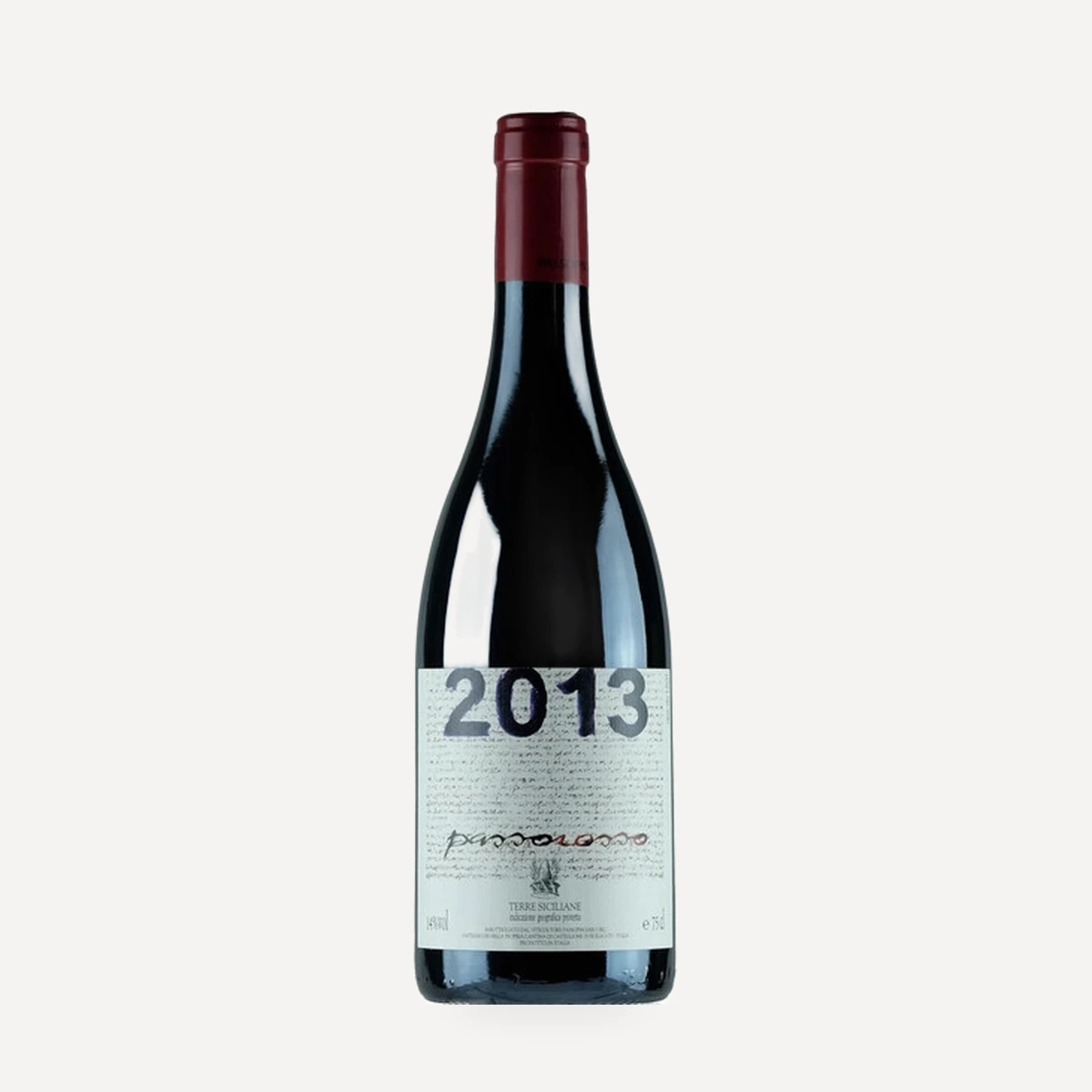
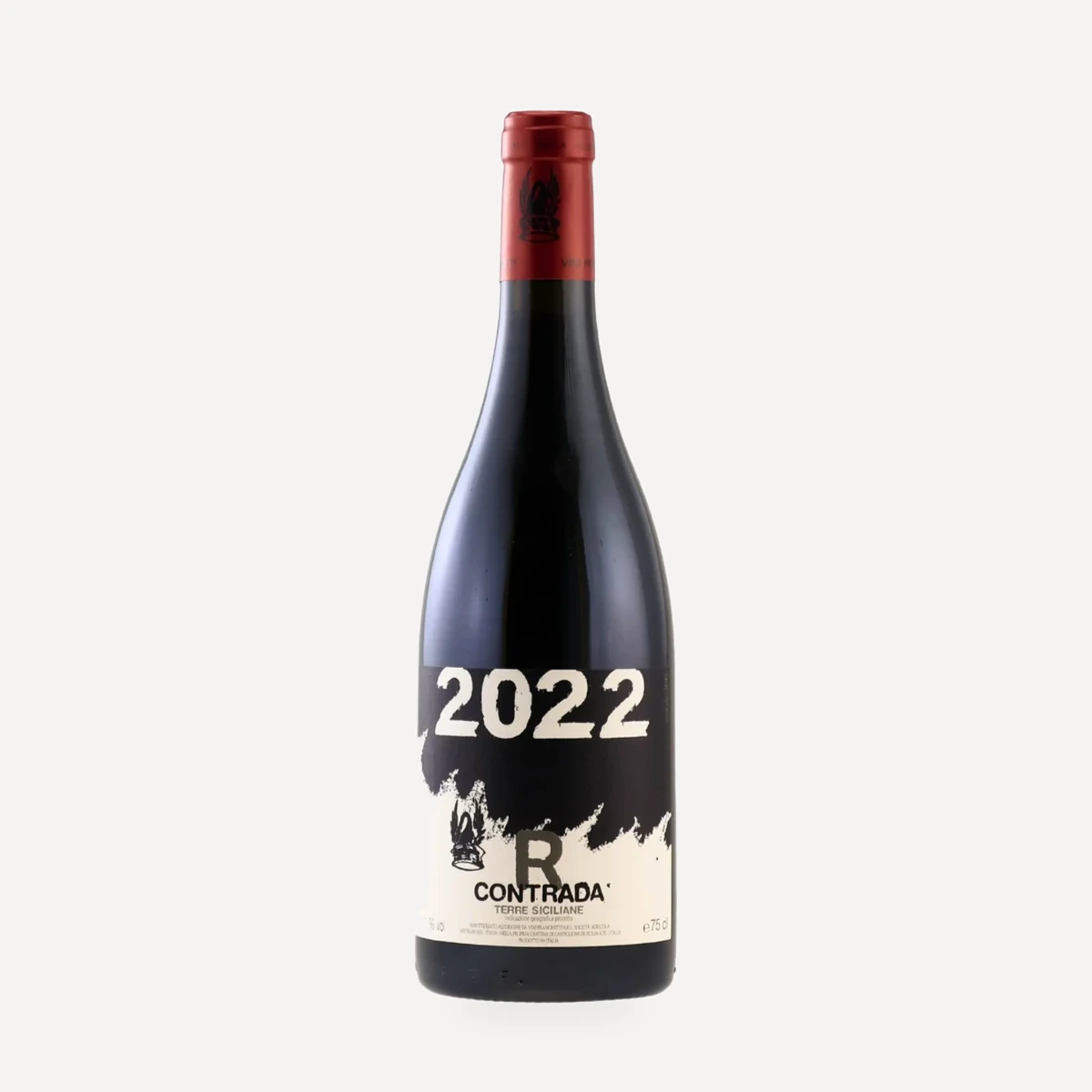
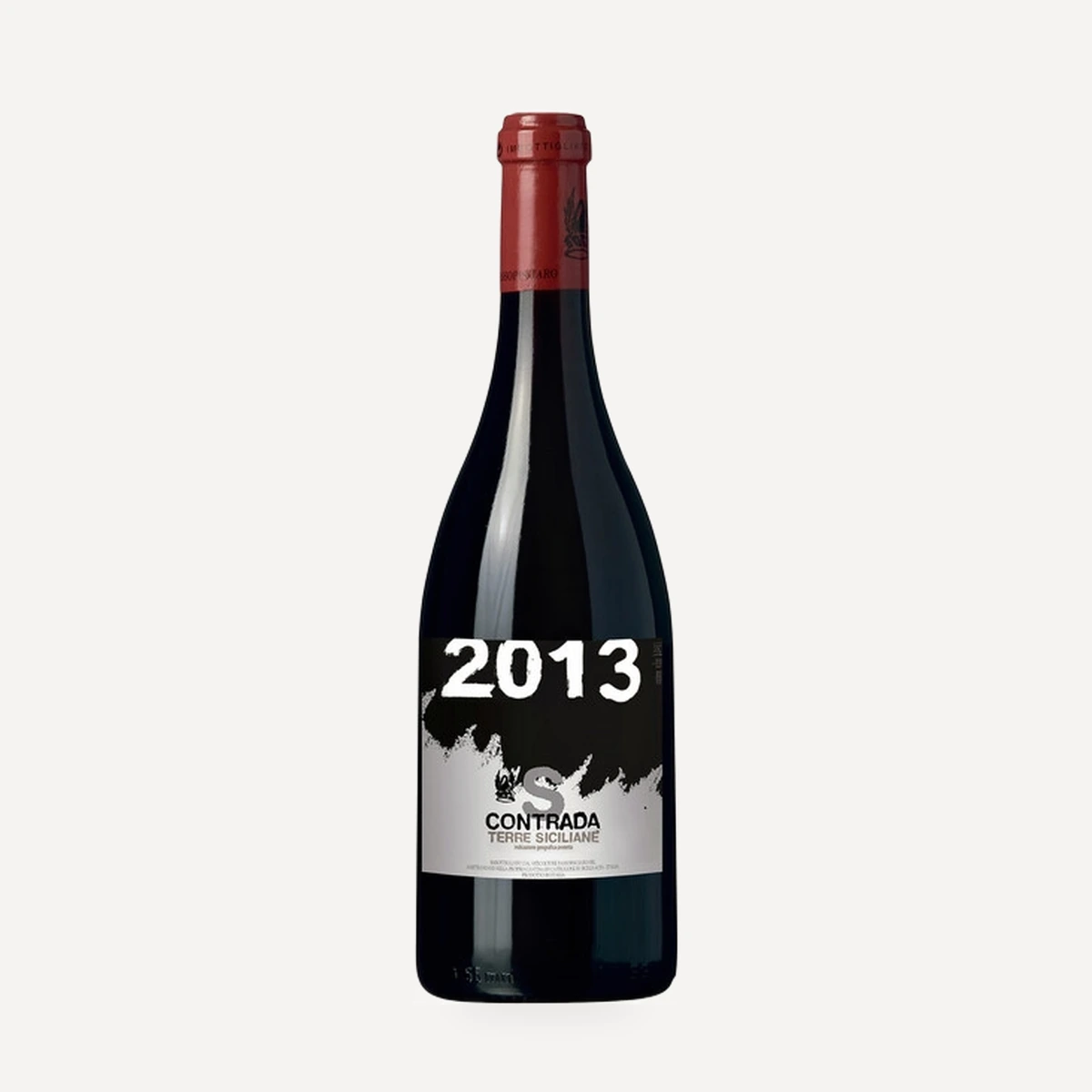
The letter “G” abbreviates Guardiola. Contrada G was first produced in 2011 from a selection of the district’s oldest Nerello Mascalese vines. Beginning with 2024, the wine moved to DOC Etna Rosso. The new classification permits the full geographical name on the label, so Contrada G is now labelled Guardiola.