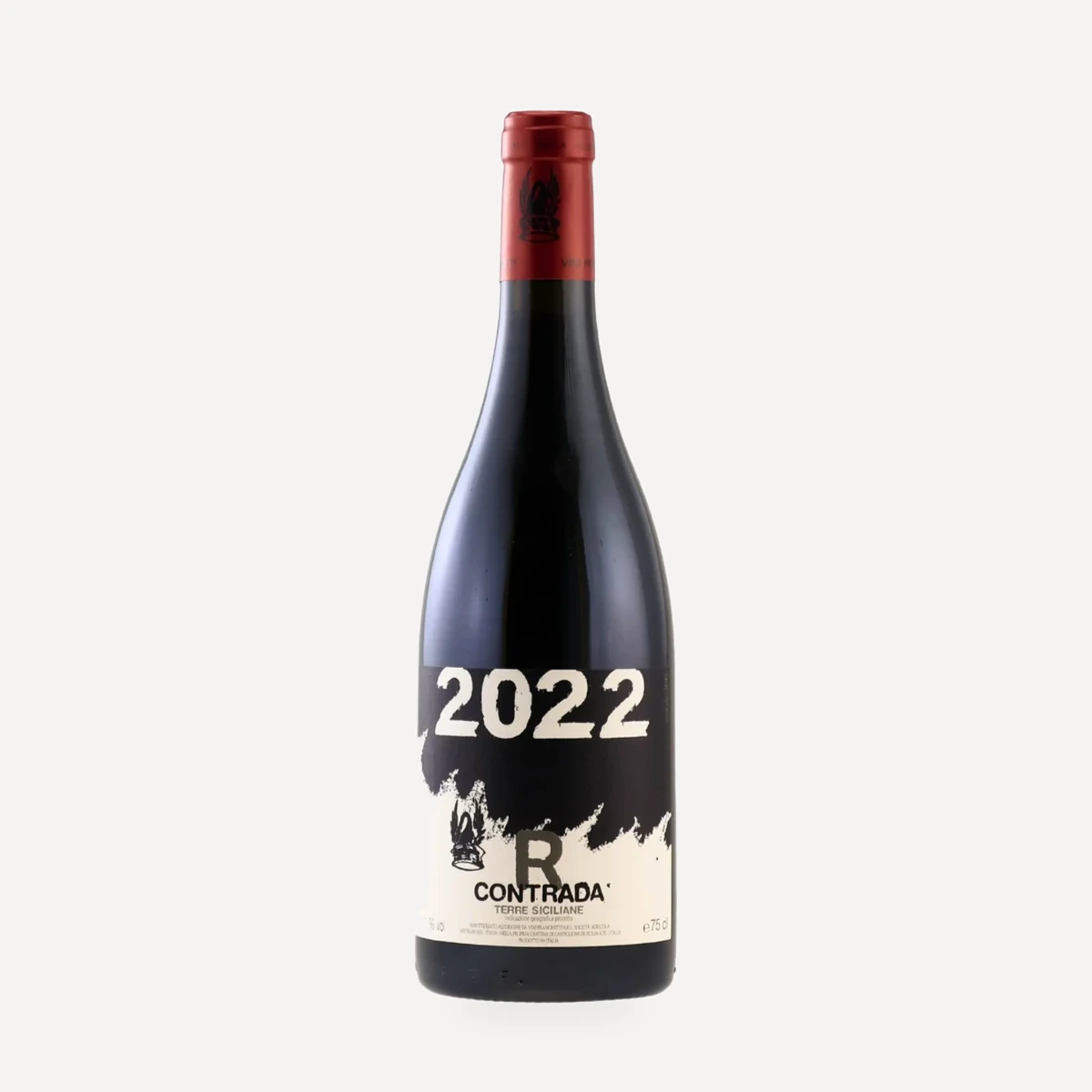
About this wine
Vineyard and terroir
Contrada R comes from Contrada Rampante, Passopisciaro’s highest contrada on the northern side of Mount Etna, at approximately 1,000 m a.s.l. The vineyard occupies steep terraces supported by dry-stone walls and lies at the upper limit of viticulture on the volcano. A 2010 description places the terraces on the lava wall of Solicchiata, just east of due north. The high elevation and moderate exposure delay ripening, making Rampante generally the last contrada to be harvested.
The soil consists of ancient lava that has weathered into a particularly sandy, oxidized texture. Recent technical material dates this lava to about 4,000 years. Current descriptions give a vine age of approximately 120 years, while earlier vintages refer to century-old or more-than-century-old vines. Planting density is 8,000 vines per hectare; the 2024 sheet identifies the training system as alberello. Clay, propolis, grapefruit-seed extract, sulphur and copper are used in the vineyard, with the 2024 sheet identifying the farming as organic. Earlier sheets generally record no fertilization; the 2021 sheet instead lists manure.
Grapes
100% Nerello Mascalese.
Vinification
Alcoholic fermentation takes place in stainless-steel vats. Documented fermentation durations are 10 days for 2008 and 2012 and 15 days for 2009–2011 and 2013–2019. Later sheets retain stainless steel but do not specify duration. Malolactic fermentation takes place in large oak barrels.
Ageing
The wine matures for 18 months in large oak barrels. Earlier releases specify neutral oak; the 2022–2024 sheets identify large Slavonian oak barrels. Recorded bottlings include the waning moon of April 2013 for 2011, April 2014 for 2012, the waning moon of April 2015 for 2013, the waning moon of April 2016 for 2014, the waning moon of April 2017 for 2015, the waning moon of April 2018 for 2016, the waning moon of May 2020 for 2018, 1 April 2021 for 2019, the waning moon of April 2022 for 2020, the waning moon of April 2023 for 2021, the waning moon of April 2024 for 2022, the waning moon of April 2025 for 2023, and 18 February 2026 for 2024.
Technical data
IGP Terre Siciliane. Altitude: approximately 1,000 m a.s.l. Planting density: 8,000 vines/ha. The 2024 vintage is 14% vol., yielded 45 q/ha and produced 4,146 bottles. Production by vintage was 2,072 bottles in 2023, 3,350 in 2022, 4,600 in 2021, 3,990 in 2020, 3,080 in 2019, 3,240 in 2018, 2,730 in 2017, 3,300 in 2016, 3,400 in 2015, 3,000 in 2014, 2,475 in 2013, 3,500 in 2012, 2,900 in 2011 and 2,000 in 2010.
Tasting profile
The 2024 opens with fragrant fresh red fruit and a delicate sweet-spice accent. Lively acidity and pronounced savoriness make the palate juicy and crisp; fine, silky tannins accompany a long, persistent finish.
The 2023 combines small red berries, Mediterranean herbs and underbrush with integrated mineral nuances. It is balanced, fresh and vibrant, with a persistent finish. Further descriptions add dusty earth, rose, citrus-edged cherry, wet stone, blackberry, exotic spice and liquorice, followed by a spicy, faintly bitter close with gripping tannins.
The 2022 has an intense, vivid and juicy bouquet of ripe small red fruit and Mediterranean herbs that develops rapidly in the glass. Bright minerality is integrated into a structured, balanced and lingering palate. Additional notes include volcanic ash and stone, grilled herbs, citrus-laced blackberry, red and blue fruit, black cherry, plum, dusty spice, tart cranberry and firm tannins.
The 2021 is light in colour yet highly aromatic, moving through dried roses, flowers, cedar, dried lemon, botanicals and pumice. Raspberry, pomegranate, orange peel, dried black cherry, autumn spice, tart red berries and saline minerals shape a lifted, medium-bodied palate with polished yet gripping tannins and a long spicy, savoury finish.
The 2020 is inward and understated, with curry-like spice, dried strawberry, tomato leaf, bitter cherry, Mediterranean herbs and volcanic ash. Its texture is silky and lifted, with saline mineral tones, rose, tart berries and fine dusty tannins; the finish is structured and dry.
The 2019 shows dried flowers, exotic spice, smoke, sour cherry, raspberry, pomegranate, liquorice, clove, plum, black fruit and crushed white pepper. Bright acidity, salty mineral tension, fine tannins and a medium-light ruby profile support a tight, structured finish.
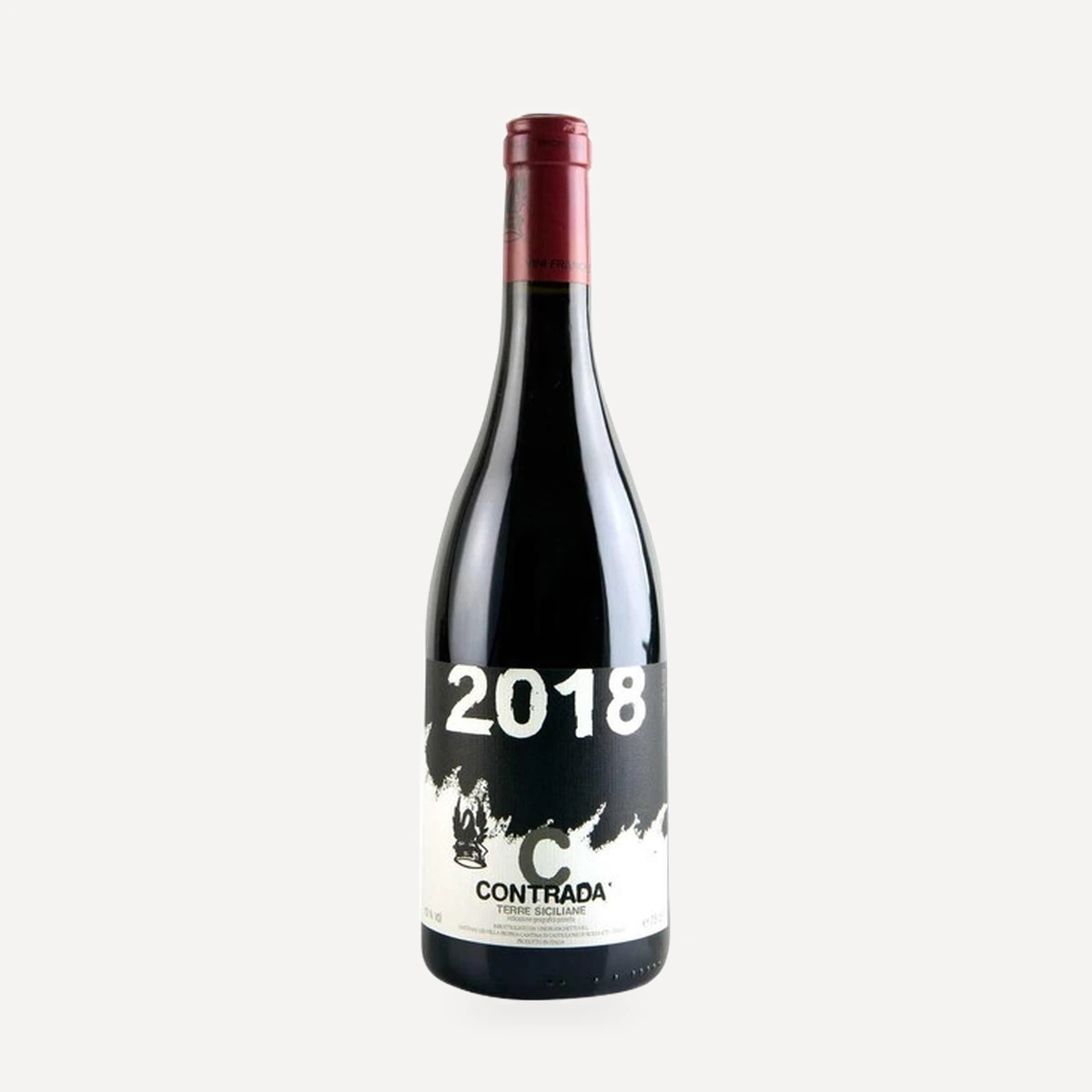
The 2018 is pale ruby to garnet, fragrant and energetic, with pressed rose, violet, red berries, white pepper, smoke, balsamic accents, exotic spice, iron, strawberry, raspberry, cinnamon, currant, ash and savoury tones. It is light and elegant, with bright acidity, powdery or silky tannins and a racy mineral finish.
The 2017 is full-bodied and powerful yet balanced, with ripe red fruit, blood orange, pomegranate and camphor. Underbrush, wet stone, scorched earth, Mediterranean scrub, dried Marasca cherry, raspberry, fennel, flint, mulberry, anise, fig and graphite accompany lively acidity and velvety to forceful tannins.
The 2016 is refined and aromatic, combining red berries, cassis, cherry, herbs, dried spices and minerals. Its delicate, medium-bodied palate has fine silky tannins and bright acidity, although the structure remains powerfully tannic and suited to cellaring.
The 2015 is mineral, saline and structured, with red berries, botanical herbs, sweet spices, crushed rock, charred earth, Mediterranean scrub, eucalyptus, strawberry, raspberry, dark baking spice and anise. It is smooth, elegant and almost weightless, with polished tannins and fresh acidity.
The 2014 is luminous ruby-red, dense yet soft, with sandalwood tempering the Etna-associated citrus and camphor character. Blood orange, raspberry, violet, liquorice, cinnamon, faded flowers, truffle, dried berries, crushed stone, grilled herbs, strawberry, eucalyptus and red cherry appear across its descriptions. The palate is silky, vibrant and ethereal, with ultrafine tannins and a very long finish.
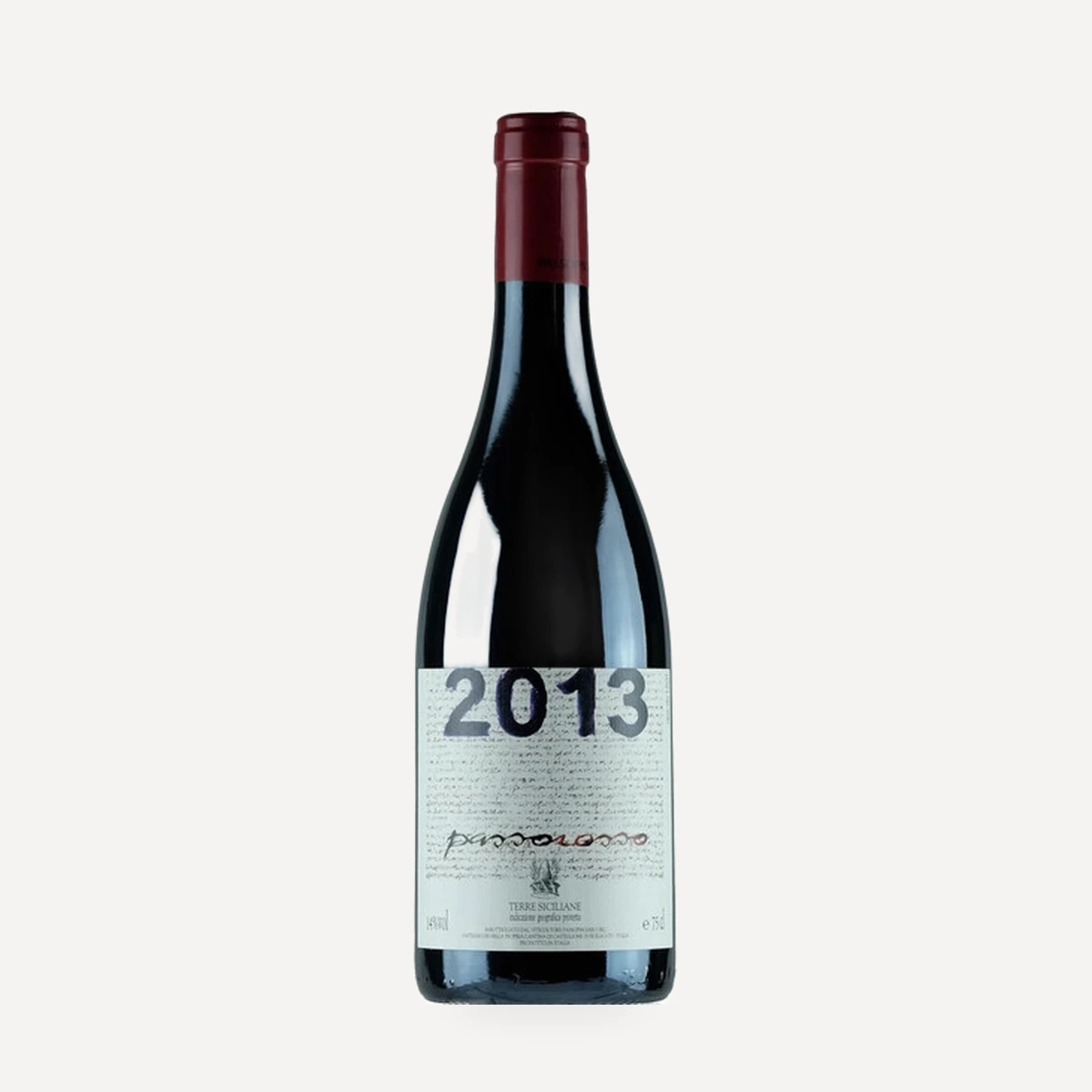
The 2013 is brilliant light ruby and light-bodied, with red fruit, raspberry, cherry, fragrant blue flowers, orange zest, exotic spice, leather and stony minerals. Bright acidity, silky tannins and a long savoury mineral aftertaste give it a delicate, elegant profile.
The 2012 is light, clean, crisp and long, with marzipan, citrus, mountain fruit, ripe red fruit, plum, cherry, spice, liquorice and a dusty mineral accent. Its texture is silky and its structure supports long ageing.
The 2011 combines wild strawberry, sweet cherry, liquorice, flowers, forest berries, citrus peel and pulverized rock. Blood orange and redcurrant are sharpened by vivid acidity; the texture is silky, with grippy but supple tannins and a lingering citrus finish.
The 2010 is savoury, fresh and complex, with purity, high acidity, lightness and durability. It was presented as a wine capable of retaining its colour over time.
The 2009 is ethereal and tense, with sweet dried fruit, herbs, spice and inner sweetness. It is less overtly dense than other contrada wines and was considered a patient, long-lived style.
The 2008 is pure, lithe, lifted and long-lived. Ripe red berries, spicy cherry, cranberry, flowers, dried herbs, minerals, menthol and liquorice meet a silky texture, firm integrated tannins, harmonious high acidity and a long mineral finish.
Vintage notes
2024. A cold, clear winter was followed by warm spring days, cool nights and regular flowering from late May into early June. Summer became intensely hot both day and night, requiring irrigation where possible. Early-August rain brought hail damage to lower vineyards, while prolonged drought caused some vine losses. High-altitude Nerello Mascalese retained generous, juicy bunches. The Rampante technical sheet records a manual harvest on 12 October.
2023. Snow above 800 m replenished water reserves after the dry 2022 season. Heavy rain and low temperatures from May through June disrupted flowering, while downy mildew reduced yields. July repeatedly approached 40°C, and red grapes ripened unevenly. Rampante’s altitude, cooler conditions and moderate exposure prolonged hang time; careful manual selection took place on 22 October.
2022. Heavy late-2021 rain, winter cold and snow, and spring rain rebuilt water reserves. Warm early-summer conditions accelerated canopy growth. Rampante’s altitude and lower solar exposure moderated water stress, allowing hand-picking on 27 October.
2021. Winter alternated rain, snow and unusual warmth; a cool spring delayed development before intense summer heat arrived. Old Nerello Mascalese vines did not require the night irrigation used elsewhere. Cooler temperatures and moderate September rain supported balanced ripening. Rampante was hand-selected on 20 October.
2020. A rainy, unsettled summer was followed by renewed heat, August and September rain, hail and then clear, cool October weather. Rampante was manually selected on 29 October.
2019. A cold April and May, including frost on 6–7 May, delayed flowering until mid-June. Heat near 40°C from late June through September recovered the delay. October temperature variation advanced phenolic maturity, producing fresh, vertical fruit and moderate alcohol. Harvest was 22 October.
2018. One of the wettest and most humid recent Etna seasons required careful leaf removal, improved canopy airflow and applications of clay and propolis. The resulting wine was linear, varietally precise, high in acidity and built for longevity. Harvest was 20 October.
2017. Sustained summer heat continued into mid-September, with limited night-time cooling and some irrigation. Ripening was advanced, moving the wider Nerello harvest forward to 20–29 October. The wines were full-bodied and powerful but balanced.
2016. Lean grapes ripened steadily and could be picked precisely. Easy extraction from fully mature fruit produced a smooth, gentle vintage. Rampante was harvested on 25 October.
2015. A rainy winter and hot summer encouraged vigorous vines, but early-October rain weakened skins and created mould pressure. Bunches and berries were selected individually, while Rampante’s altitude allowed harvest to wait until 27 October, the final day. The vintage was mineral, saline, structured, high in acidity and relatively low in alcohol.
2014. A very dry summer with cool nights was followed by a rapid harvest. Grapes from the old northern-slope vines reached the cellar dark and highly aromatic. Rampante was picked on 27 October.
2013. A cold, delayed European vintage produced a lighter, elegant wine. Rampante was harvested on 4 November.
2012. Heat and drought caused high sugar, low acidity and vine stress. Irrigation and two brief rains restored balance before the 22 October harvest. The vintage was regarded as particularly long-lived.
2011. A long season and late rain produced richness without excessive mass. A firm, lean structure retained balance. Rampante was picked on 5 November.
2010. The high site produced a fresh, complex and savoury expression. Harvest took place on 29 October.
2009. Rain and humidity encouraged earlier picking across Etna and gave the wines unusual tension, density and varietal character. Rampante was harvested between 25 October and 10 November.
2008. Winter snow supplied water reserves, and summer heat did not stop development. Timely October rain relieved the dry soils. Picking ran from 23 October to month-end.
Label / history
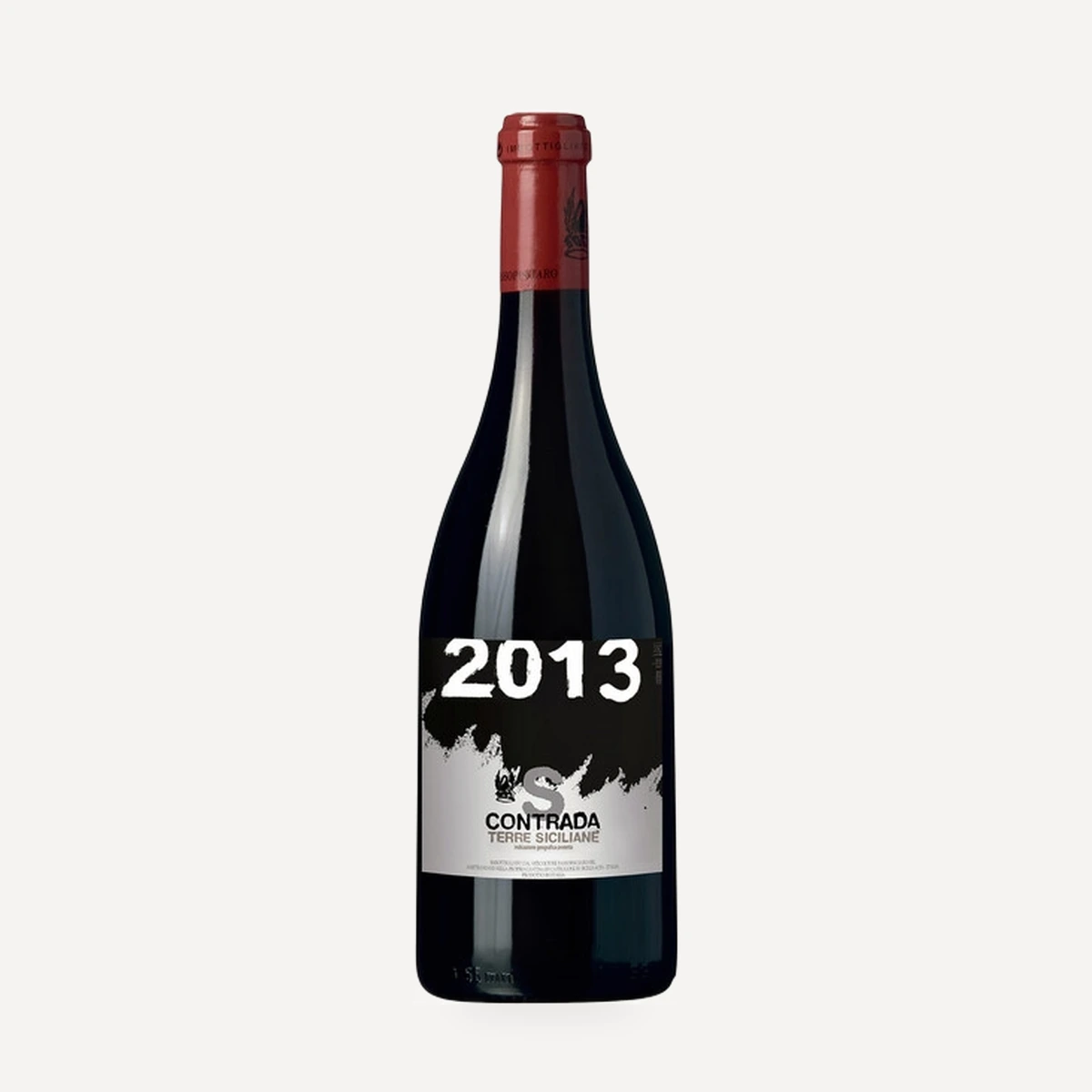
Contrada R takes its initial from Rampante. Passopisciaro began bottling the contrada wines separately in 2008, making 2008 the first standalone Contrada R. The label changed in 2009.