History
Foundation and first vintage
Fattoria Poggio di Sotto was founded in 1989 on the south-eastern side of the hill of Montalcino. Its vineyards were established exclusively with Sangiovese, and all 16 ha were entered in the register for Brunello di Montalcino.
The first vintage was harvested in 1991. Within the following years, the estate developed its identity around Sangiovese grown at several elevations and on differing soils, with deliberately low yields, rigorous grape selection, spontaneous fermentation and prolonged maturation in large Slavonian oak casks.
Entry into the ColleMassari Domaine
In 2011, Poggio di Sotto became part of the Tuscan domaine created by siblings Maria Iris and Claudio Tipa. It joined Castello di ColleMassari, established within the group in 1998, and Grattamacco, part of the domaine since 2002; Tenuta San Giorgio followed in 2016.
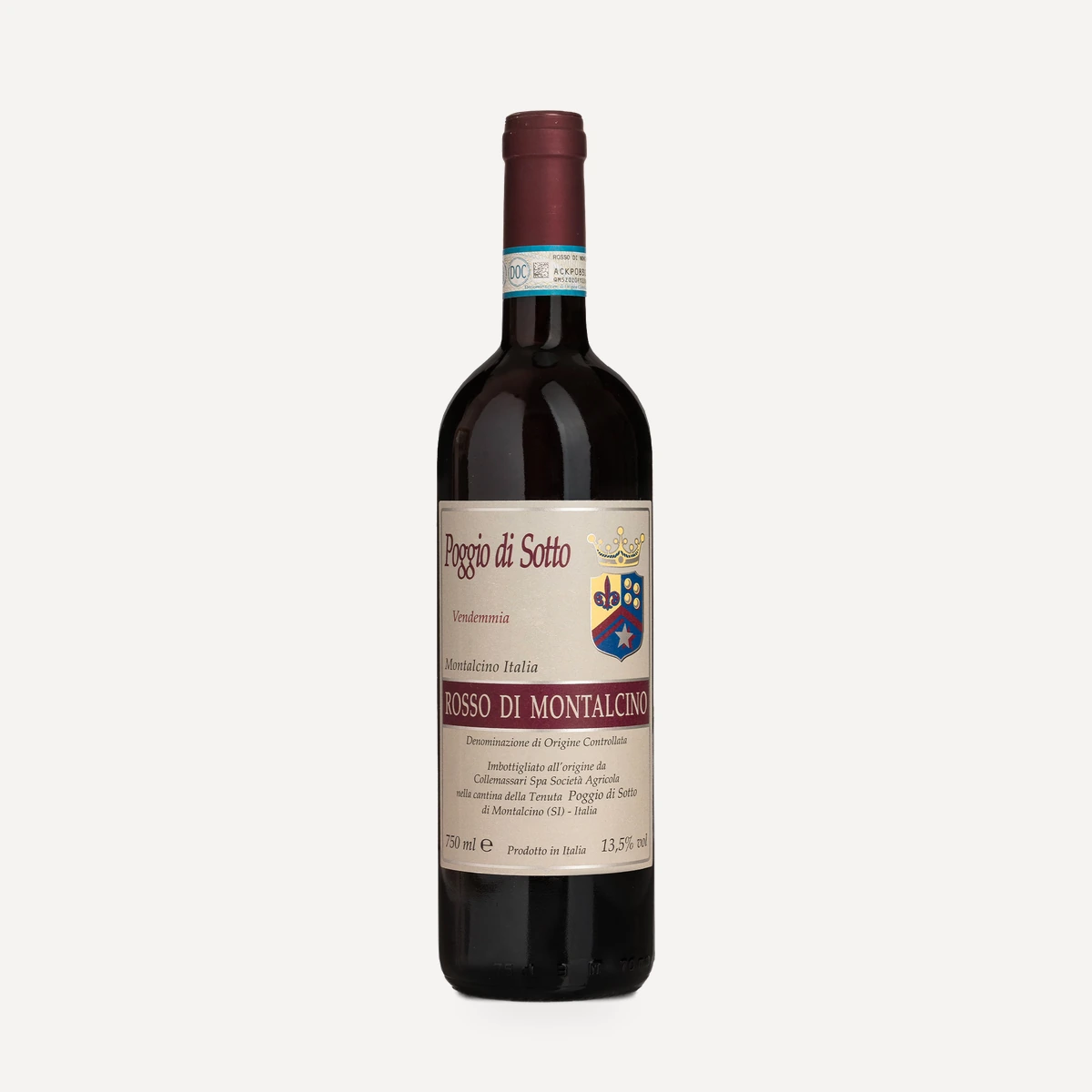
Under this ownership, Poggio di Sotto retained its distinct Montalcino identity, 44 ha estate structure and exclusive focus on Sangiovese in the vineyards. Its production remained centred on Rosso di Montalcino, Brunello di Montalcino and Brunello di Montalcino Riserva, supported by estate olive oil and a grappa made from Sangiovese pomace.
Terroir
Poggio di Sotto occupies the south-eastern side of the hill of Montalcino. Its vineyards follow a steep slope from approximately 200 to 400 m above sea level, with an average gradient of 10%.
Monte Amiata shelters the property on one side, while the other remains open to maritime breezes and the influence of the nearby Orcia river. The combination of elevation, mountain protection, river influence and sea air produces marked differences between daytime and nighttime temperatures, including during the hottest part of summer.
The soils are rocky and change along the slope. The lower vineyards are dominated by galestro and argillites, while clay and conglomerate become more prominent toward the upper elevations. Differences in altitude, soil composition and vine age allow Sangiovese to develop distinct aromatic expressions across the estate.
Winemaking
The entire estate is managed according to certified organic-farming criteria under ICEA certification.
All vineyards are trained to spur-pruned cordon. Production is deliberately restricted to approximately 3–3.5 tonnes per hectare through repeated and stringent crop selection. During ripening, only the best bunches are retained on the vines. A further selection takes place in the vineyard at harvest, followed by manual sorting after the grapes reach the cellar. This layered selection process produces very low final yields.
Differences in vine age, soil and elevation are maintained as sources of variation within the estate’s sole grape variety, Sangiovese.
Grapes undergo a final manual selection in the cellar on a moving sorting table.
Fermentation begins spontaneously and takes place in both 70-quintal truncated-conical wooden vats and stainless-steel tanks. The fermenting wines receive prolonged maceration and frequent pump-overs. Malolactic fermentation is completed before maturation.
The wines mature in 30-hl Slavonian oak casks. The estate’s stated maturation programme assigns two years in cask to Rosso di Montalcino, four years to Brunello di Montalcino and five years to Brunello di Montalcino Riserva. Bottle maturation lasts for at least six months for Rosso di Montalcino and at least one year for Brunello di Montalcino.
Philosophy
Poggio di Sotto’s approach is organised around the individual expressions of Sangiovese produced by differences in altitude, soil and vine age. Quality is pursued through severe yield restriction and several successive selections rather than through high crop volume.
In the cellar, spontaneous fermentation, long maceration and maturation in large Slavonian oak casks maintain a traditional production framework. Extended cask and bottle ageing is integral to the estate’s programme, while certified organic cultivation governs work in the vineyards.
Wines
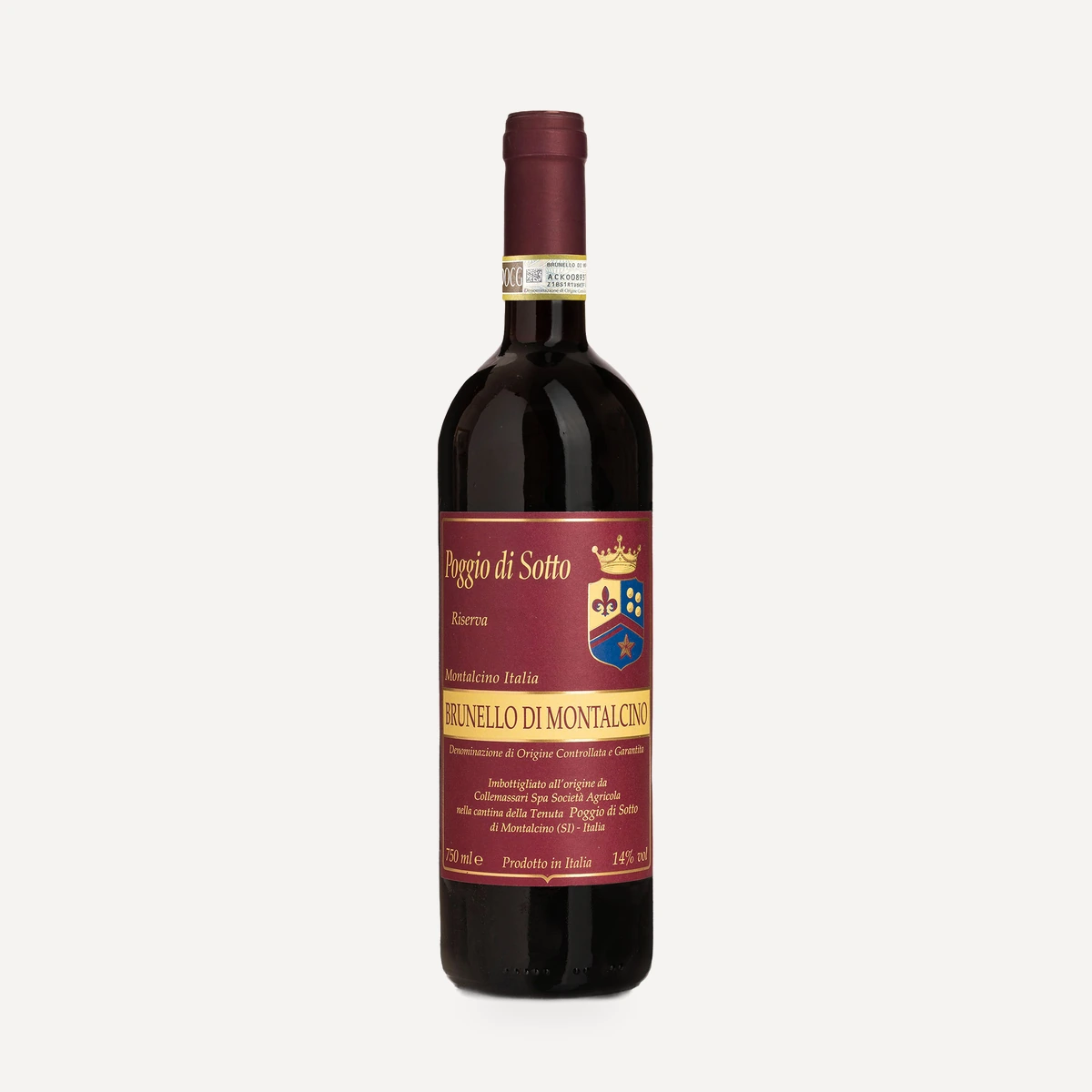
Poggio di Sotto Riserva Brunello di Montalcino DOCG
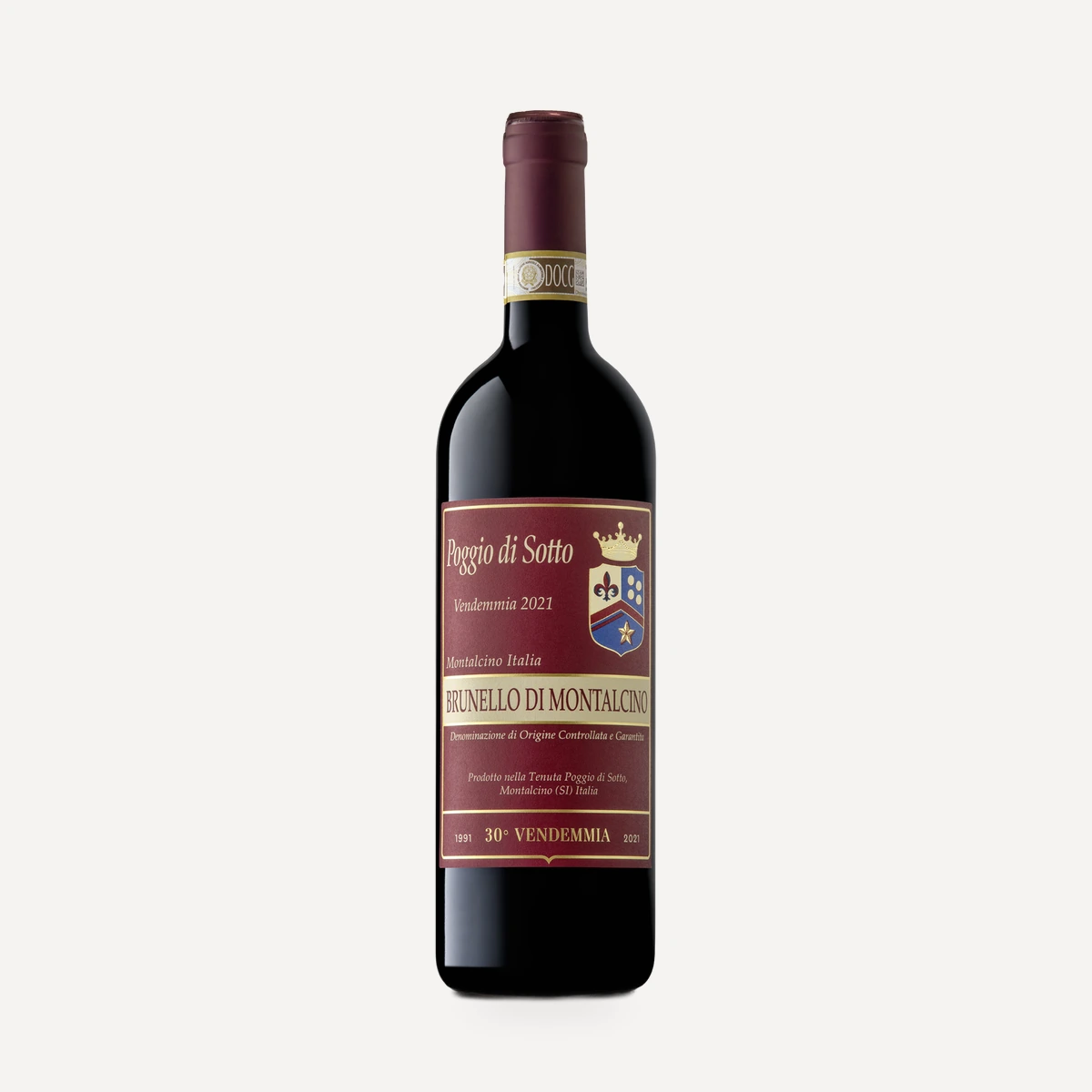
Poggio di Sotto Brunello di Montalcino DOCG