History
Family origins and the first Morellino
The estate’s identity grew from a family relationship with land and wine. Elisabetta Geppetti first encountered viticulture through her grandfather and later through her father-in-law Alfredo, universally known as Fredi. Both transmitted their attachment to the vineyard while she was still very young. Elisabetta transformed that inheritance into an ambition to produce high-quality wines capable of expressing a Maremma that was then still little known as a fine-wine territory.
The wine now called Morellino di Scansano Riserva marks the beginning of the estate’s documented winemaking history. It was originally named Rosso di Pereta. Following the establishment of the Morellino di Scansano denomination in 1978, it became the first Morellino di Scansano in the estate’s collection. Its label has been retained without fundamental alteration as a visual link to that origin. The first vintage is recorded as 1978.
1985–1987: Morellino and Saffredi
In 1985 the estate produced the first vintage of its classic Morellino di Scansano. It developed into the quantitatively largest and most continuous expression of Fattoria Le Pupille’s relationship with its territory.
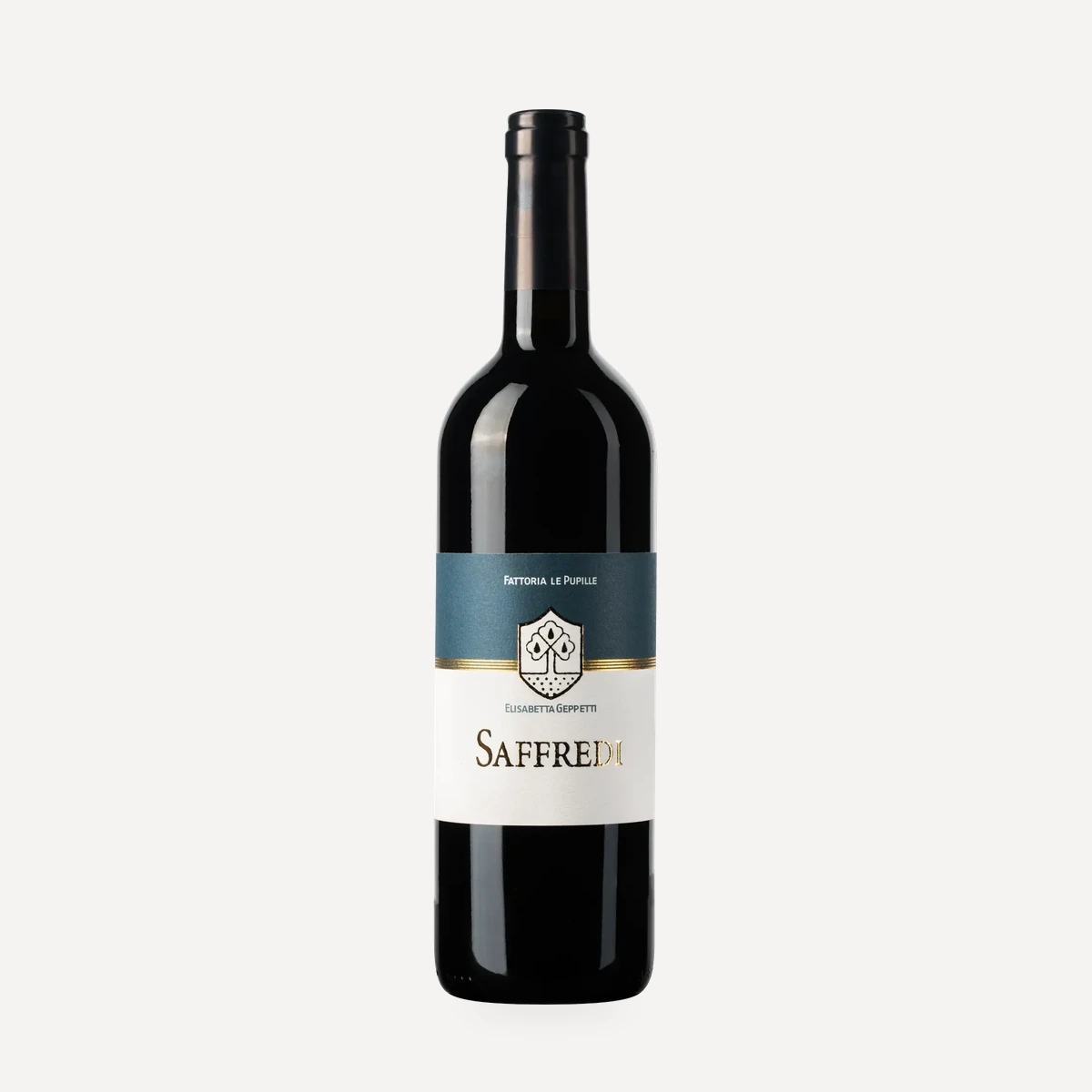
The oldest component of the present Saffredi vineyard was planted in 1985. Elisabetta’s plan was to make a major Maremma red from Bordeaux varieties, and Giacomo Tachis assisted in bringing that idea to fruition. The first Saffredi vintage was produced in 1987. The wine was dedicated to Fredi, whose influence had awakened Elisabetta’s passion for wine. It became one of the early Tuscan IGT reds identified with the Supertuscan movement.
1994–1997: sweet wine, new vineyards and new research
Solalto emerged from Elisabetta’s wish to make a contemplative sweet wine from Traminer, Sauvignon and Sémillon. Its first vintage is recorded as 1994. Its label reproduces a childhood drawing by Clara, Elisabetta’s eldest daughter, depicting the family’s land and the sea under the light of Maremma.
In 1996 Elisabetta acquired the Poggio Valente vineyard. The site demonstrated a strong affinity with Sangiovese, and two further parcels were subsequently planted to complete the holding. The first Poggio Valente vintage followed in 1997.
The estate also began studying Petit Manseng in 1996, seeking to determine whether it could support an ambitious dry white wine in a territory predominantly associated with reds. The research eventually focused on a 1.5-hectare parcel at Pian di Fiora.
Poggio Argentato also made its debut in 1997, developing the estate’s work with white varieties and maritime Maremma conditions.
2000–2007: vineyard planting and expansion of the range
Around 2000, Elisabetta began a focused Syrah project. Syrah was planted at Pian di Fiora in 2000 and at Vigna del Palo in 2002. The two sites have contrasting soils: tuffaceous, stony terrain at Pian di Fiora and cooler, looser sandstone-derived ground at Vigna del Palo. Several years of vineyard selection preceded the first Le Pupille vintage.
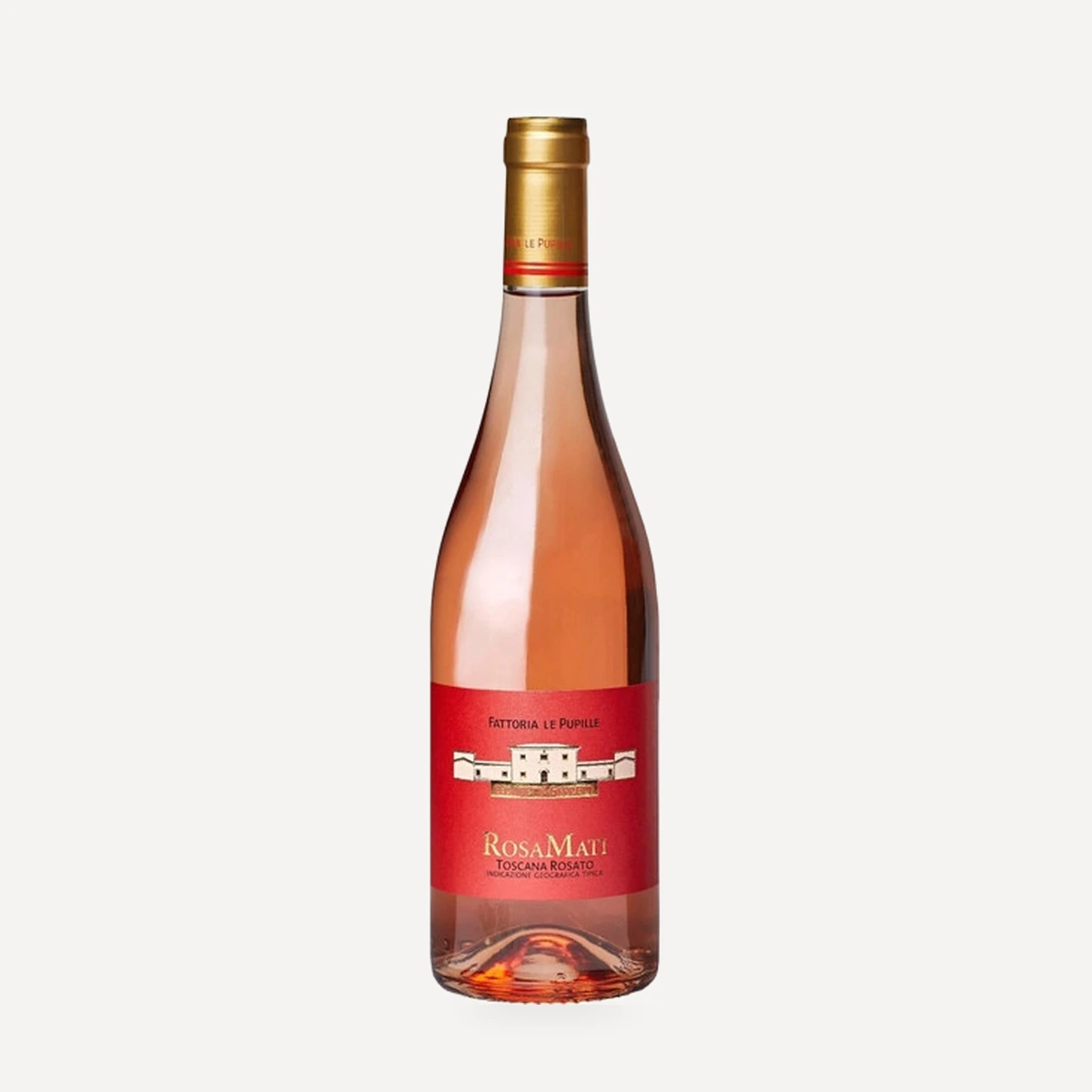
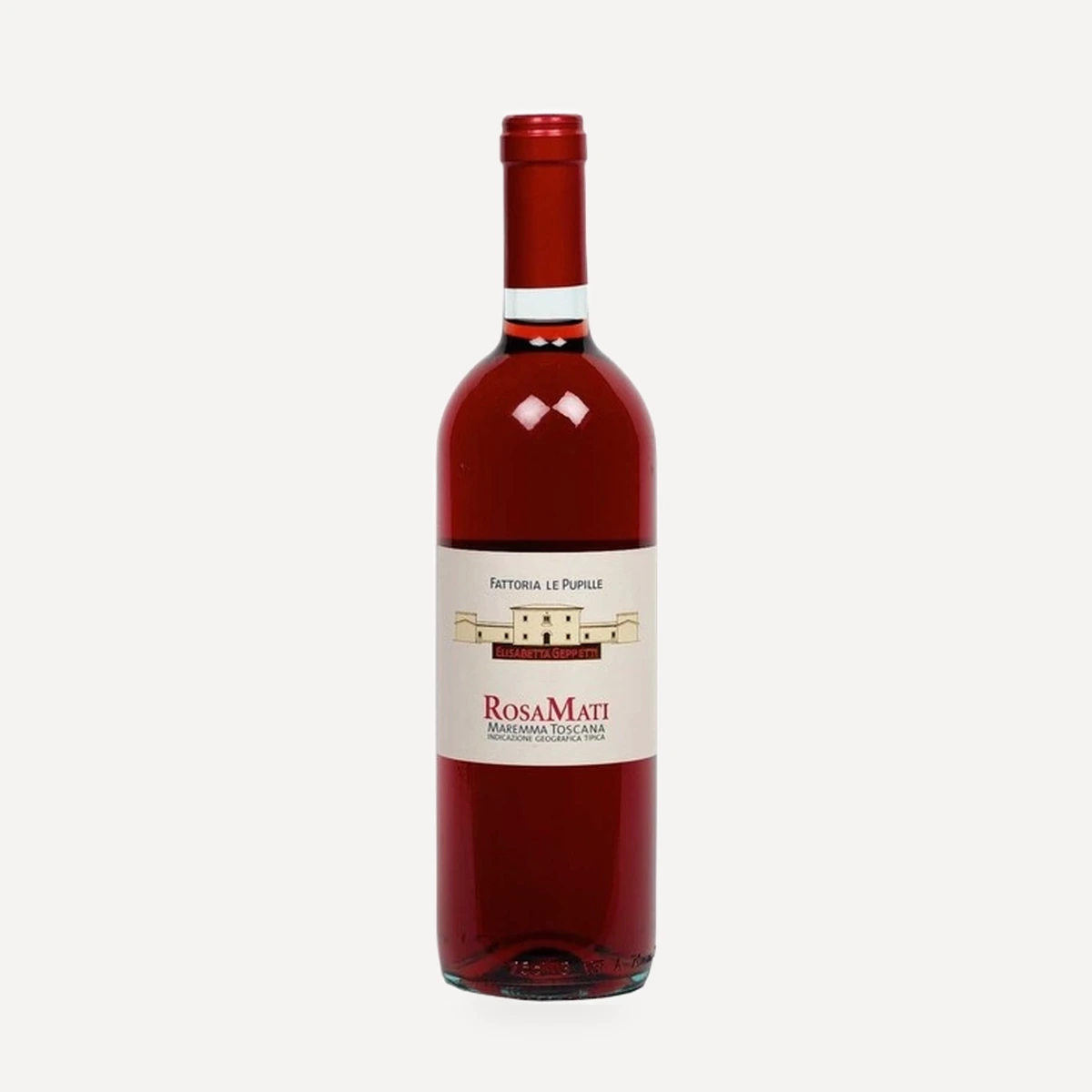
The La Carla Syrah parcel was planted in 2000. In 2007 Elisabetta used this 2.5-hectare site near Magliano in Toscana to create RosaMati, a varietal Syrah rosé. The wine was dedicated to Rosa Mati, Fredi’s mother, remembered as a strong and charismatic Maremma woman.
The Saffredi holding expanded with a new vineyard planted in 2006. That year also brought the first vintage of Pelofino, conceived as a younger expression combining Sangiovese with international red varieties.
2015–2018: Le Pupille and Piemme
Le Pupille was first produced in 2015 after the long Syrah-selection project begun around 2000. Its later development became the first wine created through the shared work of Elisabetta and Clara, linking the founder’s experimentation with the next generation.
The Petit Manseng research initiated in 1996 culminated in Piemme, first produced in 2018 from the 1.5-hectare Pian di Fiora parcel. It represented the estate’s deliberate attempt to make a structured, age-worthy dry white in Maremma.
The family today
Elisabetta now leads Fattoria Le Pupille with Clara and Ettore. Their shared work continues the family legacy while developing new interpretations of Maremma. Elisabetta is known as the “Lady of Morellino” and served as the first president of the Morellino di Scansano Consortium, helping advance the denomination’s recognition beyond the region.
Terroir
Fattoria Le Pupille works in the southern Tuscan Maremma, where the landscape runs from the Tyrrhenian coast across rolling hills toward Monte Amiata. The estate’s vineyards lie between Pereta, Magliano in Toscana and Istia d’Ombrone, at elevations generally ranging from 150 to 350 metres.
The climate is Mediterranean, with pronounced differences between daytime and nighttime temperatures. Intense sunlight and breezes moving inland from the sea are defining influences. In the coastal Pereta sector, salt-bearing winds reach west- and northwest-facing rows, while elevations of up to 280 metres provide notably cool nights. The sea contributes light, air movement and a maritime character to the estate’s vineyard environments.
Soils vary markedly across the holdings. The broad palette includes sandstone-derived formations, sandy and sandy-loam textures, marl and marly limestone, tuffaceous material, abundant stones, silt, chalk, gypsum or alabaster-rich components, and veins or layers of iron-bearing red clay. This geological variability creates distinct conditions within the estate’s dispersed vineyard mosaic.
At Saffredi, the historic parcels have sandy, sandstone-origin soils with little organic matter; marl and iron minerals are present, with clay appearing below the upper 30 centimetres in the technical description. A second 12-hectare holding is rooted in tuffaceous terrain crossed by red clay. Poggio Valente occupies a 350-metre hillside where a sandy surface overlies sandstone-derived material mixed with clay. Pian di Fiora has tuffaceous, stony soils rich in alabaster, gypsum or chalky components. Vigna del Palo has cool, loose soil created by sandstone decomposition. Le Piagge is deeper and looser, with abundant silt and clay. La Carla is silty-clayey and contains a substantial stony fraction of clay origin.
Winemaking
The estate cultivates 85 hectares of vines distributed across multiple Maremma locations and elevations. Its viticultural patrimony combines native grapes with international varieties selected for specific sites.
Training systems vary by vineyard, principally spur-pruned cordon and Guyot. Recorded planting densities range from 4,000 vines/ha in Saffredi to 6,500 vines/ha in several more recent parcels. Site-specific yields range from approximately 40 q/ha in the small Pian di Fiora and Vigna del Palo parcels to 90 q/ha in vineyards supplying the principal Morellino and Pelofino bottlings.
Harvest timing is adapted to variety and intended style. White grapes may be gathered from late August through mid-September. Merlot, Syrah, Sangiovese and Ciliegiolo generally begin in September, while Cabernet Sauvignon and Petit Verdot can continue into October. The grapes for Saffredi undergo selection both in the vineyard and at the cellar. For Le Pupille, bunches from the two Syrah vineyards are hand-destemmed, with a small percentage retained as whole clusters.
For sweet-wine production, one documented method cuts the fruiting branch in mid-September and leaves the grapes to dehydrate on the vine for about 15 days before a late-September harvest.
No organic, biodynamic or sustainability certification is identified.
Vinification is tailored to variety, vineyard and wine style rather than governed by a single cellar protocol.
Stainless steel is the principal fermentation vessel for much of the range. Recorded fermentation temperatures run from about 15°C for whites and rosé to 24–26°C for reds. Red-wine macerations range from approximately 10–15 days for earlier-drinking wines to 25–35 days for selected Sangiovese and 30–45 days for the Cabernet-led flagship production.
White grapes may be destemmed and gently pressed after an overnight skin contact; one protocol limits pressing pressure to 0.4 bar, avoids malolactic fermentation and retains the wine on fine lees for as long as possible. Rosé production uses destemming, a few hours of skin contact and gentle pressing before cool fermentation in steel.
Small-lot work includes fermentation in open 500 L oak tonneaux and handcrafted 500 L terracotta orci, with limited whole-cluster inclusion. Other white-wine fermentation takes place in 500 L tonneaux, followed by extended maturation in the same vessels.
Maturation vessels encompass stainless steel, second-use tonneaux, French-oak tonneaux of 500 and 600 L, French-oak barriques, large French-oak casks of approximately 20–30 hl, and Slavonian-oak casks of 10, 20 and 40 hl. Programs range from five or six months in steel for earlier-release wines to 15–18 months in oak for more structured reds. Saffredi matures for 18 months in French-oak barriques, 70% new, and then rests for up to six months in bottle. Morellino di Scansano Riserva spends 15 months in Slavonian oak. Extended bottle maturation of at least 12–18 months is used for the smallest-production wines.
The estate also practices long bottle maturation for its sweet wine. Clarification and filtration are documented for an earlier-release red before bottling.
Philosophy
Fattoria Le Pupille presents winegrowing as a family vocation built around continuity, care for the land and an evolving interpretation of Maremma. Elisabetta’s original objective was not simply to follow an existing regional model, but to demonstrate the territory’s capacity for fine wine through both Sangiovese and carefully selected international varieties.
The estate’s guiding ideas are elegance, balance, authenticity and a consistent pursuit of quality. Its ten wines are conceived as distinct personalities connected by this common approach. Native Maremma grapes and international varieties are treated as complementary parts of the same viticultural patrimony rather than opposing traditions.
Experimentation has been central to that outlook. Long-term work with Syrah began around 2000, while the Petit Manseng project started in 1996 as a deliberate challenge to the assumption that Maremma should be defined only by red wine. Contrasting vessels—including steel, oak and terracotta—are used when they serve the identity of a vineyard or variety.
The family also places strong emphasis on generational continuity. Elisabetta’s work is now developed jointly with Clara and Ettore, with Le Pupille serving as a particularly explicit meeting point between Elisabetta’s experience and Clara’s contribution. The sea, intense light, varied soils and vintage conditions are treated as active components of Maremma’s identity rather than as a fixed stylistic formula.
Wines

Poggio Valente
Saffredi

Morellino di Scansano Riserva

Pelofino

Le Pupille

Solalto

Poggio Argentato

Piemme

Rosamati

Morellino di Scansano
Rosa Mati Maremma Toscana IGT