About this wine
Vineyard and terroir
Palafreno comes from Ruffoli in Greve in Chianti. Cipresso and Marrone lie on a slope close to the cellar at approximately 350–400 m a.s.l., facing south to south-west. Their loose galestro schistous clay soils retain water and help maintain cool, even temperatures beneath the vines, moderating the risk of excessive ripeness and loss of acidity in Merlot.
Fruit from higher on the slope contributes concentration and intensity. The more clay-rich lower sections give a fresher, more ethereal expression. Since 2020, Vigna Due—situated at 600 m a.s.l.—has added vibrancy and depth, including during warmer growing seasons.
The vineyards are cultivated organically according to plant-based biodynamic principles. The wine is certified organic and vegan, and no animal-derived products are used from vineyard to bottle. Average yield is 30 hL/ha.
Grapes
100% Merlot. Palafreno is made only in growing seasons when the conditions for ripening are considered exceptional. The inaugural 2000 and 2001 vintages included Sangiovese; from 2004 it developed into a small-production, pure Merlot matured in fine-grained barriques.
Vinification
For the 2020 vintage, Merlot was harvested by hand from September 15 to 18. The grapes underwent two stages of selection, allowing only the best berries to enter the fermentation tanks. The wine was racked before maturation.
Ageing
Maturation lasted approximately 18 months in fine- and extra-fine-grained French oak barriques, of which 20% were new. Bottle ageing continued for at least another year before release.
Technical data
The 2020 has 14.5% alcohol, pH 3.37, total acidity of 5.98 g/L and residual sugar below 1.0 g/L. Annual production is approximately 6,000 bottles.
Formats include 750 ml bottles in 3- or 6-bottle cases, 1.5 L magnums and 3 L double magnums in individual wooden cases, and 6 L imperials in individual wooden cases. The broader format list also includes 12 L bottles in exceptional vintages.
Tasting profile
Palafreno combines a silky, velvety texture with enticing aromas and a long, savoury finish. Its richness is balanced by acidity derived from the Ruffoli terroir. The 2020 shows dark fruit, mocha, new leather, spice and espresso, followed by a deep, saline finish. The vintage profile is marked by bright colour, pronounced intensity and silky tannins.
Serving and pairing
Serve at 18–20 °C after approximately 30 minutes of decanting. Its texture, dark-fruit depth and savoury finish suit Italian cooking, tomato-based dishes and food with moderate heat. Suggested pairings include cacio e pepe, pumpkin gnocchi with sage butter, parsnip, chestnut and cranberry loaf, peposo, roast turkey with chestnut and mushroom stuffing, Hungarian-style beef goulash, black bean chili, cassoulet and slow-roasted pork shoulder with smoked paprika. Filet mignon with red-wine reduction is presented as a classic match: the meat reflects the wine’s velvety tannins, while the sauce complements its dark fruit and savoury character. Mature bottles pair particularly well with richer, earthier dishes.
Palafreno begins to reveal its full character 6–7 years after harvest and can continue developing for at least 20 years.
Vintage notes
The 2020 growing season followed a mild, dry winter that encouraged early budbreak and vegetative growth. A cold spell at the end of March interrupted that pattern. Wetter spring weather increased disease pressure and required careful vineyard management, while subsequent water availability supported maturation. Summer was drier, but the season ultimately delivered a good quantity of high-quality grapes. The resulting wines showed vivid colour, intensity and silky tannins.
Label / history
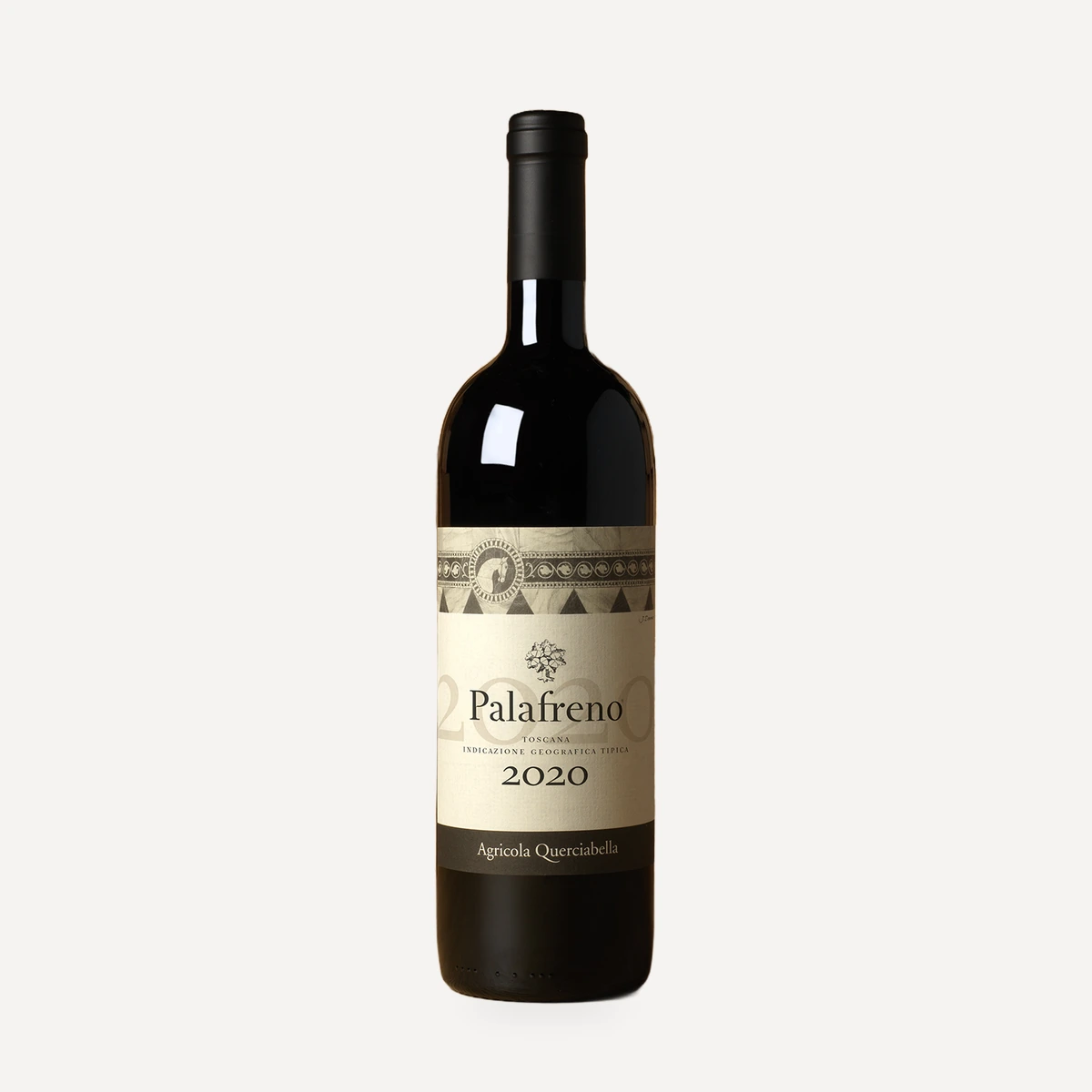
Palafreno is an old Italian term for the noble riding horse used by medieval knights for travel, parades and tournaments, and alludes to the Italian Renaissance epic Orlando Furioso. The name expresses the intended stature of the Ruffoli vineyards. The wine debuted in 2000 and has been released only in selected exceptional years.
Sebastiano Cossia Castiglioni designed the label around artwork by John Downer. Its pattern evokes marble floors and Roman mosaics found in Tuscan churches. The proprietary Simona typeface was created exclusively for Querciabella by Jane Patterson and John Downer.