About this wine
Vineyard and terroir
Mongrana comes from Querciabella’s coastal estate at Alberese, immediately south of Grosseto. The Uccellina Hills shelter the vineyards from harsher maritime weather, while Mistral winds moderate the highest summer temperatures.
The source vineyards stand at 20–50 m above sea level and were planted in 2000, predominantly on a north–south axis. Guyot training is used. Slightly acidic, mineral-rich loamy soils combine silt and alluvial sand, with gravel and pebbles at the surface; across the estate, sand, silt and clay provide both drainage and water retention. Farming is certified organic, and the wine is certified vegan.
The wider Maremma property covers 41.5 ha in three plots: Banditella 1, a 20 ha parcel acquired in 1997; Banditella 3, a 16 ha parcel purchased in 2002; and the 5.4 ha Vallemaggiore parcel acquired in 2023. Vallemaggiore lies at 95 m on clay- and marl-rich, rocky soils and employs the ancient settonce training method; its new plantings include Vermentino, Syrah, Grenache, Viognier and Mourvèdre.
Grapes
Blend proportions vary by vintage, and as many as nine varieties may be used. The latest published vintage, 2023, comprises 20% Merlot, 16% Sangiovese, 16% Cabernet Sauvignon, 14% Cabernet Franc, 14% Mourvèdre, 12% Syrah and 8% Petit Verdot.
Vinification
Each variety is harvested at peak phenolic maturity. The 2023 harvest ran from 1 to 20 September. Gentle fermentation takes place in small cement and stainless-steel vats. The finished blend is deliberately unoaked.
Ageing
The component wines undergo élevage in cement vats for at least ten months before blending and bottling. Total maturation is given as 12 months in cement and stainless-steel vats.
Technical data
For the 2023 vintage: alcohol 13.5% vol.; pH 3.36; total acidity 5.47 g/L; residual sugar below 1.0 g/L. Average wine yield is 40 hL/ha, and annual production is 77,000 bottles.
The available formats are 750 mL bottles packed 12 per cardboard case and 1.5 L magnums packed individually.
Tasting profile
The aromatic profile opens with ripe Morello cherry, blackberry and blueberry, followed by kirsch, ivy, pine needles and a light liquorice accent. The palate is juicy and refreshing, with soft, integrated tannins. A long, savoury finish carries a persistent mineral note.
Mongrana is immediately enjoyable in its youth but can continue to develop for years after the harvest.
Serving and pairing
Serve at 14–18 °C. Its fruit, freshness and Mediterranean herbal character make it versatile with pasta, pizza and many other cuisines. Basil, oregano, thyme and colourful spices are natural partners, while the wine can also accommodate hearty or spicy flavours. Suggested dishes include pasta all’amatriciana, spicy meatballs in tomato sauce, grilled kebabs, falafel with hummus, harissa-spiced beans, panzanella, chickpea and spelt soup, cheese manakish, and Greek-style stuffed tomatoes.
Recommended glasses include Riedel Extreme Cabernet 4441/0, Riedel Performance Cabernet 6884/0, Zalto Universal 11300 and Zalto Bordeaux 11200.
Vintage notes
The 2023 growing season began late and brought variable weather, high temperatures and limited rainfall. Yields were consequently below normal. The resulting wine is medium-bodied, with pleasant acidity, firm tannins, a crisp finish, good persistence and distinctive character.
Label / history
First produced in 2005, Mongrana grew out of experimentation with blending at Querciabella’s Maremma estate. The Castiglioni family began establishing the coastal property in 1997, planting new vineyards south of Grosseto and ultimately creating an unoaked red blend centred on supple fruit, freshness and regional expression.
The name joins Palafreno and Turpino in paying homage to Ludovico Ariosto’s 16th-century Italian epic poem Orlando Furioso. Its proprietary Simona typeface was designed for Querciabella by Jane Patterson and John Downer.
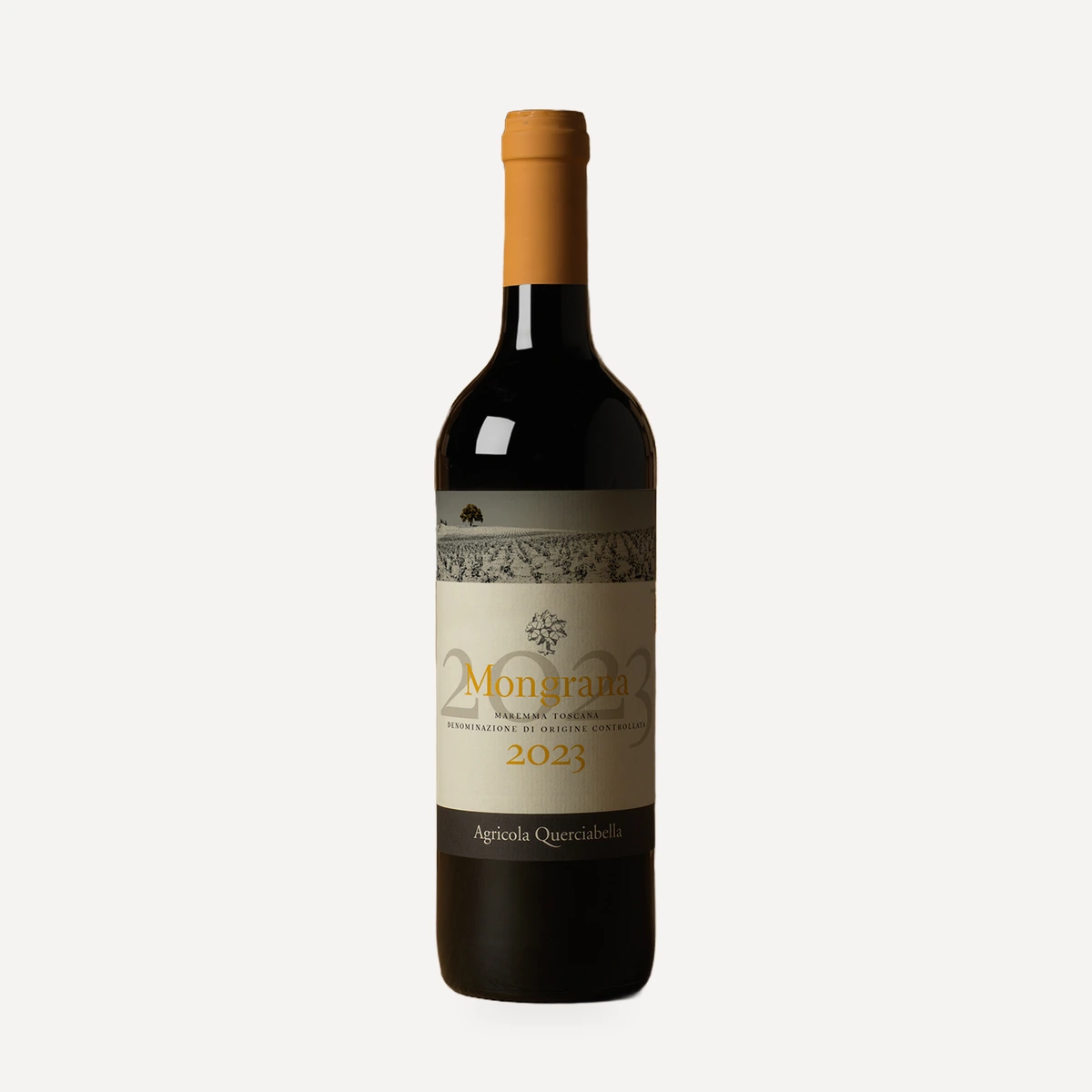
Every vintage carries a different photograph. The 2023 label shows Querciabella’s Alberese vineyards, photographed in 2024 by Emanuele Costantini; the page also presents the changing label images for every vintage from 2005 through 2022.