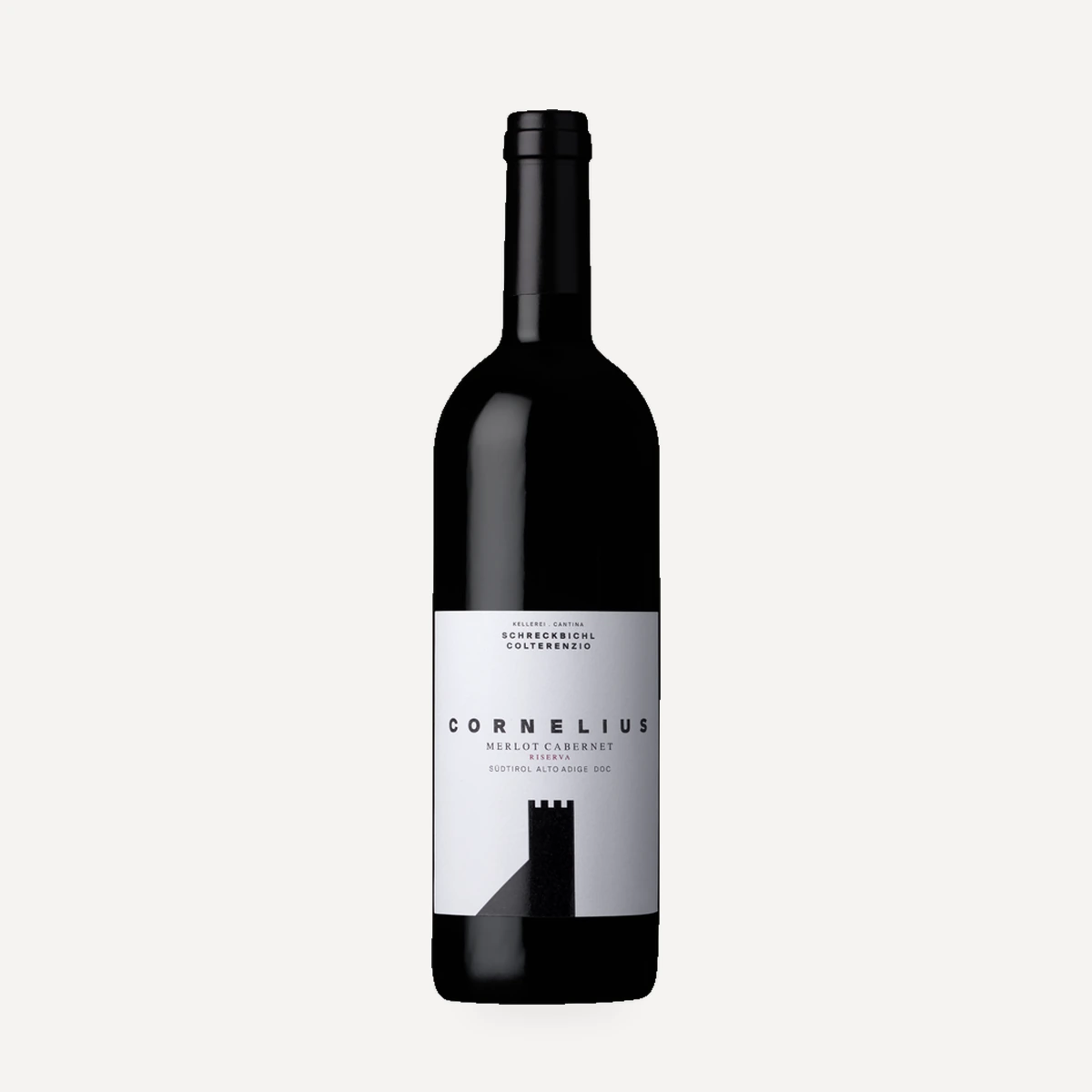
About this wine
Vineyard and terroir
The Merlot and Cabernet come from south-west-facing vineyards at 250–430 metres above sea level. The morainal and alluvial soils contain eroded porphyry. The espalier-trained vines are 15–20 years old and planted at a density of 5,000 vines per hectare. Yield is 40 hl/ha.
Grapes
A blend of Merlot and Cabernet.
Vinification
The crushed grapes undergo alcoholic fermentation, followed by a further 7–10 days of skin maceration. The wine is transferred to oak barriques for malolactic fermentation. The two varieties are blended in spring. The finished blend is lightly filtered before bottling.
Ageing
Following the spring blending, the wine matures for 14 months in small oak casks. It then ages for a further year in bottle before release.
Technical data
2023 vintage: 13.5% alcohol, 5.2 g/L total acidity and 0.8 g/L residual sugar.
Tasting profile
Deep red in colour. The bouquet combines ripe berries and cassis with a subtle, well-integrated oak note. Black cherry and spice define the palate, supported by assertive yet supple tannins. Full-bodied, balanced and rich, with a long finish.
Serving and pairing
Serve at 16°C. Pair with rare roast beef and its accompaniments, rich casseroles, game or mature cheeses. Cellaring potential is 10–15 years.
Label / history
The wine takes its name from Cornelius, a Roman conqueror and winegrower said to have settled in the Colterenzio area around 15 BC and founded the Cornelianum estate, from which the name Cornaiano derives. Cornelius is conceived as an elegant Bordeaux-style blend of Merlot and Cabernet.