History
Mario Bollag’s path to Montalcino
Mario Bollag was born in Basel, Switzerland, to a Swiss lawyer. He initially followed a path toward law but turned instead to art and travel. While studying art in Florence, he developed a lasting attachment to Tuscany. His subsequent travels included work as a ski instructor in California and, during the 1970s, five years in Haiti as a cargo pilot for Haiti Air Inter.
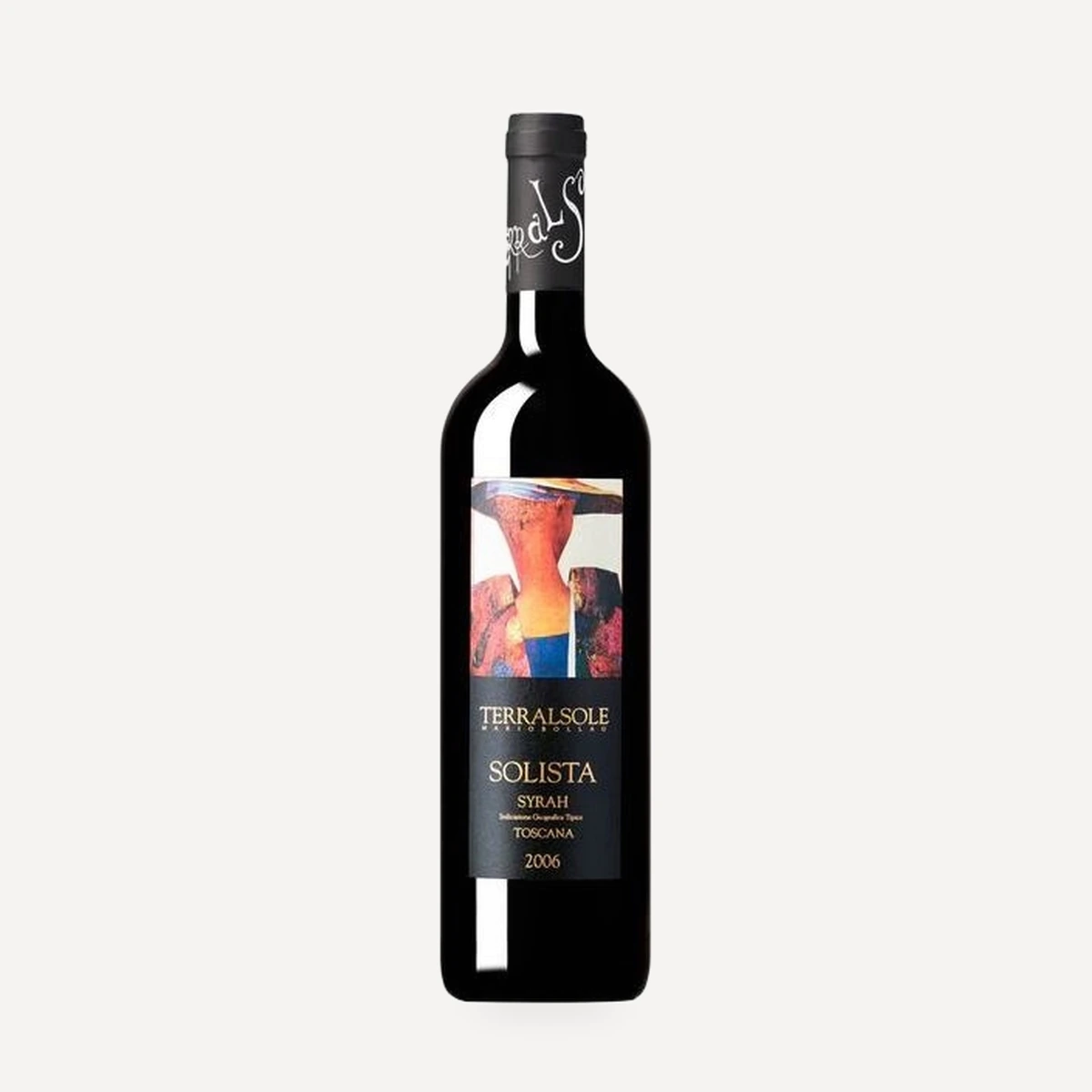
Haiti’s art scene became a formative influence. Bollag established close relationships with master painters, and their work later appeared prominently on Terralsole labels. After returning to San Francisco, he founded a successful tour and travel business, but his interest in Tuscany eventually brought him back to Montalcino.
Il Palazzone and the first Brunello
Back in Montalcino, Bollag bought an old farmhouse and established his first winery, Il Palazzone. He released his first Brunello there in 1990. He subsequently sold Il Palazzone to pursue a new project intended to express the different terroirs of Montalcino through estate-grown wines.
1996: Terralsole takes shape
After the sale, Bollag secured two vineyard properties in Montalcino: Pian Bossolino and Fonte Lattaia. In 1996 he broke ground on Terralsole, conceiving the estate as a meeting place for winemaking, visual art and music. The Terralsole Villa and modern cantina were constructed from the ground up within a 12-hectare estate of rolling vineyards and old olive trees.
2000: the first Terralsole Brunello
The first Brunello bearing the Terralsole name was released from the 2000 vintage. The estate developed its production around the complementary characters of its two sites: the cooler, higher Pian Bossolino property and the warmer, lower Fonte Lattaia property.
Athena Tergis joins the estate
Athena Tergis arrived in Montalcino and joined Terralsole in 2003, making the town her home from 2004. A fifth-generation San Franciscan and internationally touring Irish fiddle player, she brought music into the estate’s creative identity and assumed a central role in its activities. She and Mario have raised two daughters while managing Terralsole alongside their respective artistic careers.
Evolution of vineyard management
Organic methods formed part of the approach from the estate’s early years, followed by a formal three-year conversion that culminated in full biological certification in 2018. Vineyard management progressively moved away from extensive tillage and heavy machinery toward preserving living soil and sustaining an indigenous ecosystem between the rows.
The effects were already apparent during the severe drought of 2017, when the vineyards showed improved vigour and resilience. Athena associated the change with greater complexity, concentration and balance in the resulting wines. Jacqueline Ouellet, who joined the estate in 2017 as an intern and industry professional, documented this transition in an interview with Athena.
Recent development
During the COVID period, experimentation with older and younger vintages of Sangiovese, Cabernet Franc, Syrah and Merlot led to Senza Età, conceived as a one-time bottling. Athena later launched Wine Wellness, an educational initiative connecting Brunello with the food, habits and natural lifestyle of Italy. Terralsole also expanded its visitor programme to include vineyard and cellar tours, tastings, private dining, cooking classes, accommodation, bespoke winemaking experiences and custom labels.
Terroir
Terralsole occupies 12 hectares in the southern part of the Montalcino appellation, on gently rolling countryside planted with vineyards and old olive trees. The winery is situated on Montalcino’s southeastern slope, approximately 15 minutes from the town. Its vineyards are divided between two properties with contrasting elevations, exposures, soils and microclimates.
Pian Bossolino
Pian Bossolino surrounds the Terralsole Villa on the cooler southeastern slopes of Montalcino. Its vineyards lie at approximately 366 metres and benefit from cooler conditions and strong ventilation. Marl, limestone and metamorphic composite material characterize the soils; the vineyard is also described as limestone-rich. The combination of altitude, ventilation and soil allows Sangiovese Grosso to ripen slowly and evenly, retaining acidity and developing expressive aromas, floral character, spice and a refined structure.
Fonte Lattaia
Fonte Lattaia lies at approximately 229 metres on warmer southwestern slopes. The vines face southwest, under warmer and drier conditions than Pian Bossolino. Marine deposits and clay—and, more broadly, clay-rich soils—provide the site’s geological basis. This environment gives Sangiovese Grosso greater robustness, firm structure and depth. The property lies near the Abbey of Sant’Antimo, and its vineyard contains a secluded hillside guest cottage overlooking the surrounding vines and hills.
The estate uses the contrast between these two sites as a source of balance: Pian Bossolino contributes cooler-climate finesse and aromatic precision, while Fonte Lattaia supplies warmth, power and structural depth.
Winemaking
Terralsole follows organic and sustainable viticulture, having completed a three-year conversion to full biological certification in 2018. Mostly organic vineyard practices had been used from the estate’s beginning.
Planting decisions are made site by site, matching rootstocks to Montalcino’s different terroirs. Vineyards are planted at a high density of 5,000–7,000 vines per hectare. Mario Bollag’s objective is to make each vine carry fewer grapes while improving fruit quality. Canopy management is carried out carefully, and all estate wines are grown from Terralsole’s own vineyards.
Soil management has shifted from extensive tillage—formerly used to break up clay and move nutrients toward the roots—to protecting the life already present in the ground. By 2017, the previous five years had brought an increased emphasis on cultivating a rich indigenous ecosystem in every row. This more labour-intensive approach favours soil vigour and natural support for the vines instead of heavy reliance on machinery.
Natural fertilization includes sheep manure. Rotating cover crops are used, while bees support pollination and wider biodiversity. The estate also emphasizes preservation of living soils and of the property’s broader biological diversity. These practices produced vines described as more vigorous and resilient during the severe 2017 drought.
Mario and Athena personally supervise harvest. Grapes are picked by hand at peak ripeness and placed in small boxes so that the skins and fruit arrive intact at the cantina.
The Terralsole Villa and modern cantina were built from the ground up on the estate. Production combines temperature-controlled equipment and gravity handling with maturation in French oak.
Hand-picked bunches arrive in small boxes intended to protect the berries and skins. The grapes are gently destemmed, then moved by gravity into temperature-controlled stainless-steel tanks. The tank system supports a cold maceration designed to increase the extraction and preservation of colour, aromas and bouquet before or during the fermentation stage.
Brunello is matured exclusively in French oak. The cellar uses tight-grained, 600-litre tonneaux from the Allier forest together with custom 5,500-litre large-format vessels made in Sicily from imported French oak. The combination is intended to provide slow, even maturation. Different barrel sizes are selected for Rosso and IGT wines according to the profile sought for each wine.
The annual Brunello brings together Sangiovese Grosso from Pian Bossolino and Fonte Lattaia. Riserva is made only in selected vintages from hand-selected grapes and the most exceptional barrels, with longer maturation. Single-vineyard Brunellos from either site—or both—are reserved for particularly expressive years. Terralsole regards ten years as the ideal starting point for mature, elegant Brunello, beyond the stated minimum five-year maturation period.
Philosophy
Terralsole places terroir, balance and elegance at the centre of its work. Rather than treating one part of Montalcino as inherently superior, it seeks structure and equilibrium by working with the complementary personalities of Pian Bossolino and Fonte Lattaia. Its model of Brunello combines the aromatic character of pure Sangiovese Grosso with supple fruit, acidity and tannic structure.
The estate’s stated approach begins in the vineyard. Rootstocks are matched to individual growing conditions, planting density is used to reduce the crop carried by each vine, and organic methods aim to maintain living soils and biodiversity for future generations. Vintage differences determine whether fruit becomes the annual two-site Brunello, a Riserva selection or a limited single-vineyard cru.
In the cellar, Terralsole frames winemaking as a balance between artistic judgement and technical precision. Gravity movement, temperature-controlled tanks and carefully selected French-oak formats are combined with long maturation. The house regards ten years as the point at which Brunello begins to show the elegance it seeks.
Art and music are integral to the estate’s identity rather than decorative additions. Mario’s visual-art background and relationship with Haitian painters, together with Athena’s life as a professional musician, inform a conception of each vintage as a creative expression of place. Family participation extends from vineyard and harvest oversight to hospitality, education and culinary programmes.
Wines
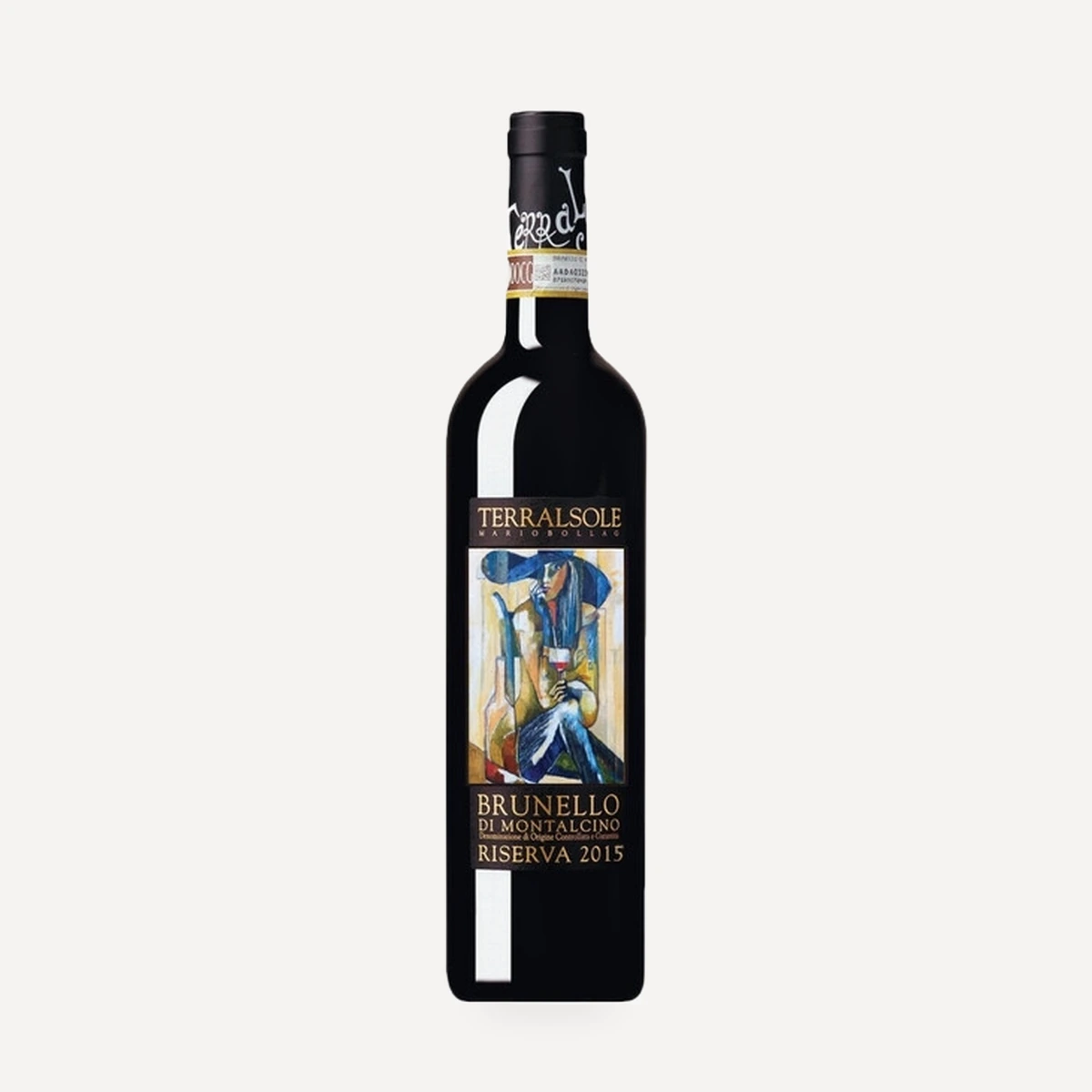
Brunello di Montalcino Riserva DOCG