Storia
The social foundations: 1919–1958
Arnaldo Rivera was born in Castiglione Falletto on 13 December 1919. He experienced the war and the liberation at first hand, began teaching at the village primary school in 1949 and was elected mayor in 1951. Teaching remained his principal occupation for 28 years, while repeated electoral victories kept him in municipal office for 36 years.
During the mid-1950s, Rivera began promoting cooperation among the winegrowers of the Barolo area. Earlier village cooperatives had disappeared, exports were limited and the Barolo market was stagnant. Smallholders brought their grapes to Piazza Savona in Alba—now Piazza Michele Ferrero—where last-minute purchasing by brokers left them with little bargaining power and the risk of having to return home with unsold fruit. Memories of agricultural bankruptcies during the 1920s further increased distrust of cooperative ventures.
Rivera visited outlying settlements and spoke with parish priests and village officials to build support. His objective was both economic and social: democratic cooperation, proportional distribution of returns and protection of growers who were otherwise subordinated to intermediaries.
Founding Terre del Barolo: 1958
Terre del Barolo was founded in Castiglione Falletto on 8 December 1958 with 22 members. Its valley-floor location was selected because roads from the members’ villages converged there. Those villages were Castiglione Falletto, Barolo, Grinzane Cavour, Serralunga d’Alba, Diano d’Alba, Monforte d’Alba, La Morra, Verduno, Novello and Roddi. Their position within the Barolo-growing territory inspired the name Terre del Barolo—“Lands of Barolo.”
Rivera overcame hostility and initial suspicion to establish the cooperative as an instrument of rural solidarity. Membership grew from 22 to almost 500 families within a few years. The cooperative helped protect household incomes, counter the migration of rural residents to the industrial cities of northern Italy and strengthen the economic foundations of Barolo and the Langhe.
Rivera’s continuing work: 1960–1987
In spring 1960 Rivera hired winemaker Armando Cordero, who had recently returned from years of work in Brazil and was considering emigrating again because he could not find employment. Rivera subsequently served as president of the Consorzio del Barolo e Barbaresco from 1980 to 1983; Renato Ratti succeeded him.
At the cooperative’s twenty-fifth-anniversary celebrations in 1983, Rivera reaffirmed his belief in a democratic social enterprise that distributed returns according to members’ participation and rejected individual privilege as the basis of economic relations.
Rivera and his wife, Ester Rinaldi, had no children, but his work placed him in a position of responsibility toward approximately 500 grower families. He died on 10 January 1987 after returning from a winery board meeting.
Creation of Arnaldo Rivera: 2013 onward
The Arnaldo Rivera project began with the 2013 vintage. It was conceived by grower-member families as a tribute to the cooperative’s founder and as a focused expression of selected native varieties and sites across the Barolo area’s eleven communes. The project operates under a formal agreement between the winery and participating grower-owners.
The protocol identifies small parcels—averaging no more than 5,000 m²—in distinguished M.G.A.s and denominations. Agronomists, biologists and geologists monitor each site throughout the growing cycle. A vineyard or an entire vintage can be excluded when weather, vine health or fruit quality fails to meet the project’s standard. Vineyard practices, vinification equipment, fermentation and wood use are coordinated to reduce variables that might obscure the identity of the fruit and its place of origin.
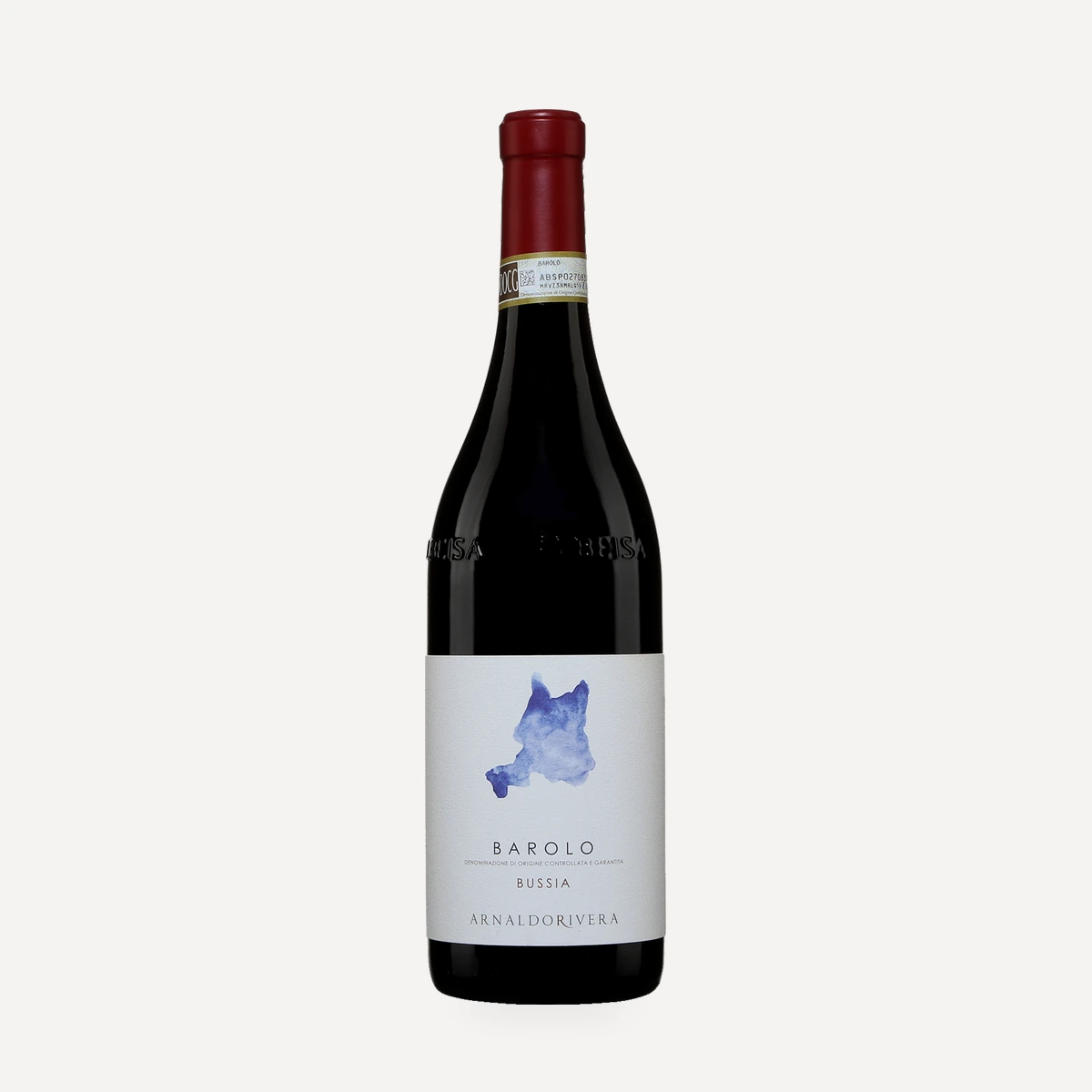
The resulting portfolio connects the cooperative tradition established in 1958 with individually characterised vineyards and native varieties. It includes a Barolo blended across the denomination’s communes, a group of M.G.A. Barolos and wines based on Dolcetto, Barbera, Pelaverga Piccolo, Freisa and Nascetta.
Terroir
Regional setting and climate
The Langhe extend for approximately 40 km south of the Tanaro, with Alba as their principal centre. The name is linked to lingua, referring to the tongue-like form of the ridges. The landscape consists of successive hills and ridges formed from an ancient seabed.
The Barolo zone is influenced by both the Alps and the Mediterranean. The Alps provide protection from prevailing westerly winds and adverse weather, while humid Mediterranean air carries warmth northward from Liguria. The continental pattern brings cold, snowy winters, hot summers and long autumns.
Geological development
The Barolo area rests on sedimentary rocks formed mainly during the late Miocene. Its succession of ancient marl, sand and sandstone, younger marl, gypsum and marsh deposits records more than six million years of sedimentation and Alpine uplift within the former Ligurian-Piedmontese Tertiary Basin.
The wider Langhe sequence began approximately 30 million years ago in the lower Oligocene. Shallow tropical marine conditions produced the Molar Formation; subsidence about 25 million years ago then created a strait that locally exceeded 600 m in depth. By around 12 million years ago, sandstone and marl beds had accumulated across what are now the Upper and Asti Langa.
Three formations are central to the featured vineyards:
- Lequio Formation: the oldest formation represented in the Barolo area, underlying Serralunga and part of Monforte. It alternates compact, pale marl with sandy strata that can form well-cemented Langa stone.
- Diano Sandstone: resistant sandstone formed when submarine landslides transported coastal sand to deeper seabeds. Its permeable beds can hold and conduct water above less-permeable marl.
- Sant’Agata Fossil Marl: fine silty and clayey marine sediments deposited under calm conditions. It varies from thick typical marl to sandy and finely laminated forms.
Around 6.5 million years ago, the closure of the Strait of Gibraltar isolated the Mediterranean and caused severe evaporation. Gypsum beds developed on the western slopes of the La Morra–Verduno ridge. Later lagoons, marshes and river-borne mud, sand and pebbles formed the Cassano Spinola deposits near the north-eastern boundary of the Barolo area.
Site diversity
The selected vineyards range from 220 to 420 m above sea level and encompass white, young, shallow soils as well as deeper, evolved brown soils. Their substrates include laminated, typical and sandy Sant’Agata Fossil Marl, contacts between marl and Diano Sandstone, and the older Lequio Formation. Differences in slope, aspect, water retention, wind exposure, altitude and proximity to the Tanaro and Talloria valleys produce markedly different ripening conditions within a geographically compact area.
Vinificazione
Arnaldo Rivera operates through a formal protocol shared by the winery and participating grower-owners. Selected parcels average no more than 5,000 m² and must combine recognised site identity with pedological and climatic conditions suited to high-quality fruit.
An internal team of agronomists, biologists and geologists follows each vineyard throughout the annual cycle. Vine behaviour is assessed in relation to soil so that cultivation timing, methods and any nutritional additions can be adapted to the individual parcel. Mineral fertilisers are categorically excluded.
Grass cover is managed mechanically, without chemical herbicides. Pruning is chosen according to vine age, health and vigour. Canopy work—including shoot removal, lateral-leaf removal and defoliation—is timed according to weather and plant development. Shoot tops may be tied together or trimmed gently with the aim of limiting impact.
Green harvesting is not imposed through a fixed formula. Bunch selection responds to the condition and crop development of each site in each vintage. Protection against flavescence dorée requires rapid removal of infected vines.
Harvest dates are determined plot by plot, with particular attention to phenolic maturity and to the substantial differences among vineyard sites. Unfavourable weather, compromised vine health or fruit that fails the project’s quality threshold can lead to the exclusion of a particular vineyard or vintage from the Arnaldo Rivera label.
Grapes accepted under the Arnaldo Rivera protocol receive priority on arrival and are destemmed promptly. The winery has invested in micro-fermenters and a range of French-oak vessels: 10, 15, 25, 30 and 50 hl casks and 500- and 700-litre tonneaux.
Alcoholic fermentation uses wild yeast strains native to the Barolo area. For the Barolos, fermentation and skin maceration take place in temperature-controlled stainless steel for approximately three weeks. Malolactic fermentation occurs spontaneously in wood.
Barolo ageing continues for an extended period in traditional casks or tonneaux according to the needs of the individual site. The current M.G.A. Barolos generally mature for approximately 30 months in cask. The project’s guiding cellar principle is minimal intervention, with vineyard practices, fermentation choices and wood use coordinated to preserve the identity of the fruit and its origin.
Filosofia
Arnaldo Rivera presents wine as a collective expression of grower knowledge, native varieties and individual places. Its formal protocol is intended to reduce the influence of avoidable variables—from vineyard management to vinification techniques and wood—so that fruit and origin remain central.
The project combines cooperative responsibility with strict parcel selection. Growers accept continuous technical monitoring and the possibility that a vineyard or vintage will not be released. Decisions such as pruning, canopy work, green harvesting and picking dates respond to individual vine condition and seasonal development rather than a fixed recipe.
Minimal cellar intervention, native wild yeasts and spontaneous malolactic fermentation serve the same objective: retaining the clearest possible expression of fruit and provenance. The range also functions as a tribute to Arnaldo Rivera’s model of cooperation—shared economic progress, democratic participation and value returned to the grower community rather than concentrated through individual privilege.
Vini
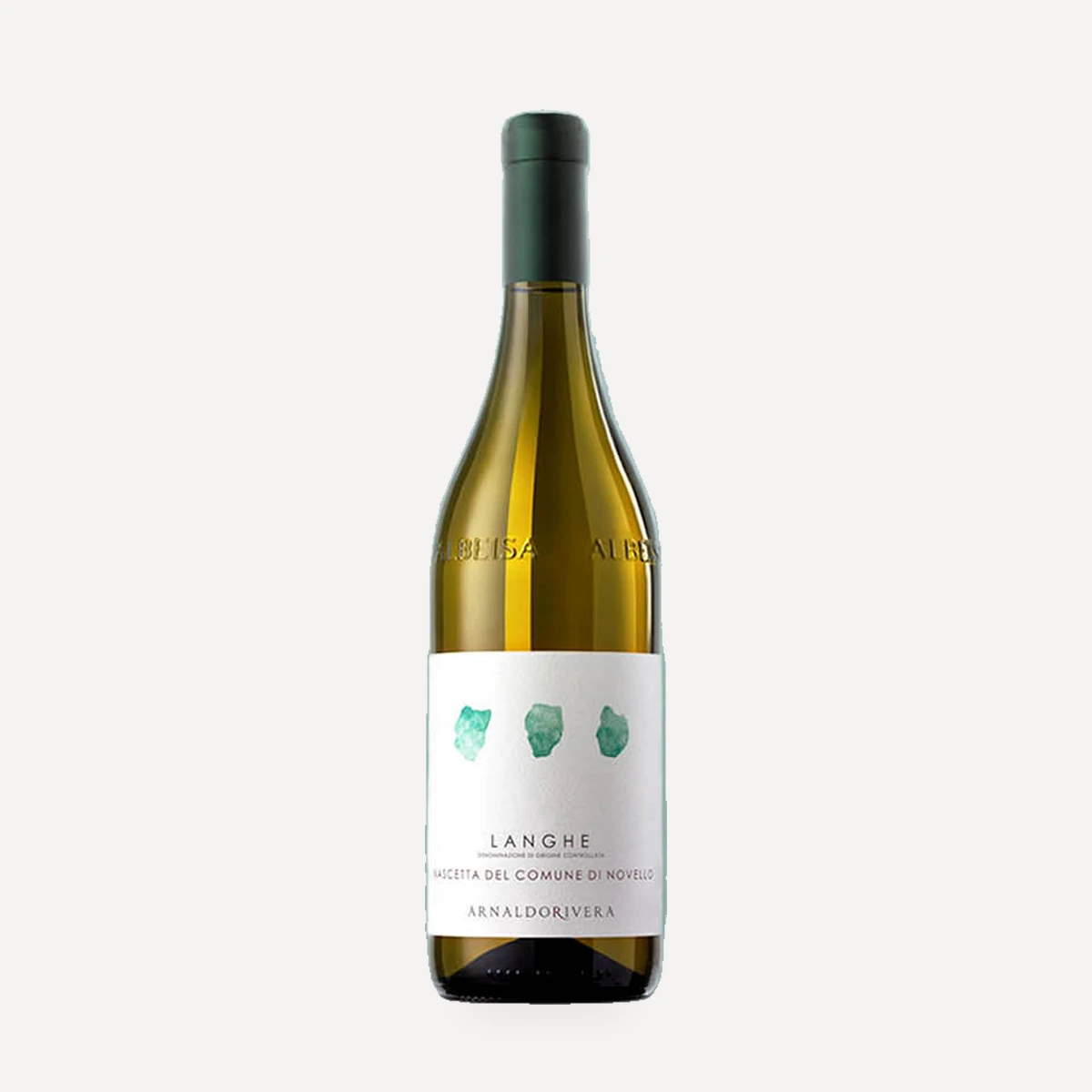
Langhe Doc Nascetta del Comune di Novello
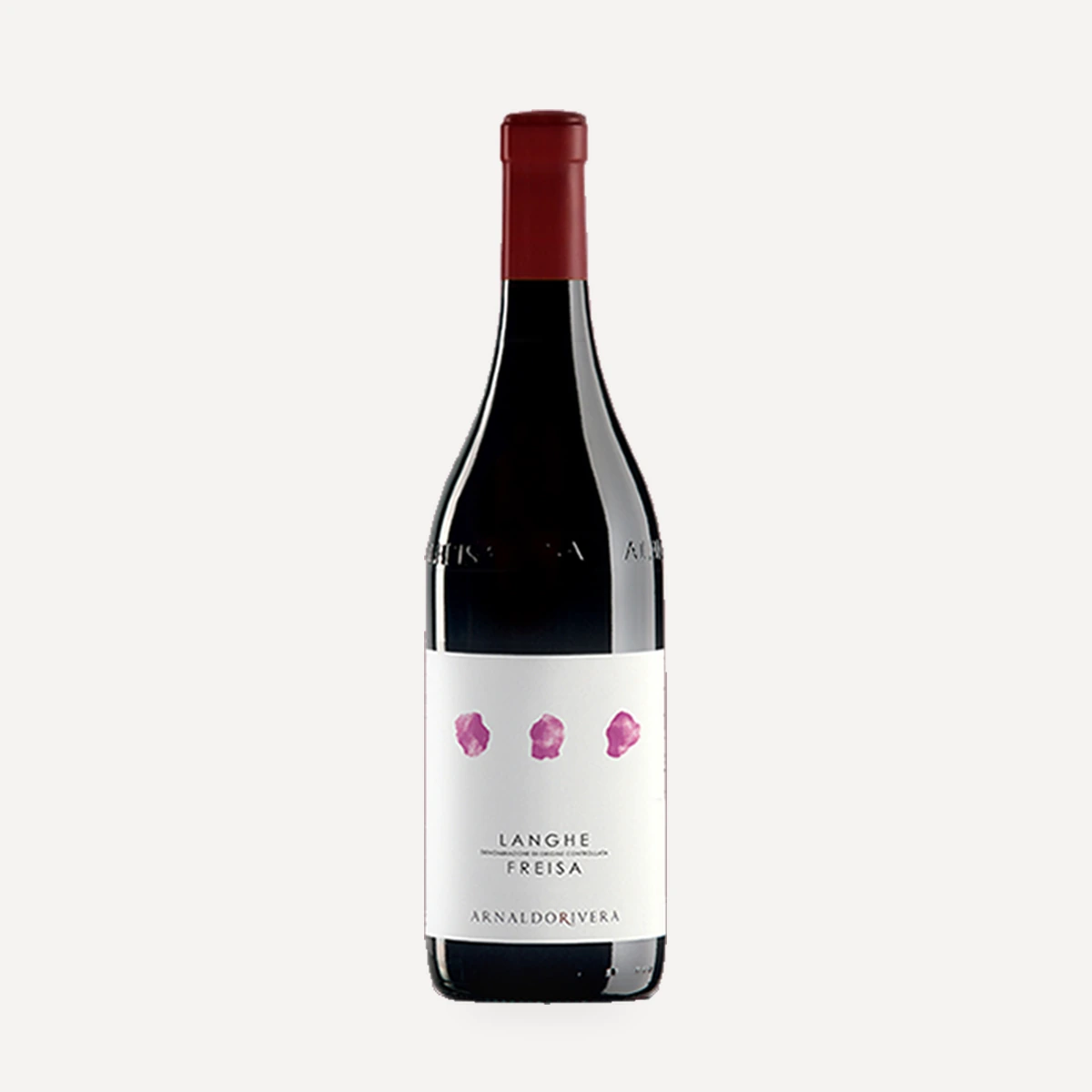
Langhe Doc Freisa