Storia
Family roots in viticulture
The Nutricato family’s viticultural tradition is traced through four generations to great-grandfather Paolo in the early 19th century. The head of a traditionally patriarchal family, he devoted his working life to vineyards and passed his knowledge of vines and wine to his many descendants.
One of Paolo’s sons, Michele, pursued agricultural studies. Around the middle of the 20th century he joined the Ferrazzi farm, a large agricultural enterprise in Supersano. Maurilio Corrado, the maternal grandfather of the present generation, also worked for Ferrazzi. He travelled across Salento by motorcycle, buying and trading selected grapes on the farm’s behalf.
This was a prosperous period for winegrowing in Supersano. Vineyards covered much of the surrounding countryside, agriculture provided a livelihood for local families, and Salento produced substantial volumes of deeply coloured, alcoholic blending wine for buyers in northern Italy and France.
Decline of the local vineyard landscape
Agriculture was subsequently abandoned by many residents in favour of other occupations offering better living conditions. Traditional knowledge receded, while subsidies encouraged larger landowners around Supersano to uproot vineyards and replace them with olive trees. The local agricultural landscape was consequently transformed.
Michele’s children nevertheless preserved the family’s connection to farming. One of them, uncle Paolo, became a full-time farmer. His brothers continued agricultural work as a secondary occupation and passed their practical knowledge to their children.
Recovery of abandoned vineyards
The next Nutricato heirs—Gabriele, Paolo and Sara—prepared for agricultural careers. Sara graduated in Agronomy from the University of Bologna. Paolo earned a diploma in agricultural techniques from the G. Presta institute in Lecce and qualified as a sommelier. Gabriele received a diploma in agricultural techniques from the Columella Institute in Maglie and enrolled in Viticulture and Enology at the University of Cesena.
After several years away, Gabriele left university and returned home. Together with his friend Raffaele, he began tending old, abandoned vineyards. What started as a personal project became full-time work. A few years later, Gabriele and his siblings were managing 3 ha of vineyards.
Foundation in 2014
Gabriele, Paolo and Sara founded Cantina Supersanum in 2014. The family assumed direct responsibility for the complete chain of work—from cultivating the vines to vinification and sales—with attention to the sensory integrity of the wines and the quality of each production stage.
The new enterprise combined inherited local practices with contemporary agricultural and cellar techniques. Its vineyards were recovered from abandonment and managed with an emphasis on soil microbiology, recycling agricultural residues and reducing conventional chemical inputs. This approach subsequently developed into an integrated system of earthworm composting, compost tea, microbiological plant protection and low-input cellar work.
Terroir
Supersano
The estate’s old, fragmented vineyards lie in several parts of the Supersano countryside in the province of Lecce, near the foot of the plateau known locally as Madonna di Coelimanna or S. Eleuterio.
The named Don Mosè site is situated in the Supersano countryside at approximately 110 m above sea level. Its soil is clay-rich and contains substantial organic matter. During summer ripening, the neighbouring plateau blocks direct sunlight roughly two hours before sunset. The resulting day–night temperature difference is reported at 10–15°C.
Ruffano
Other vineyards lie in the Ruffano countryside at approximately 108 m above sea level. Madonna della Serra shades these vineyards about two hours before sunset during the summer ripening period, likewise producing a stated diurnal range of 10–15°C.
The Ruffano soil is red, with its colour associated with iron hydroxide. It also contains aluminium, clay minerals—particularly illite and kaolinite—and substantial organic matter. Summer temperatures can rise to approximately 40°C in July and August.
Vinificazione
Cantina Supersanum follows organic and regenerative principles intended to reactivate natural cycles and maintain soils rich in microbial and mineral life. The system emphasizes local inputs, recycling, crop rotation and alternation, appropriate mechanization, fermented preparations and reduced dependence on fossil-fuel-derived products.
Agricultural residues and winery by-products—including grape marc, stalks, lees, prunings and other plant material—are processed with earthworms to make compost. This material is returned to the vineyards to improve soil structure and is also used to prepare biological plant-protection treatments.
For compost tea, the estate’s compost is macerated and aerated to develop a preparation rich in regenerative microorganisms. It is intended to counter organisms associated with downy mildew, powdery mildew and botrytis. The approach uses antagonistic organisms produced during composting, including thermophilic bacteria of the genus Bacillus, while also stimulating antagonistic organisms already present in the soil. These compete with pathogenic bacteria and fungi for space and nutrients, may produce antibiotic compounds and are intended to induce resistance in the plant through microbial activity around the roots.
Dr. Massimo Zaccardelli of the C.R.A. Research Centre for Horticulture in Pontecagnano collaborated on the development of these microbiological methods and analysed the estate’s compost.
At Don Mosè, legumes, grasses and spontaneous Mediterranean plants alternate between the alberello-trained rows. At the Ruffano sites, controlled spontaneous ground cover is maintained; shallow harrowing may be carried out in July and August when temperatures approach 40°C. Fertility comes from manure pellets or earthworm humus produced by recycling organic residues.
The more recent vineyard descriptions limit metallic copper to less than 400 g/ha/year, use antagonistic microorganisms for other plant-protection treatments and report that sulfur had not been used for several years. Harvesting is manual, normally early in the morning, with grapes placed in perforated 20 kg crates for delivery to the cellar. Only selected grapes proceed to vinification.
Production follows deliberately slow cycles associated with artisanal natural wine. Grapes are selected before processing, and settling and racking are timed with the seasons and lunar cycles. Harvesting is manual in the early morning, using perforated 20 kg crates.
The published production records show destemming followed by temperature-controlled skin contact. Depending on the wine and colour, maceration ranges from a few hours to three days; red grapes may receive traditional punch-downs. Pressing is gentle, with a stated pressure of 1 bar for one rosé production. Fermentations in the more recent records last approximately 16–20 days: whites and rosés ferment at 15–18°C, while reds ferment at 20–25°C.
Stainless steel is the principal fermentation and maturation vessel. Wines may remain on fine lees for two to five months, followed by further tank maturation and bottle ageing. Across the described productions, tank maturation ranges from about five to twelve months and bottle maturation from three to six months. High-pressure filtration is avoided, and at least one documented production was bottled unfiltered.
Chemical additions are kept to a minimum. Sulphites are used at levels described as 90% below normally recommended doses, with the long-term objective of eliminating them. Packaging follows the same low-impact approach: closures are made from recyclable sugar-cane-biopolymer bioplastic, finished with handmade coloured shellac capsules. Jute and beeswax were identified as fully biodegradable capsule materials intended for subsequent bottlings.
Filosofia
Cantina Supersanum’s guiding idea is that healthy, balanced crops originate in living soils with strong microbiological and mineral activity. Organic and regenerative agriculture is treated not simply as the replacement of individual products, but as the restoration of natural cycles through locally available resources, recycled biomass and cooperation with the wider agricultural community.
The family seeks to preserve the microbiological balance of its soils and the integrity of the surrounding landscape while combining inherited winegrowing practices with contemporary knowledge. Resilience to climatic stress, reduced dependence on fossil fuels and greater autonomy in producing fertilizers and plant-protection preparations are central objectives.
In the cellar, this becomes a preference for slow cycles, selected fruit, fine-lees maturation, seasonal and lunar timing, minimal additives and the avoidance of aggressive filtration. Consumer health and eventual elimination of added sulphites are stated goals. Environmental responsibility also extends to recyclable or biodegradable packaging materials.
The project is inseparable from the family’s recovery of abandoned vineyards. Restoring these sites preserves both old vines and agricultural knowledge that had been threatened by the widespread replacement of vineyards with olive trees and the movement of local workers away from farming.
Vini
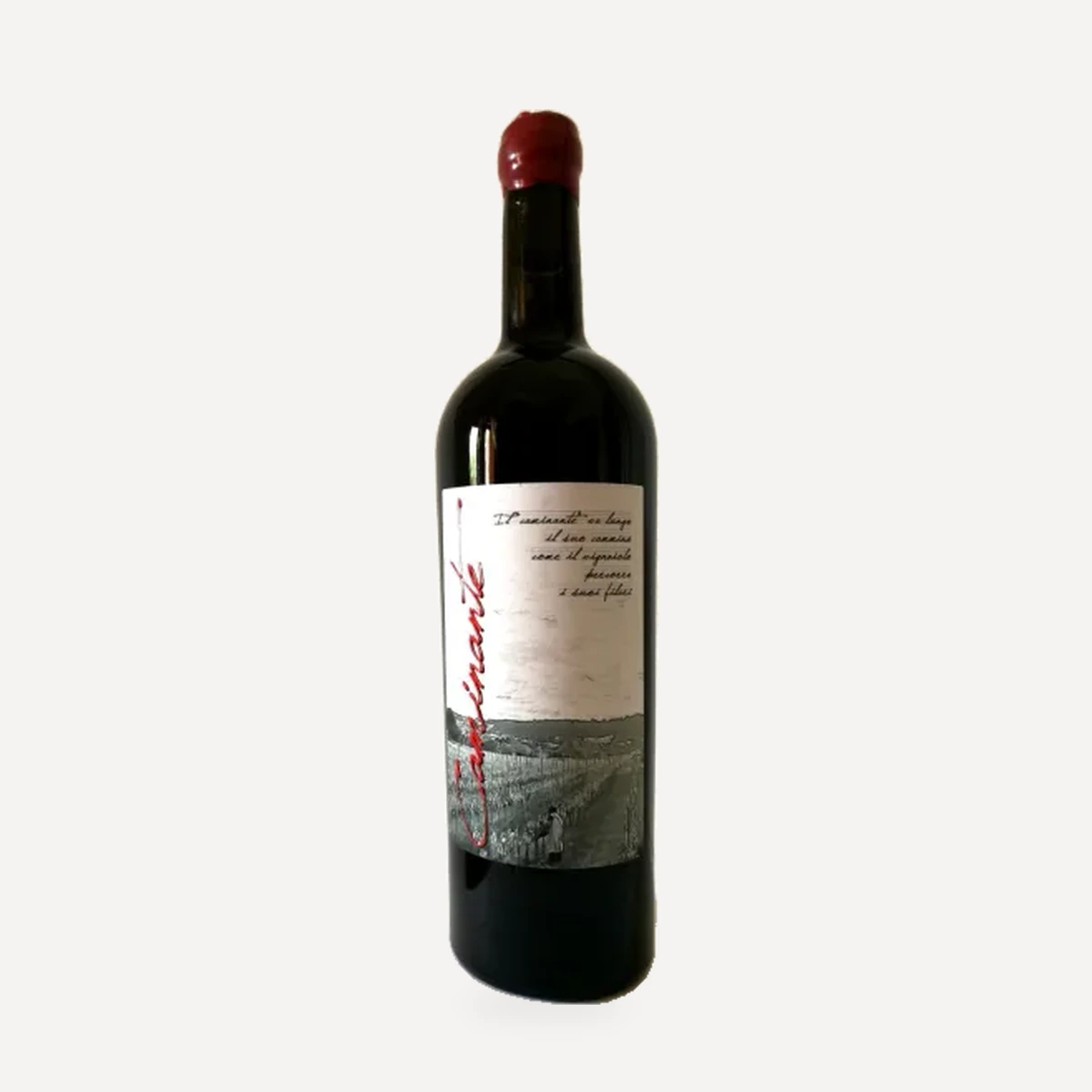
Caminante Red
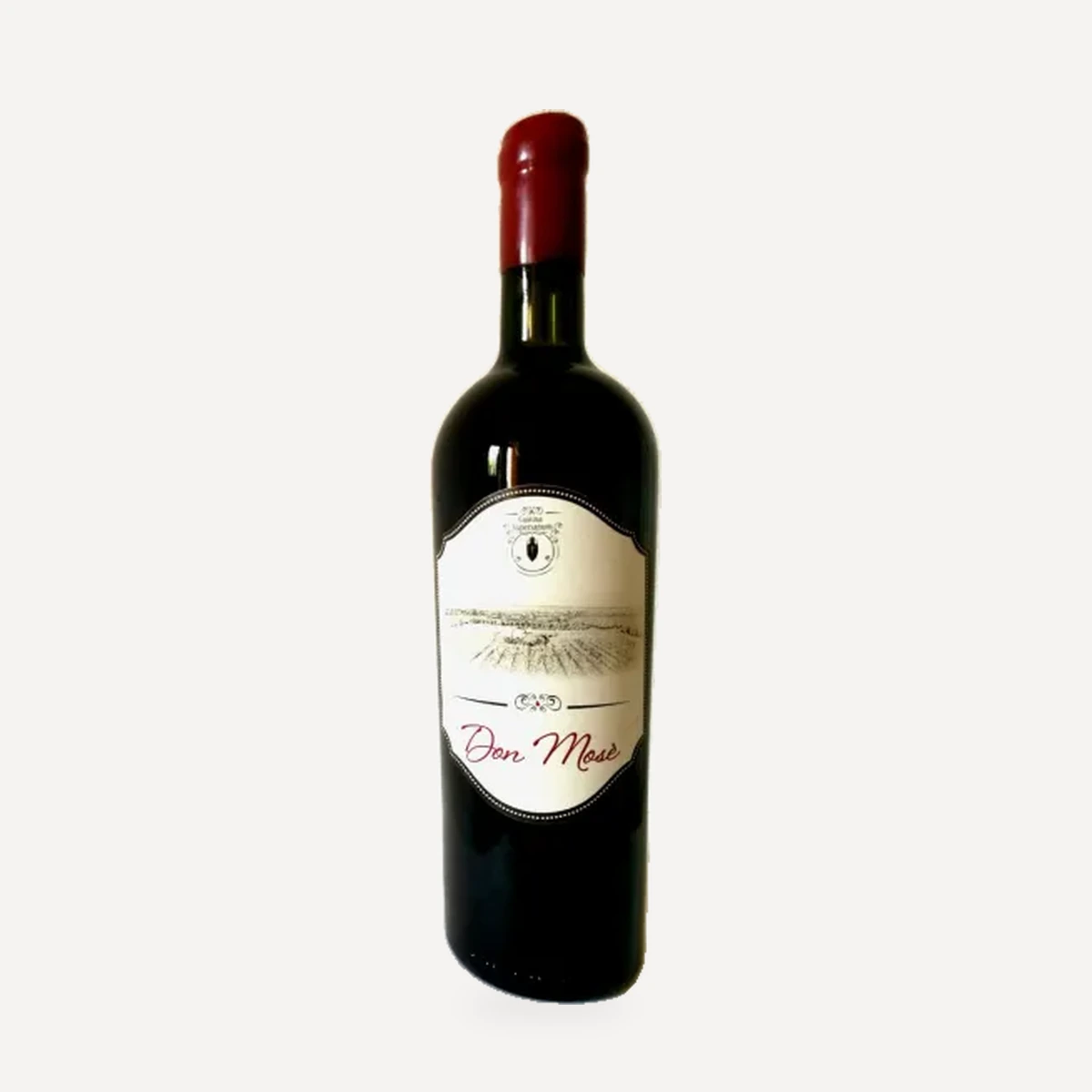
Don Mosè
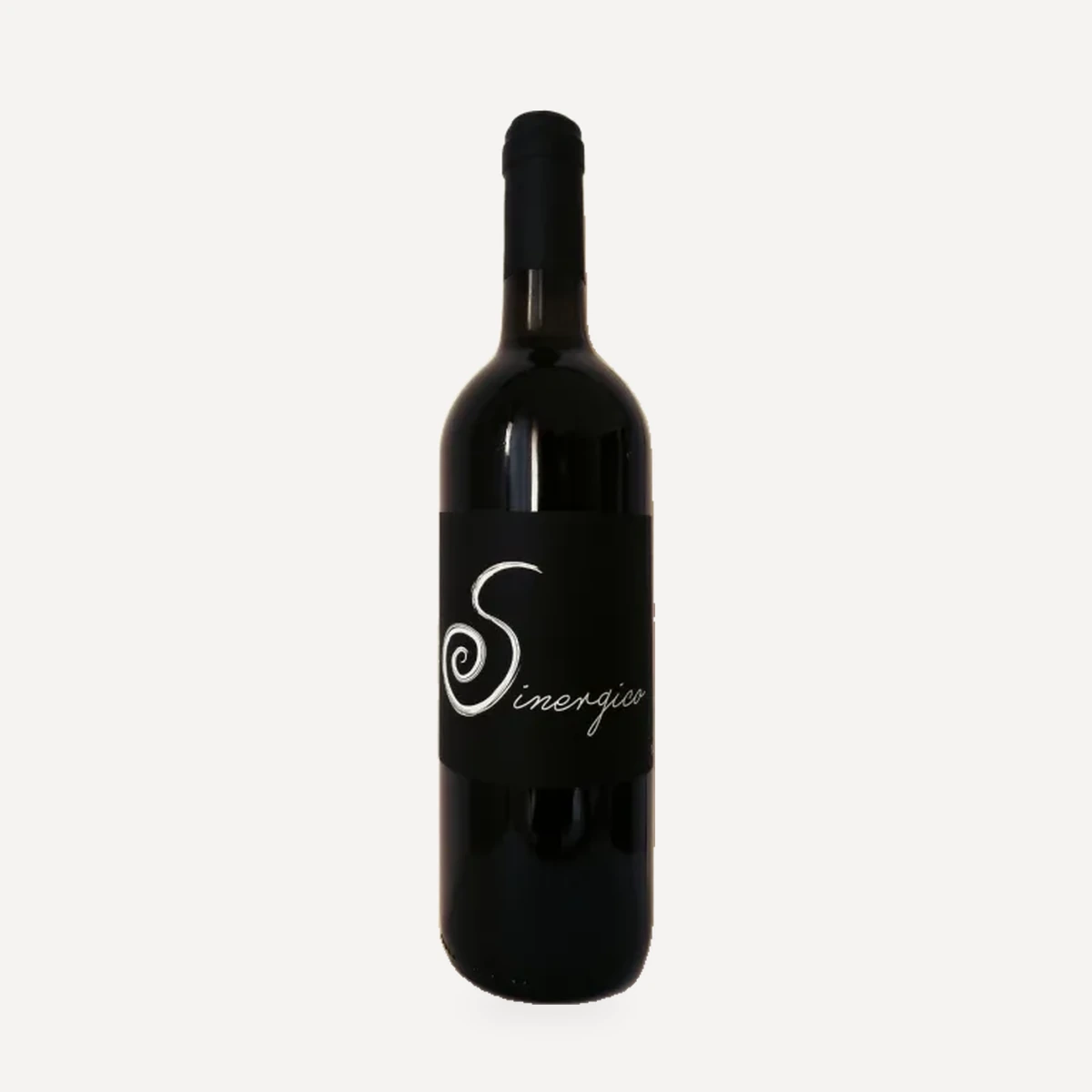
Sinergico Red