Storia
From sharecropping to ownership
The Coccia family began working the property as sharecroppers in 1908. After more than half a century cultivating the land, the family purchased the farm in 1962.
The establishment of Castellinuzza e Piuca
Castellinuzza e Piuca was created in 1985 from a portion of the original farm. Giuliano Coccia took responsibility for the new agricultural enterprise as a direct farmer, working with his wife and their two children. The business remains closely associated with the Coccia family and combines winegrowing with olive cultivation, woodland, livestock and hospitality.
The historic landscape
The agricultural history of the site predates the present estate. Much of the steep land is supported by dry-stone terraces that have existed for centuries, and a stone incorporated into one wall bears the date 1740.
Since 2018, the territory around Lamole has been included in Italy’s National Register of Historic Rural Landscapes, recognized by the Ministry of Agriculture. Castellinuzza e Piuca lies within this landscape in the Chianti Classico production area of Greve in Chianti.
Terroir
Castellinuzza e Piuca lies in the Chianti Classico production area, within the municipality of Greve in Chianti and close to the hamlet of Lamole. Its address is Via Petriolo 21/a, in the hills reached by the road from Greve towards Lamole.
The estate’s terrain is hilly and steep, generally ranging from 400 to 600 metres above sea level. The named Piuca vineyard occupies an especially high position at more than 600 metres. Substantial changes in elevation have made terracing necessary across much of the property. These terraces are retained by characteristic dry-stone walls and make cultivation more demanding.
The soils contain little clay and consist principally of sandstone formed through the breakdown of macigno. The combination of these sandstone-derived soils and the elevated position is associated with fragrant, elegant wines marked by finesse, moderate body, savoury character, drinkability and mineral notes.
The terraced landscape has been maintained for centuries. A stone dated 1740 survives in one of its walls, and the surrounding Lamole territory has belonged to Italy’s National Register of Historic Rural Landscapes since 2018.
Vinificazione
The current wine range is identified as organic and comprises Chianti Classico Annata, Chianti Classico Gran Selezione and IGT Toscano Rosso. Cultivation takes place on steep, high-altitude terraces retained by dry-stone walls, conditions that make vineyard work particularly demanding.
The broader farm incorporates vines, olive trees, woodland and non-intensive cattle husbandry. This mixed agricultural structure preserves multiple uses of the approximately 10 ha property rather than devoting the entire estate to vines.
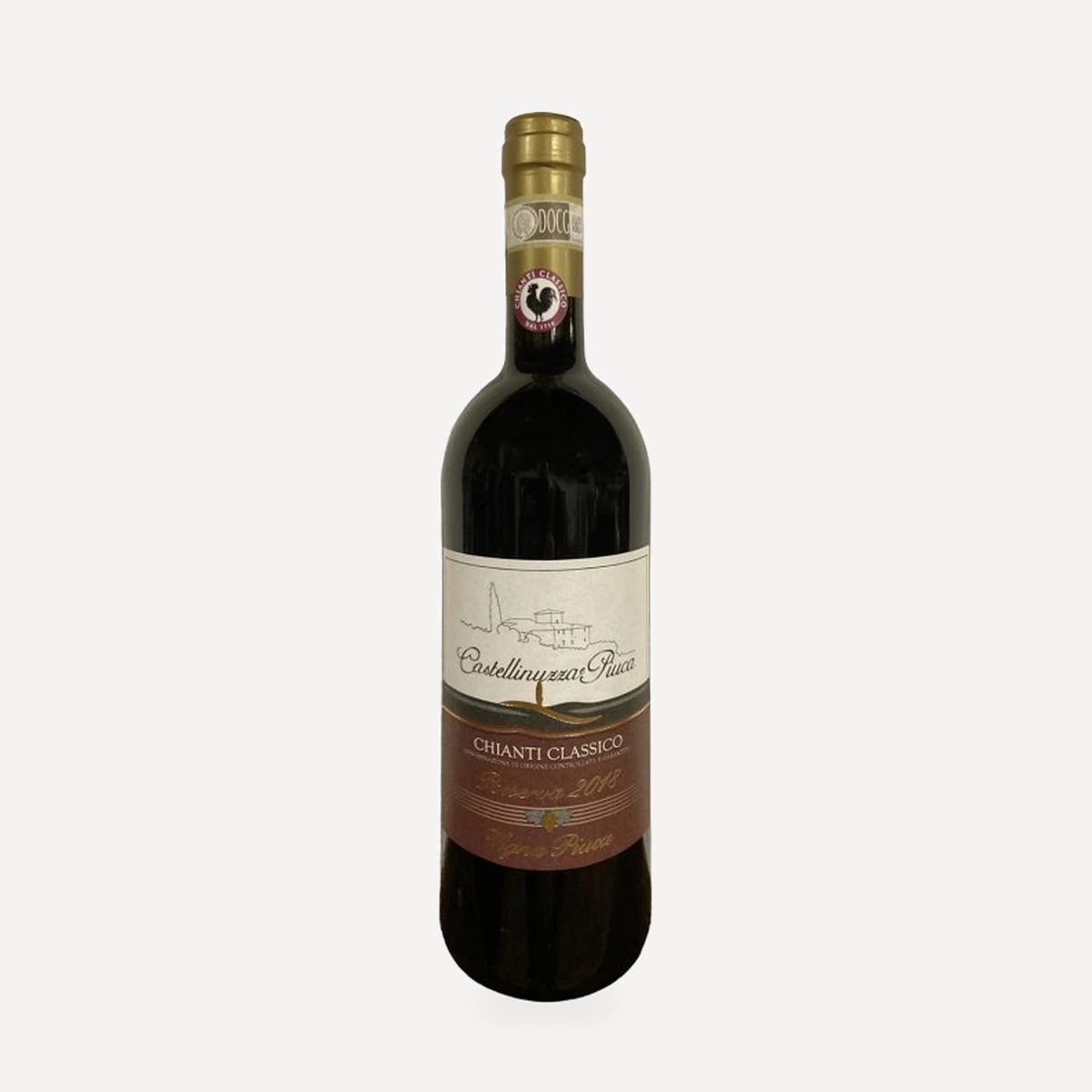
Annual wine production is approximately 110 hl, corresponding to about 10,000 bottles across Chianti Classico Annata, Riserva, Gran Selezione and IGT Toscano.
Cement is part of the cellar’s production approach. Sangiovese selected from the Piuca vineyard for Gran Selezione is vinified by traditional methods in cement tanks. Chianti Classico Annata is matured in cement containers until bottling, which takes place approximately 12–14 months after harvest.
Filosofia
Castellinuzza e Piuca presents winegrowing as both a passion and an art rather than merely an occupation. Its identity is rooted in small-scale mountain agriculture, family participation and the continued cultivation of a difficult terraced landscape.
The estate’s approach connects wine with the whole farm: vineyards share the property with olive groves, woodland, non-intensive Chianina cattle and family hospitality. Its current wines are organic, while traditional cement vessels remain part of cellar practice. Hospitality follows the same family-centred model, bringing together estate wines and oil, home cooking, homemade pasta, house-produced cured meats and meat from the farm.
Vini
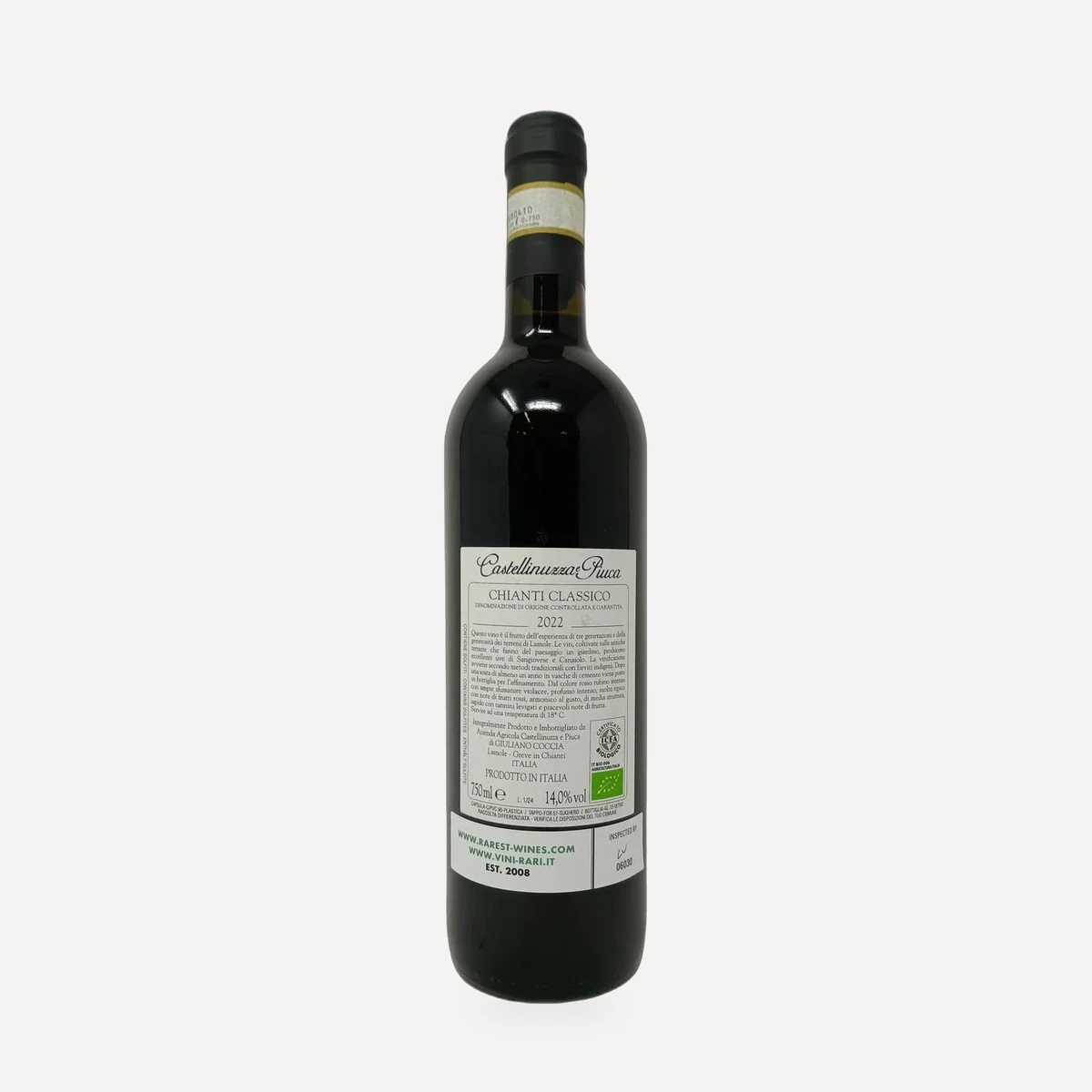
Chianti Classico Annata Biologico
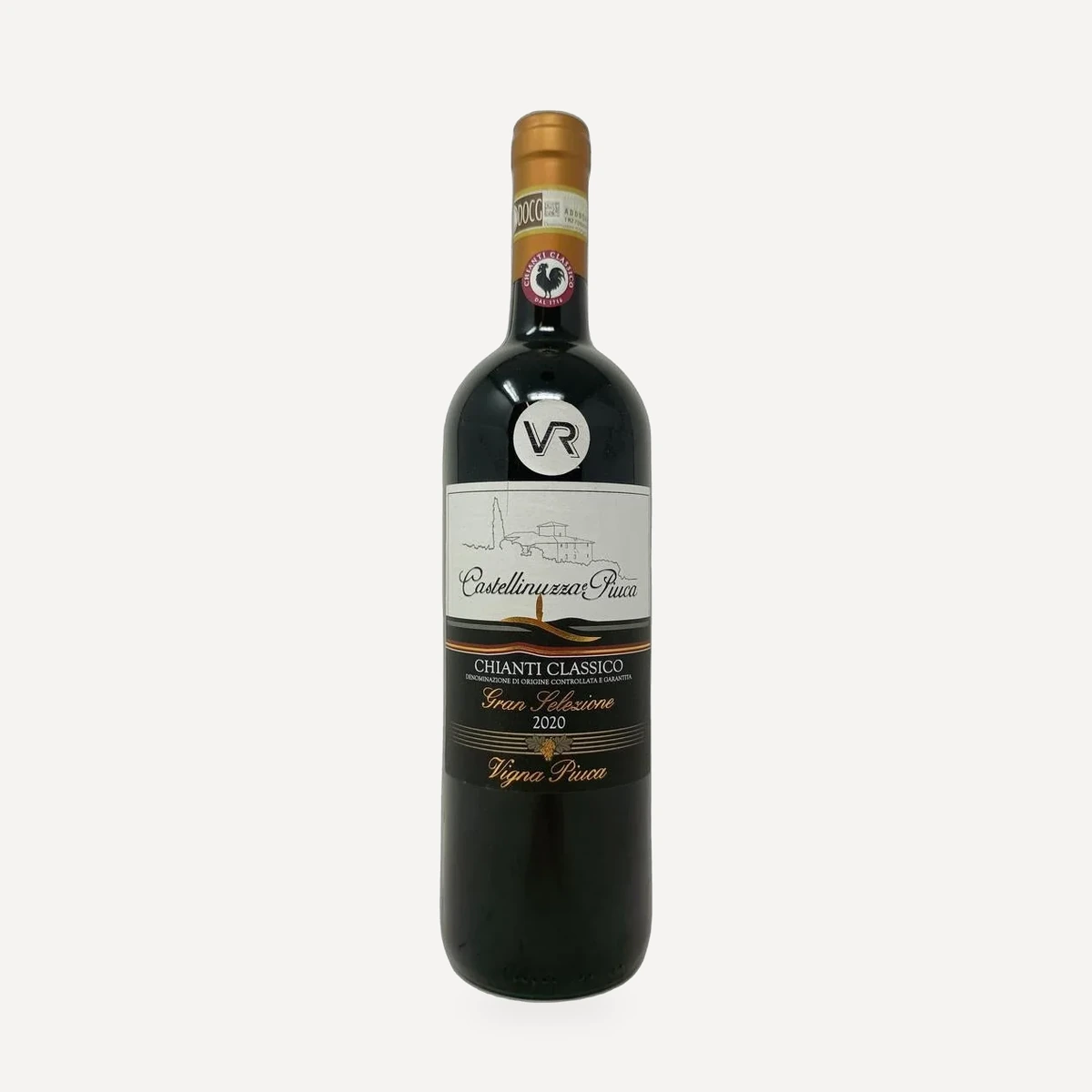
Chianti Classico Gran Selezione 2020 Biologico