Storia
The Pazzi era and the conspiracy of 1478
Castello del Trebbio belonged to the Pazzi family and became associated with the conspiracy against Lorenzo and Giuliano de’ Medici. Francesco de’ Pazzi and his friend Girolamo Riario, a nephew of Pope Sisto IV, played central roles in the plot. They involved Francesco Salviati, Archbishop of Pisa, and selected the papal military commander Giovan Battista da Montesecco to carry out the attack. Iacopo de’ Pazzi was initially reluctant but later joined the conspiracy, apparently after becoming convinced that it had papal support.
The original plan was to poison Lorenzo and Giuliano during a banquet at Villa Medici in Fiesole. The family relationship created by the marriage of Bianca de’ Medici to Guglielmo de’ Pazzi was expected to deflect suspicion. Giuliano’s illness kept him from the banquet, however, and the attempt was postponed.
On 26 April 1478, the conspirators attacked during Mass in Florence’s Cathedral of Santa Maria del Fiore. Francesco de’ Pazzi killed Giuliano, while Lorenzo received a superficial wound at the base of his neck and escaped into the sacristy. Antonio da Volterra and Stefano da Bagnone had replaced Montesecco, who refused to commit the killing inside a church. The attack failed, and the conspirators were condemned. Iacopo de’ Pazzi fled first to Castello del Trebbio and then toward the Mugello countryside before being captured and executed. The failure of the conspiracy reinforced Medici authority and led to the confiscation of Pazzi property, including the castle.
Restitution and later ownership
In 1478, Francesca di Giovanni di Martini, widow of Renato di Piero de’ Pazzi, petitioned the Republic of Florence for the return of her dowry. Her marriage agreement entitled her, if widowed, to recover property worth 6,000 florins. In 1481, she received Castello del Trebbio and its associated assets at that value, returning the property to the Pazzi family.
The castle remained with the Pazzi until 1671, when the family’s principal line became extinct and the estate passed to the Nerli family. It subsequently changed hands several times.
Abandonment and restoration
By the middle of the 20th century, rural depopulation and migration toward the cities had left the property abandoned. In 1968, Giovanni Enea “Nino” Baj Macario acquired the estate. Together with his wife, Eugenia, he restored both the villa-castle and the farm from a state of severe neglect. The castle became the family home as well as the centre of the agricultural and wine estate.
Development of the contemporary estate
The family developed Castello del Trebbio as a combined winery, Biointegrale® farm and agritourism property. The wine programme joined established Tuscan varieties and denominations to plantings of varieties including Merlot, Syrah, Riesling, Pinot Grigio and Manzoni Bianco. Traditional cellar vessels and methods were retained alongside stainless steel, modern temperature control and terracotta amphorae.
La Sosta del Gusto began operating beside the castle in 2006, serving produce from the estate. In 2015, Anna Baj Macario and Stefano Casadei launched the I Naturali cosmetics project in scientific collaboration with the University of Florence. The project created uses for rosemary, lavender, saffron, amaranth, grape seeds and olive pomace within a circular production model.
In October 2018, the estate marked 50 years of Baj Macario family ownership. The family continued to reside in the castle while operating its winery, farm and hospitality activities.
Terroir
The estate lies on the hills of Chianti Rufina near Pontassieve, in the Florentine part of Tuscany. Its vineyards coexist with olive groves, orchards, other crops and 100 hectares of forest. The local microclimate is marked by temperatures that remain cool and stable even in summer.
The highest vineyard selections reach approximately 450 metres above sea level. Soil conditions vary across the estate. The principal Sangiovese sites have clay soils with substantial limestone skeleton, providing drainage. Other blocks combine medium loam with marl, clay, stones or limestone. The Canaiolo vines grow on soil derived from metamorphic rock with pronounced schistosity, while the Ciliegiolo block is planted on stony clay. These variations support both established Tuscan varieties and later plantings of Merlot, Syrah, Chardonnay, Pinot Grigio, Riesling and Manzoni Bianco.
Vinificazione
The estate follows the Biointegrale® protocol developed from Stefano Casadei’s biodynamic approach. Its principal commitments are to maintain soil and environmental vitality through biodynamic practices, feed the soil rather than the plants, create an agricultural system favourable to biodiversity and obtain sound raw materials that can be processed naturally with fewer additives.
Cultivation environments are certified Biodiversity Friend. Soil fertility is maintained through cyclical crop rotation and agricultural practices that avoid chemical and synthetic additions. Vineyards form part of a mixed 350 ha farm containing olive groves, orchards, saffron, spelt, indigenous grains and 100 ha of forest. The orchards and crop diversity are treated as contributors to soil health and biodiversity.
Harvesting varies by block and intended use. The single-vineyard, reserve, white, sparkling, Vin Santo and small-production red blocks are picked manually, generally into small crates; the best clusters may be selected in the vineyard and again at the cellar. The broader Chianti Superiore blocks are harvested mechanically to bring the fruit in quickly at the chosen ripeness. Across the estate, the objective is to deliver healthy grapes to the cellar. Harvest activity runs broadly from late August to early October, depending on variety and purpose.
Production combines historic castle cellars and traditional ageing vessels with stainless steel, temperature control, pneumatic pressing and terracotta amphorae. Amphorae may be used for fermentation or maturation; their role is to preserve and emphasize differences among sites, varieties and vintages.
Red-wine processing can include destemming, gentle crushing, cold pre-fermentation treatment and macerations ranging from about 10 to 30 days. Several cuvées ferment spontaneously, and some complete malolactic fermentation without inoculation. Stainless-steel tanks are the principal fermentation vessels, while selected Sangiovese lots ferment in terracotta. A sulphite-free Ciliegiolo–Canaiolo wine is fermented in steel after cold skin maceration.
White grapes may be destemmed and pneumatically pressed before settling and temperature-controlled fermentation. Depending on the lot, fermentation and maturation take place in stainless steel, tonneaux or both. Traditional-method sparkling production uses gentle pressing, cold clarification for approximately 36 hours at 10°C, inoculated fermentation in steel at 14–16°C, a second fermentation and 30 months on the lees. Its dosage includes Trebbiano matured in amphora for a further six months.
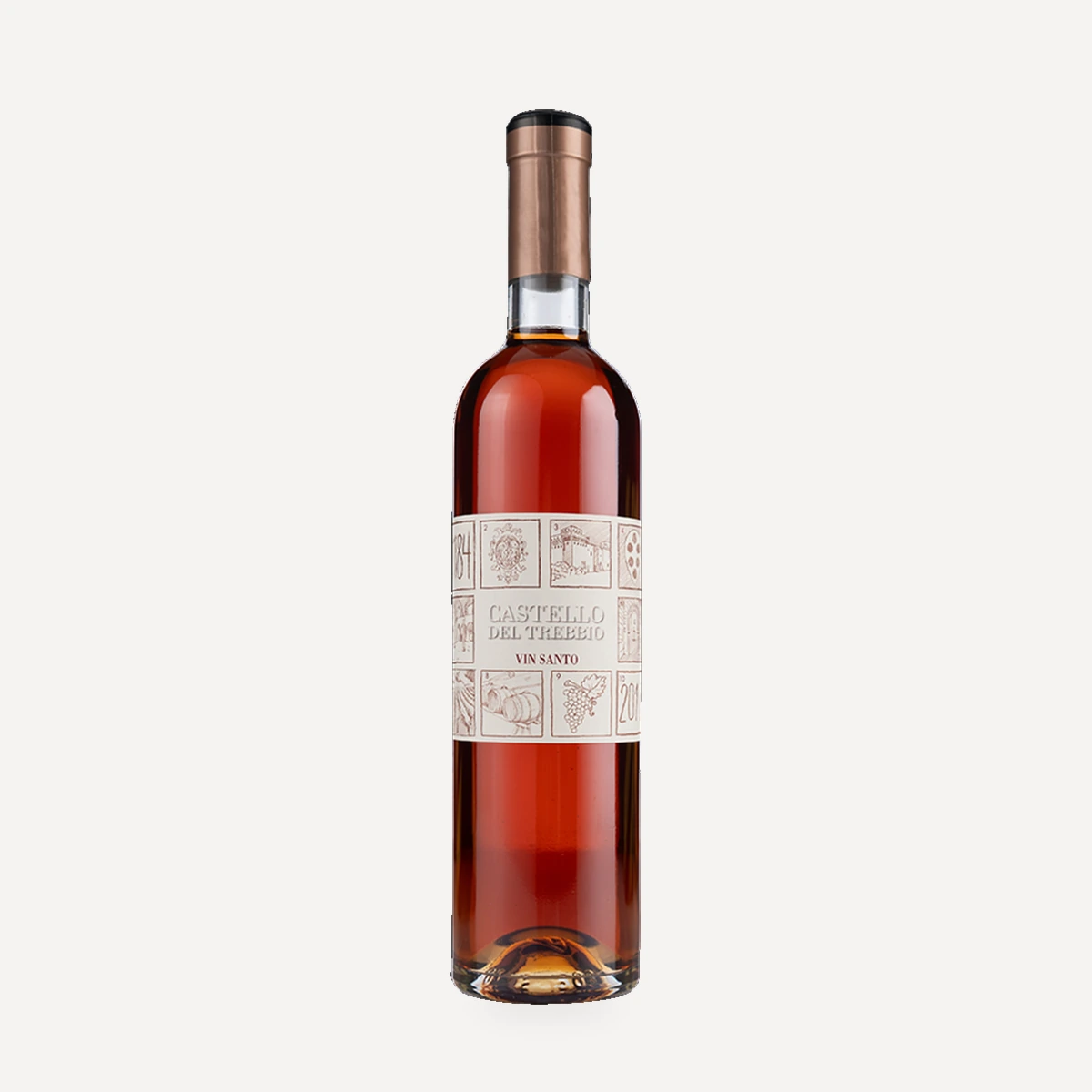
The ageing cellar contains 20 hl oak barrels, tonneaux, barriques, terracotta vessels and small caratelli. Red wines may mature in large barrels, second- and third-fill tonneaux, or new and used barriques, followed by bottle ageing. Vin Santo grapes dry for about five months on mats in a ventilated room; the concentrated must then ferments and matures for five years in caratelli. Bottle maturation ranges from several months to about a year for selected wines.
Filosofia
Biointegrale® is conceived as an ethical agricultural system in which environmental protection is a prerequisite for the future. Stefano Casadei describes its foundations through land, roots, care, respect, practical work, biodynamics and the enhancement of the surrounding territory. Its central proposition is that agriculture should be returned to nature.
At del Trebbio, this translates into feeding the soil rather than the crop, supporting biodiversity, producing inputs internally wherever possible and seeking raw materials of sufficient quality to require fewer processing additives. The approach also has a social dimension: the estate aims to distribute economic value locally by favouring local workers and businesses.
The wine philosophy combines tradition with experimentation. Sangiovese, Trebbiano and established denominations remain central, while the estate also explores varieties such as Merlot, Syrah, Riesling, Pinot Grigio and Manzoni Bianco. In the cellar, historic methods and oak ageing coexist with stainless steel, temperature control and terracotta amphorae. Amphora is used to reinforce the expression of site, grape variety and vintage rather than to impose a uniform style.
The wider farm is managed as an interconnected system. Vineyards, olive trees, orchards, grains, saffron and woodland contribute to biodiversity and a controlled internal supply chain. Forest and photovoltaic energy contribute to the estate’s energy requirements, while grape seeds, olive pomace and estate-grown plants are repurposed in cosmetics.
Vini
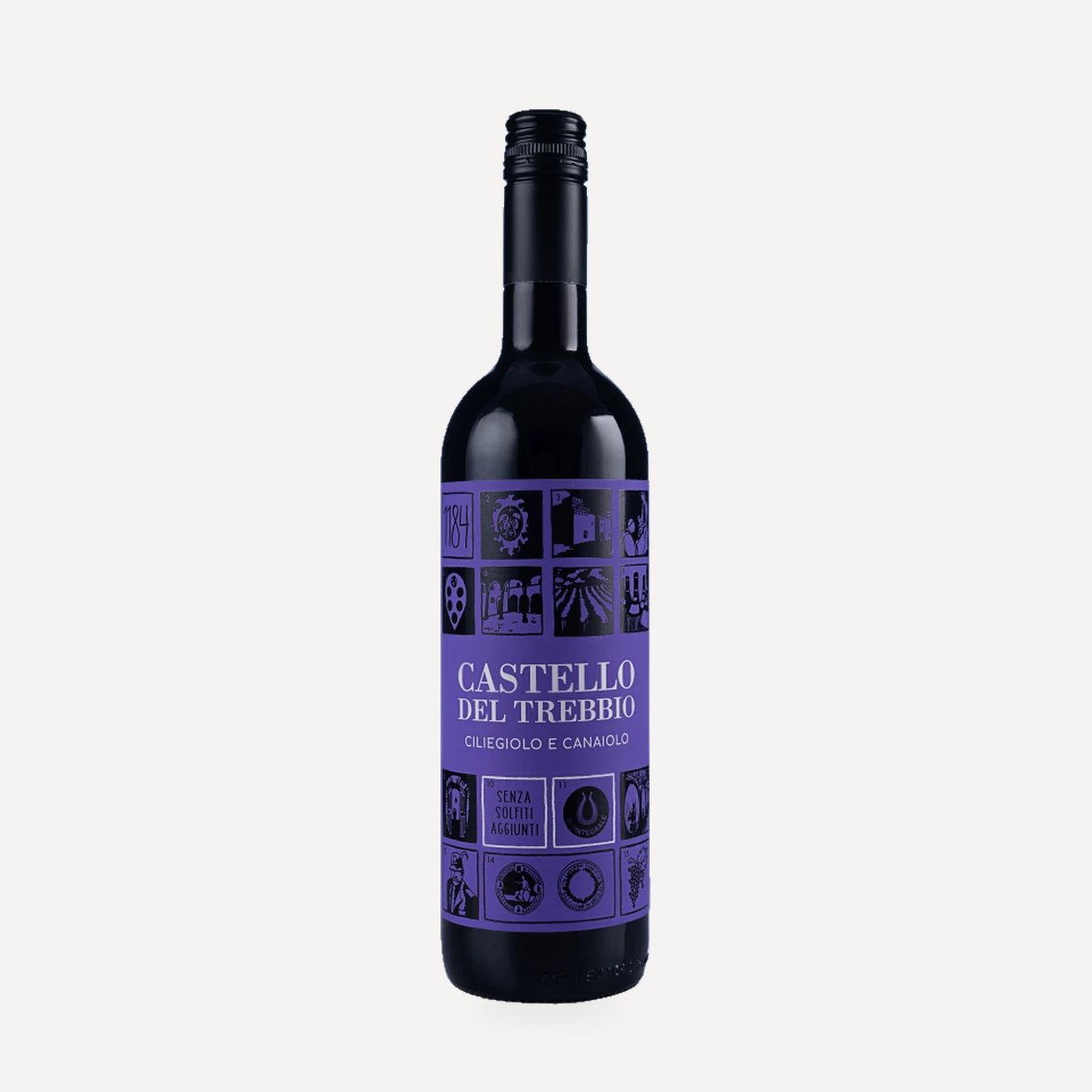
Ciliegiolo and Canaiolo
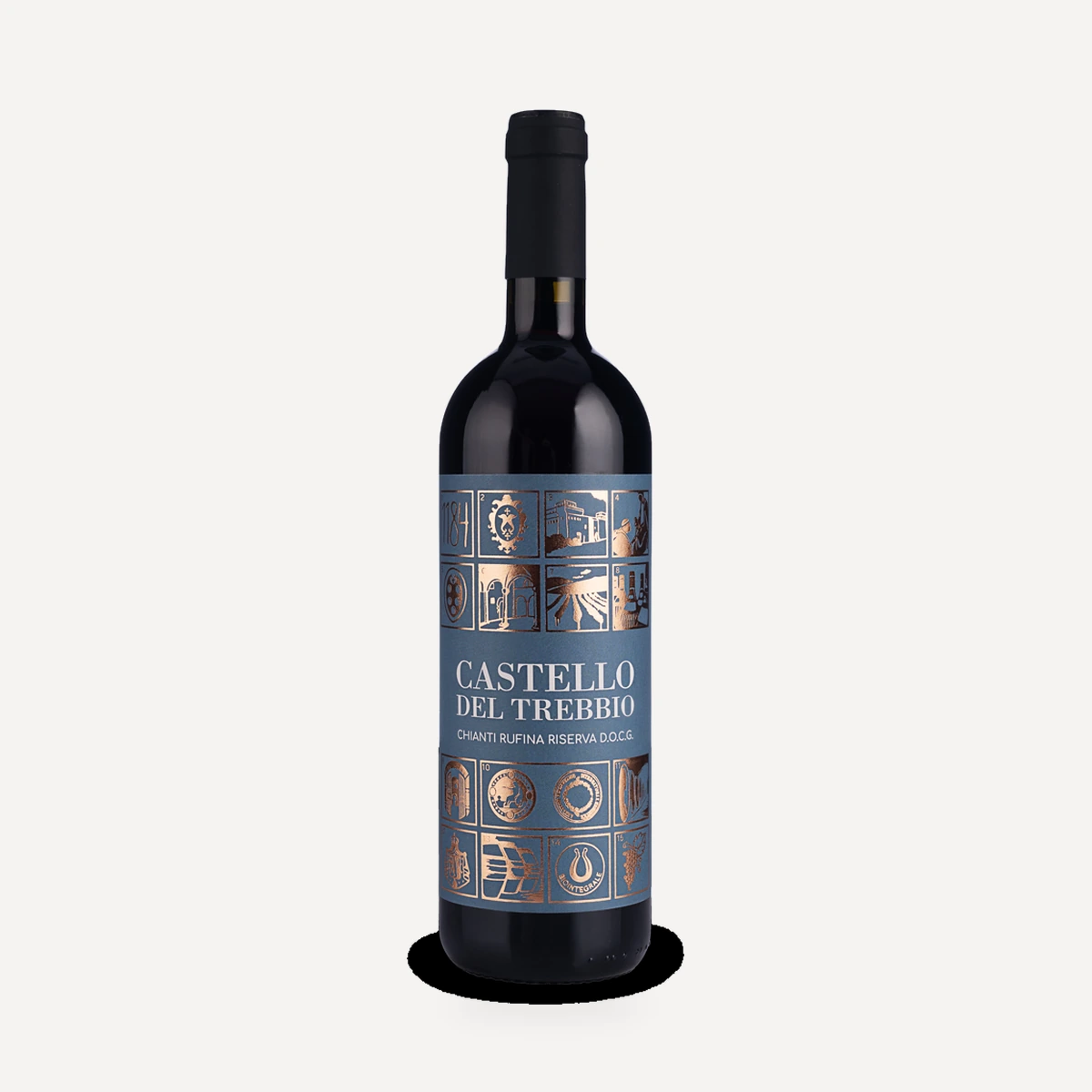
Chianti Rufina Riserva
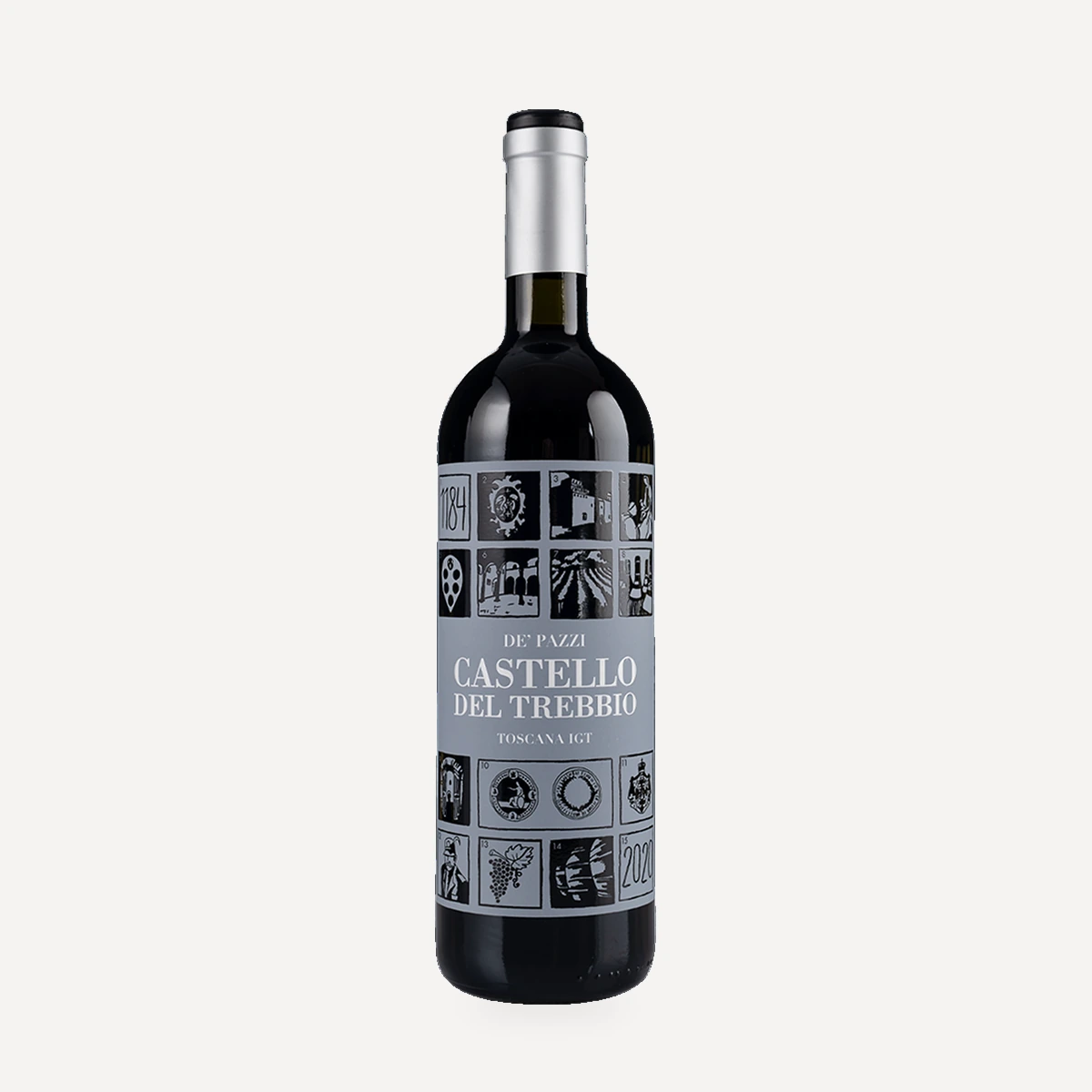
De Pazzi
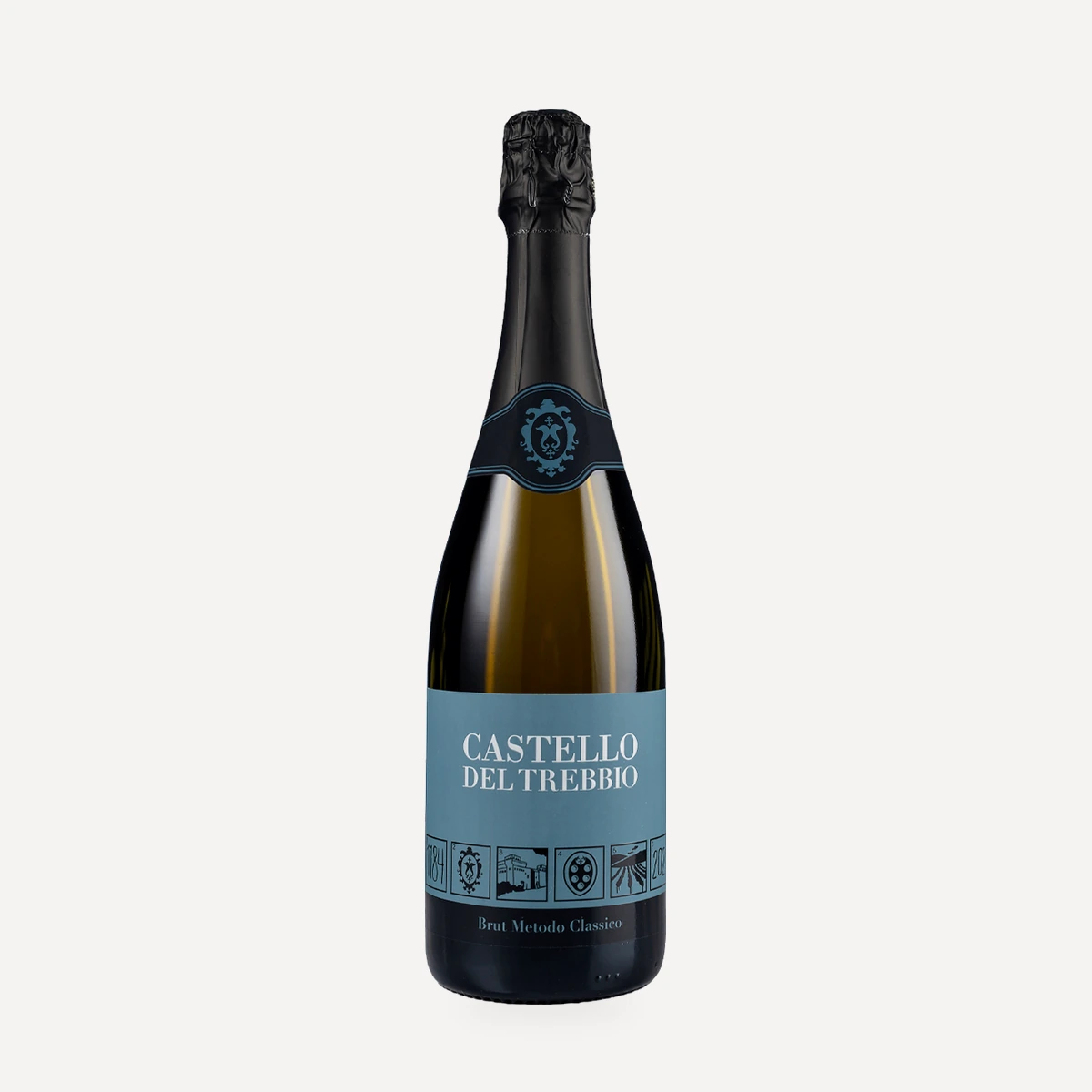
Metodo Classico
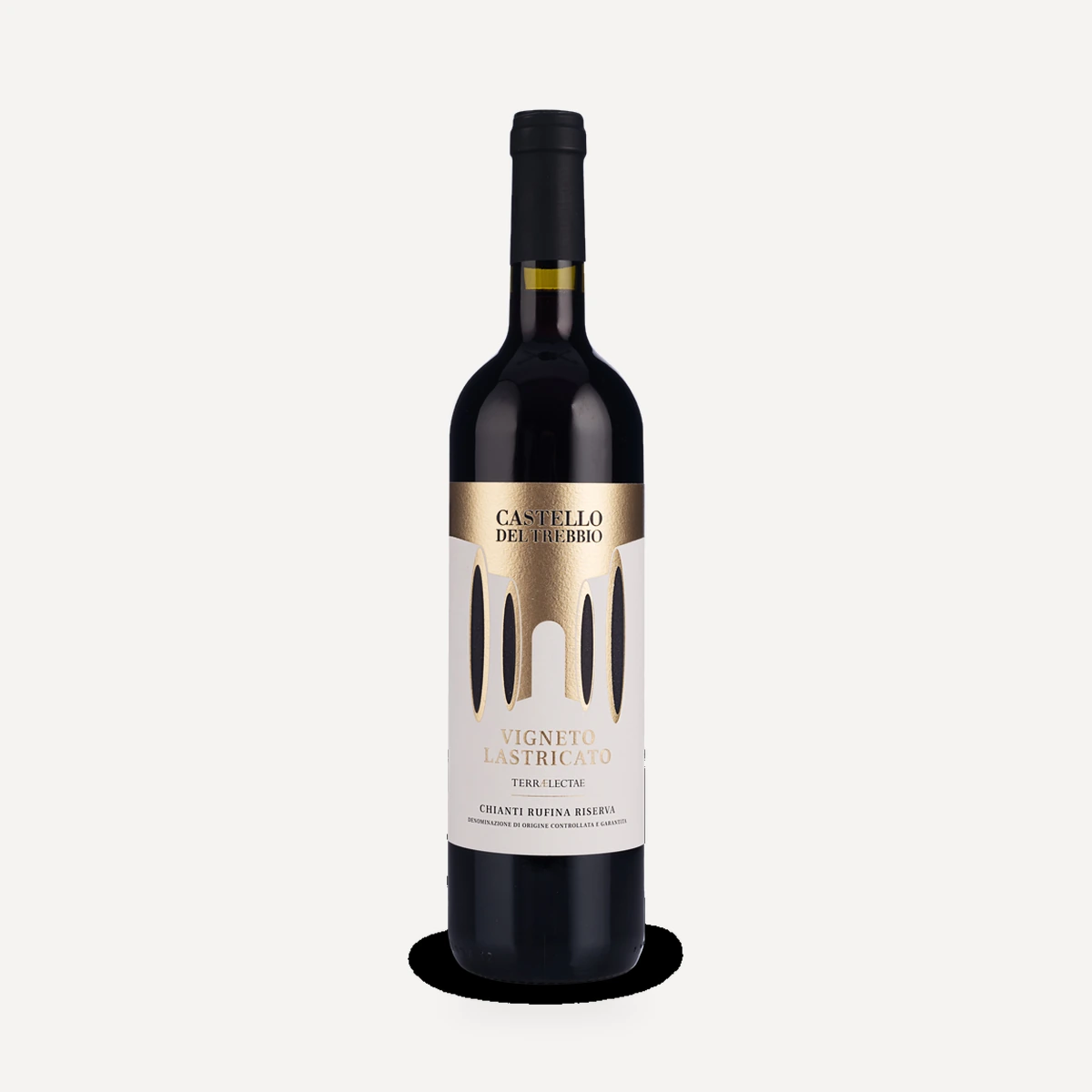
Vigneto Lastricato Terraelectae