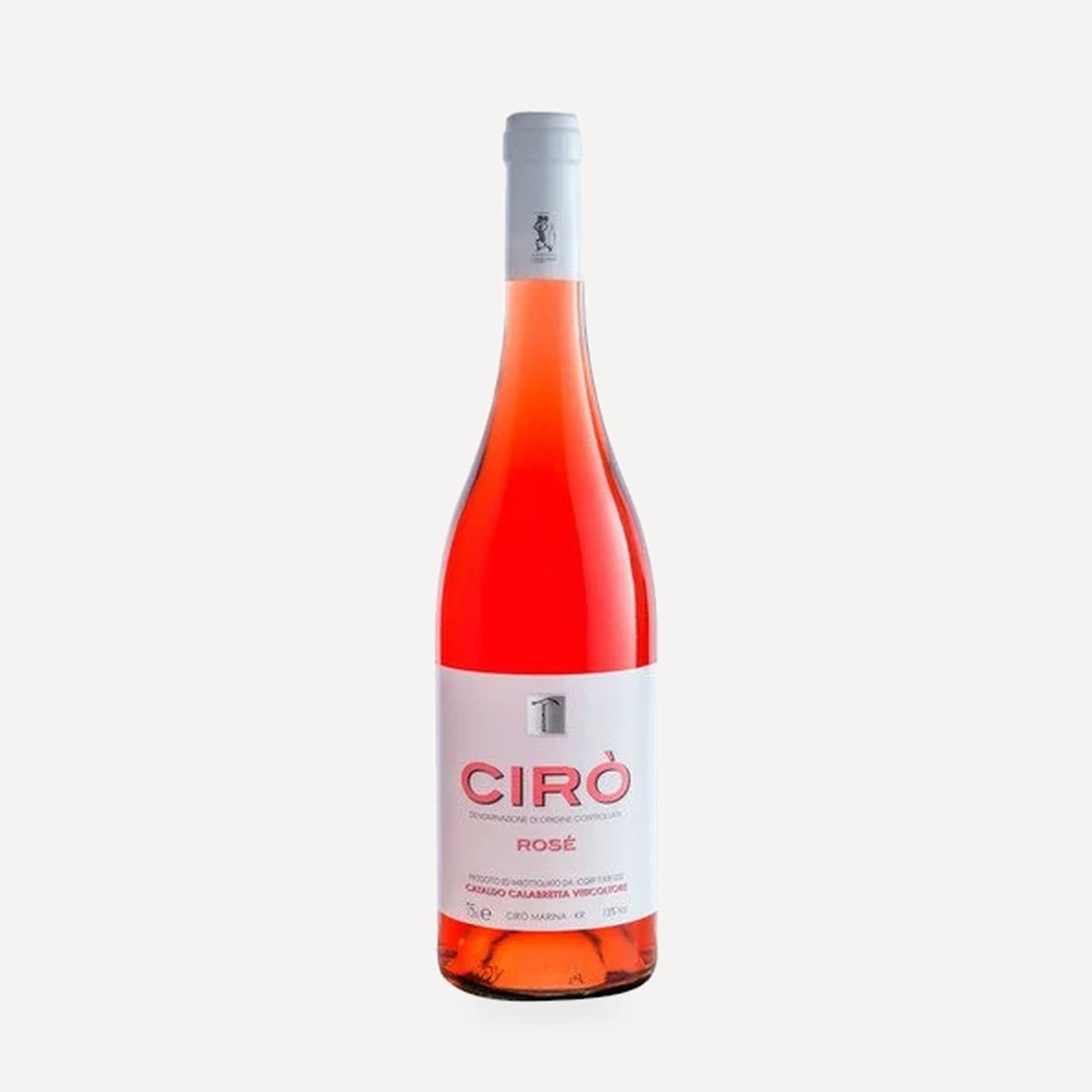
Storia
Four generations
Cataldo Calabretta represents the fourth generation of a family whose members devoted their working lives to their land and vineyards. His grandfather, also named Cataldo, farmed the vineyards later reclaimed by the present generation. The family’s accumulated vineyard knowledge became the foundation for the current project.
Education and experience
Cataldo graduated in Oenology and Viticulture from the Faculty of Agriculture in Milan. He subsequently worked at several wine estates before returning to Cirò to continue the family story.
2008: return to the family vineyards
In 2008, Cataldo took back the vineyards of his grandfather and began renovating the old family cellar. The project was conceived as a renewal of the family’s long winegrowing tradition and its inherited practical knowledge.
Organic renewal
The estate has followed organic-farming principles for more than fifteen years. During the most recent decade, its vineyards were renewed while Gaglioppo remained central, particularly in the traditional alberello form on hillside sites. Older cultivation practices—including plough work, manual hoeing and green manure—were retained alongside sulfur and copper for crop protection.
The present estate
The official vineyard register now identifies seven blocks in Cirò Marina, Melissa and Strongoli, covering 12 hectares in total. The cellar combines restored concrete vats with stainless steel and, for a selected best-vintage Gaglioppo lot, Slavonian oak. Fermentations are spontaneous, selected yeasts and fermentation activators are excluded, and sulfur dioxide is kept to a minimum.
Terroir
The vineyards extend through Cirò Marina, Melissa and Strongoli at stated elevations from 1 to 100 metres above sea level. The register encompasses hillside and low-lying sites: ‘Ntagliata reaches 100 metres, Donnoccicio 60 metres and Cropia 50 metres, while Jumara and Jumara 2 lie at 10 metres and the two Contrada Tronca blocks at 1 metre.
The technical sheets document several soil profiles. Gaglioppo hillside vineyards in the historic Cirò Classico production area have clay-limestone soils. Another Gaglioppo vineyard is clay-silt, the Ansonica site is loam-clay, and the Alicante site has silty soil rich in stones. The Melissa white-grape vineyard is described as level and clay-limestone.
This range of elevations, landforms and soils is approached through the estate’s definition of terroir: the combined effect of place, climate, grape variety, human skill, daily work and responsibility toward the surrounding environment.
Vinificazione
The estate has worked according to organic-farming principles for more than fifteen years. It presents this as an ethical decision independent of marketing considerations.
During the most recent decade the vineyards were renewed while retaining Gaglioppo on hillside sites and in the traditional alberello form. Vineyard work includes using a plough to remove soil from around the vines, loosening the ground manually with a hoe and fertilizing through green-manure crops. Sulfur and copper are used for plant protection.
Training varies by variety. Gaglioppo is principally associated with alberello; Alicante and Greco Bianco are trained to spur-pruned cordon; Ansonica and Malvasia use simple Guyot. Individual technical sheets also document espalier-trained Greco Bianco and Malvasia and a cordon-trained Gaglioppo rosato parcel.
The published sheets record planting densities of 5,000–5,500 vines per hectare, production of 1–1.5 kilograms per vine and yields of approximately 50–70 quintals per hectare. Documented vine ages range from 5 to 35 years. All six technical sheets specify manual harvesting into crates. Depending on variety and intended production, harvesting runs from the second ten days of August through the first ten days of October.
The cellar excludes selected yeasts and fermentation activators, relying on spontaneous fermentation across the documented production. Sulfur dioxide is used as sparingly as possible. Restored concrete vats are considered particularly suitable for Cirò, while stainless steel is used for white and rosato production and Slavonian oak appears in the maturation of a selected Gaglioppo lot made only in the best vintages.
The technical sheets show several approaches to extraction. Gaglioppo destined for the principal red expression receives four days of skin contact followed by 18 months in concrete. A more selectively produced Gaglioppo undergoes two weeks on the skins, then 12 months in Slavonian oak, 12 months in concrete and 12 months in bottle. Rosato production can involve 24 hours of maceration followed by six months on fine lees in stainless steel.
For the Greco Bianco–Malvasia white, destemmed Greco Bianco contributes only free-run must, while Malvasia remains on its skins for four days. The two components are blended after fermentation and mature for six months on fine lees in stainless steel with bâtonnage. Ansonica is destemmed, macerated for 24 hours and matured for eight months on fine lees in steel with bâtonnage. Alicante is destemmed and pressed; only free-run must is retained before spontaneous fermentation and six months on fine lees in steel with bâtonnage.
Filosofia
Cataldo Calabretta frames his work as the continuation of four generations devoted to their land. Remaining in Cirò and producing wine tied to place are presented as ways to renew and honour both the family’s tradition and that of the surrounding territory.
The estate’s emblem is the arciglione, the traditional pruning hook of Cirò. The tool belonged to Cataldo’s grandfather and represents the accumulated skill of local winegrowers. It also expresses the estate’s understanding of terroir as the sum of territory, climate, grape variety, human skill and labour, together with the grower’s responsibility toward the environment.
Organic farming is treated as an ethical commitment rather than a marketing device. In the cellar, the same preference for continuity and restrained intervention appears through spontaneous fermentations, restored concrete vats, the exclusion of fermentation additives and minimal sulfur dioxide.
Vini
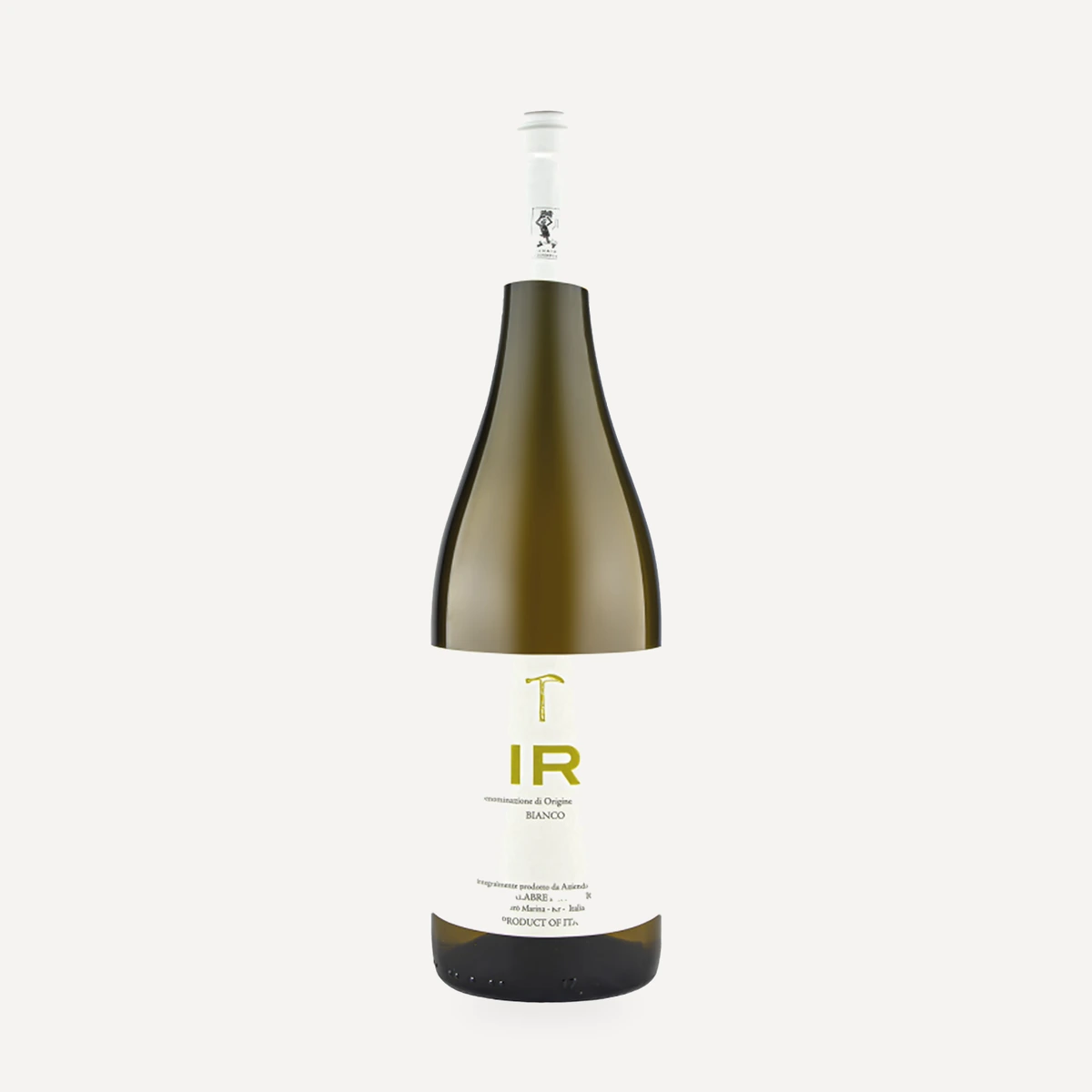
Cirò Bianco