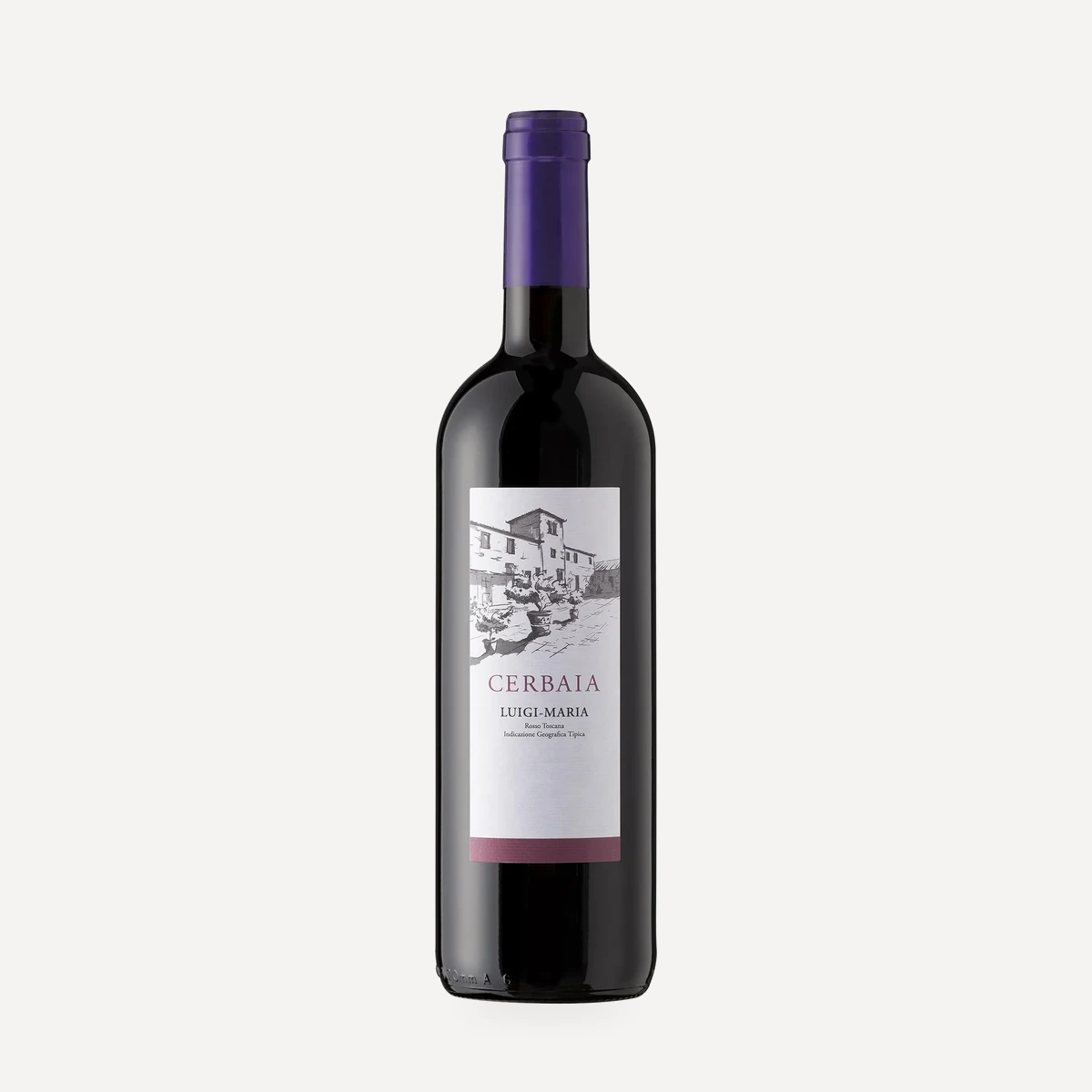
Storia
Agricultural origins
Cerbaia’s agricultural buildings date from the 16th century and were intended for farming from their inception. They were constructed in characteristic local stone, whose golden tones change with the light, while Tuscan red brick frames the doors and windows. The old dovecote, distinguished by its mullioned window, overlooks the property and the surrounding valley.
The complex was renovated and enlarged during both the 18th and 19th centuries. The manor house occupies one of the higher parts of the property, above vineyards, olive groves and surrounding woodland.
Vineyard renewal since 2000
A sustained programme of vineyard renewal began in 2000. More than 3 ha were replanted between 2000 and 2005, followed by 0.5 ha in 2009, 4 ha in 2010 and 3.5 ha in 2014. The new vineyards were established at a density of 6,250 vines/ha.
Alongside the replanting programme, 1.5 ha of old vines were retained to preserve the estate’s viticultural memory. These older plantings contain the concentration of Cerbaia’s white varieties. Missing vines are regularly counted and replaced; the Italian and English accounts specify a two-year cycle for this work. The purpose is to maintain vineyard balance and consistent fruit quality.
Louis-Marie and Birgit
In 2008, Louis-Marie Chollet arrived in Chianti and assumed responsibility for Cerbaia, concentrating particularly on production. Born in Bordeaux and raised among the vineyards of Château Plaisance in the Médoc, he had studied art history before bringing together his agricultural background and interest in the arts at Cerbaia.
Birgit joined him in 2010. Born in Vienna, where she studied economics, she had previously worked for several years in private banking. At Cerbaia she took responsibility for activities connected with agritourism and sales or distribution.
Environmental modernisation
More recent renovations modernised the property’s environmental and energy infrastructure. Solar panels now provide part of its energy requirements, while rainwater collected from the roofs is recovered to conserve water. The farm complex is organised as an interconnected ecological system encompassing vineyards, olive groves and woodland, with biodiversity treated as an operational part of the estate.
Terroir
Cerbaia lies in the Tuscan countryside between Florence and Siena, within the Chianti area and the municipality of Barberino Tavarnelle. Its vineyards and olive groves occupy a hilly landscape, with some plantings laid out on terraces and extensive woodland adjoining the cultivated land. The manor house stands in an elevated part of the property, while the distant towers of San Gimignano are visible across the hills and cypresses.
The vineyards stand at 220–300 m above sea level. Their south to south-east exposure provides sustained sunlight. The soils are described as calcareous clay.
The estate is approximately 30 km from Florence, 40 km from Siena, 25 km from San Gimignano and 50 km from Volterra. Tavarnelle Val di Pesa, 6 km away, is the nearest service centre.
Vinificazione
Work in the vineyards is directed toward harvesting fully ripe, healthy grapes while using methods characterised as natural. Chemical herbicides and insecticides are excluded.
A large-scale renewal programme replaced more than 10 ha of vineyard between 2000 and 2014, while 1.5 ha of old vines were deliberately conserved. The new plantings were established at 6,250 vines/ha. Missing vines are inventoried and systematically replaced—on a two-year cycle in the Italian and English accounts—to maintain balance within the vineyards and regularity in grape quality.
Harvesting for the Chianti Classico wines is performed by hand. Two skilled workers are employed full-time on the property and are joined by seasonal personnel during periods of greater labour demand.
Cerbaia treats the vineyards, olive groves and surrounding woods as parts of an ecologically connected farm system intended to support biodiversity. Rainwater is recovered from the roofs, and solar panels provide part of the farm’s energy requirements.
Cerbaia’s cellar approach is based on limited intervention and the aim of retaining the expression of its vineyards.
For the Chianti Classico wines, grapes are harvested by hand and transferred to stainless-steel tanks. Fermentation is driven exclusively by the grapes’ indigenous yeasts, without the addition of commercially selected yeasts. Pressing follows fermentation, and maturation takes place in French-oak barriques. Used or previously seasoned barriques are favoured for the Chianti Classico and Riserva so that oak does not obscure Sangiovese. The wines receive further maturation in bottle in Cerbaia’s cellars before release.
Selection is also part of the production process: lots judged to be of lower quality are excluded from the estate wines and sold in bulk. The retained lots are assembled and bottled on the property.
Filosofia
Cerbaia’s guiding idea is to operate the farm as an ecologically complete system in which vineyards, olive groves and woodland support biodiversity and permit more natural cultivation. In the vineyard, this translates into the exclusion of chemical herbicides and insecticides and an emphasis on achieving healthy, fully mature fruit.
The preservation of 1.5 ha of old vines is presented as a means of maintaining the property’s viticultural memory while the remaining vineyards have undergone extensive renewal at higher planting density. Regular replacement of missing vines is intended to preserve balance rather than allow the vineyards to become progressively irregular.
In the cellar, the stated objective is minimal intervention and maximum expression of the vines. Indigenous fermentations, restrained use of seasoned oak and rejection of weaker lots are practical expressions of that approach.
Environmental improvements extend beyond cultivation. Solar panels cover part of the farm’s energy requirements, rainwater is recovered from the roofs, and intervention in the olive groves and woods is kept to a minimum so that natural processes can play a larger role.
Vini
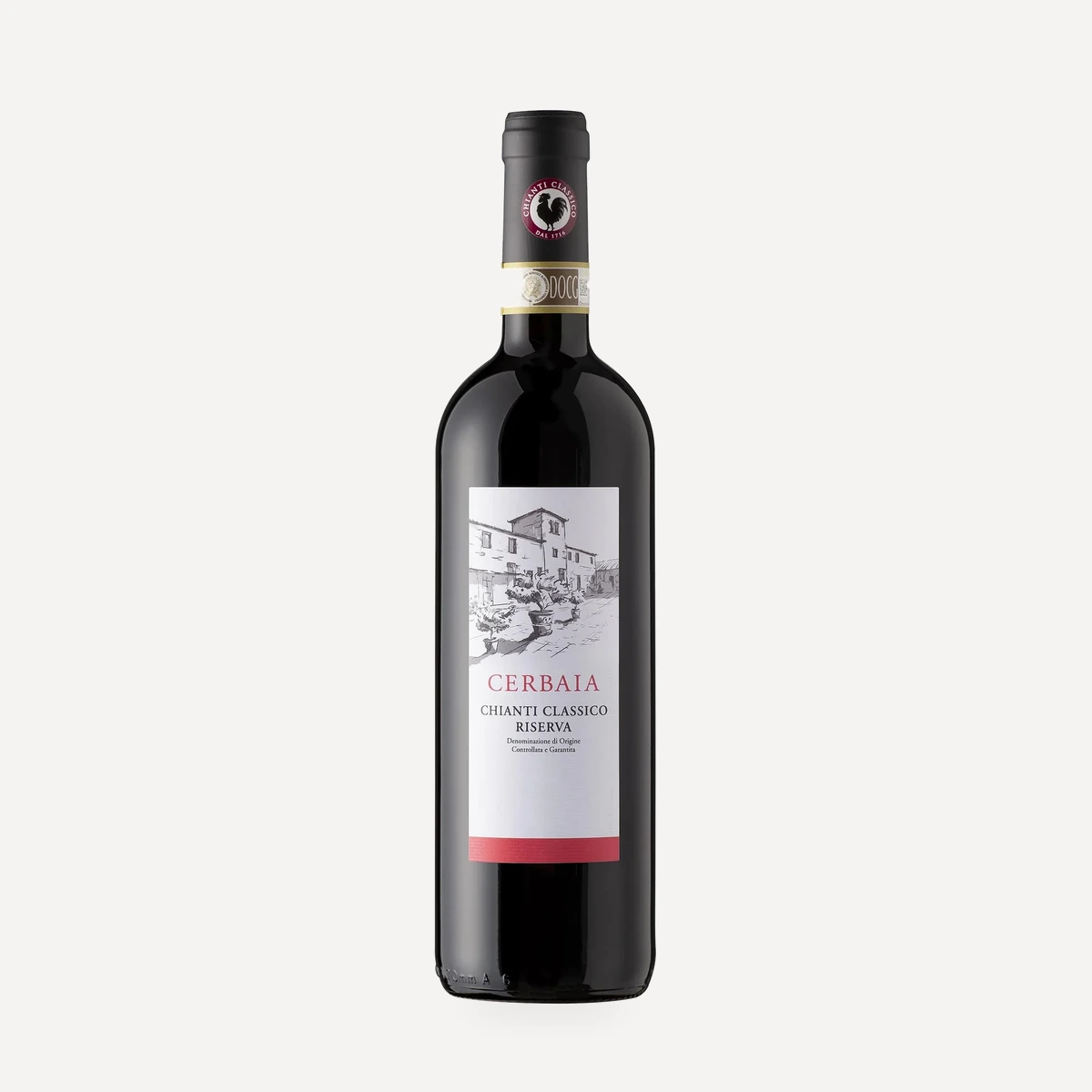
Chianti Classico Riserva DOCG
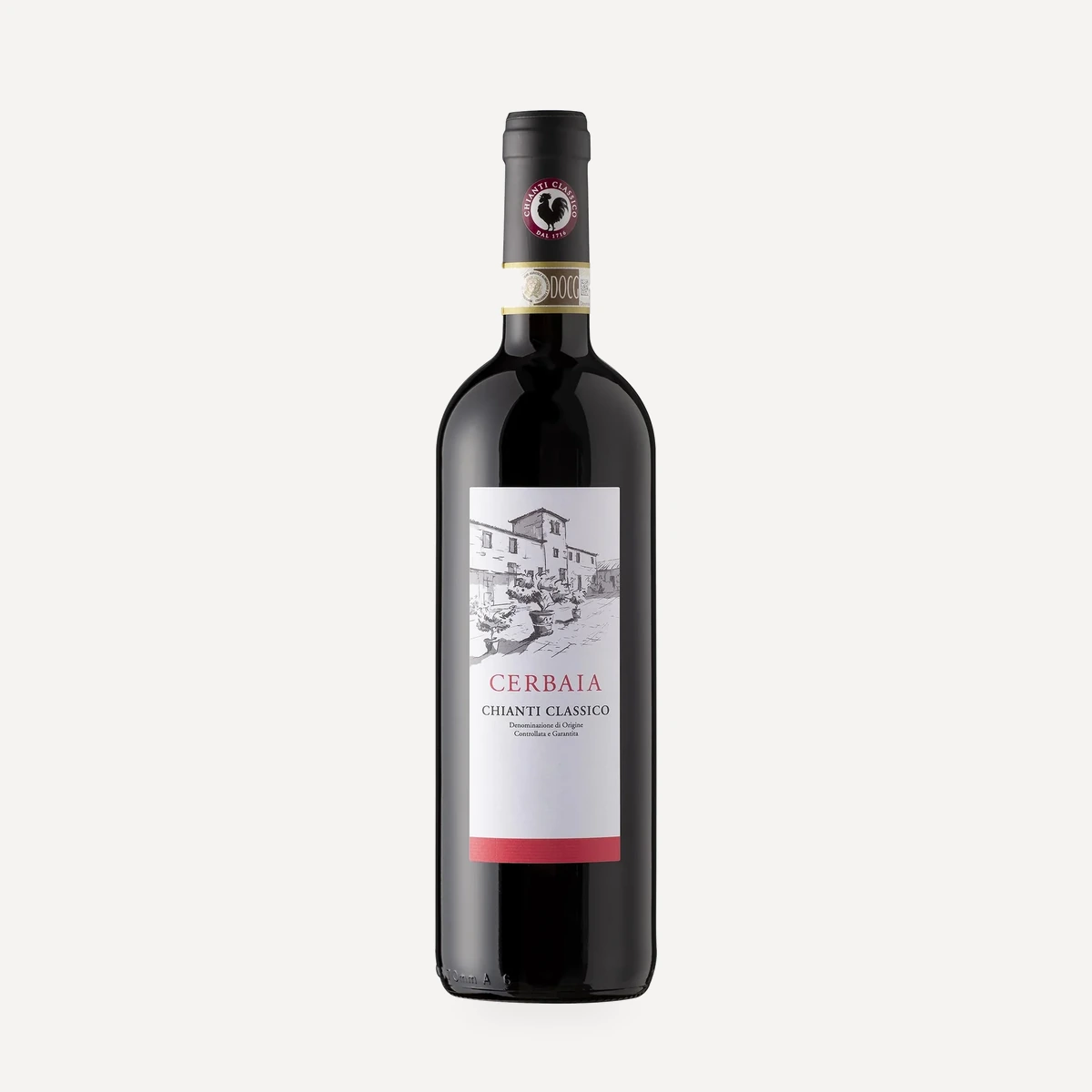
Chianti Classico DOCG