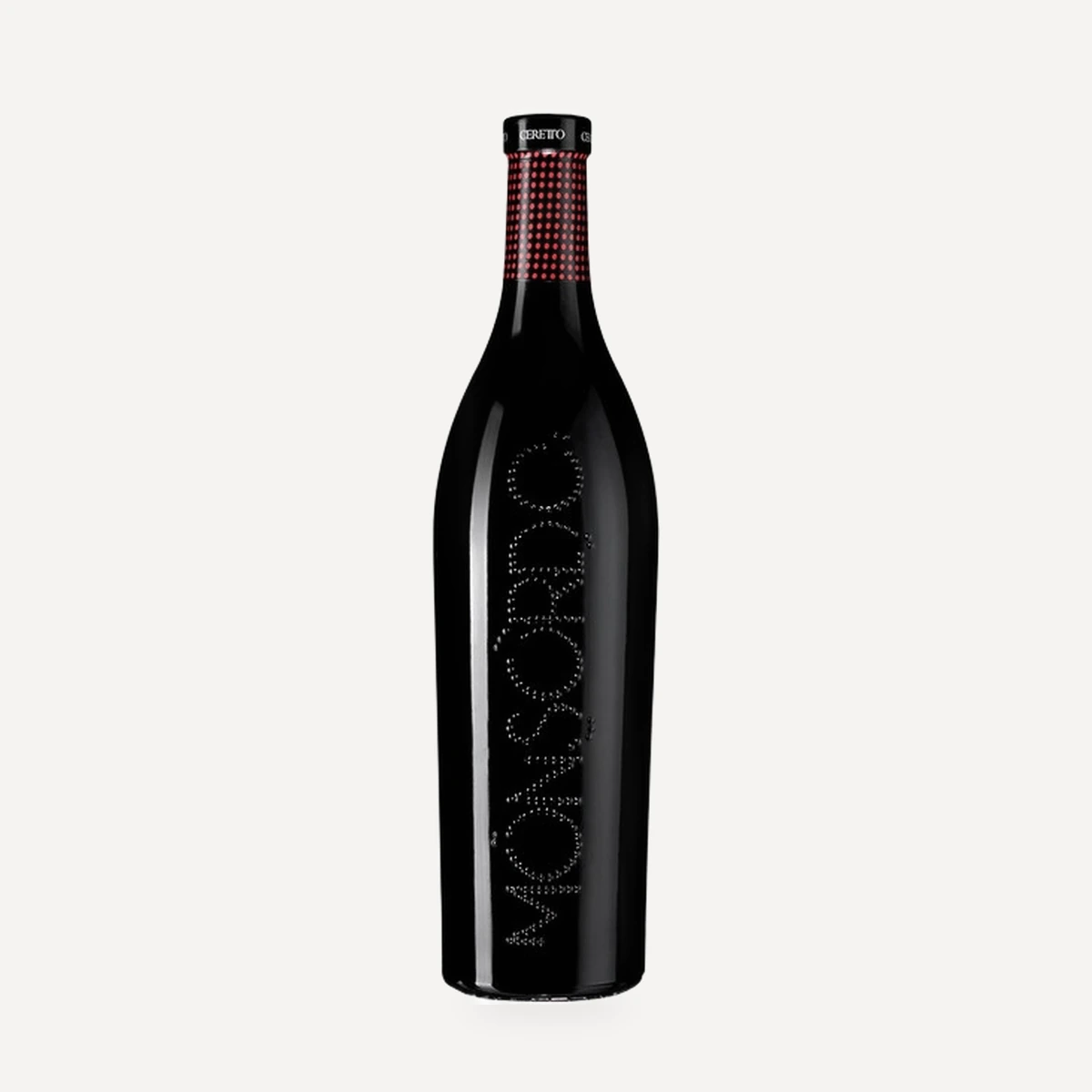
Questo vino
Vineyard and terroir
The estate's vineyards lie at 240 to 285 metres above sea level and form a patchwork of plots with different soil compositions and grape varieties. The vines for Monsordo were planted in 1987 on south- and southwest-facing sites. The soil is 45% clay, 10% silt and 40% sand.
Grapes
The wine blends three internationally known varieties: Cabernet Sauvignon, Merlot and Syrah.
Vinification
The grapes are harvested in several stages as they ripen, and each variety is vinified separately. Fermentation takes place in 45-hectolitre oak casks and lasts 12–15 days. Malolactic fermentation follows in 300-litre French barrels.
Ageing
The wines age separately in oak barrels for 18 months and are then blended. After bottling, the wine spends a further 6 months in the winery's cellars.
Tasting profile
Monsordo has a relatively modern character. It shows the qualities of its individual grape varieties and is also strongly shaped by the Langhe terroir. It is an international-style wine with a distinctly Piedmontese accent.
Label / history
Monsordo was a long-held dream at Monsordo Bernardina: a rich wine from a blend of Cabernet Sauvignon, Merlot and Syrah, which came out of many experiments and trials. In the 1990s the estate made significant changes to its plantings, introducing international varieties alongside the traditional grapes. The aim was to explore their potential and limitations in Piedmont and how clearly they could express themselves in the glass. After several years of vinifying the varieties separately, the project took its final form in 1997, combining the varieties that had adapted best to the region. Production began in 1997. The Ceretto family pays close attention to the key details of its vinification and ageing. Monsordo Bernardina is Ceretto's main office and principal winery, and is also known as a centre for experiments in grape growing and winemaking.
The Ceretto family began making wine in the 1930s, when Riccardo Ceretto moved to Alba. In the 1960s his sons Bruno and Marcello took over, and they are often called the "Barolo Brothers" for promoting Barolo. The family today owns several estates producing around 700,000 bottles, with more than 80 hectares of vineyards in total.