Storia
Origins and medieval Cinciano
Cinciano may have Roman origins and may once have belonged to the Gens Cincia. Its first documented appearance dates to 1126, when Zaballina, widow of Ridolfino da Catignano, donated the property to Gotifredo, Bishop of Florence, together with the castles of Linari and Catignano. Villa Zaballina retains the donor’s name.
For much of the 12th century, the surrounding district was disputed by the bishops of Florence and Siena. Its elevated position above the Elsa, proximity to the ancient Poggio di Bonizio and location near the Via Francigena gave the area strategic importance. Poggio di Bonizio took its name from Bonizio Segni, lord of the place.
The springs and bathing place were known from the 13th century. During that century, the inhabitants of Poggibonsi continued to support the Empire against Guelph Florence. The resulting conflict brought occupation by Carlo d’Angiò and the destruction of ancient Poggibonsi. Cinciano subsequently followed the changing fortunes of the area until its incorporation into the Florentine Republic.
In 1292, documents recorded Bishop Andrea leasing some of the lands for an annual rent of 14 staia of wheat.
The historic village
Successive transformations are visible in Villa Zaballina, the manor house at the centre of the medieval village. Its three terraces and small, still-consecrated chapel preserve the estate’s architectural continuity; the chapel was frescoed during the 20th century. The villa overlooks the valley and opens onto a three-level Italianate garden connected by broad staircases and water features. A long avenue of cypresses formed the historical approach to the village. Beside the principal building stands a tower whose base retains sections of medieval masonry.
The estate’s residential buildings, including the manor house, village rooms, apartments, farmhouses and tower-area accommodation, were restored while retaining historical materials, frescoes, furnishings and architectural features.
The modern wine estate
The Garrè family has pursued the Cinciano project for more than forty years, combining wine production, olive growing, hospitality, food and events within the restored village. The historical Camponi vineyard, planted in 1971, preserves an older mixed-variety expression of the estate and is its oldest vineyard.
The vineyards have undergone renewal alongside small-scale experimentation with additional grape varieties. A more recent project focuses on the recovery and expression of indigenous red grapes, including Canaiolo, Malvasia Nera and Foglia Tonda, varieties already associated with Camponi.
Sustainability programme
In 2024, Cinciano initiated the Equalitas Winery certification project, adopting a framework based on environmental, ethical-social and economic sustainability. Equalitas certification was subsequently recognized for the estate. The programme formalized work on biodiversity, water and energy management, soil health, circular packaging, employee welfare, product safety and relations with the local community.
Terroir
Cinciano occupies a hill on the western boundary of Chianti Classico, midway between Siena and Florence, above the Val d’Elsa and near Poggibonsi. The estate’s vineyards lie within the Chianti Classico area, principally at 250–300 metres above sea level. Vines encircle the hill, and the principal orientation is south-west.
The vineyards are surrounded by olive groves and woodland belonging to the hunting reserve. Across the 150-hectare property, vineyards, olive groves, woods and arable fields form a continuous agricultural and natural mosaic. The estate’s management has retained the historical configuration of the hill and limited urbanization.
The soils contain limestone and clay. Vineyard soils are generally medium-textured: some have abundant coarse material, while others are slightly clayey and contain sand. Alberese-derived soils are also described as stony and mildly clayey. Individual vineyard selections occupy different elevations, exposures and soil types, creating multiple estate terroirs.
Vinificazione
Cinciano follows low-impact viticulture centred on the health of vines, soils and the wider estate ecosystem. Pruning is managed carefully to avoid water stress and reduce the incidence of wood diseases. Yields per hectare are kept low to limit pressure on the ecosystem, while spontaneous grass cover is managed between the vines.
Pest management is based on targeted strategies and natural antagonism. Recovery sprayers apply treatments directly to the canopy and recover excess product, reducing airborne dispersion by approximately 80–90%, including in copper applications. Woodland management and reforestation encourage insects and animals that naturally help control pests and reduce vineyard vulnerability.
Manure and other organic preparations are used to enrich vineyard soils. This approach responds to the loss of organic matter and the soil stress associated with prolonged dependence on chemical fertilizers. Abandoned land is regenerated where possible. Tree roots are maintained to stabilize soils, while foliage helps protect against erosion caused by wind and rain.
Harvest is manual, using baskets. In a typical year it begins around mid-September and concludes during the first ten days of October. Bunch selection takes place in the vineyard, and fruit is divided by parcel and variety. In years with excessive crop load, bunches may be thinned: in July 2024, selected parcels were thinned to meet the estate’s quality objectives.
Water used to wash vineyard equipment is captured in a dedicated collection system to reduce the risk of localized surface- and groundwater contamination. Water is obtained from an estate source or well rather than the municipal aqueduct; water use and treated wastewater quality are monitored, with drip irrigation and treated-water reuse among the management measures. The estate also protects biodiversity through its mixture of vineyards, olive groves, woodland, fields and animal habitats.
The winery is housed within the medieval village and is divided into three areas dedicated respectively to grape processing, maturation and tasting. Wines mature in an underground cellar protected from light and maintained with controlled temperature variation.
Fruit from individual vineyards is kept in separate tanks to retain the character of each parcel and variety. Fermentation takes place principally in stainless-steel tanks, with glass-lined concrete also used for selected red wines. White and rosé musts ferment without skins for 15–20 days at 15–18°C. Red grapes ferment with their skins for 10–15 days, followed by post-fermentation maceration that may continue for as long as 20 days. More extended red-wine protocols use stainless steel or glass-lined concrete at approximately 28–30°C, with total fermentation and post-fermentation skin contact of around 20–30 days. Malolactic fermentation can occur spontaneously between November and December.
Maturation is tailored to grape variety and intended expression, using stainless steel, concrete, large wooden casks, barriques and tonneaux. Large Slavonian oak casks are central to the Chianti Classico programme; formats named in technical material range from 5 to 50 hectolitres. French oak barriques and tonneaux are used for selected international-variety lots, which are matured separately before blending. Bottle maturation follows wood ageing for selected wines.
The broader production philosophy favours simple, appropriate cellar techniques intended to preserve varietal and parcel character. Quality and traceability controls extend from grape selection through vinification and bottling, supported by routine analyses, microbiological testing and checks for pesticides, mycotoxins, heavy metals and other food-safety parameters.
Filosofia
Cinciano’s wine philosophy is centred on expressing and strengthening the particular character of Sangiovese, the estate’s principal grape. Manual bunch selection and harvesting are treated as essential quality tools, while cellar work is intended to remain simple and appropriate to the fruit.
The estate interprets Sangiovese through both traditional forms and experimental development. Its indigenous-red-variety project extends this work to Canaiolo, Malvasia Nera and Foglia Tonda, while small plantings of international varieties provide a separate field of experimentation. Parcel-by-parcel harvesting and the choice of concrete, steel, large casks, barriques or tonneaux are matched to variety and intended expression.
Cinciano defines its values through attachment to the Tuscan territory, uncompromising grape selection, respect for local wine traditions, modernization of production, professional collaboration and reduction of waste and environmental impact. Innovation is pursued through long-term work with specialist professionals and companies rather than as a rejection of tradition.
Its wider mission is to offer a close experience of nature through wine, human teamwork, seasonal rhythms, a healthy landscape and the culture of Chianti Classico. Environmental, ethical-social and economic responsibility form the three pillars of its sustainability programme, with continuous improvement treated as an ongoing process.
Vini
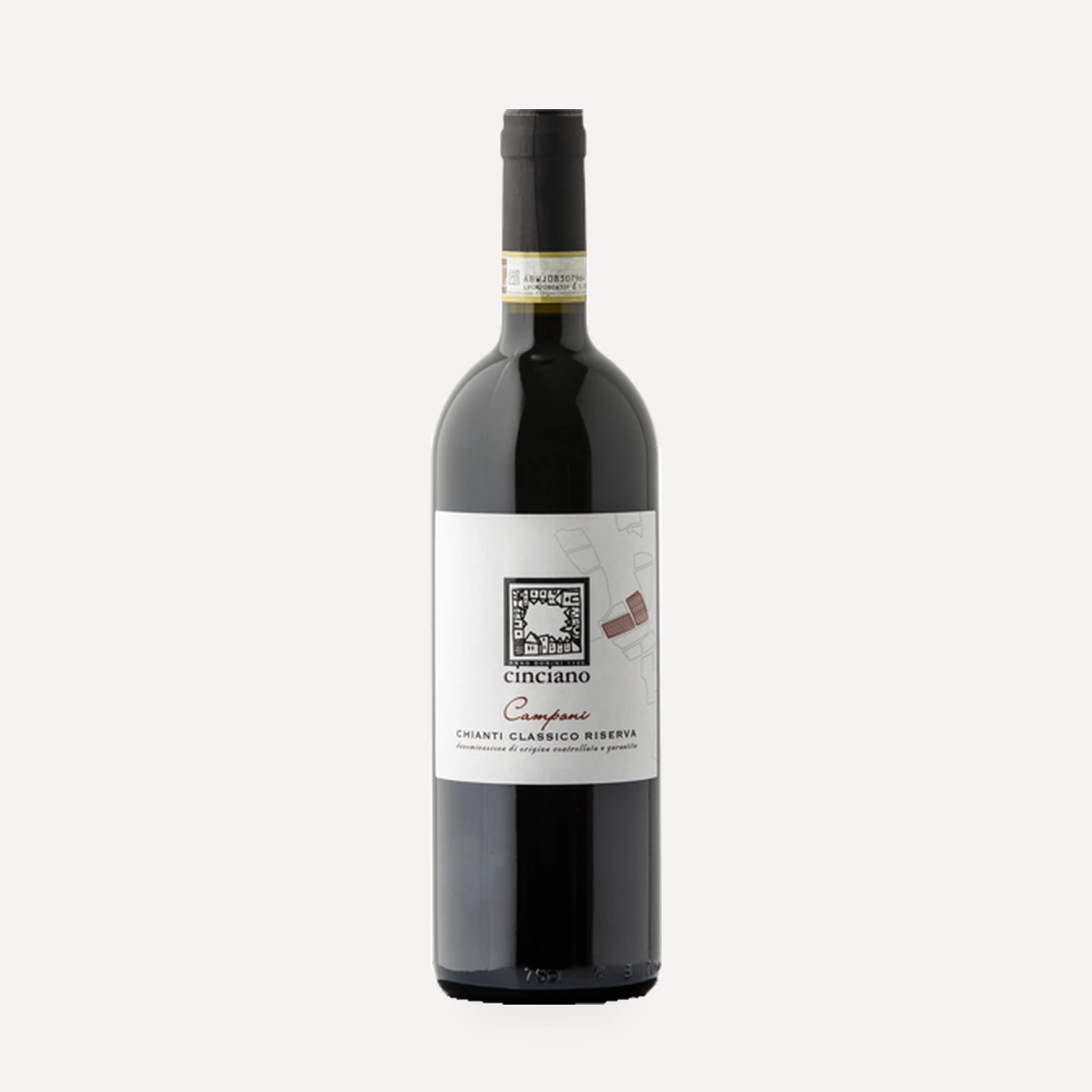
Camponi Chianti Classico Riserva DOCG
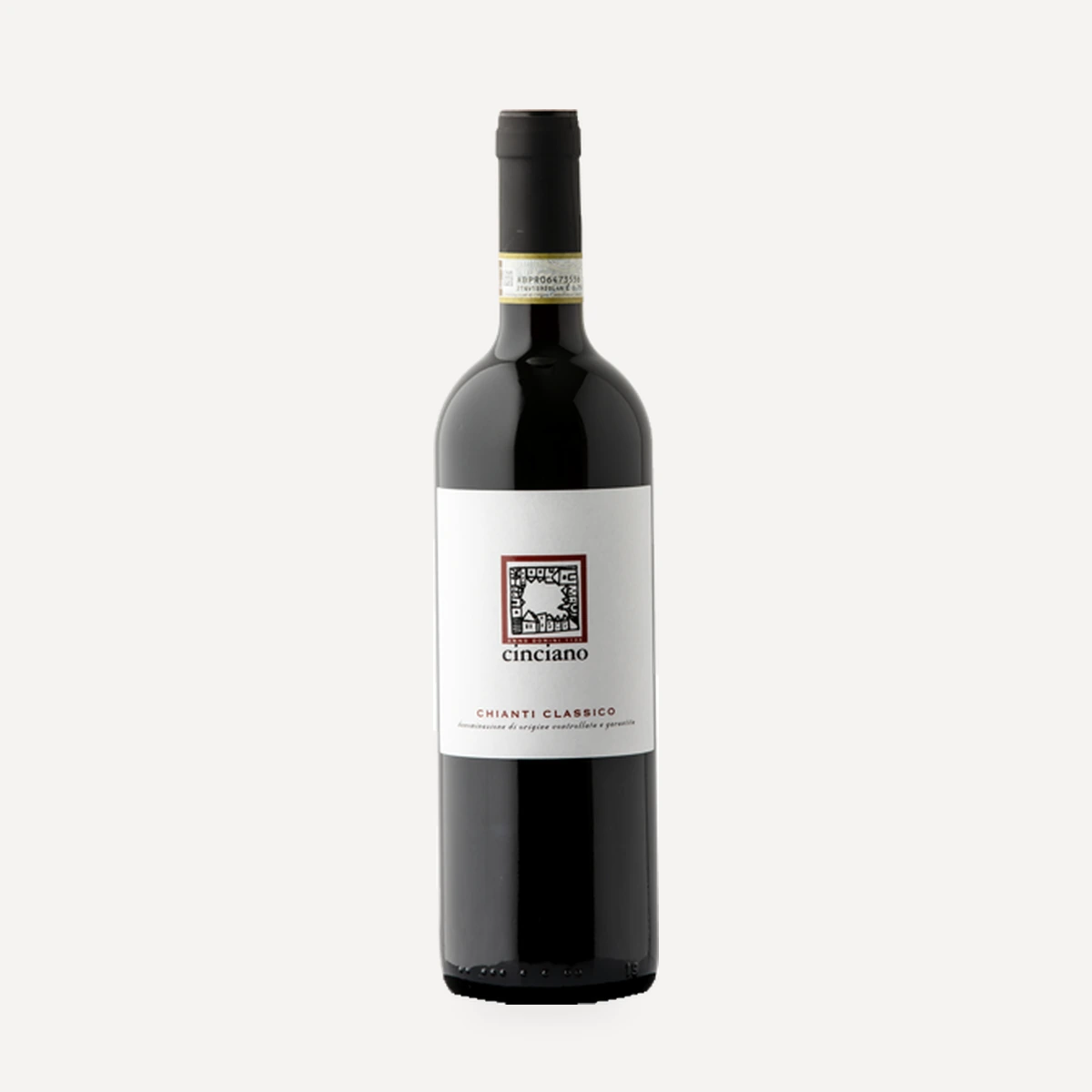
Chianti Classico DOCG
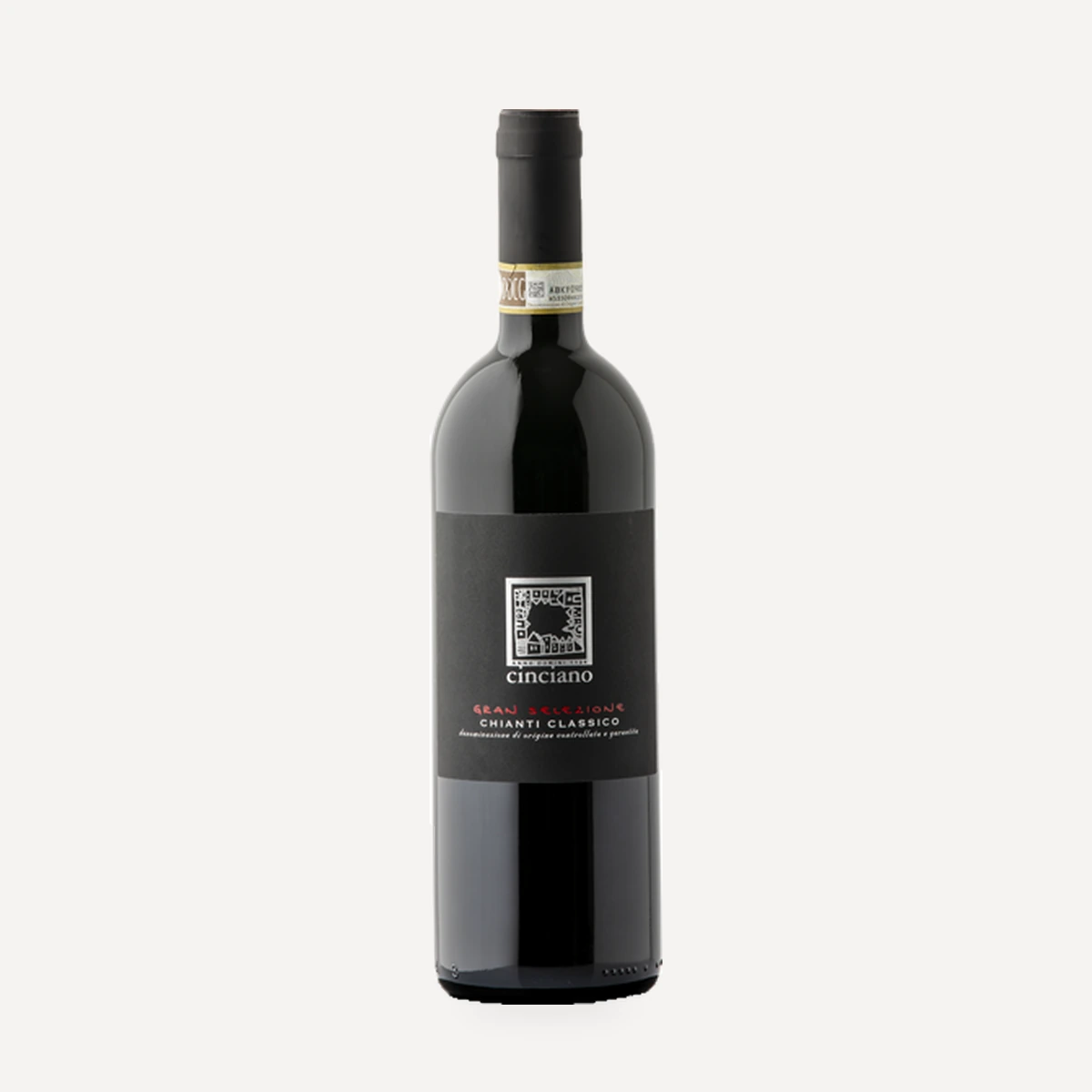
Chianti Classico Gran Selezione DOCG
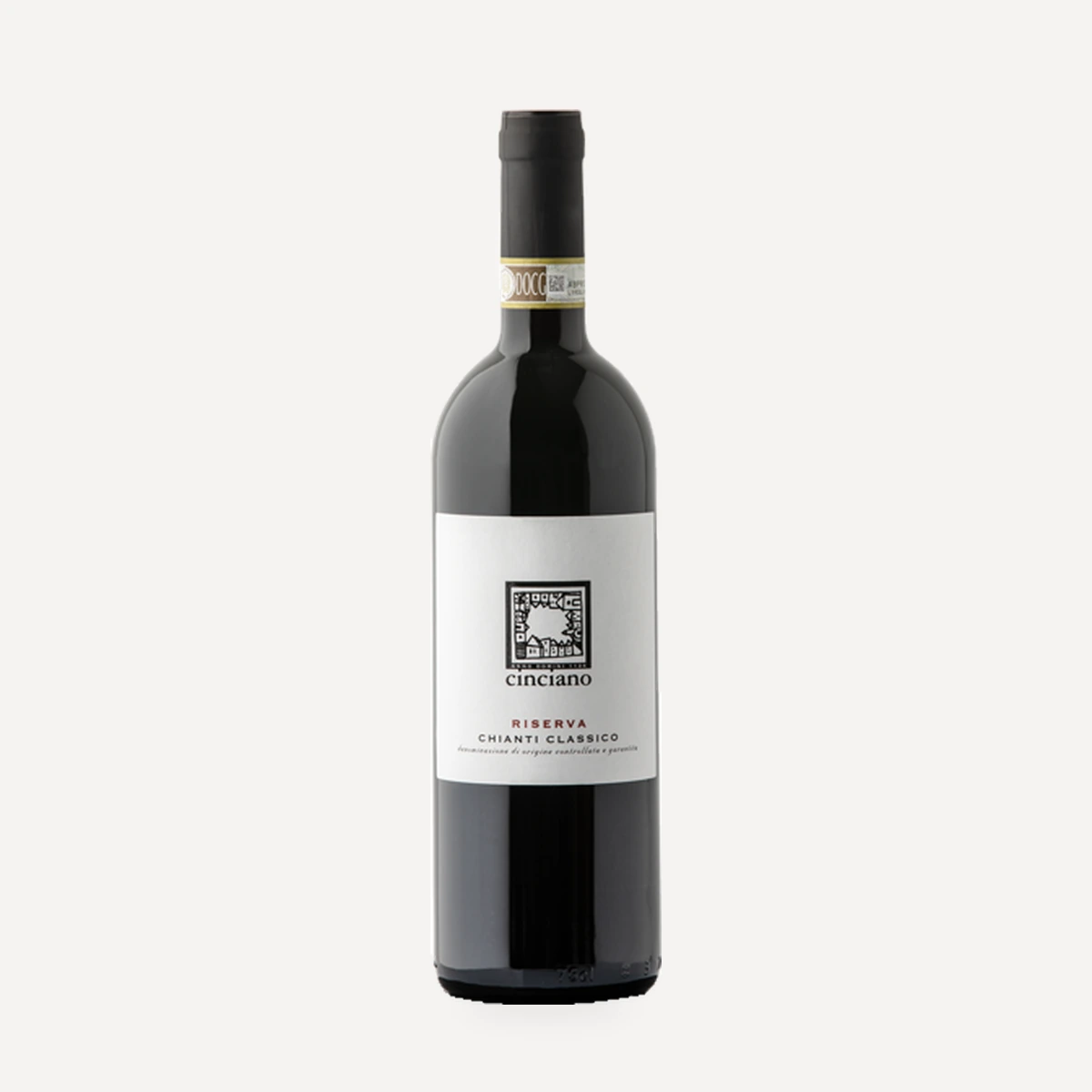
Chianti Classico Riserva DOCG
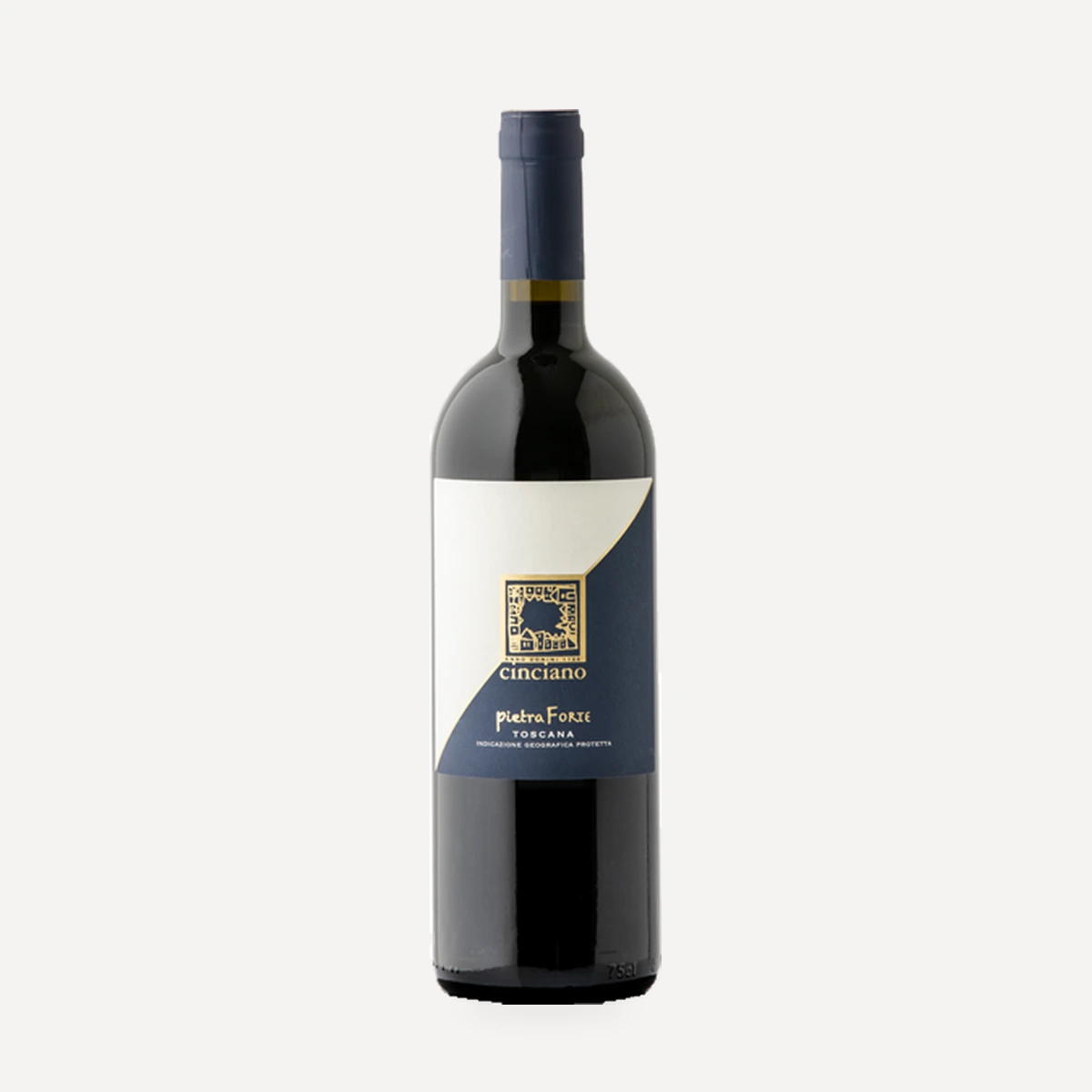
Pietraforte Rosso IGT Toscana