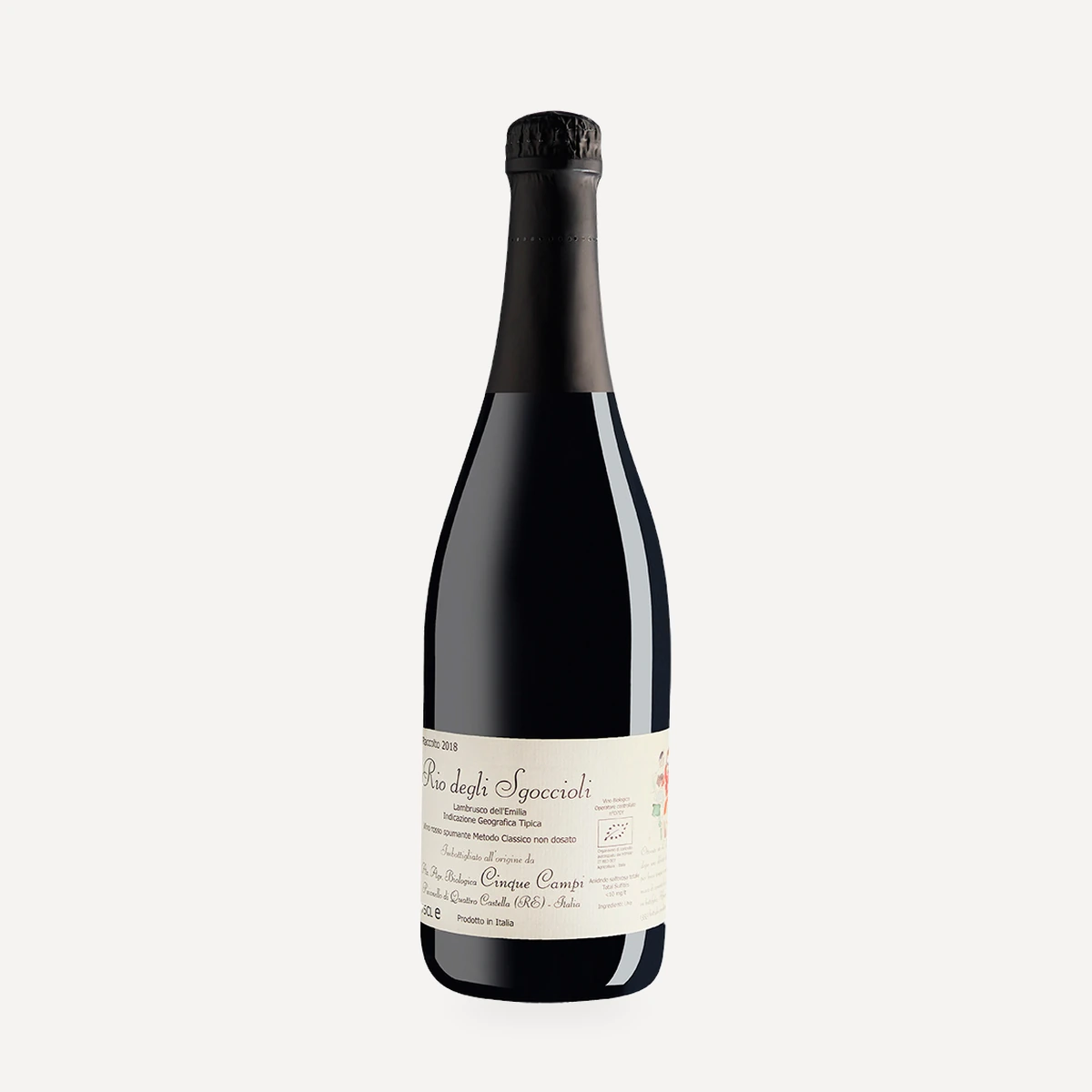
Storia
A family tradition spanning more than two centuries
The farm’s land and vineyards lie on the first hills at the foot of the Reggiano Apennines. They have passed from father to son for more than 200 years. For most of this period, the wine was made exclusively for the consumption of the large family.
1980: the Cinque Campi name and local sales
In 1980, the farm adopted the name of its principal historic parcel, Cinque Campi—literally “Five Fields.” It also began selling limited quantities of wine in glass demijohns to a small circle of customers in the village.
2003: formal organic management and bottling
Organic management was formalized in 2003, codifying methods that had already been followed as customary practice. The same year marked the beginning of bottling and labelling the farm’s wines.
2005: recovery of local varieties
In 2005, Cinque Campi began a substantial programme to recover and replant local grape varieties that had become rare in the area. This work broadened and differentiated the farm’s production.
Terroir
Cinque Campi’s vineyards are situated on the first hills at the foot of the Reggiano Apennines. The named sites have different orientations: the historic Cinquecampi parcel faces east, Le Marcone faces west, while Botteghe and La Bora Lunga face northwest.
The vineyard soil is clay loam composed of approximately 20% sand, 45% silt and 35% clay. Production ranges from 1.5 to 3 kg of grapes per vine, depending on the variety.
Vinificazione
Organic methods are used throughout the vineyards and the farm’s other agricultural production. Vineyard care is carried out manually.
The annual harvest cycle includes a green harvest in July, when surplus bunches are removed. From late August until early October, the remaining grapes are picked by hand into small crates. The crates help prevent berries from being crushed prematurely, and the fruit reaches the estate cellar for processing within a few hours of picking.
The approach is founded on preserving the natural balance of the land. Organisms living on the leaves, shoots and in the soil are treated as integral parts of that balance rather than elements to be eliminated or altered.
Grapes are processed within a few hours of the manual harvest. Depending on the intended wine, they are placed in open oak vats or stainless-steel tanks.
Skin macerations last from 10 to 30 days, with daily pump-overs. After maceration, the wine is drawn off and the remaining material is pressed gently in a vertical press. White wines remain on their skins for 3–5 days and ferment without temperature control. Subsequent maturation varies by wine.
Fermentations are spontaneous and driven by the wild yeasts naturally present on the grapes. The wines are made without filtration, clarification or added oenological processing aids. Sulphur dioxide is not added; any sulphites present are a natural result of fermentation.
Filosofia
Cinque Campi regards organic farming as a customary practice rather than a recent technical programme. Its guiding conviction is that the natural balance of the land should neither be disturbed nor modified. Every living organism on the vine leaves, shoots and in the soil is understood as part of that balance.
This biological diversity is linked to the identity of the farm’s products, and organic cultivation and processing are presented as the only acceptable way for the family to make wine. In the cellar, this position is expressed through spontaneous fermentation, the absence of filtration and clarification, and avoidance of added processing aids and sulphites.
Vini
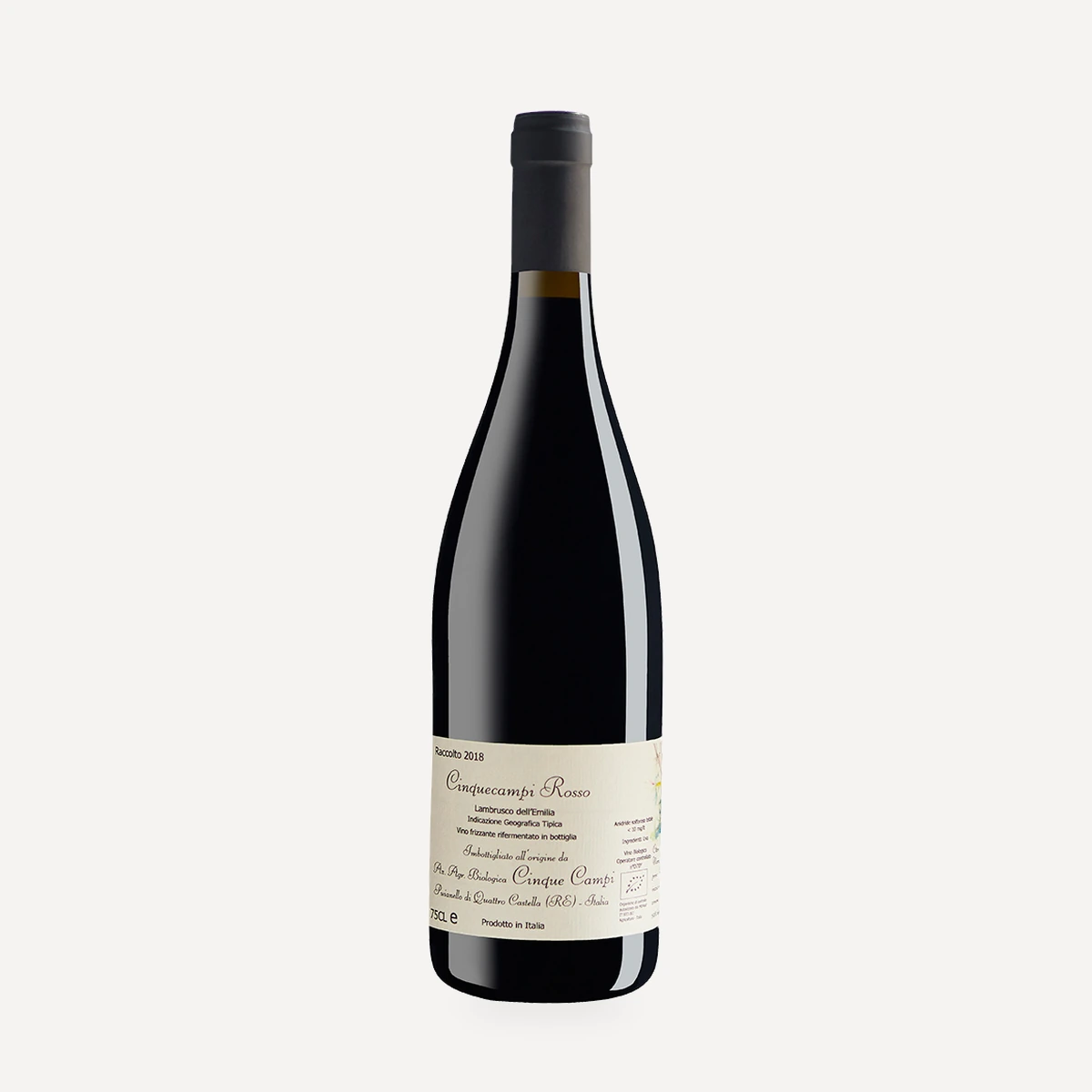
Cinquecampi Rosso
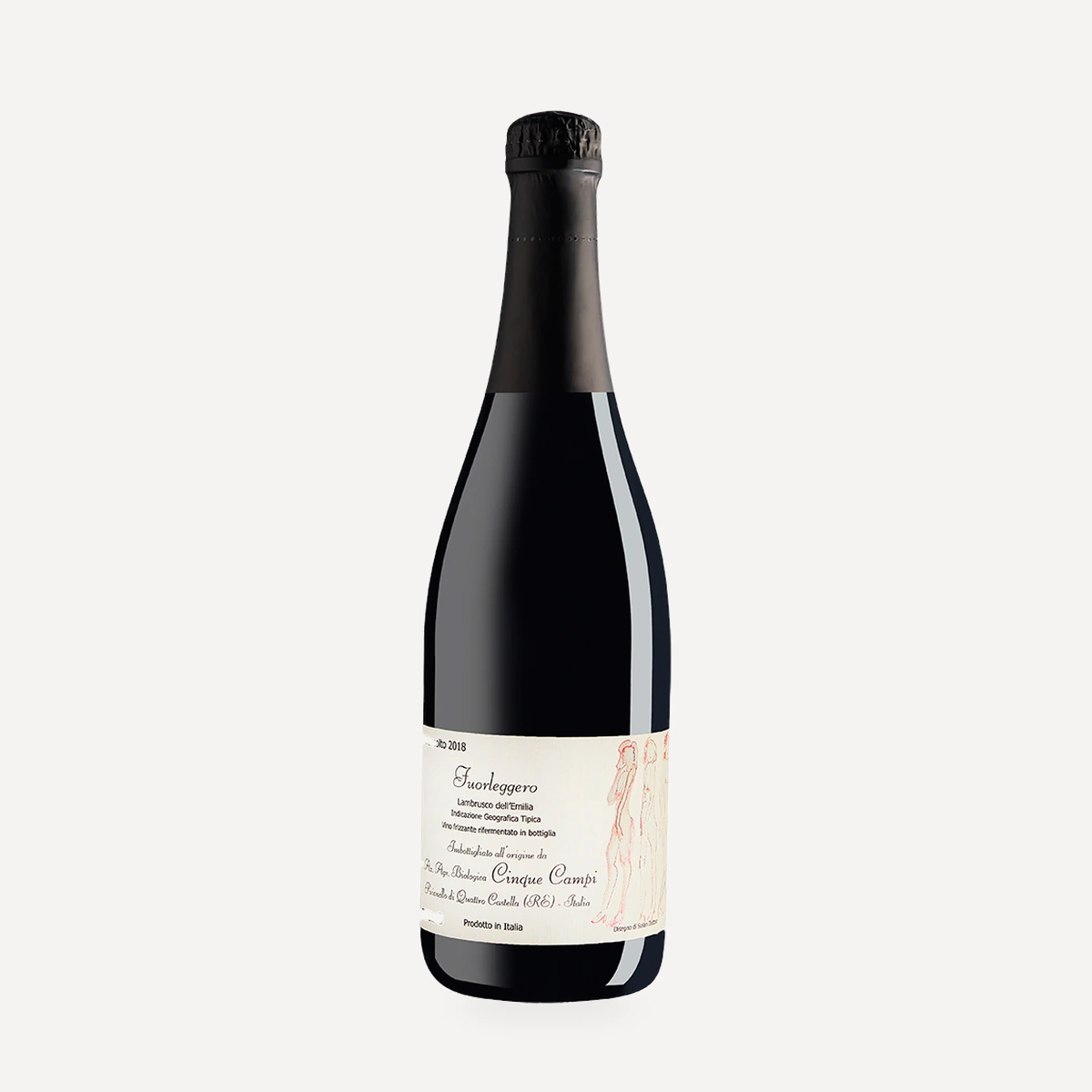
Fuorleggero
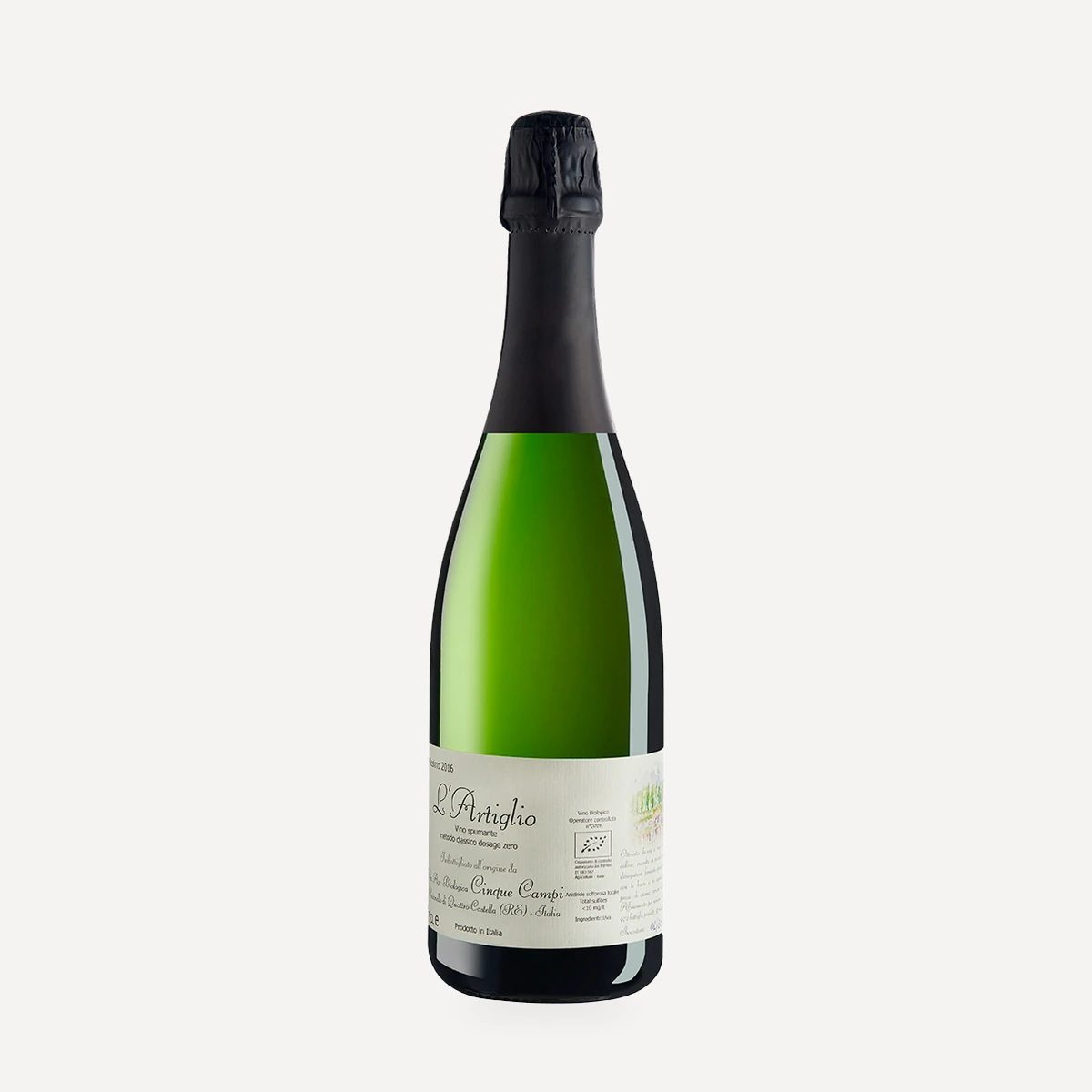
L'Artiglio
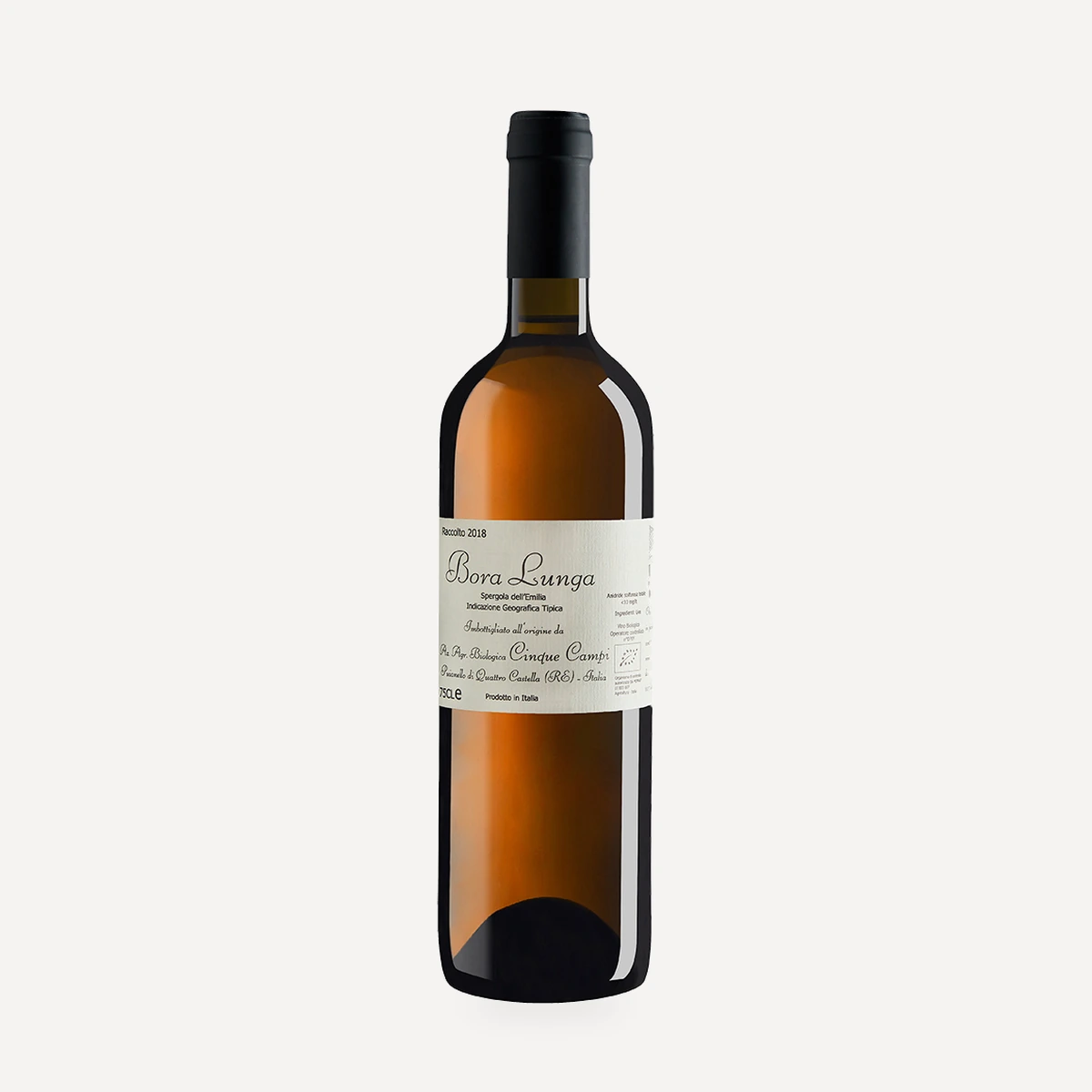
La Bora Lunga
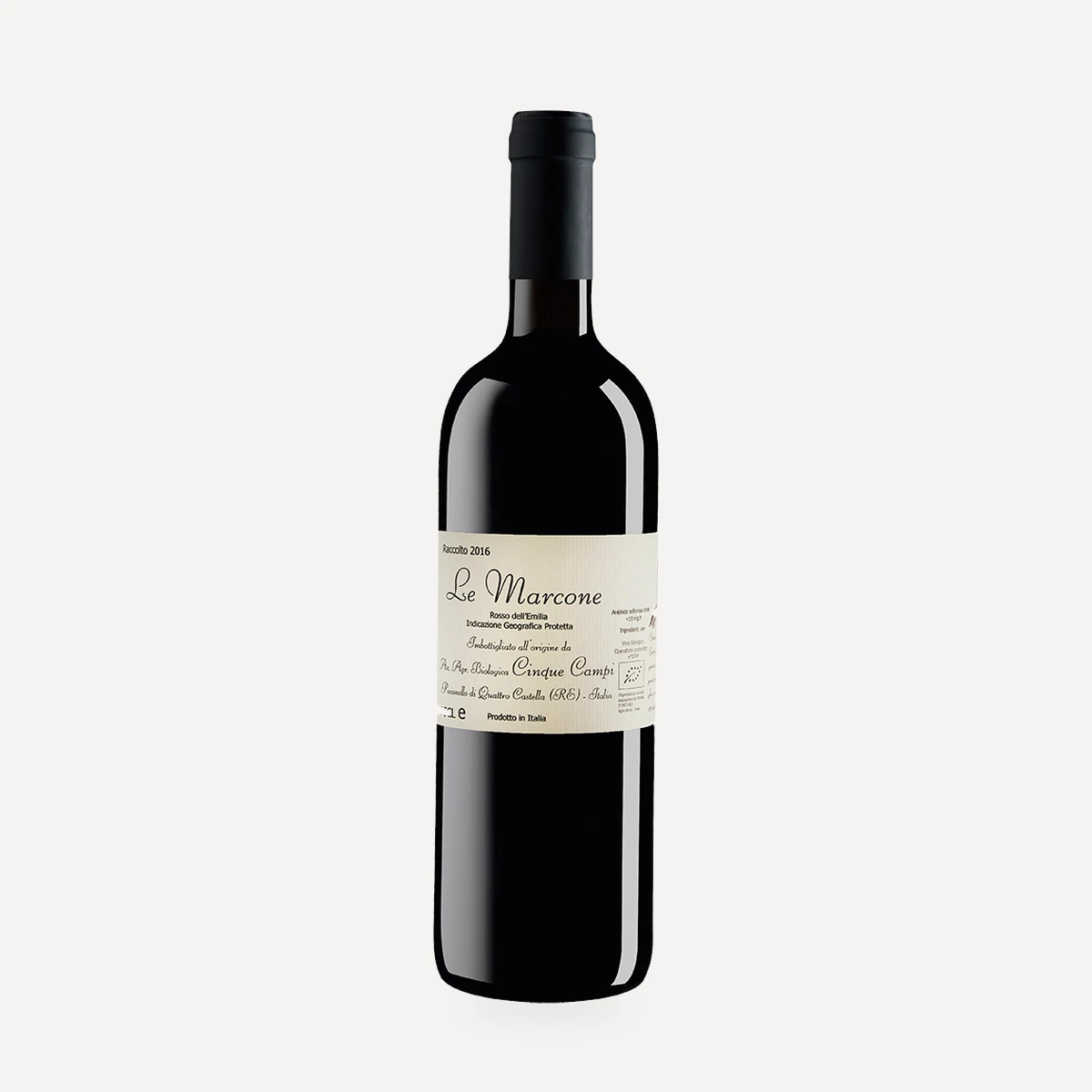
Le Marcone
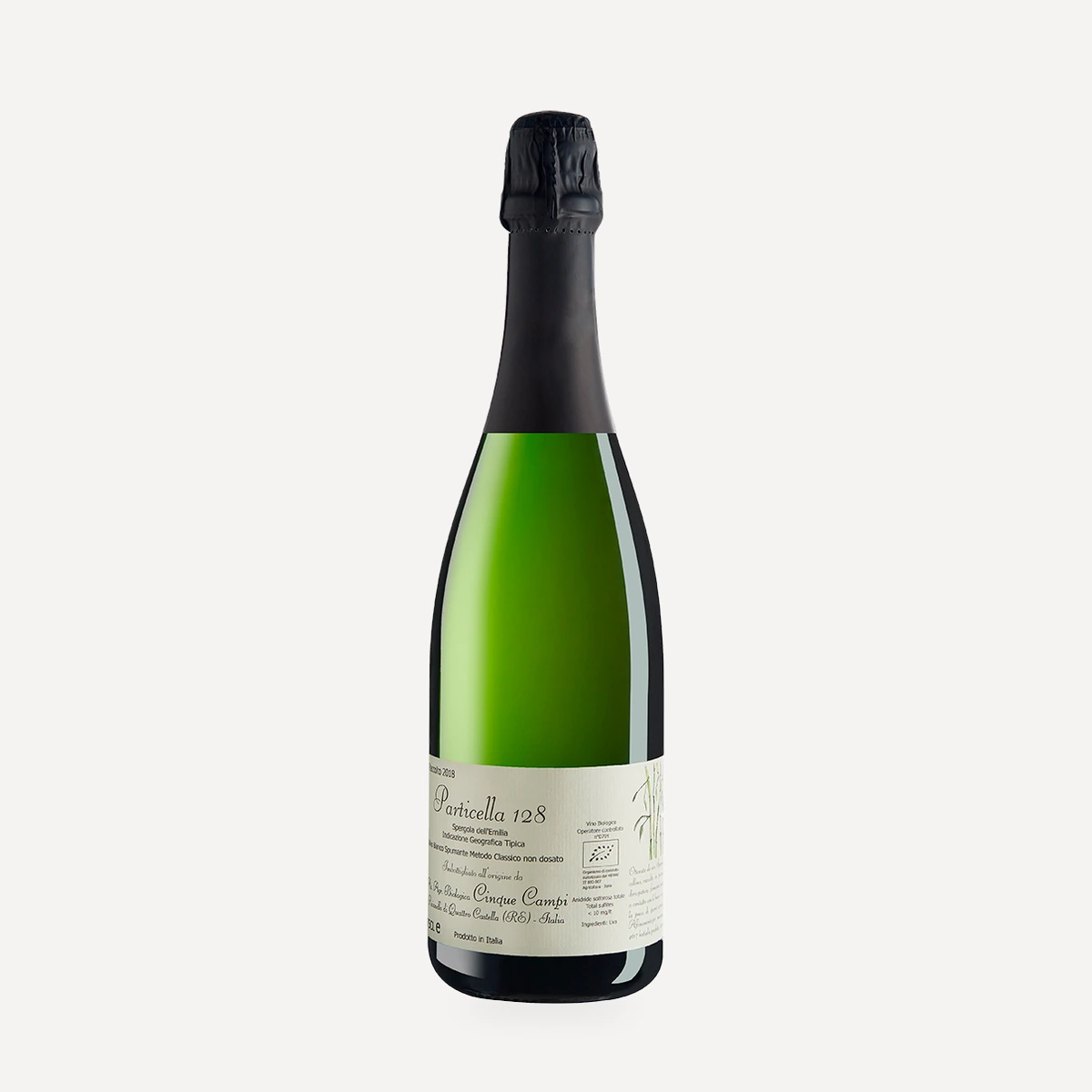
Particella 128
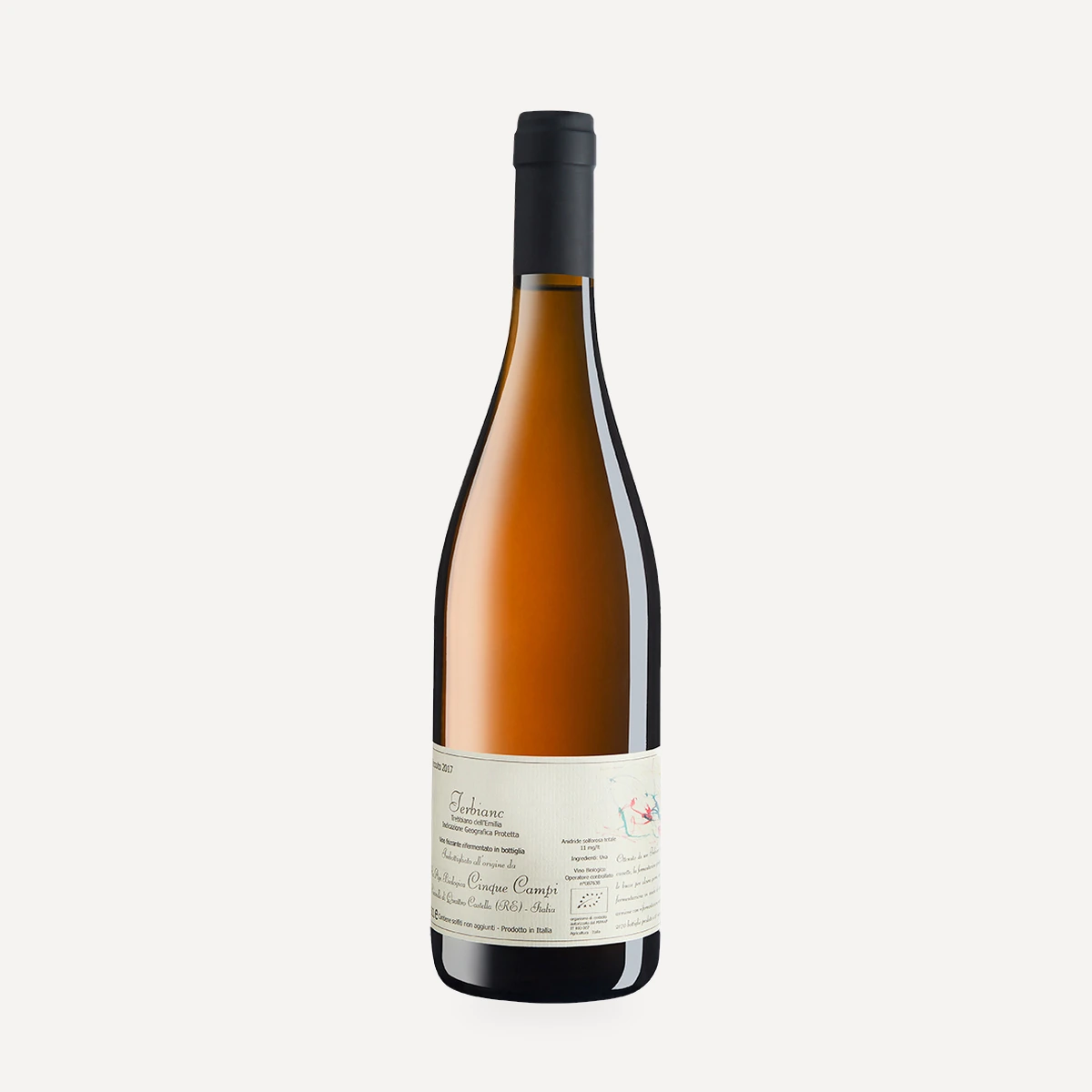
Trebianc
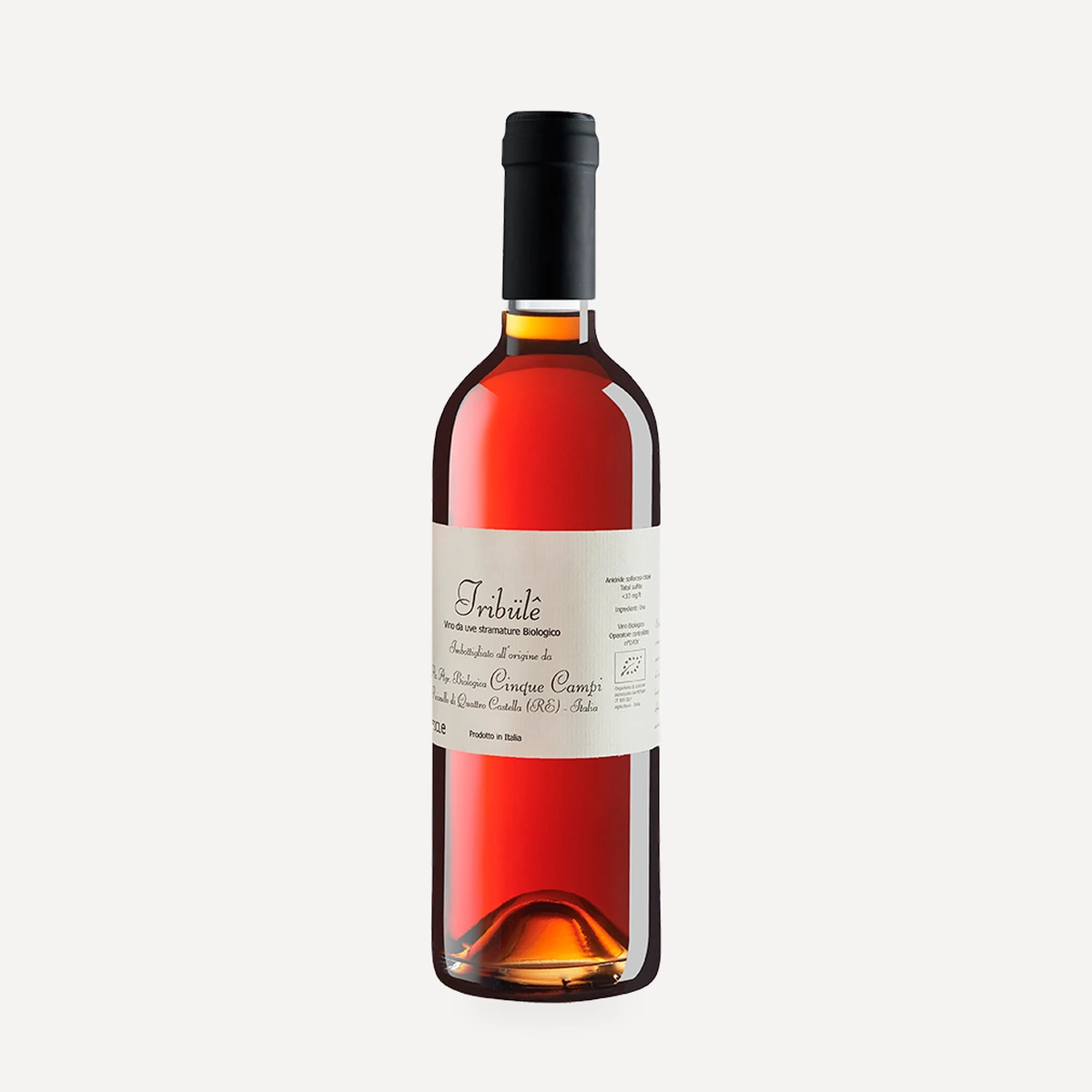
Tribülê