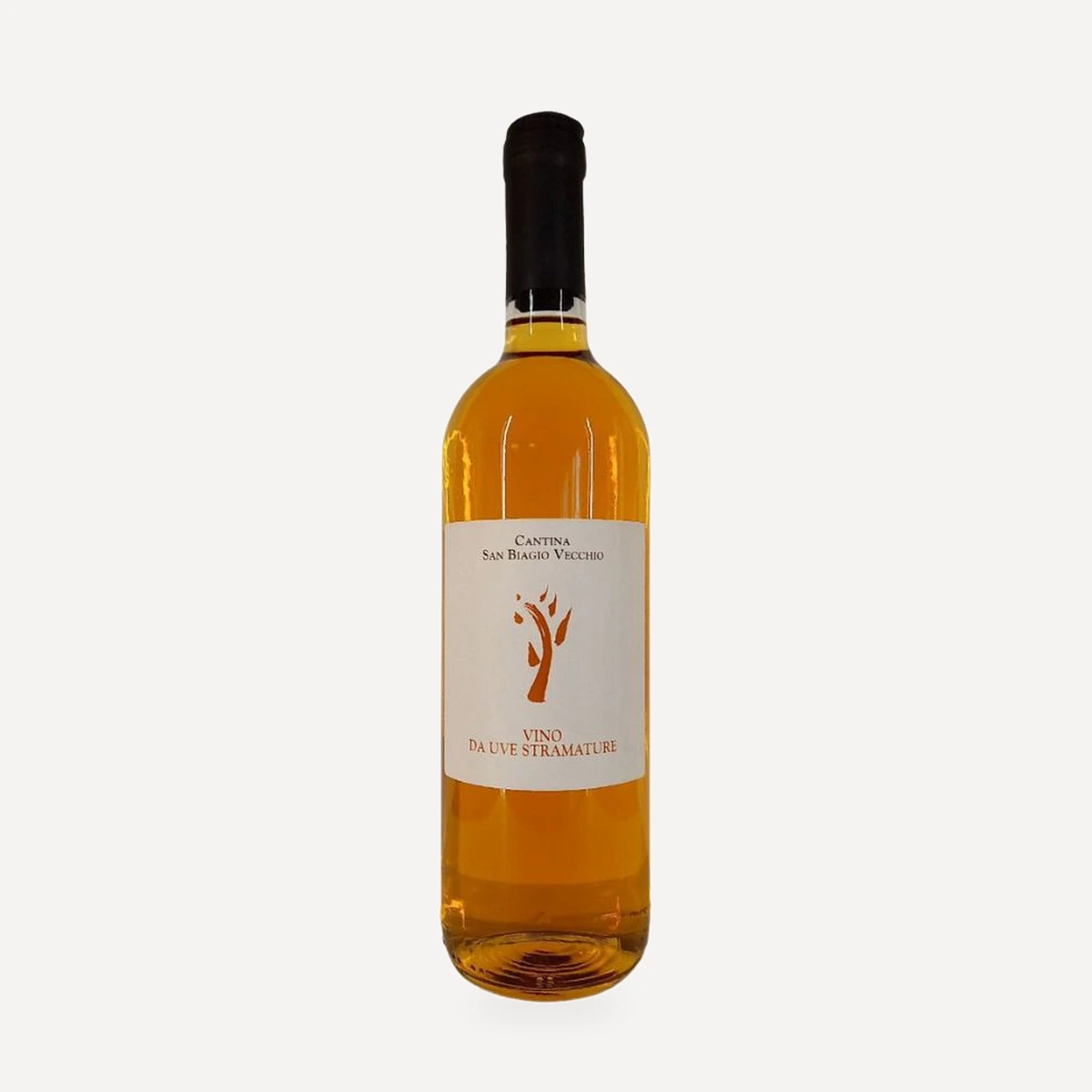
Storia
The recovery of Centesimino
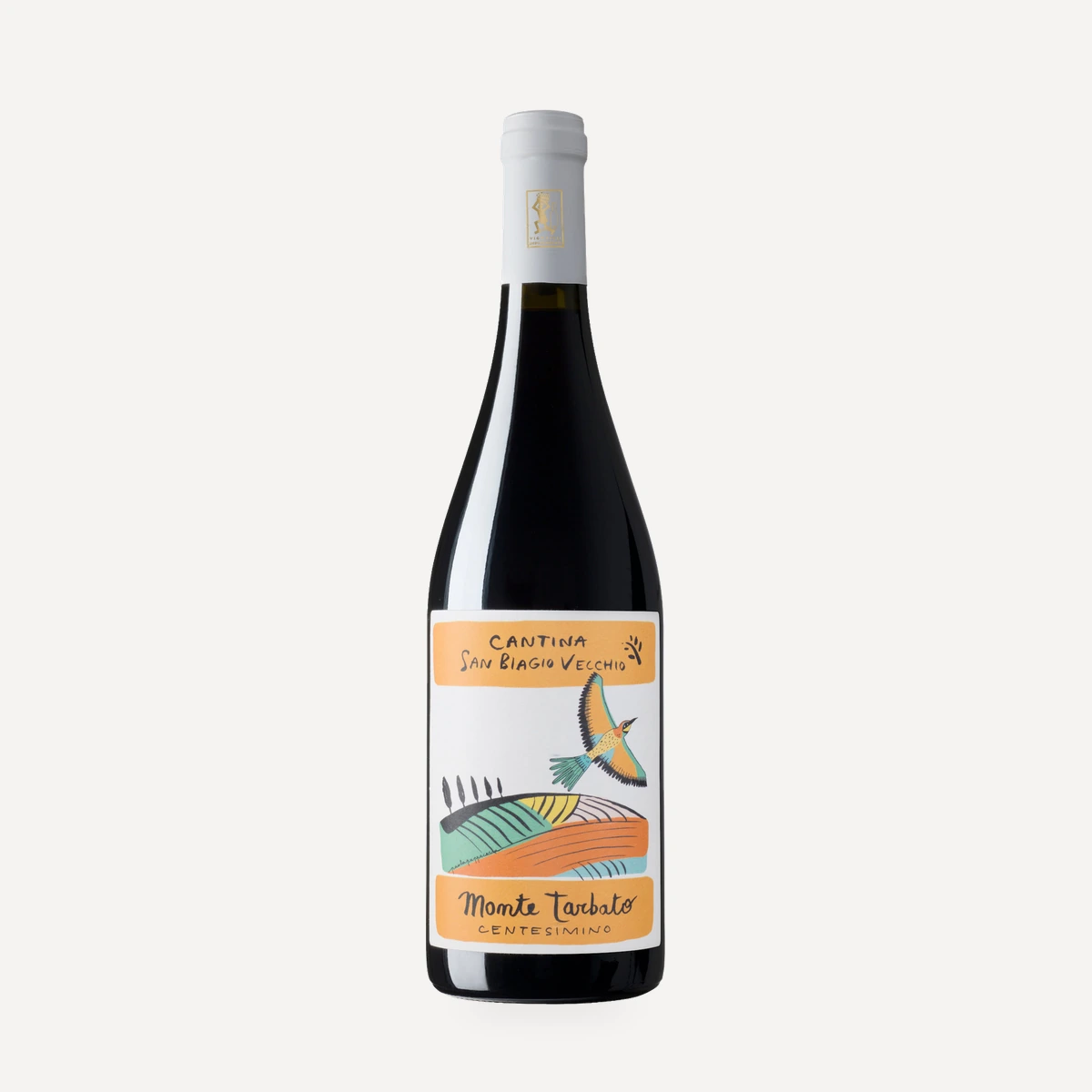
The local red grape now known as Centesimino was formerly called Savignone. After phylloxera, the variety came close to extinction. Pietro Pianori of Faenza preserved a healthy Savignone vine in his garden in central Faenza and propagated its cuttings at his farm in Terbato, near the Torre di Oriolo dei Fichi.
Over time, the grape ceased to be known as Savignone and took the Italian form of Pianori's Romagnolo nickname, Zàntesmen. The nickname referred to his reputation for thriftiness. The resulting name was Centesimino. DNA analysis later identified the variety as a hybrid of Sangiovese and Moscato Violetto.
Pianori's Centesimino vineyard survived at Podere Terbato until 1980. Before it was removed, Don Antonio Baldassari recovered cuttings and propagated them in his vineyards at San Biagio Vecchio, continuing the variety's local history.
Don Antonio and the Albana vineyard
Don Antonio Baldassari was the parish priest of San Biagio and an enthusiastic winegrower. In the early 1990s, he planted the first Albana vineyard associated with the estate. The vines derived from a careful massal selection of old Albana di Romagna material personally chosen by Don Antonio and his father.
Andrea and Lucia
Andrea Balducci subsequently took over management of the farm from Don Antonio and drew heavily on the priest's experience. Lucia Ziniti came from the restaurant trade and assumed responsibility for sales and hospitality. Andrea and Lucia, partners in both the business and their private lives, met at San Biagio Vecchio and now manage the estate together.
The 2014 turning point
Continuous rain in 2014 destroyed more than half of the Sangiovese crop. The grapes that survived came from the highest rows at Podere Terbato and produced the first vintage of PorcaLoca. The resulting Sangiovese was fine-boned, elegant, lightly spicy and refreshing rather than powerful.
The estate attempted to present the wine as Romagna DOC Sangiovese Oriolo, but the DOC commission rejected it. Andrea and Lucia bottled it regardless because they believed in the result. The experience changed their approach to Sangiovese: from 2014 onward, they abandoned the objective of making a muscular expression and instead pursued its fresher, fruitier and more playful character.
Terroir
Setting
The agricultural estate covers 6 hectares on the Romagnolo hill of San Biagio Vecchio, close to Faenza. Its land faces the medieval Torre di Oriolo dei Fichi, while the view crosses the plain toward the Adriatic Sea. Podere Terbato lies approximately 1 km from the main cellar and has a direct view of the tower.
The vineyards are generally documented at approximately 190 m above sea level. Within only a few metres, the soil changes in colour and composition, exposure to wind and sunlight varies, and cooler sections alternate with warmer ones. These small-scale differences are reflected in the grapes from each harvest.
The Lente di Sabbia
Yellow sand and clay define the hills. The Albana vineyard grows over marzana: emerged pockets of yellow sand of Pleistocene origin. Geological studies associated with the discovery at Monte Poggiolo identified the hilly territory of Oriolo, Castiglione and Monte Poggiolo as a coastal river-delta zone around 1.5 million years ago.
This formation is known as the Lente di Sabbia of Oriolo dei Fichi. Golden-sand pockets are visible at the surface in some places; elsewhere they lie deeper and are interspersed with calcareous clay and red clay. The estate connects these soils with freshness and a saline character in its wines.
Individual soil expressions
San Biagio Vecchio includes southeast-facing, medium-textured ground. Podere Terbato combines Pleistocene yellow sand with red clay and includes both southeast- and northeast-facing vineyard sections. Podere Cà di Frè is southeast-facing and has medium-textured soil.
Vinificazione
The vineyards are managed as a biologically active agricultural environment rather than as an isolated monoculture. Herbicides and systemic treatments are excluded, with the stated objective of retaining as much biodiversity as possible.
Harvesting is performed manually into boxes, with bunch selection. Repeated passages are used where ripening is slow or uneven, allowing individual sections and bunches to be collected progressively. This practice is particularly important for Albana and for grapes allowed to over-ripen or develop botrytis on the vine.
Massal selection has an important role in preserving local plant material. The Albana vineyard established in the early 1990s originated from old Albana di Romagna selections chosen by Don Antonio and his father, while the Centesimino plantings continue material linked with the cuttings rescued by Don Antonio before the old Terbato vineyard was removed.
The cellar is deliberately small and uses only the technology considered useful for guiding must through its transformation into wine. The governing principle is minimal interference rather than technological display.
Fermentations are spontaneous, and sulfur dioxide is used sparingly when healthy grapes make this possible. Cellar work relies on repeated tank tasting, patience during fermentation, meticulous hygiene and precise timing of rackings.
Documented equipment and vessels across production include a pneumatic press, stainless-steel tanks, concrete tanks and Georgian qvevri. Practices represented in the cellar include gentle pressing, static settling without oenological processing aids, skin contact of varying duration, spontaneous malolactic fermentation, maturation in steel or concrete, and extended skin fermentation in qvevri. One sparkling expression is refermented in bottle by the traditional method and is neither disgorged nor filtered; no sulfites are added during its eight-month steel maturation.
Filosofia
San Biagio Vecchio treats wine as one part of a wider agricultural culture rooted in the Faenza hills. The estate's declared objective is to produce authentic, vital wines by first maintaining soil that is rich and full of life.
The vineyard is understood as a complex garden in which soil colour and composition, wind, sunlight and temperature can change over very short distances. Preserving this complexity and its biodiversity is the reason given for rejecting herbicides and systemic treatments.
In the cellar, Andrea and Lucia define their role as accompanying the grapes from must to wine with as little interference as possible. Spontaneous fermentation, restrained sulfur use, patient observation, cleanliness and timely racking are presented as practical consequences of that approach.
Their experience with the difficult 2014 Sangiovese harvest also shaped the estate's view of varietal expression. Rather than forcing Sangiovese toward power, they chose to cultivate its fresher, fruitier and more playful side. The preservation of Centesimino, massal selection of Albana and revival of Gentil Rosso wheat extend the same commitment to local agricultural material beyond a single wine or vintage.
Vini
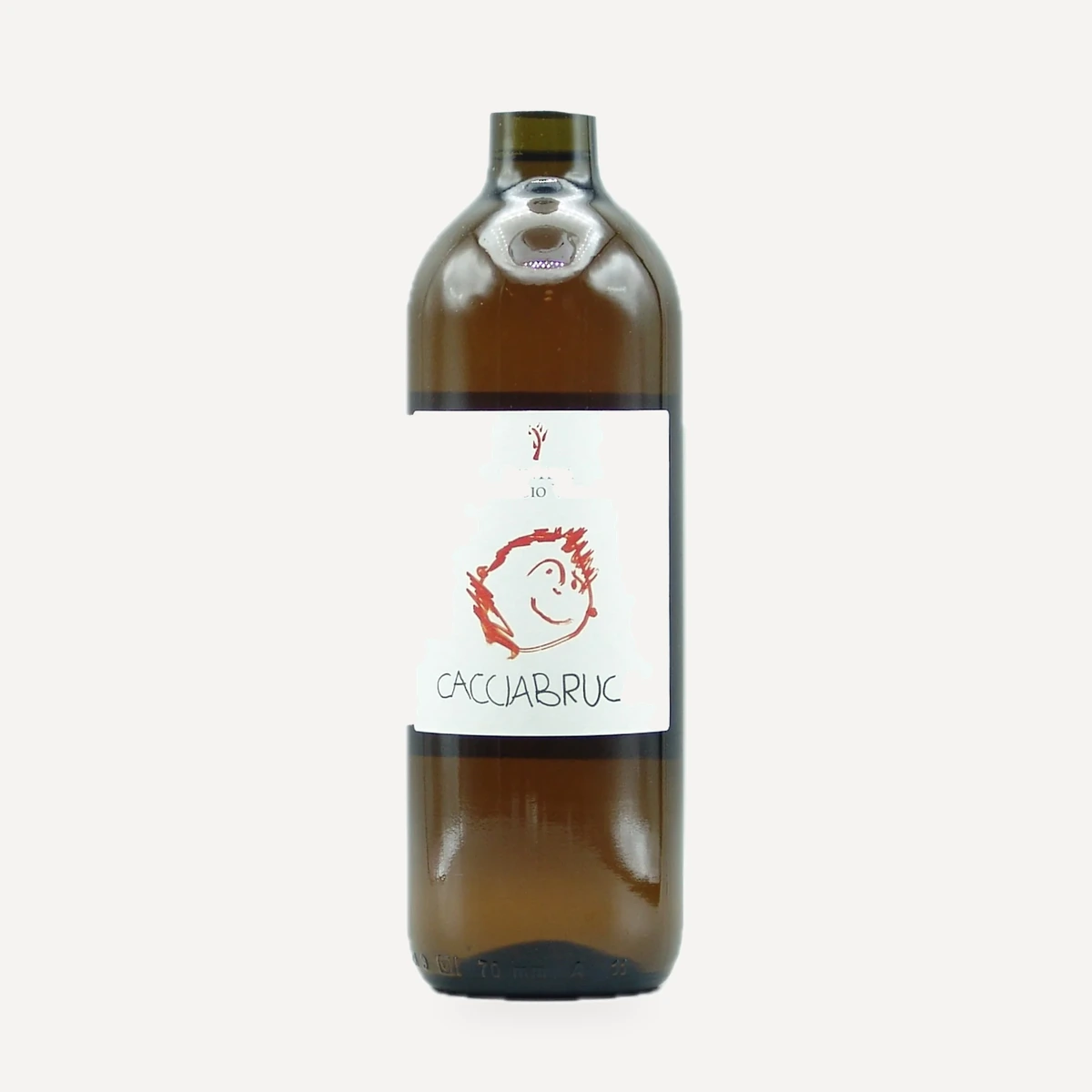
CacciaBruco
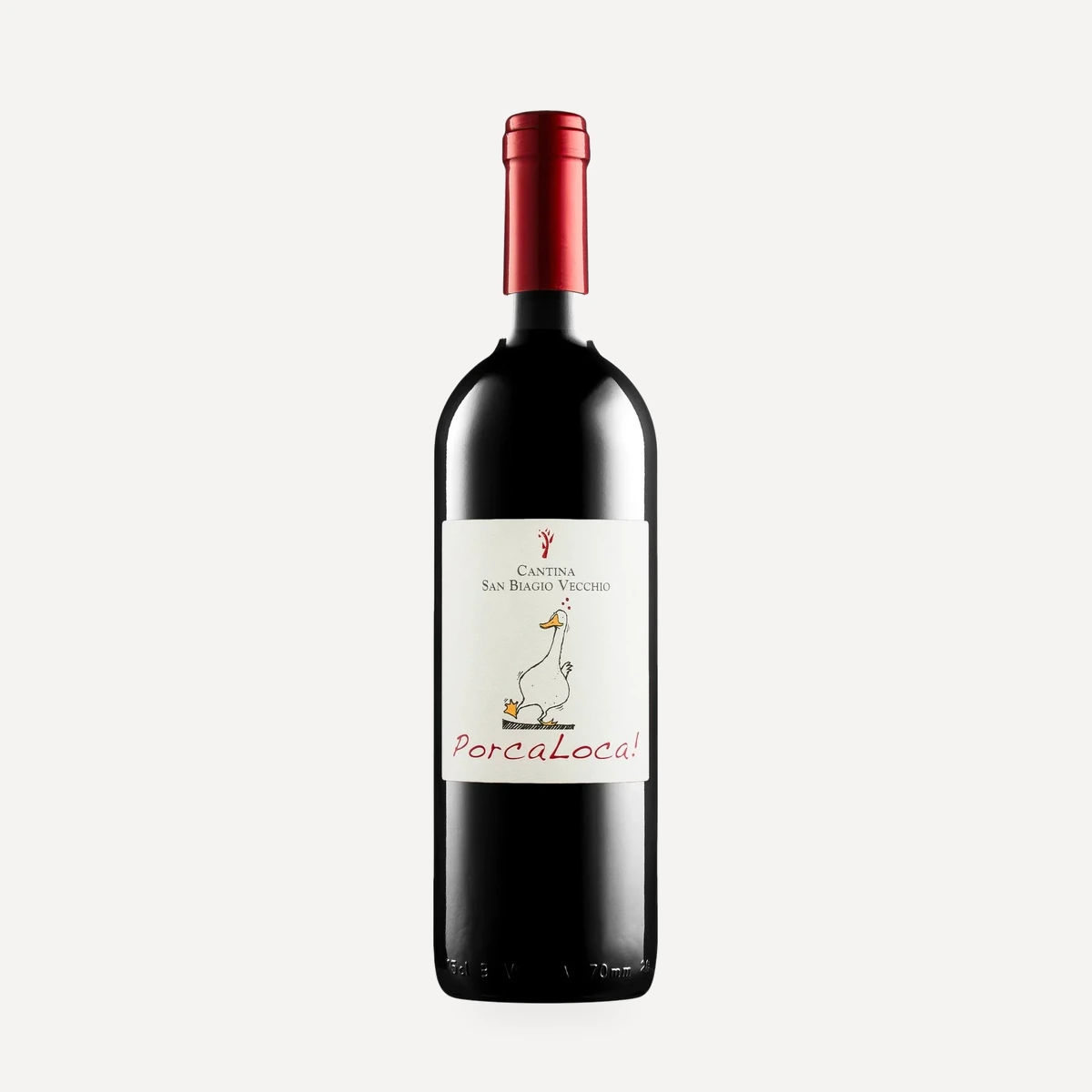
PorcaLoca!
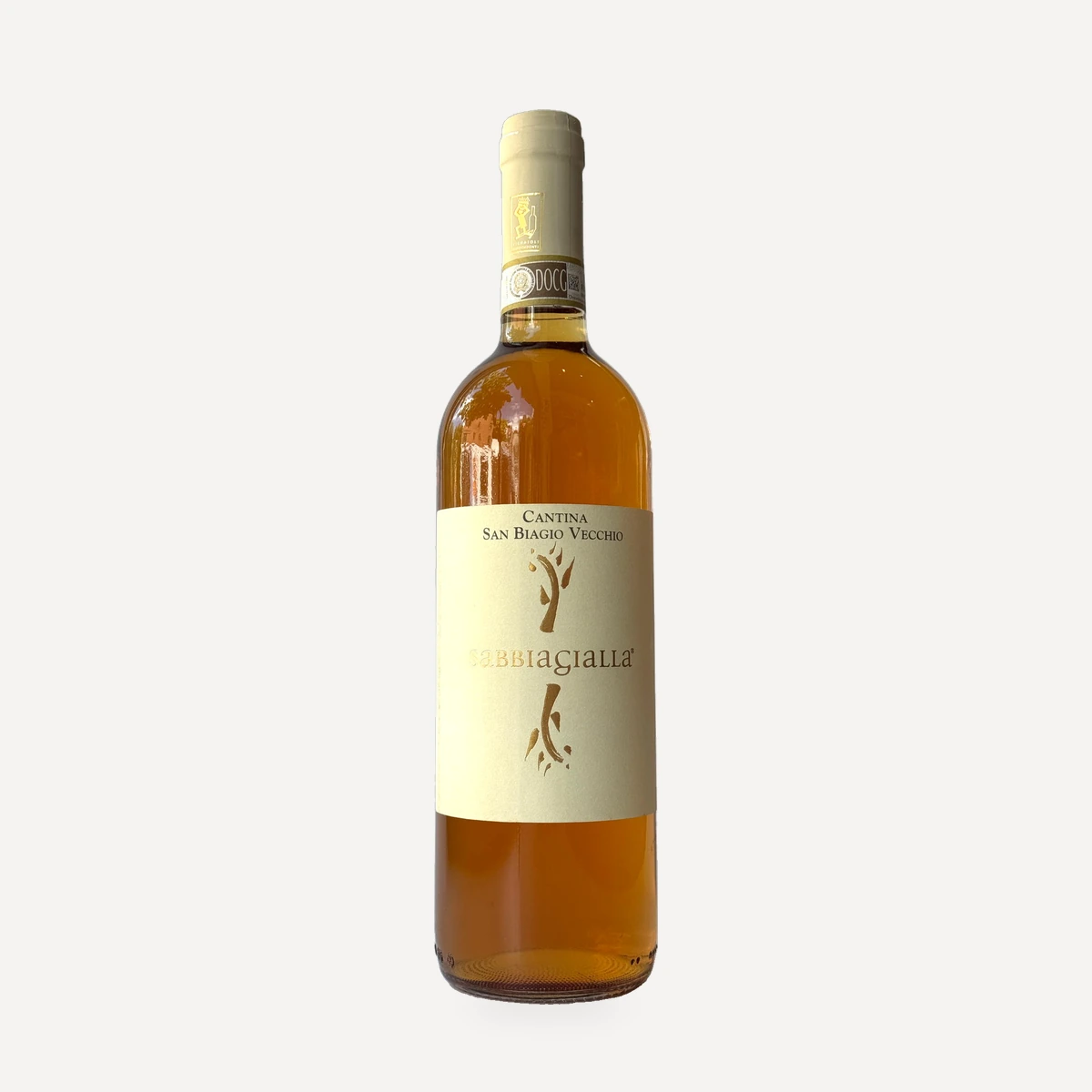
SabbiaGialla
MonteTarbato