Storia
The earlier estate
In 1376, the family then occupying Collazzi was among eight Florentine families honoured after fighting for the liberation of Florence. The word Libertà was incorporated into the former owners’ coat of arms in recognition of that action. This episode later supplied the name and historical reference for one of the estate’s wines.
Villa I Collazzi stands at the heart of the property, on a rectangular terrace at the summit of a hill. A cypress-lined approach leads to the villa and garden. The interior preserves Renaissance paintings, a family chapel and a cellar containing an olive mill described as the oldest in Italy.
Marchi family ownership
The Marchi family acquired Tenuta Collazzi in 1933 and remains its owner. At a later stage of the family’s stewardship, the vineyards and winery were restructured to give the agricultural business renewed impetus and support an explicit objective of producing high-quality wines.
Development of the wine portfolio
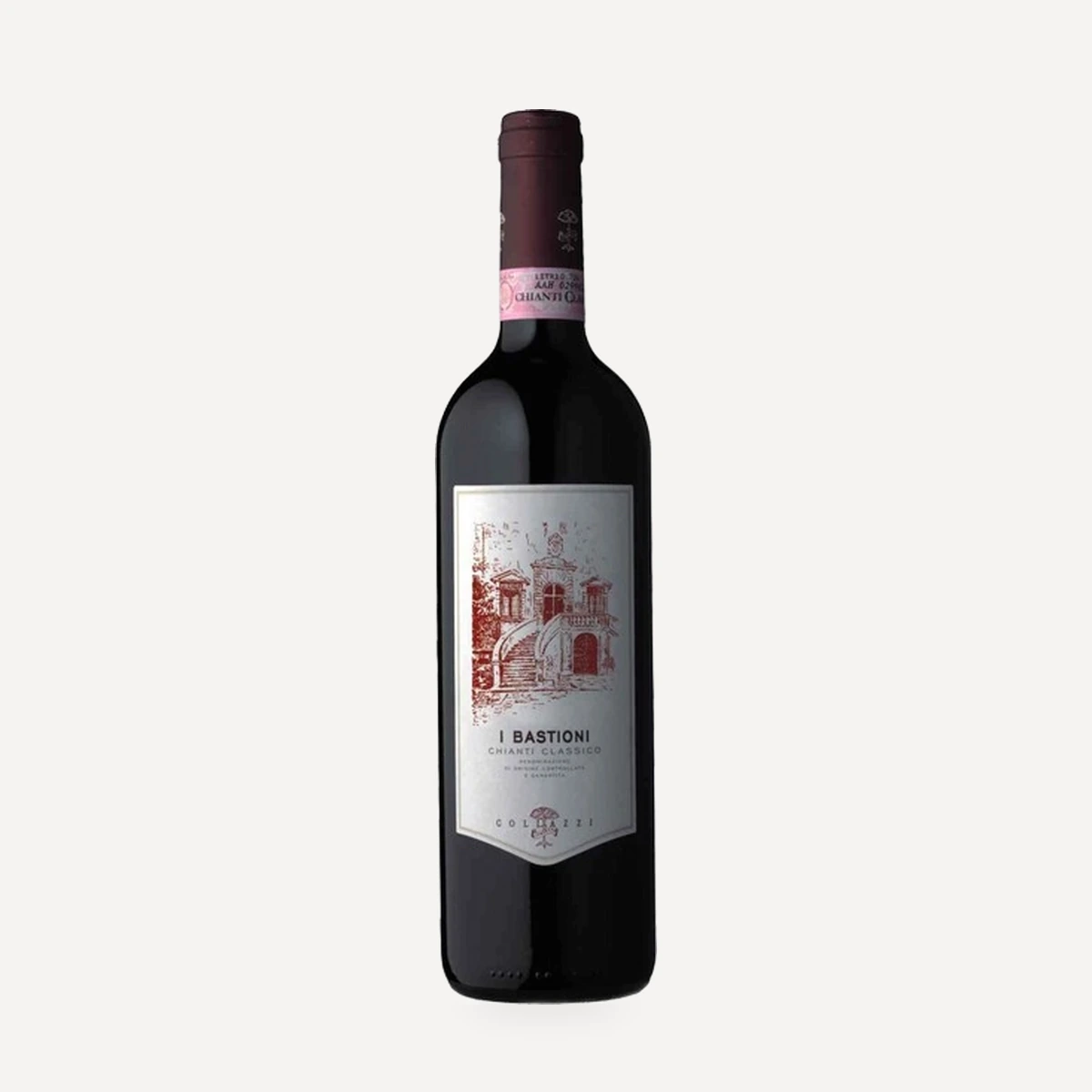
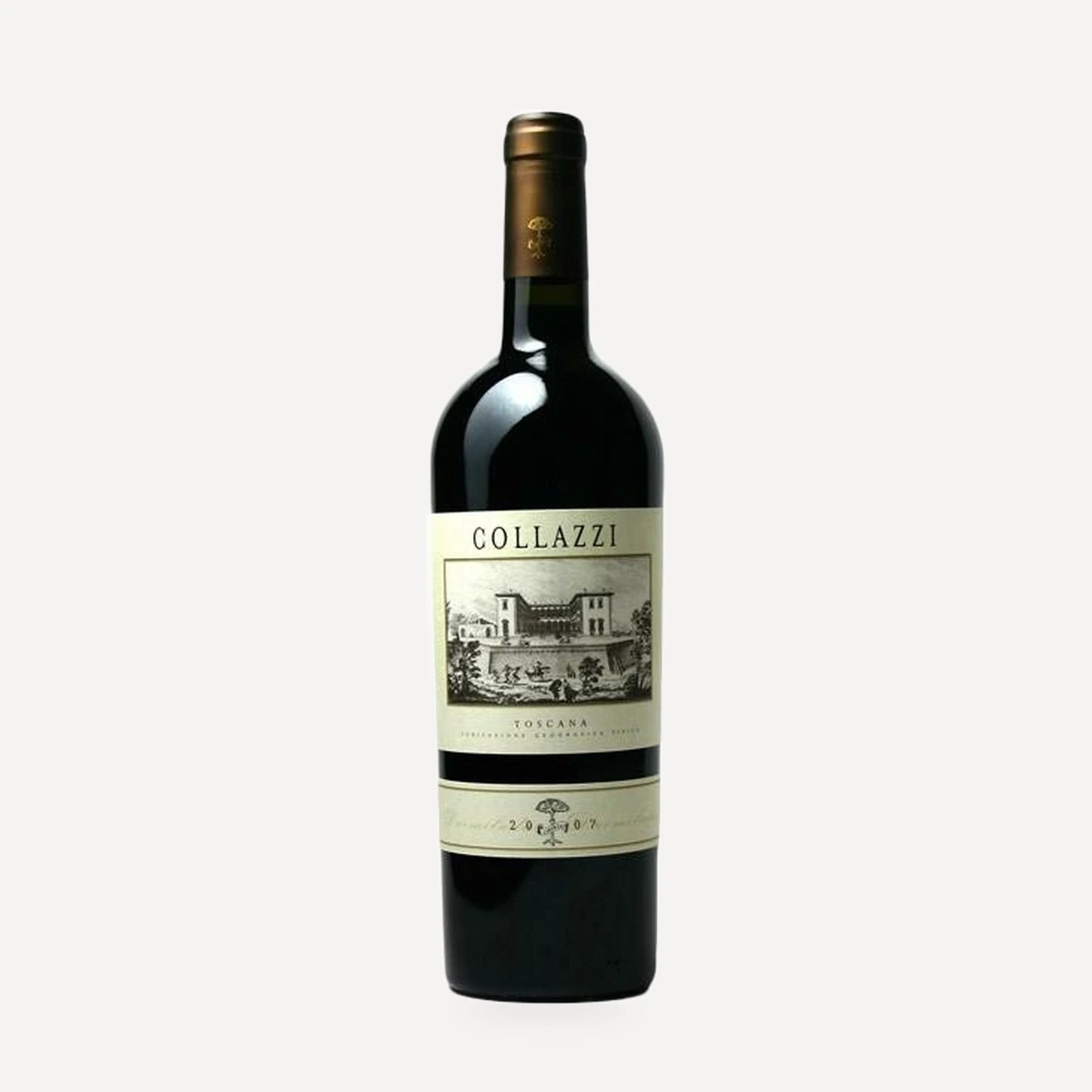
The first vintage of the estate’s eponymous Collazzi wine was produced in 1999. Production of Bastioni, sourced from the estate’s Chianti Classico vineyard in San Casciano Val di Pesa, began with the 2002 vintage.
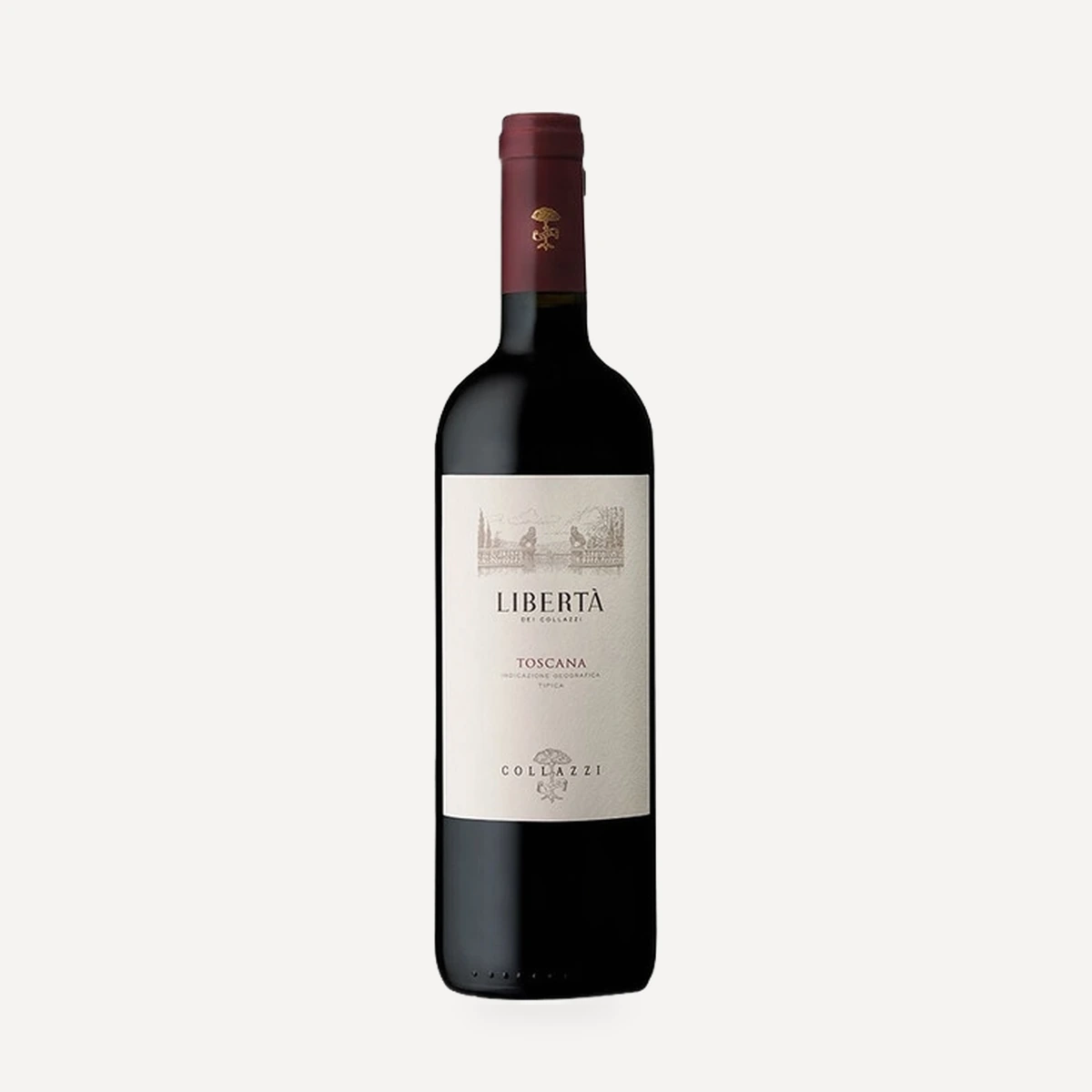
The 2008 harvest marked the introduction of Libertà as Collazzi’s second wine, drawing on younger vineyards around the estate. In 2010, the harvest revealed the potential of the one-hectare Ferro vineyard and inspired a varietal Petit Verdot bearing the vineyard’s name. The same year is recorded as the first harvest for Otto Muri, the estate’s Fiano. Its name recalls the eight walls that once formed eight terraces on the plot; the coolest part of that site was allocated to Fiano.
Terroir
Tenuta Collazzi occupies hills a few kilometres from Florence. Its principal vineyards lie in the municipality of Impruneta, around Galluzzo and Tavarnuzze, while a separate Chianti Classico vineyard is situated several kilometres from the winery in San Casciano Val di Pesa.
The main estate has a microclimate that is warmer and drier than nearby areas. Part of the property forms a natural amphitheatre with an optimal south-west exposure. Abundant sunlight and mild to high daytime temperatures encourage prolonged, complete and relatively consistent ripening. The vineyards used for the principal Impruneta wines are close to the centrally positioned cellar, generally within a radius of 400 metres.
Soils across the principal vineyards combine clay and sand with abundant limestone and a substantial rocky component. The high proportion of stones aids drainage and, in the Ferro vineyard, helps restrain vegetative growth. These conditions informed the decision to plant mainly Cabernet Sauvignon, Merlot, Cabernet Franc and Petit Verdot, with a smaller share of Sangiovese.
The Ferro site faces Florence at approximately 150 metres above sea level. Its orientation runs south-west to north-east. The separate Bastioni vineyard has a south to south-west exposure in Chianti Classico. Its climate is continental, with cold winters and consistently warm, dry summers favourable to Sangiovese ripening. Otto Muri occupies a comparatively cool site; marked summer day–night temperature differences contribute to the preservation of aromatic freshness in its Fiano.
Vinificazione
The estate’s vineyards are planted at a general density of more than 6,150 vines per hectare and trained to both spurred cordon and Guyot. Bud load is kept very low to limit production and favour grape concentration. The Ferro block is planted at 6,120 vines per hectare and trained to bilateral spurred cordon.
Harvesting is manual, generally into small boxes or baskets to prevent berry damage. Varieties and individual parcels are picked separately. Because the principal vineyards are concentrated around the centrally placed cellar—within approximately 400 metres for the main Impruneta blocks—the interval between picking and processing is short. Incoming bunches are selected manually on a sorting table; the most rigorous description includes the removal of damaged or unsuitable grapes, leaves, stalk fragments and other green material.
Bunch-level selection begins in the vineyard for Ferro, with attention from the budding stage onward. Irrigation is available: during the low-rainfall 2017 season it was used to protect the Otto Muri vines. Fresh soil and careful management of soil cultivation further limited water stress and supported healthy bunch development.
No organic, biodynamic or other vineyard-farming certification is identified. The estate’s reference to organic production applies to its honey rather than to its vineyards.
The winery was restructured during the Marchi family’s renewal of the estate. It is centrally positioned in relation to the principal vineyards, allowing harvested fruit to reach the cellar quickly. Part of the production and maturation space is underground; the cellar maintains a natural temperature of approximately 15°C.
Grapes are harvested by hand and brought to the winery in small boxes or baskets. Parcels and varieties are handled separately. Bunches are inspected on a sorting table, including a vibrating selection table for the eponymous Collazzi production, and unsuitable berries, leaves and other green material are removed manually.
Temperature-controlled stainless-steel tanks and vats are used for alcoholic fermentation. Red-wine fermentation temperatures described across the estate’s production range are approximately 25–30°C. Malolactic fermentation may take place in stainless steel, in tanks, in barriques, or partly in wood and partly in tank, depending on the lot. Oak maturation includes 225-litre vessels, with both new and previously used barriques represented; maturation is carried out in the underground cellar.
For Fiano, manually harvested grapes go promptly to the press and remain in contact with the skins for one night. Fermentation takes place at 16–18°C, using vats and wood, followed by partial malolactic fermentation and several months on the lees.
Filosofia
The estate’s stated objective is to produce wines of high quality through renewed vineyards, a restructured winery and close attention at each stage from vine to maturation.
Planting choices respond directly to the property’s soils and microclimate. Cabernet Sauvignon, Merlot, Cabernet Franc and Petit Verdot predominate because the sandy and clay-rich, limestone-bearing, stony soils and temperate conditions are considered particularly well suited to them; traditional Sangiovese occupies a smaller share. Fiano was selected only after comparative trials, then assigned to the coolest part of the Otto Muri site.
Quality control begins with dense planting, restricted bud load and bunch-level selection in the vineyard. It continues through manual picking, rapid transport, separation of varieties and parcels, and detailed sorting in the cellar. The approach combines site-specific agricultural decisions with temperature-controlled cellar work and carefully selected maturation vessels.
Vini
Collazzi
Libertà