Storia
The estate’s origins in the 1960s
Colle di Maggio began in the Velletri countryside during the 1960s. Founder Domenico Tulino—a successful lawyer, art collector and patron—planted the first historic vineyards. The estate subsequently accumulated more than fifty years of viticultural continuity on the volcanic terrain of the Colli Albani.
Tulino also shaped the property as a meeting place for wine and art. Giorgio de Chirico and Mario Schifano were among the prominent artists who spent time with him at the estate, establishing the cultural character that remains part of Colle di Maggio’s identity.
The name derives from the locality historically known as Contrada Prato di Maggio.
Vineyard development
Documented vineyard blocks include Chardonnay and Fiano plantings dating from 1988 and red-variety plantings dating from 1989. A later Chardonnay and Bombino planting was established in 2015. These plantings form part of a broader estate landscape in which vineyards and olive groves occupy elevations between 150 and 300 metres.
The contemporary company
The present agricultural limited-liability company, Colle Di Maggio Wine Farm – Società Agricola a Responsabilità Limitata, was founded in 2019. Its purpose was to renew the expression of Colli Albani varieties through a modern, territorially focused style while preserving the vineyard and cultural inheritance created by Domenico Tulino.
The new management follows a family-oriented vision and places particular emphasis on experimentation. Its work combines the estate’s established vineyards with production methods involving integral vinification, amphorae and selected woods. The range is positioned around the meeting of Lazio wine and contemporary art, while farming is conducted under SQNPI-certified integrated-production standards.
Continuation of the artistic legacy
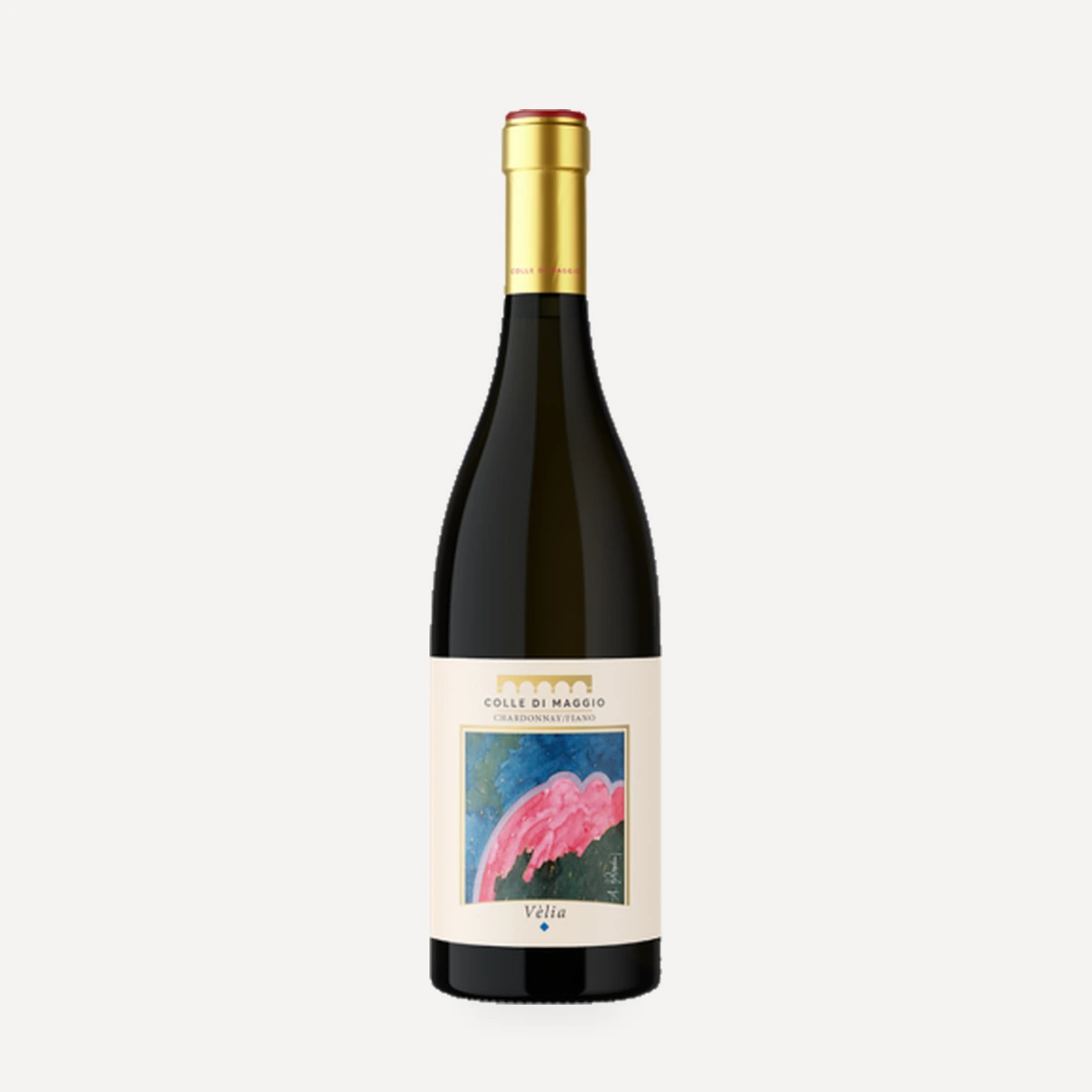
Colle di Maggio has continued Tulino’s patronage through artists’ labels and the annual VinArte Prize. Agostino De Romanis’s 1993 watercolours Armonia e Numero: Fuoco 1993 (Pitagora) and Armonia e Numero: Acqua 1993 (Pitagora) were selected for the Èstia and Vèlia labels. VinArte, meanwhile, invites a student from the Liceo Artistico “Cesare Battisti” in Velletri to create an artwork for a Colle di Maggio label; an additional Menzione Speciale Premio Domenico Tulino honours the founder each year.
International development, 2025–2026
On 15 October 2025, the “Colle di Maggio – New Horizons Wines” international-market project entered the PR FESR Lazio 2021–2027 framework under Determination G13369. Funding was granted through Determination G07596 of 4 June 2026. The project was designed to develop international promotion, trade-fair participation and B2B relationships, particularly in the United States and premium European markets. Its stated aims include agreements with importers and distributors, greater visibility for the combination of culture, art and wine, and wider promotion of the Colli Albani and Lazio wine sector.
Terroir
Colle di Maggio lies at Velletri in the Colli Albani, within the hilly landscape formed by the area’s ancient volcano. The estate characterises this setting as the Roman countryside and the Lazio hinterland.
Vineyards and olive groves are distributed between 150 and 300 metres above sea level. The soils are volcanic and described in the vineyard specifications as clay-rich and of volcanic origin. The estate associates their mineral and nutrient content with the character of both its grapes and its olive oil.
The planted landscape combines local and Italian white varieties—including Bellone, Bombino, Malvasia Puntinata and Fiano—with Chardonnay, Merlot, Cabernet Sauvignon, Syrah and Petit Verdot.
Vinificazione
Viticulture follows SQNPI-certified integrated-production principles. The approach is presented as environmentally respectful and focused on quality, sustainability and responsible management of natural resources.
The core planting density is approximately 4,500 vines per hectare. Stated yield targets are 1.5 kg per vine for red varieties and 2 kg per vine for whites. Guyot is used in the documented vineyard blocks. Harvesting represented across the range is performed by hand into small crates, with capacities of up to 12 kg for white grapes and 13 kg for red grapes.
Colle di Maggio frames its cellar work as a meeting of tradition and experimentation. The production vocabulary includes integral vinification, amphorae and selected woods, with environmental responsibility and respect for tradition presented as guiding principles.
The cellar employs temperature-controlled fermentations and works with several vessel types, including stainless steel, French oak, large Slavonian oak barrels, cement tanks, and amphorae made from terracotta, ceramic and clinker. Depending on the intended expression, the methods represented within the range include fermentation on the skins, partial or complete malolactic fermentation, maturation in amphora, oak or cement, and subsequent bottle ageing.
Filosofia
Colle di Maggio’s contemporary identity rests on three linked ideas: territorial expression, experimentation and art. The current company seeks to interpret the varieties of the Colli Albani in a modern but recognisably local style, while maintaining the vineyard inheritance established by Domenico Tulino.
Its family-oriented management presents experimentation as a means of enhancing that inheritance rather than replacing it. Integral methods, amphorae and selected woods are brought together with respect for environmental responsibility and tradition.
The cultural philosophy continues Tulino’s role as a patron. Labels are treated as spaces for contemporary artwork, and VinArte extends that relationship through exhibitions, experiential activities and opportunities for young artists. The phrase “Il Lazio che non ti aspetti” expresses the ambition to present a contemporary and less familiar face of Lazio wine.
Vini
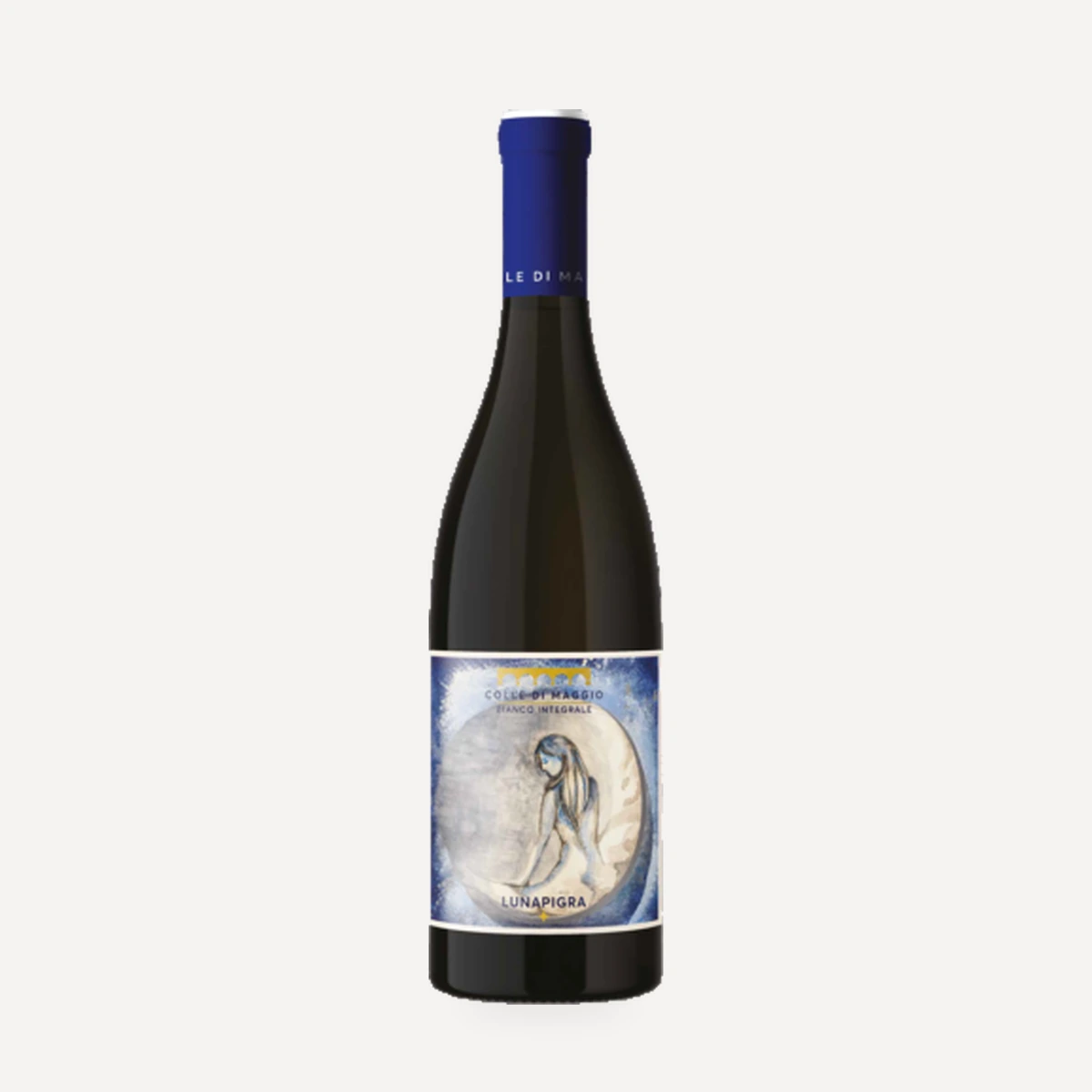
Lunapigra Lazio Bianco IGP
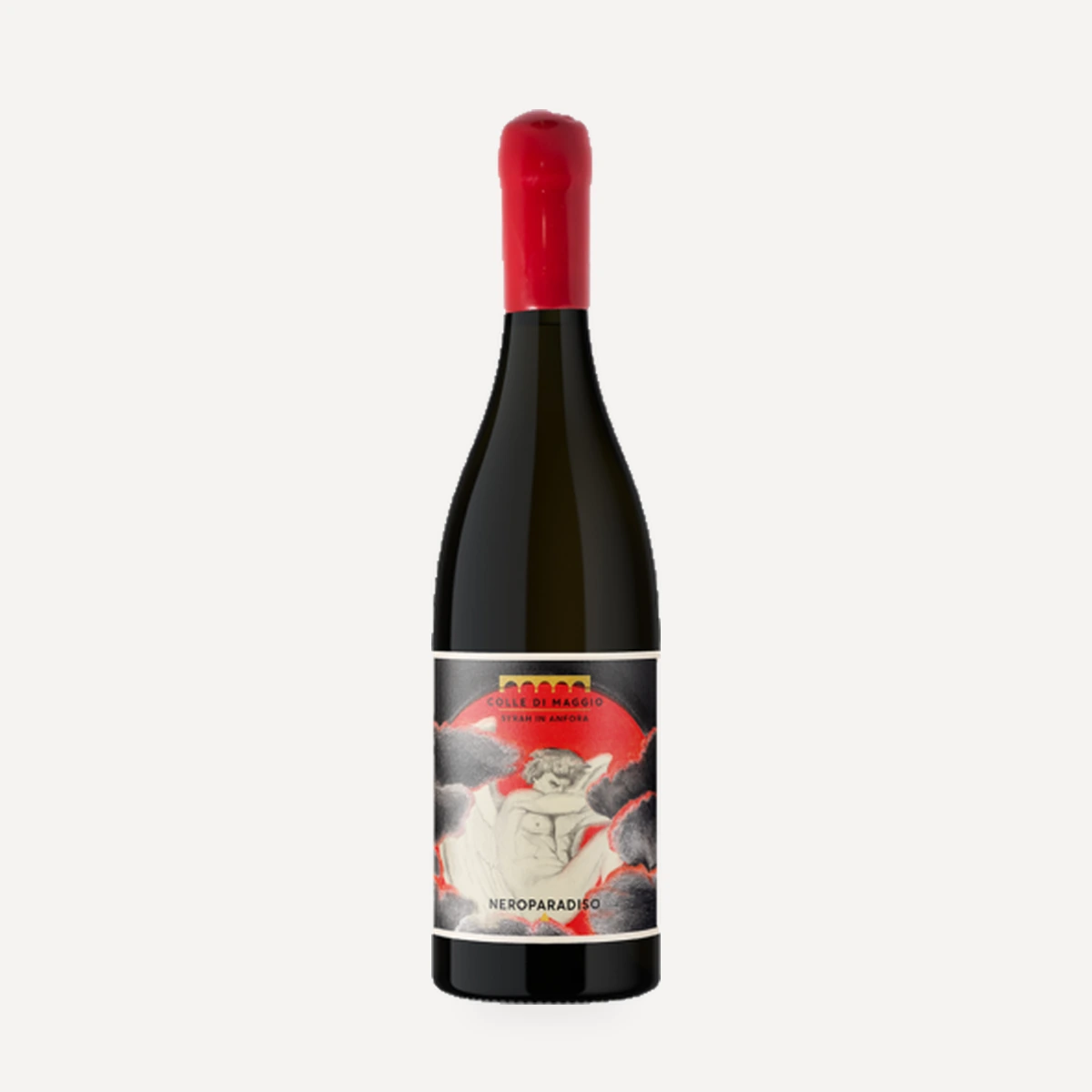
Neroparadiso Lazio Rosso IGP