Storia
Ancient roots
The estate’s recorded history begins in 1301, when the Casale appeared in a bull issued by Pope Boniface VIII as part of the Annibaldi family’s fief. Its wider setting at the foot of Monte Tuscolo has an even older association with viticulture: Marco Porzio Catone, known as Cato the Censor and described as a Tusculan citizen of 230 BC, recommended planting vines in local holdings because of the suitability of the place.
Renaissance residence and origin of the name
About 250 years after the 1301 reference, during the Renaissance, the Casale became the residence of Marchese Emilio de’ Cavalieri (1550–1602), an Italian composer and organist whose father was a close friend of Michelangelo. The historic map name “Casale del Marchese,” and consequently the estate’s present identity, derives from Marchese de’ Cavalieri.
The eighteenth- and nineteenth-century estate
The Casale’s present architectural form dates from the eighteenth century. Its old cellar was established in the late eighteenth century and now accommodates the tasting room. The estate continued to appear in later records, including the 1860 Catasto Pontificio. Its association with the arts also endured: in 1878, writer Clara Wells referred to it in one of her books.
Two centuries of Carletti family ownership
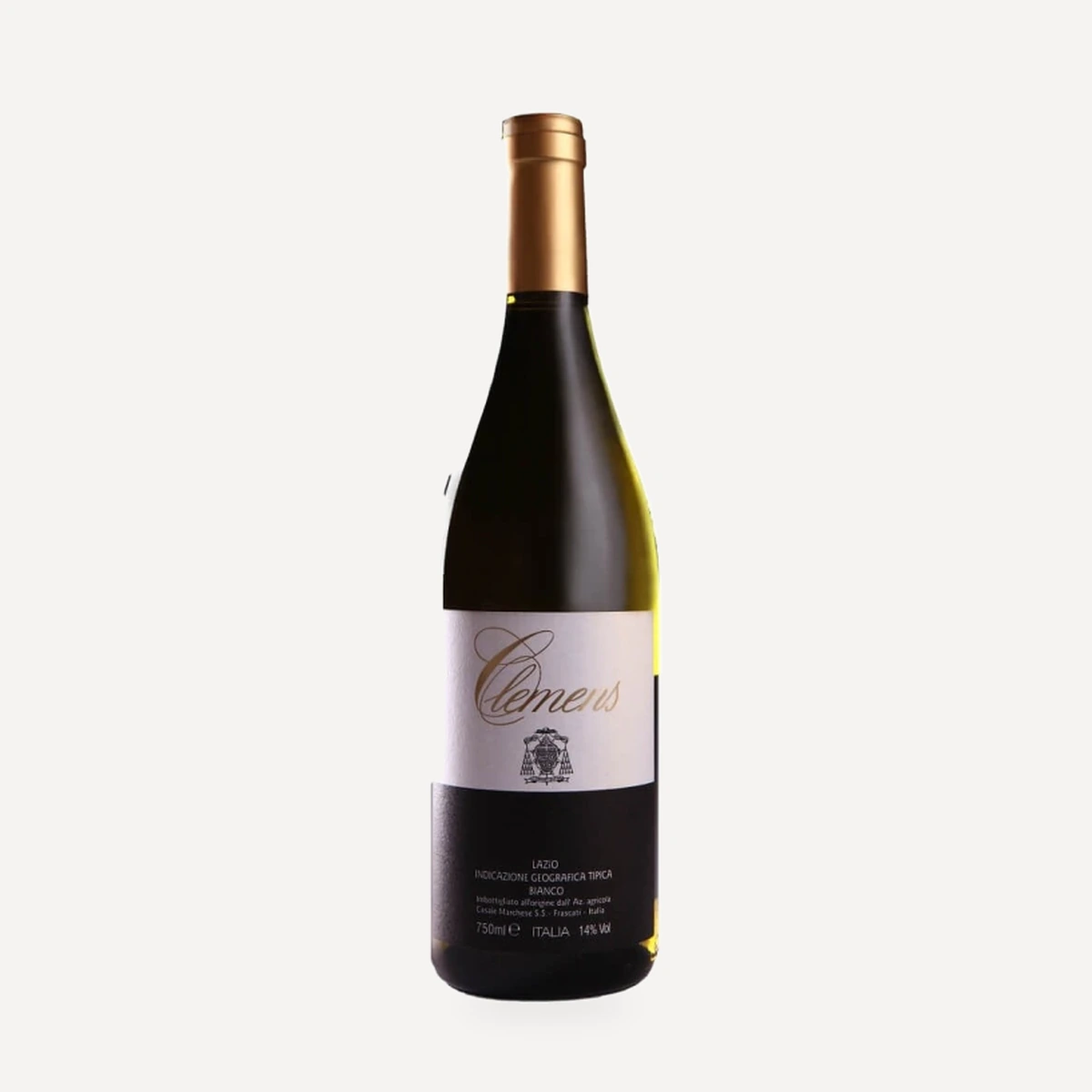
The Carletti family has owned the agricultural estate for approximately two centuries, maintaining wine and olive-oil production across more than seven generations. The family included Cardinals Ludovico Micara (1775–1847) and Clemente Micara (1879–1965); the latter is commemorated by the wine Clemens.
The seventh generation and renewal of the winery
The seventh generation is represented by the brothers Alessandro and Ferdinando. Alessandro, the elder brother, is the estate administrator, while Ferdinando, the younger, serves as its agronomist. Part of the eighteenth-century building remains the Carletti family residence, while another wing is devoted to wine production.
A section of the Casale has recently been restored and converted into a modern winery equipped with current-generation machinery. The historic barrel room remains within the eighteenth-century fabric, preserving a direct connection between the old and new production spaces. Vinification, bottling and packaging all take place at the estate, which also produces extra-virgin olive oil solely from its own olives.
Terroir
Casale Marchese lies in the Frascati area of the Castelli Romani, at the foot of Monte Tuscolo. The estate address is Via di Vermicino 68, Frascati, at coordinates 41° 50' 23.04" N, 12° 39' 36.61" E.
The property comprises more than 50 hectares, largely occupied by specialized vineyards interspersed with centuries-old olive trees. Vineyard soils are of volcanic origin, and the olive oil retains herbaceous characters associated with the vegetation of Frascati’s volcanic hills.
The location belongs to the territory historically identified with ancient Tusculum, where grape growing and wine production are traced back to Roman times. The estate works within the Frascati DOC/DOCG area and cultivates both the varieties traditionally associated with Frascati and more recently planted international grapes.
Vinificazione
Most vineyards are trained to spurred cordon at a relatively high density of 4,000–5,000 vines per hectare. Short pruning limits the number of bunches, concentrating production at approximately 1.5–2 kg of grapes per vine.
The crops are managed under integrated-production rules, using exclusively products described as having a low environmental impact. The approach is presented as an extension of the family’s two-century commitment to protecting its land.
Harvest normally begins in the first week of September and continues until mid-October. All grapes are picked by hand, with the timing determined by variety and ripeness. Workers use pruning shears and visually select mature bunches during picking. For the principal winemaking pathways, grapes are placed in perforated 15 kg crates before processing.
Winery and cellar layout
The recently renovated winery is equipped with current-generation machinery and arranged over several levels. Red-wine vinifiers occupy the upper floor, while further tanks for white-wine fermentation are located on the ground floor. The barrel room occupies historic eighteenth-century spaces and contains French-oak barrels.
Vinification, bottling and packaging are carried out entirely at the Casale.
Reception and pressing
Grapes are harvested manually, commonly into perforated 15 kg crates. White grapes may be pressed whole. Pneumatic presses apply gentle pressure intended to avoid tearing the skins and to preserve the must’s aromas. Different must or wine fractions are selected during pressing.
White-wine production
The white-wine process includes static clarification, separation of the sediment and temperature-controlled alcoholic fermentation lasting approximately one week, with selected yeasts. Some wines undergo cold tartaric stabilization in December or February before bottling between January and June or in March. One white-wine pathway includes four months on fine lees, cold tartaric stabilization in April and bottling in May.
Red-wine production
Red grapes are destemmed and crushed, then inoculated with selected yeasts. Temperature-controlled alcoholic fermentation is conducted at either 24–26°C or 28–30°C, depending on the wine. Gentle pressing and separation of wine fractions follow. Malolactic fermentation takes place in stainless steel. Red-wine lots may undergo cold tartaric stabilization in February, followed by blending and bottling in February or March. A barrel-aged red matures for 12 months in French-oak barriques.
Sweet-wine production
One sweet-wine method arrests alcoholic fermentation through chilling and filtration, followed by cold tartaric stabilization and March bottling. Another begins by drying hand-picked grapes on racks until the desired sugar concentration is achieved; after gentle pressing and selected-yeast addition, temperature-controlled fermentation and one year of maturation take place in barriques before blending and March bottling.
Filosofia
Casale Marchese defines its work through continuity between family tradition, respect for its raw materials and measured technological renewal. Its stated priorities are safeguarding the land, protecting the environment and expressing the origins and traditions of the Frascati territory.
In the vineyards, this position is translated into integrated crop management, low-environmental-impact products, short pruning, controlled yields and manual selection at harvest. In the cellar, gentle handling and modern machinery coexist with an eighteenth-century barrel room and production spaces embedded in the family’s historic residence.
The estate also presents wine as a convivial product whose purpose is to bring people together. Family continuity is central to that outlook: harvest is understood as the annual renewal of a tradition maintained for more than seven generations, while every production year also introduces an element of renewal.
Vini
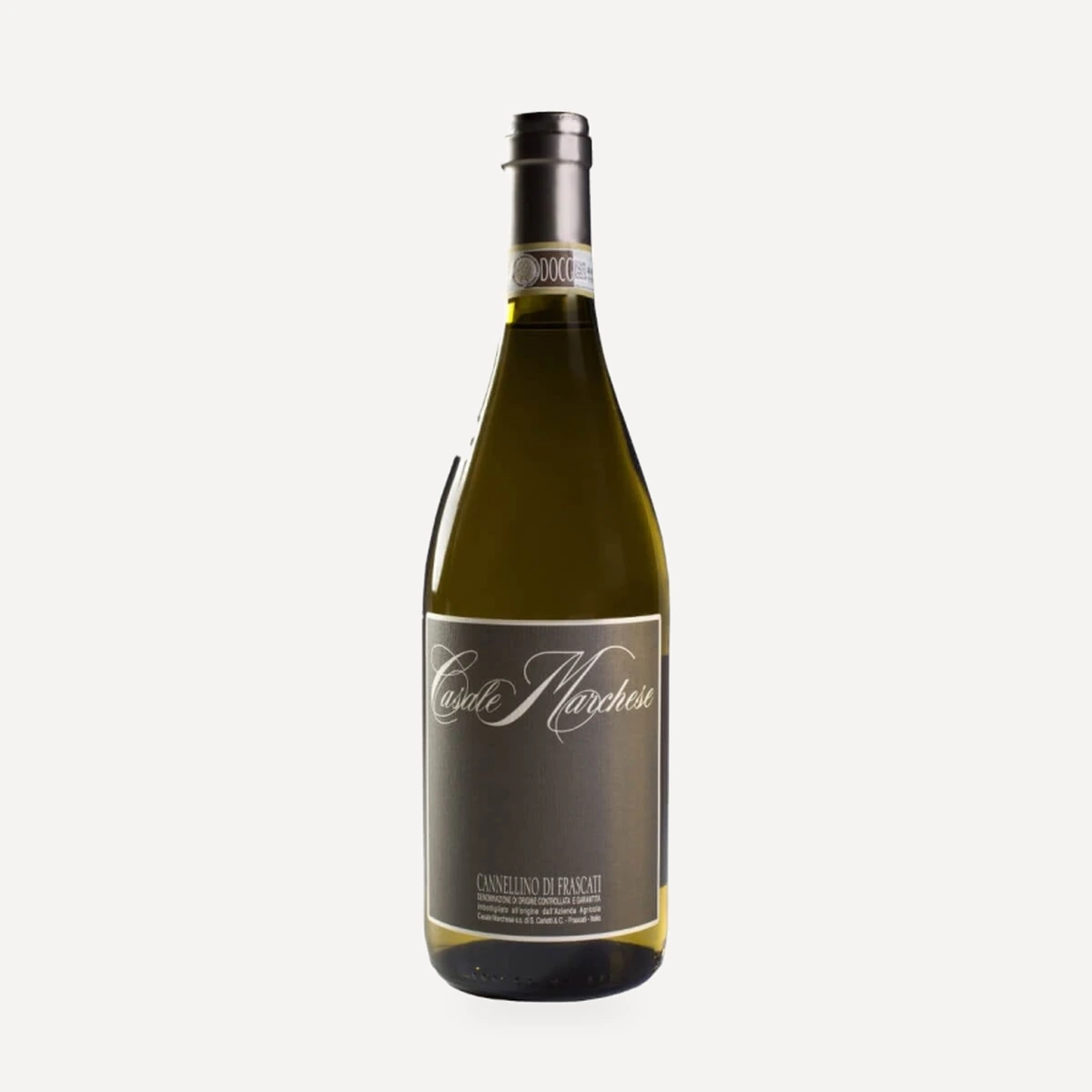
Cannellino di Frascati DOCG
Frascati Superiore DOCG
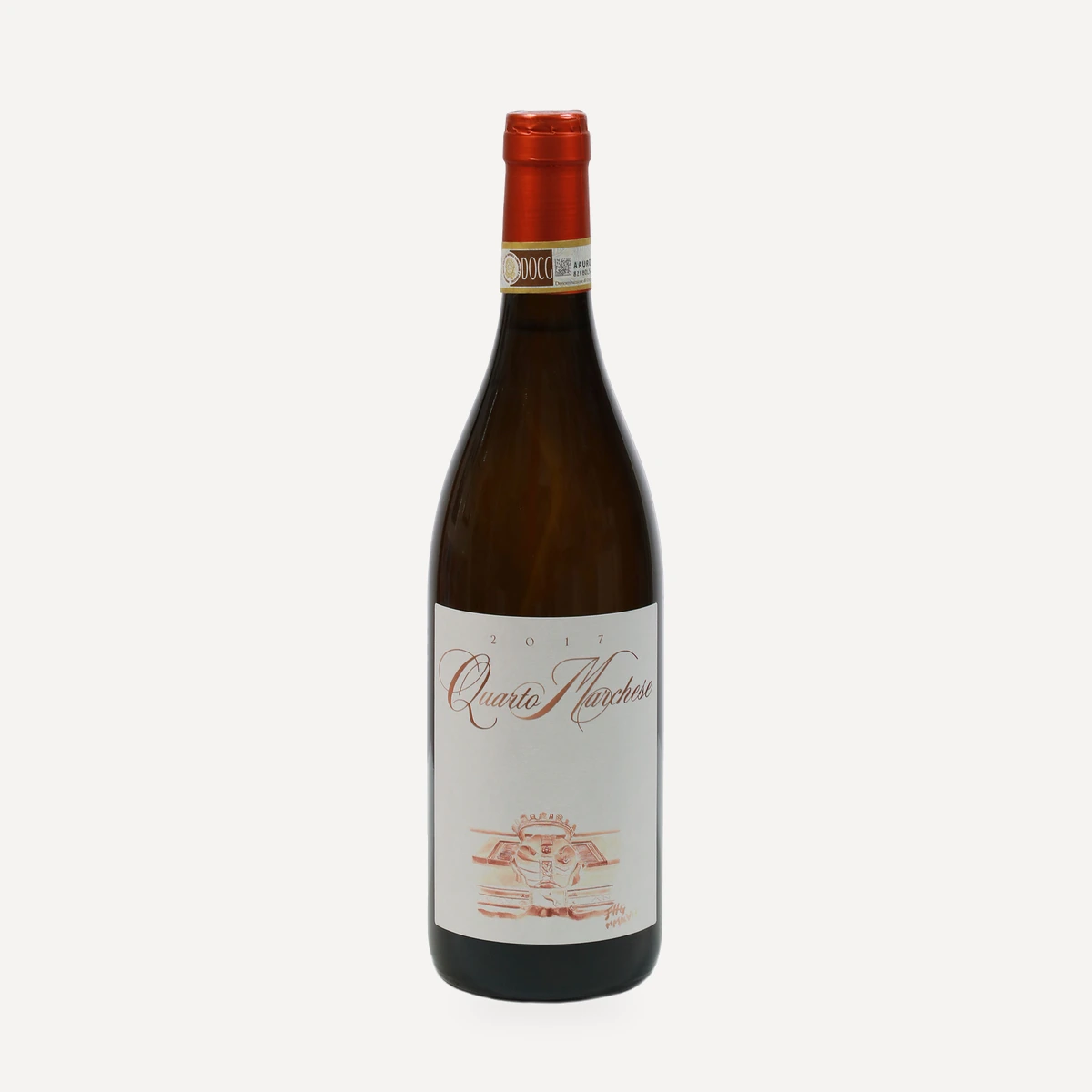
Quarto Marchese Frascati Superiore DOCG