Storia
The older tradition of Cesanese di Affile
The history presented by Colline di Affile begins with the local grape and wine rather than with the modern company. Local tradition traces Cesanese di Affile back to Roman times, when colonists cleared woodland around Affile to establish vineyards. The traditional etymology connects the grape's name with cesae, meaning places where trees had been cut.
Over subsequent centuries, Cesanese di Affile was associated in local tradition with the tables of popes and emperors and was credited with medicinal and even supernatural qualities. Wine accompanied the agricultural life of Affile, whose municipal statutes imposed severe penalties for damaging vineyards. This relationship is also represented in the town's coat of arms: a vine bearing dark bunches of grapes with an asp coiled around its trunk.
Recognition in the 1930s
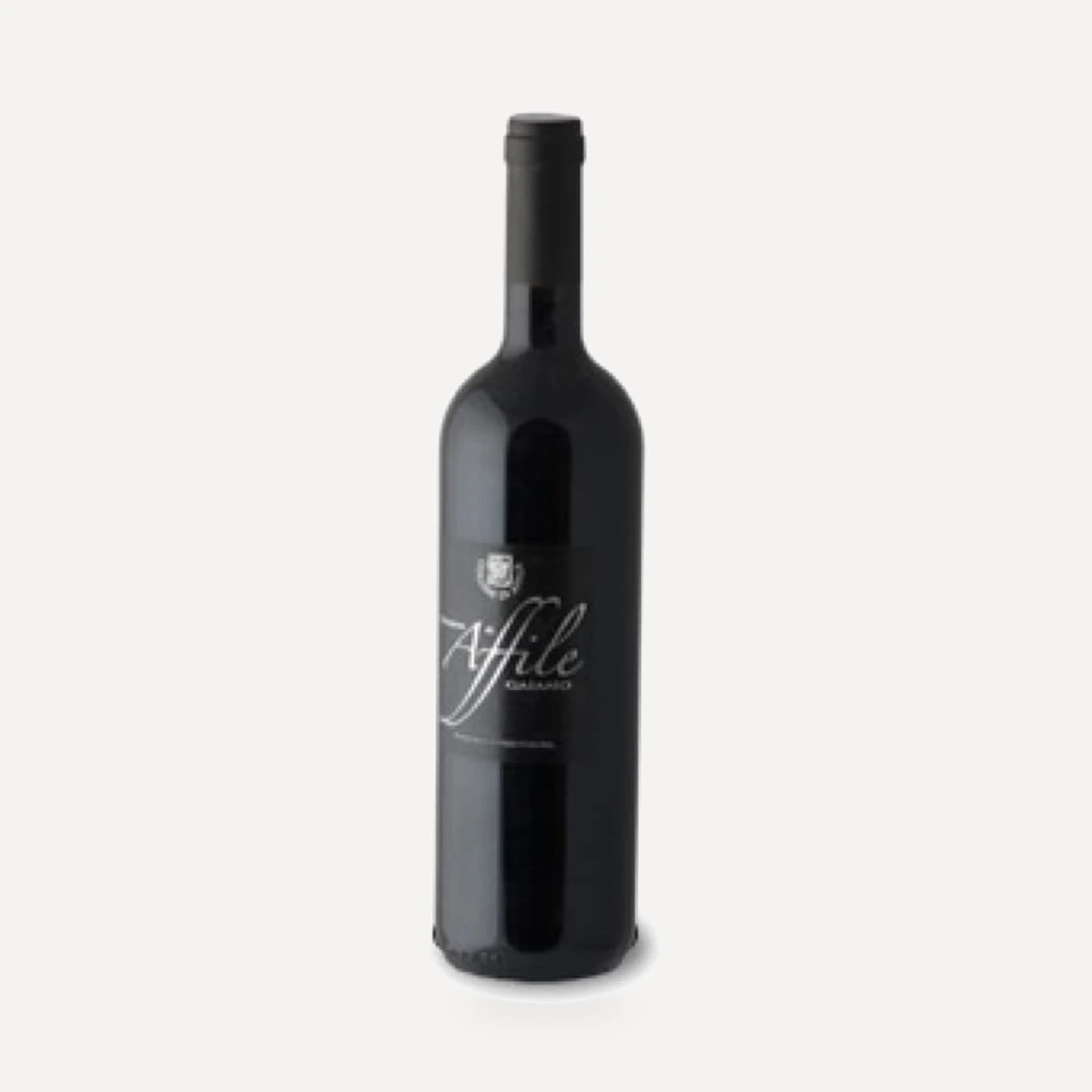
During the 1930s, Cesanese di Affile received recognition and gold medals in Paris, Brussels, Rome and Milan. The Paris exhibition is specifically associated with a gold medal for the best wine. The modern cuvée named 1930 was subsequently conceived as a reference to this period of recognition.
DOC recognition and a prolonged interruption
The denomination was established in 1973. Despite that recognition, the local wine then passed through a period described as approximately half a century of silence, during which no Cesanese di Affile DOC label had been produced.
2003: the recovery project begins
Colline di Affile has operated since 2003 with the purpose of recovering the cultivation of Cesanese di Affile. The project combined the revival of an old native grape with a broader commitment to Affile's products, community, history and natural setting.
2004: the first Cesanese di Affile DOC label
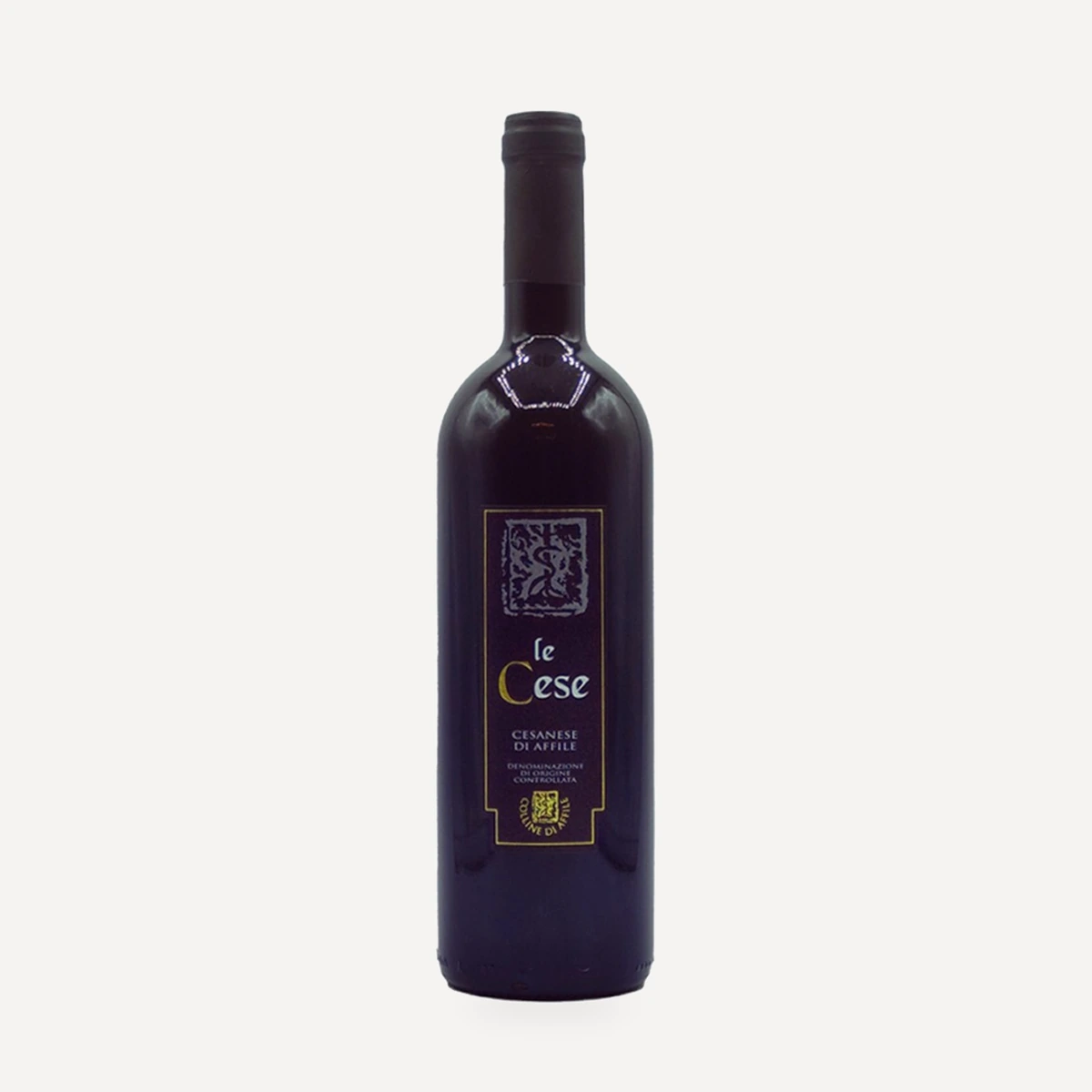
In 2004, Colline di Affile released the first label bearing the Cesanese di Affile DOC designation since the denomination had been established in 1973. It also became the first company to commercialize this local wine. This release marked the return of Cesanese di Affile after the long interruption and initiated a renewed search for quality and a distinct contemporary identity for the variety.
The company today
Colline di Affile now has more than 60 members. They include grape growers, wine specialists and people committed to Affile and its surroundings. The company participates in a wider local network dedicated to protecting and promoting the area's agricultural products, communities, history and natural heritage. It manages a 3-hectare vineyard and produces approximately 10,000 bottles annually, using Cesanese di Affile for its wines.
Terroir
Colline di Affile is based in Affile, a small mountain settlement east of Rome in the Province of Rome, Lazio. The small Affile DOC zone lies in the Valle dell'Aniene, within a mountainous area bounded by the Monti Ernici and Monti Simbruini.
The estate-managed vineyard covers 3 hectares. The vineyards stand above 450 metres, while the production vineyard described for the wines is placed at approximately 500 metres above sea level, with southern and western exposures.
Conditions are mountainous, cool and ventilated. The soils are described both as calcareous-clayey and mineral-rich and, more specifically, as clay-marl. These high-altitude conditions, exposures and soils form the physical setting for the estate's Cesanese di Affile.
Vinificazione
Colline di Affile directly manages its 3-hectare vineyard. Cesanese di Affile is trained to spur-pruned cordon at a density of 4,000 vines per hectare. Yields are kept low and calibrated for quality; the technical specifications give a yield of 70 quintals per hectare, equivalent to 7 tonnes per hectare.
Harvest is late, taking place in the second half of October. Grapes are harvested manually for the principal dry red wines, and bunches are selected in the vineyard. Vineyard work is directed toward preserving the qualities of the native variety under Affile's cool, ventilated mountain conditions.
Production is approximately 10,000 bottles per year, all sourced from the company's fully managed 3-hectare vineyard. The cellar approach combines the preservation of Affile's wine tradition with modern oenological methods. Quality control extends through processing and maturation, while grape selection begins in the vineyard.
The range demonstrates the use of both stainless steel and wood. Stainless steel is employed for fermentation, malolactic fermentation and maturation where freshness and varietal character are the objective. For wines intended for longer development, the cellar also uses 13-hectolitre casks. Depending on the intended style, production may include cold pre-fermentation maceration, extended skin contact, maturation on fine lees under strongly reductive conditions, temperature reduction to arrest fermentation, or the deliberate avoidance of malolactic fermentation.
Filosofia
Colline di Affile defines its purpose as the recovery and enhancement of Cesanese di Affile and its place of origin. The company seeks to safeguard inherited traditions while applying the advances of modern oenology, treating tradition and innovation as complementary rather than opposing principles.
Quality is pursued through direct vineyard management, low and deliberately calibrated yields, bunch selection and control throughout processing and maturation. The work extends beyond wine: the company participates in a network concerned with Affile's products, communities, history and natural heritage. Its membership brings together growers, wine specialists and people united by an interest in the territory.
Vini
Gaiano - Affile DoC