Storia
The local viticultural inheritance
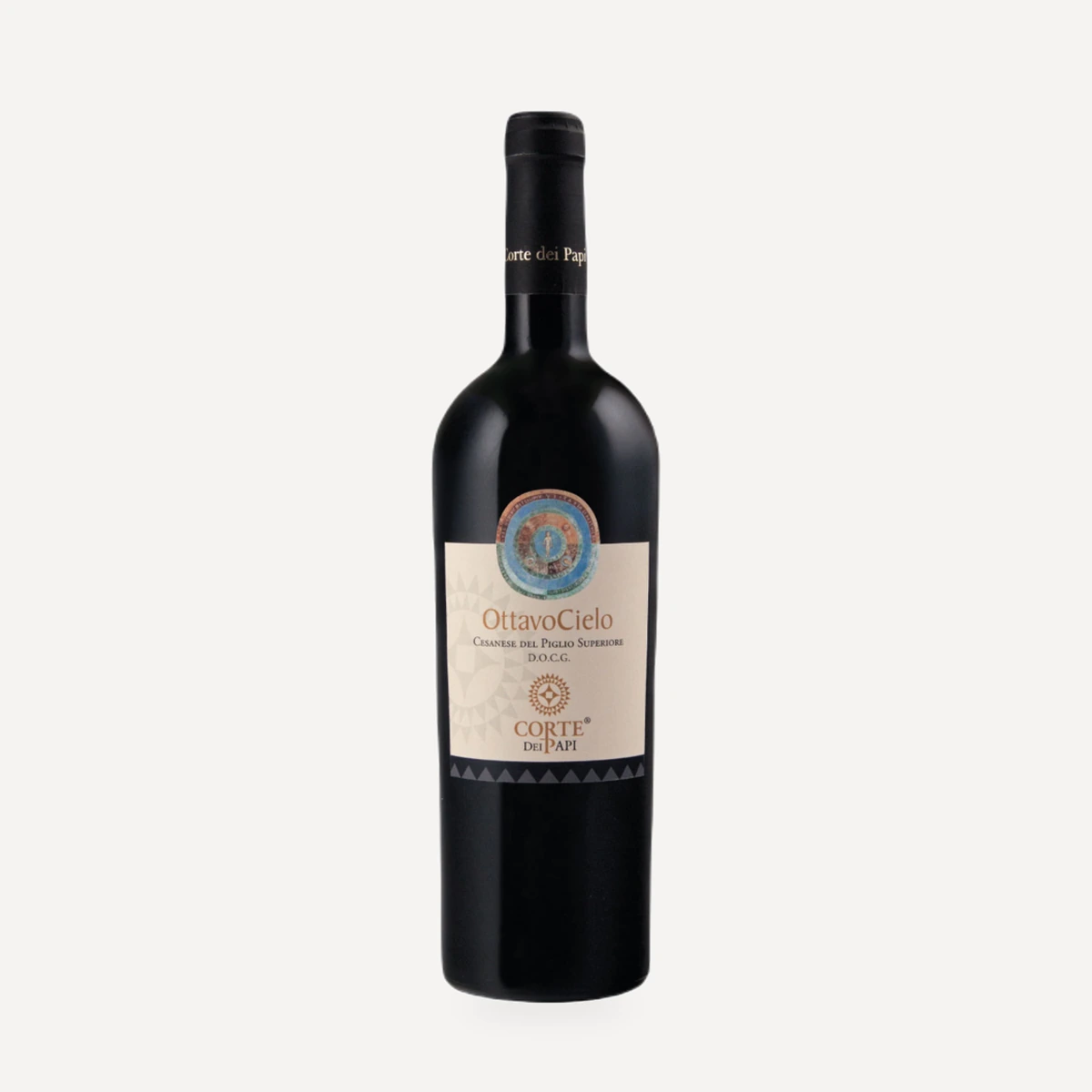
Cesanese has long been cultivated across Lazio. A distinct variety appeared in the Cesanese del Piglio area toward the end of the eighteenth century and rapidly attracted growers because of its high sugar content and aromas associated with violets and blackberries. It became known as Cesanese d’Affile after the place where its first cuttings were planted. Cesanese d’Affile and the genetically distinct Cesanese Comune traditionally formed the basis of the area’s wines, accompanied by a small proportion of Nostrano, described as an ancient precursor of Sangiovese.
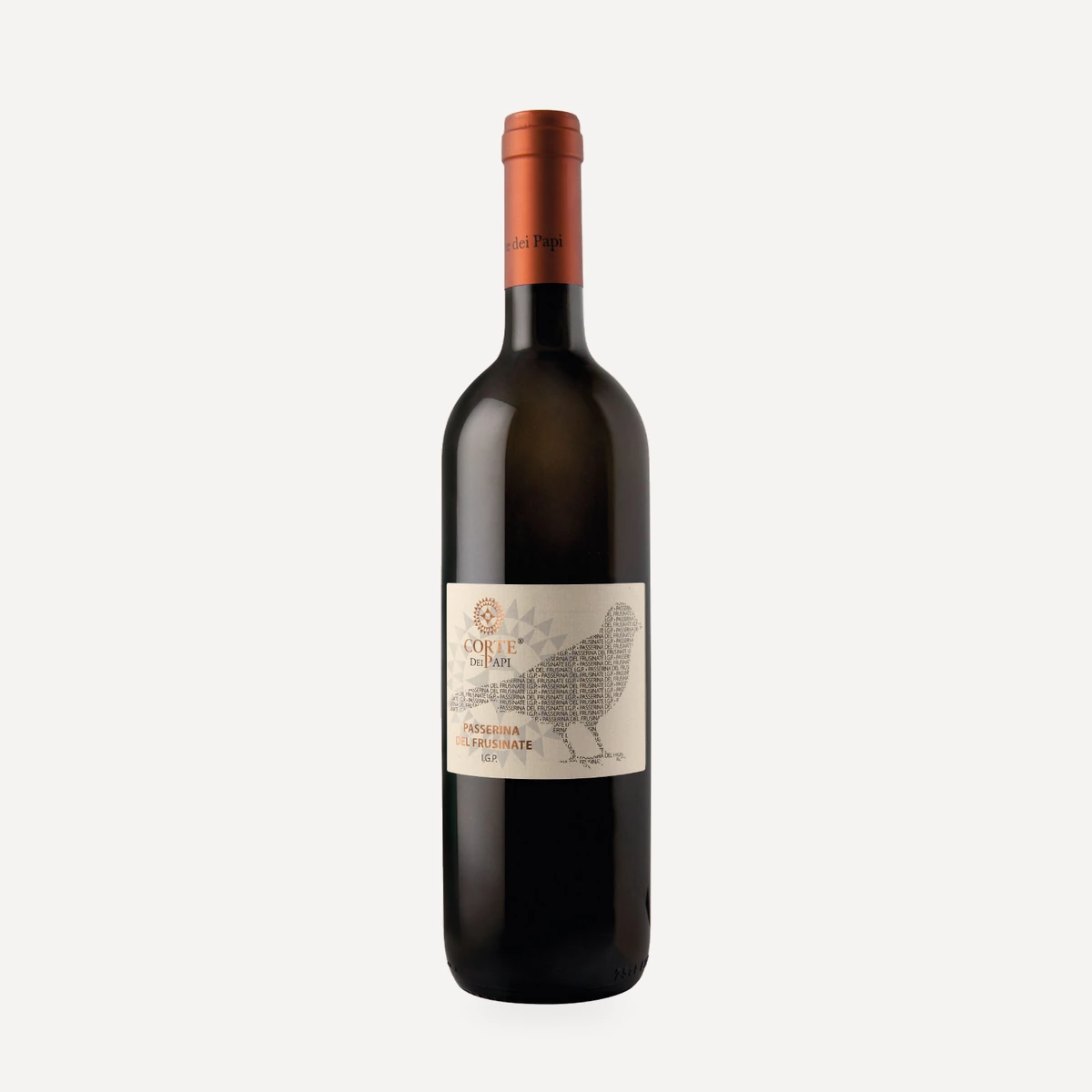
Corte Dei Papi planted Cesanese d’Affile, Cesanese Comune and Nostrano alongside Passerina, Malvasia Istriana and Sauvignon Blanc. The varietal composition was chosen to recreate the distribution once found in the area’s historic vineyards while applying modern equipment and contemporary technical knowledge.
Estate and cellar development
The approximately 190-hectare estate occupies three hills between Paliano and Anagni: Colletonno, Colle Ticchio and Colle Ricchezza. The name Colletonno derives from a local word meaning “round.” Part of the vineyard associated with the Colle Ticchio wine lies on the hill of the same name, while Colle Ricchezza carries an old name referring to the generosity of its land.
The winery was created by converting a building formerly used as a sheepfold. Its original architectural form was retained, and locally sourced materials were used to maintain a connection with the area’s building traditions. The renovation improved thermal insulation and introduced control of natural light and humidity in the ageing areas. The long interior was organized sequentially into grape reception, vinification, ageing and tasting zones.
Organic transition
On 27 May 2020, Corte Dei Papi announced that the entire operation had moved to organic cultivation. The declared vineyard approach excludes synthetic chemical substances and combines organic techniques with modern machinery and procedures intended to reduce environmental impact.
Terroir
Corte Dei Papi lies between the municipalities of Paliano and Anagni, within the Cesanese del Piglio DOCG production area. The estate’s approximately 190 hectares extend across three softly contoured hills formed by prehistoric karst erosion.
The three hills are Colletonno, Colle Ticchio and Colle Ricchezza. Colletonno takes its name from the local word tonno, meaning “round.” Colle Ticchio supports part of the vineyard connected with the wine of the same name. Colle Ricchezza is an old name that refers to the generosity attributed to its land.
Strong day-to-night temperature variations occur during harvest. These variations support uniform ripening and allow picking to begin early in the morning under cooler conditions.
Vinificazione
Corte Dei Papi employs organic cultivation throughout its vineyards and excludes synthetic chemical substances. Organic techniques are combined with modern machinery and operating procedures intended to minimize environmental impact.
The principal training system described for the vineyards is bilateral spur-pruned cordon. Individual white-wine entries identify double Guyot for the Passerina and Quattro Profeti source vineyards. Short pruning and repeated green operations regulate both vegetative growth and crop size. Several thinning passes during the year reduce yields to approximately 60 quintals per hectare and encourage more even ripening. Canopy management is adjusted each year to suit the season.
Alternate rows are grassed. This practice is intended to avoid disrupting soil structure and to create more favorable conditions for pollinating insects. After harvest, manure is applied and alternate rows are cultivated. Dry pruning follows, while the vine shoots are shredded and left on the ground.
White grapes are harvested before the red varieties. All picking is manual and starts early in the morning to take advantage of the temperature variation between day and night. Grapes are placed in crates and taken promptly to the winery, where processing begins immediately.
Winery layout and environmental control
The winery occupies a converted sheepfold whose original form was retained during renovation. Materials from the surrounding area were used, while the building was upgraded with thermal insulation and systems for controlling natural light and humidity in the ageing areas. The production flow follows the length of the building through separate reception, vinification, ageing and tasting zones. The insulation helps maintain suitable storage conditions while limiting electricity consumption.
Reception and white-wine processing
Harvested grapes arrive in crates. Destemming and crushing take place in an anoxic environment to protect aromatic components from oxidation. For white grapes, the must and skins then pass to the press, which separates the juice from the pomace. The must undergoes alcoholic fermentation in temperature-controlled stainless-steel tanks. After fermentation, the wines remain in tank and receive weekly bâtonnage.
Red-wine processing
After destemming and crushing, red must and skins are transferred to temperature-controlled fermentation vats. Pump-overs and punch-downs are carried out during alcoholic fermentation to promote color extraction. At the end of alcoholic fermentation, the skins are separated and the wine is transferred to wooden vessels or stainless steel for malolactic fermentation and ageing.
Ageing
Ageing takes place in both stainless steel and wood. The estate’s cru wines are matured in barriques to develop their aromatic expression and connection with the territory.
Filosofia
Corte Dei Papi’s stated aim is to create wines that communicate the territory and engage the drinker emotionally. Its philosophy links symbolism with precision: the estate seeks to inherit a long local tradition while refining it through careful use of modern tools, combining established techniques with contemporary technology.
The vineyard’s varietal composition follows the same principle. Historic local patterns are recreated through plantings of Cesanese d’Affile, Cesanese Comune and Nostrano, complemented by white varieties, while modern equipment is used to reinterpret knowledge accumulated over centuries.
Environmental responsibility extends beyond organic cultivation. The estate emphasizes protection of the land, environment and people directly or indirectly involved in its work; attention to employee and collaborator working conditions; support for the area’s human, environmental, economic and tourism resources; and packaging made from recyclable cardboard and glass.
Vini
Passerina del Frusinate