Storia
The family tradition
The Ciolli family owned and cultivated vineyards at Olevano Romano for at least three generations before Damiano Ciolli took charge. His grandfather Guido and his father Costantino belonged to a period when many local growers made wine for sale in bulk in nearby Rome.
1953: the old Cesanese vineyard
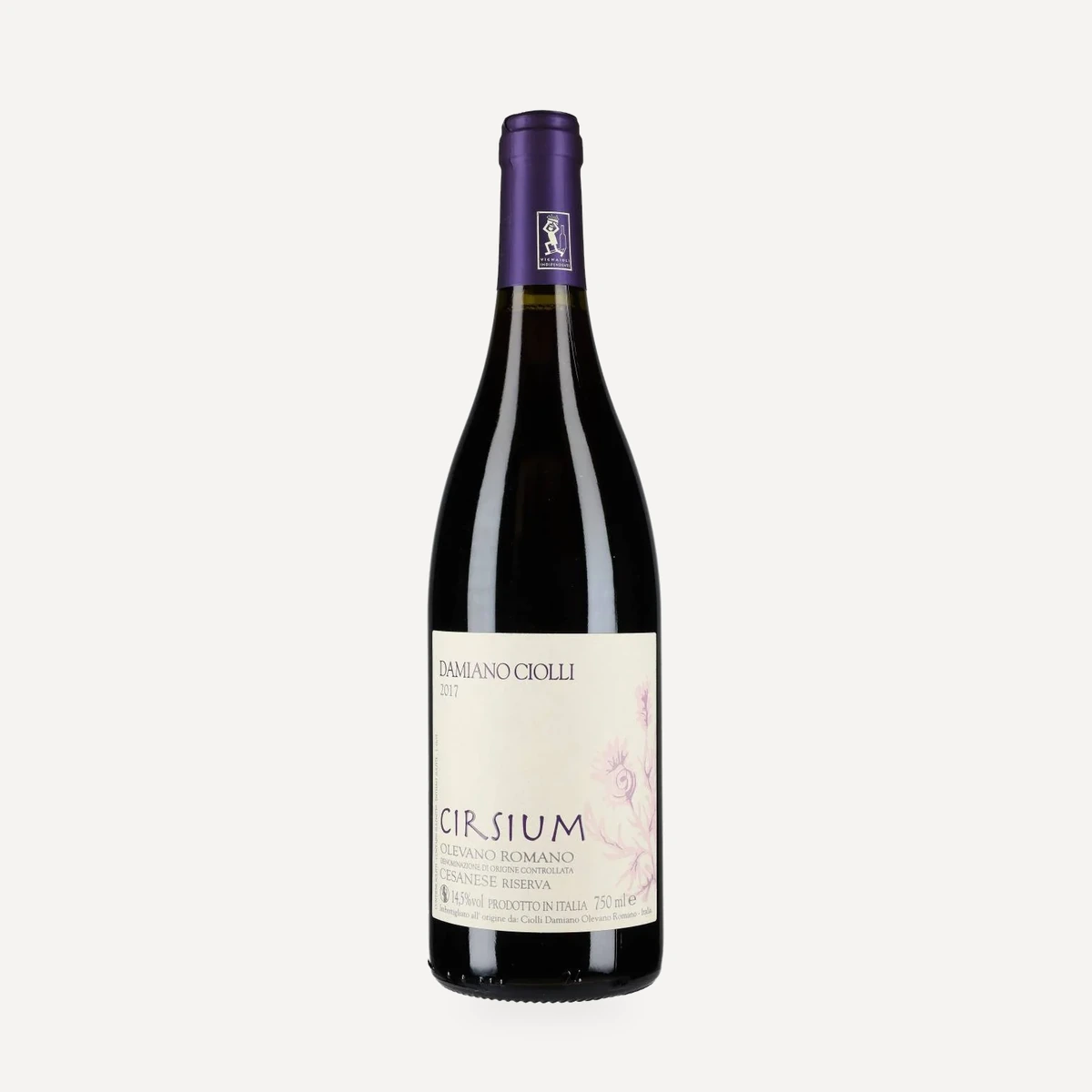
In 1953, Guido planted approximately 1 hectare of Cesanese d’Affile. The vineyard, trained as a modified bush vine arranged along a vertical wall, later became the source of the estate’s Cirsium selection. Its naturally limited production is four to six bunches per vine.
2001: Damiano takes over
Damiano began his activity and assumed responsibility for the family estate in 2001. Convinced that Cesanese could produce fine wine, he redirected the operation toward quality-focused estate production rather than the family’s former bulk-wine model. The small scale of the approximately 7-hectare property allows the work to be followed directly from pruning through bottling.
Damiano and Letizia Rocchi
Damiano’s family supported the transition, as did his partner Letizia Rocchi. She subsequently earned a PhD in grapevine physiology and oenology and became closely involved in both vineyard and cellar work. Together, Damiano and Letizia developed an approach intended to express the relationship among grape variety, soil and microclimate.
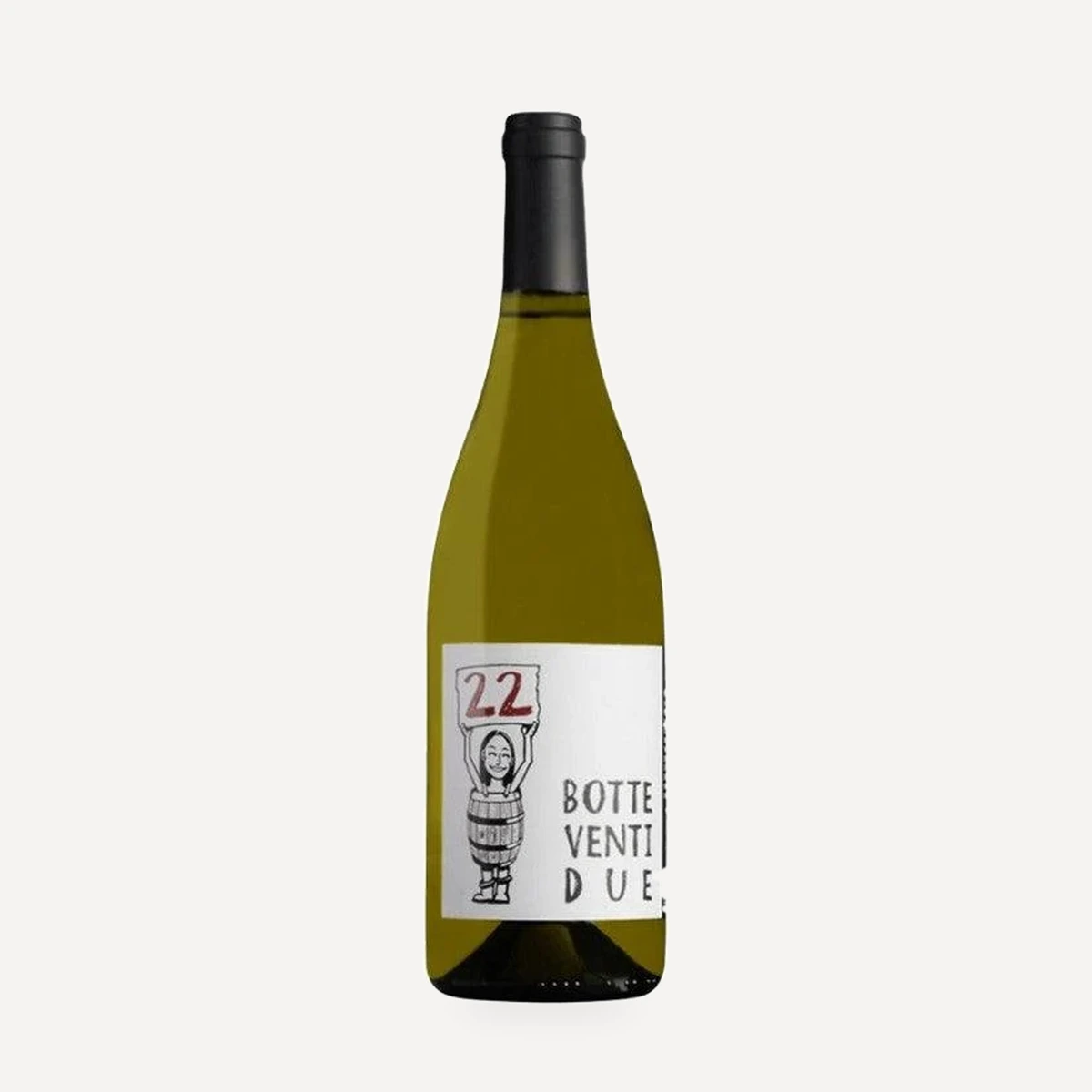
Their work expanded beyond Cesanese to the local white varieties Trebbian Verde and Ottonese. Botte Ventidue originated with an idea from Letizia and continued study of the Olevano Romano territory. Its name comes from the large wooden vessel numbered 22 in the cellar.
Present direction
The estate remains centered on family-owned vineyards and indigenous varieties. Soil fertility is maintained through green manure and the use of organic and biodynamic products. Cellar work relies on spontaneous fermentation without additives, with concrete and large wooden vessels playing central roles. The stated stylistic objectives are freshness, elegance and drinkability, pursued through environmentally conscious production and respect for local farming traditions.
Terroir
The estate lies at Olevano Romano in central Italy, southeast of Rome. The medieval settlement is perched at approximately 600 metres above sea level at the foot of Monte Celeste, while the estate vineyards occupy elevations between 300 and 450 metres.
The landscape is hilly to mountainous. The vineyards face south and are protected on three sides by surrounding hills. Their soil is deep, dark red and volcanic in origin.
The temperate growing conditions combine rainy winters with sunny summers. A fresh morning breeze arrives daily from the nearby Tyrrhenian Sea, moving inland from the southwest. It helps dry the soils, reduces humidity and limits vine diseases associated with damp conditions. This combination of elevation, exposure, shelter, volcanic soil and maritime airflow shapes the estate’s conditions for Cesanese d’Affile and its local white varieties.
Vinificazione
The approximately 7-hectare scale allows vineyard work to be managed closely from pruning onward. All of the vineyards belong to the estate.
Damiano Ciolli and Letizia Rocchi concentrate on maintaining natural soil fertility. Their practices include green manure and the application of organic and biodynamic products. No formal organic or biodynamic certification is identified.
Training varies with the site. Cesanese blocks include spur-cordon and traditional ventaglio training, while the 1953 vineyard is cultivated as a modified bush vine arranged along a vertical wall. The Trebbian Verde and Ottonese blocks retain traditional cultivation systems.
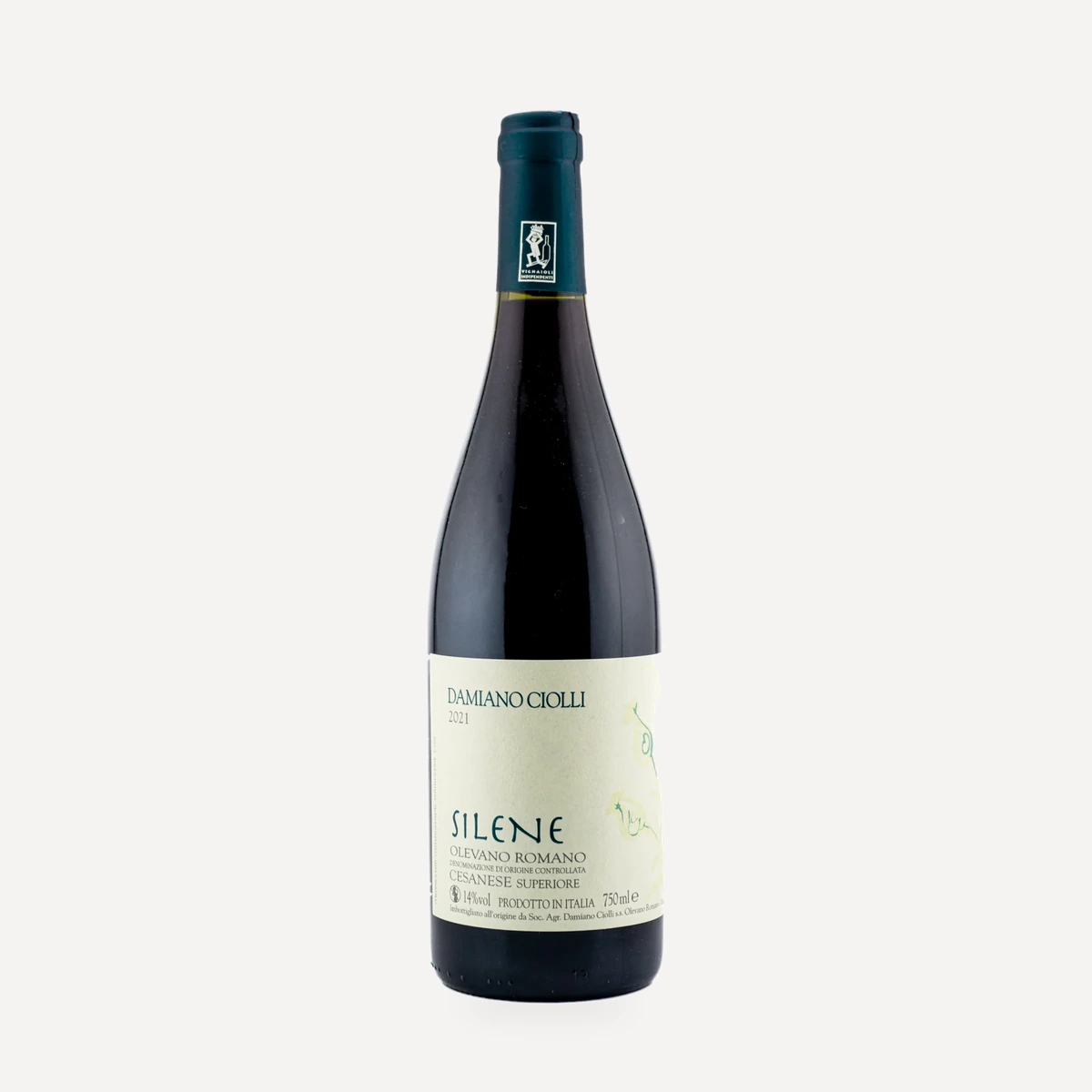
Harvesting is manual and timed for optimal maturity. The old Cesanese vineyard is naturally low yielding, at four to six bunches per vine. Fruit from that parcel receives particularly careful selection, including the removal of imperfect berries before crushing. Cesanese from the separate Silene blocks is kept apart during fermentation before the lots are assembled.
The cellar approach is based on spontaneous fermentation without added fermentation additives. Fruit is harvested by hand at optimal maturity, and selection is especially rigorous for grapes from the old Cesanese parcel.
Concrete vats are central to red-wine production. Cesanese parcels may be fermented separately before blending, while maturation on the fine deposits also takes place in concrete. Large wooden vessels are used both for fermentation and maturation elsewhere in the range. The old-vine Cesanese follows a sequence combining concrete fermentation, maturation in a large wooden vessel and a return to concrete.
The local white grapes are destemmed and crushed before spontaneous fermentation in a large wooden vessel. Maturation may continue in the same vessel in contact with the gross deposits, followed by a short period in concrete before bottling.
The estate uses cellar maturation after bottling as the final stage before release. Across the range, the recurring methods are manual harvesting, spontaneous fermentation, concrete vats, large wooden vessels, contact with fermentation deposits and bottle rest.
Filosofia
Damiano Ciolli’s quality project began with his conviction that Cesanese could produce fine wine. The estate’s objective is to translate the interaction among grape variety, volcanic soil and local microclimate into the finished wines, with particular emphasis on Cesanese d’Affile and the traditional white varieties Trebbian Verde and Ottonese.
Damiano and Letizia define their desired style through freshness, elegance and drinkability. Their approach combines close attention to small, estate-owned vineyards with spontaneous fermentation and restrained cellar handling.
Environmental stewardship is framed around preserving soil fertility, enhancing the surrounding environment and producing ethically. Green manure and organic and biodynamic products support that objective. The work is also presented as a continuation of Olevano Romano’s farming traditions rather than a separation from them.
Vini
Cirsium
Silene