Storia
The Caracciolo estate
The property at Salza Irpina was formerly associated with the Principi Caracciolo. During the eighteenth century, the Caracciolo family built the estate's Casino di Caccia in a wooded landscape rich in game. The restrained, classical building comprised a ground floor with service rooms and a small chapel and a principal floor above. A spring-water collection basin dating from the middle of the same century remains on the property.
The estate also preserves an Aglianico vine planted at the end of the nineteenth century, before phylloxera, and still trained in the traditional tennecchia avellinese form. Another historic pre-phylloxera vineyard at Paternopoli, planted at the end of the nineteenth century, supplies Aglianico and Piedirosso for a limited-production wine.
The family project
At the beginning of the 1980s, Erminia, Generoso and Roberto Di Meo took over the historic agricultural property of their parents, Vittorio and Alessandrina, at Salza Irpina, a few kilometres from Avellino. Their project combined two objectives: making wine from Irpinia's native grapes—including Fiano, Greco, Aglianico and Coda di Volpe—and sustaining the cultural traditions inherited by the family.
New vineyards were planted. One of the Salza Irpina Fiano blocks dates from 1984, while the family's first wines arrived in 1986, marking the birth of the Di Meo winery. The project subsequently expanded from wine into liqueurs, distillates and other Irpinian food products, alongside the development of vineyards in the principal production zones of the province.
Expansion across Irpinia
The estate established its viticultural presence in the three Irpinian DOCG areas. At Salza Irpina, four Fiano vineyards occupy different sides of the estate hill. Vigna Olmo at Montemarano was planted to Aglianico in 1993 at 850 metres. Vigna Alessandra and Vigna Colle dei Cerri at Salza Irpina date from 1995. The steep Greco vineyard at Montefusco was planted in 1998, while a Greco vineyard at Santa Paolina followed in 2007. Other documented plantings include Falanghina at Guardia Sanframondi in 2005 and Aglianico at Mirabella Eclano in 1989.
The cellar was built and enlarged in successive phases. Its underground barrel room occupies the estate's old cellars and was renovated while retaining its historic layout. The Casino di Caccia underwent a conservative restoration and became a country residence used in connection with the agricultural estate and for private and corporate events.
Wine, time and cultural activity
Di Meo progressively developed two central strands in its range. Tradizione presents varietal wines as direct expressions of their grapes, vintages and places, while Tempo explores prolonged maturation, particularly the capacity of Fiano and other native varieties to evolve over many years. The broader range has also included Vini d'Arte, Speciali and sparkling wines.
In 2003, the siblings created the first Calendario Di Meo at Salza Irpina as an editorial and cultural project. Capodimonte became its subject in 2004. From 2005, the calendar embarked on a recurring international “Grand Tour”, examining places and histories connected with Naples and its traditions; featured cities have included Madrid, Marrakech, London, Moscow, Berlin and New York.
In 2013, the Associazione Di Meo Vini ad Arte began an artistic collaboration with Florentine photographer Massimo Listri, producing calendar projects in historic buildings across European capitals. In 2017, the Camera dei Deputati presented Generoso Di Meo with the Premio Vino, Arte e Tradizione.
Present management
The business is managed by Roberto and Generoso Di Meo. Roberto serves as winemaker and commercial director and oversees both cellar and vineyard work. Generoso promotes Di Meo Vini ad Arte, extending the family's activity into projects devoted to the cultural heritage of Irpinia, Campania and the wider Mediterranean. The 2027 calendar, Napoli Tangeri: Dialoghi Mediterranei, was curated by Generoso Di Meo, photographed by Massimo Listri and centred on the cultural dialogue between Naples and Tangier.
Terroir
Estate setting
Di Meo's principal estate lies about 15 kilometres east of Avellino, between the Monti Picentini and the Partenio, close to Salza Irpina and Parolise. The approximately 25-hectare property occupies a gently sloping, ventilated hill. Water and natural springs are abundant around Salza Irpina, and a mid-eighteenth-century spring-water basin survives on the estate.
The wider Irpinian landscape combines hills, mountains, plateaux, streams, lakes and rivers. Di Meo's vineyards extend through the three principal DOCG zones: Fiano di Avellino around Salza Irpina, Greco di Tufo around Santa Paolina and Montefusco, and Taurasi around Montemarano.
Salza Irpina and Fiano
The approximately 20 hectares of family vineyards at Salza Irpina include four Fiano vineyards extending over different sides of the estate hill. Differences in altitude, soil and rootstock create substantial internal variation, studied through long-term parcel experiments. The sites lie at approximately 520–550 metres. Soils are clay and clay-limestone, while the documented named blocks generally face north-east. Planting densities range from 3,500 to 5,000 vines per hectare.
Montemarano and Taurasi
Montemarano lies about 20 kilometres from the winery in the south-eastern, upper Calore Valley sector of the Taurasi area. Vigna Olmo reaches 850 metres and is described as the highest vineyard in the denomination. Its soil is clay-rich and contains abundant stones, with a north-western exposure.
A markedly continental climate and strong day-to-night temperature changes slow ripening. Harvest consequently takes place very late, generally around the middle of November. These conditions produce grapes with substantial alcohol, extract, tannin and acidity, requiring prolonged maturation.
Santa Paolina and Montefusco
The Greco di Tufo area extends over steep hills in the Sabato Valley. Its vineyards range broadly from 300 to 700 metres, with fragmented holdings and clay-limestone soils of volcanic origin.
At Santa Paolina, Di Meo works with Greco planted in 2007 at 480 metres on a varied but predominantly clay soil. At Montefusco, the Greco vineyard rises to 750 metres on sunny, north-east-facing slopes with gradients exceeding 20%. Its soils are clay and limestone. The former sulphur-mining history of the wider Greco di Tufo area is associated with the sulphurous mineral character attributed to wines from these hills.
Other documented sites
The Falanghina site at Guardia Sanframondi stands at 500 metres on south-east-facing clay soil. The Aglianico vineyard at Mirabella Eclano lies at 450 metres on north-west-facing sandy loam. At Paternopoli, a pre-phylloxera vineyard planted at the end of the nineteenth century occupies south-east-facing, slightly acidic, relatively loose soil rich in lapillus at 530 metres.
Vinificazione
The vineyards are conventionally farmed. Di Meo concentrates on native grape varieties and works with sites distributed across contrasting elevations, soils, rootstocks and microclimates. At Salza Irpina, the four Fiano vineyards have been monitored through extended parcel studies to understand their differences and provide varied raw material for the cellar.
Training systems are adapted to site and variety. Fiano, Greco, Falanghina and Coda di Volpe are principally Guyot-trained. Aglianico at Vigna Olmo and Mirabella Eclano is spur-pruned cordon, while the old Paternopoli vineyard retains the traditional starzeta or tennecchia avellinese system with candelabrum pruning. Densities range from 1,000 vines/ha in the old pre-phylloxera vineyard to 5,000 vines/ha in the denser Fiano plantings.
Harvesting for the documented wines is manual. Selected bunches are placed in 15 kg crates. Picking dates reflect the elevated, continental conditions: white varieties are generally harvested from late September through October, while Aglianico at the highest Montemarano site may remain on the vine until approximately mid-November.
The Salza Irpina property supports more than 50 species of trees and shrubs, including oaks, poplars, pines, cypresses, willows, acacias, maples, eucalyptus, mimosa, almond, apple and olive trees. This mixed vegetation, together with vineyards, fruit trees, springs and the surviving nineteenth-century Aglianico vine, forms the estate's principal biodiversity setting.
Cellar and handling
The winery was built and expanded in several phases. It is a modern, functional structure equipped with temperature-controlled technology, including equipment built or modified to Roberto Di Meo's specifications. Wine is moved and processed carefully, with the stated objective of preserving the integrity of the raw material.
Soft pressing is used to extract varietal aromatic components from the skins. Inert gas—principally nitrogen—protects must and wine from oxidation. Sulphite use is described as very limited. Specific yeasts isolated from Fiano and Aglianico are employed to reinforce the connection between variety and place.
White-wine methods
Documented white-wine protocols include destemming, cryomaceration, soft pressing and temperature-controlled fermentation. Some selections undergo skin maceration, while individual Fiano lots may ferment in French-oak tonneaux. Stainless-steel tanks of different capacities are used both for initial élevage and for the exceptionally long maturation associated with the Tempo range. Selected whites remain on their fine lees; depending on the project, maturation may combine tonneaux, many years in steel and an extended final period in bottle.
The multi-vintage Fiano project demonstrates the cellar's use of long steel ageing on fine lees: component vintages spanning 2006–2022 matured for periods ranging from 3 to 19 years before blending and bottling in 2025.
Red-wine methods
The documented red protocols use skin maceration and temperature-controlled fermentation. Maceration ranges from approximately 10–15 days at around 26°C for younger Aglianico to 25–30 days at around 28°C for the old-vine Aglianico and Piedirosso blend. Pump-overs are used during fermentation, and the longer maceration also employs periodic délestage. Malolactic fermentation follows racking. Maturation can take place in French-oak barriques or tonneaux, followed by bottle ageing.
Oak and underground cellar
The barrel cellar occupies the ancient underground rooms of the estate. It was renovated without altering the original arrangement. French Allier oak barrels, tonneaux and barriques are used for Fiano and Aglianico selected for wood maturation.
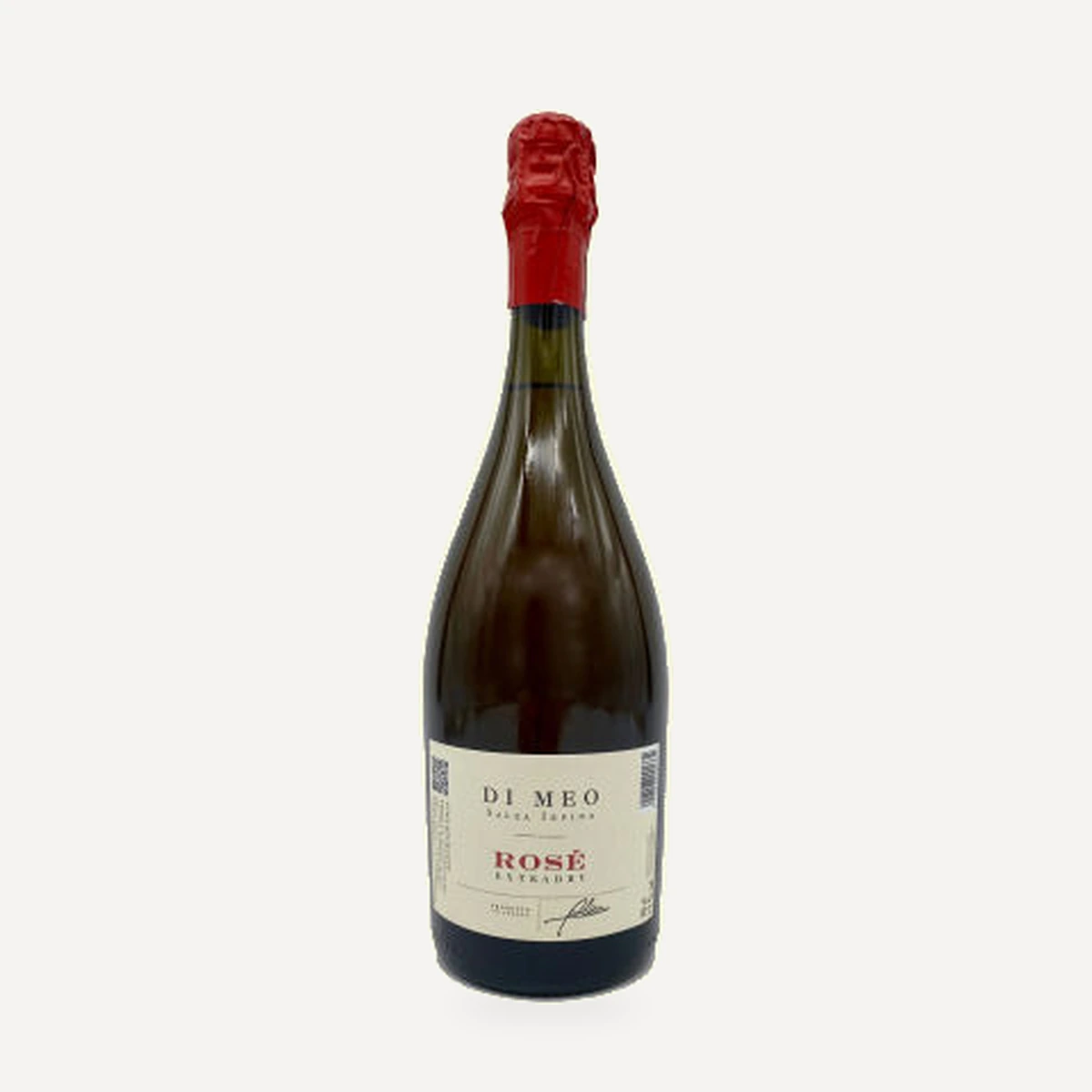
Sparkling wine
The sparkling-wine protocol includes manual harvesting of selected bunches in 15 kg crates, destemming, cryomaceration, soft pressing and temperature-controlled fermentation in stainless steel. Secondary fermentation follows an extended Charmat method, with approximately 12–18 months in autoclave and a further 12–18 months in bottle.
Filosofia
Di Meo's project is built around the relationship between family, native grapes and the cultural inheritance of Irpinia. Wine and cultural activity are treated as parallel means of presenting the territory's history in a contemporary form.
In the vineyards and cellar, the declared objective is to begin with intact, authentic fruit and intervene as little as possible. Tradition is paired with modern technology: historic training systems, old underground cellars and long maturation coexist with temperature control, inert gas, custom-designed equipment and isolated Fiano and Aglianico yeasts.
Time is a central element of the winemaking philosophy. Tradizione is intended to offer a direct reading of grape, place and vintage. Tempo tests the capacity of Fiano and other local varieties to develop through unusually long maturation in steel, oak where appropriate, and bottle. Vintage differences are preserved through separate lots and selective long ageing rather than being treated as an obstacle to consistency.
The estate's cultural philosophy extends beyond wine. Di Meo Vini ad Arte and the Calendario Di Meo seek to recover and disseminate artistic and historical connections linking Irpinia and Naples with other places. The 2027 project frames the Mediterranean as a place of encounter and treats relationships between peoples and cultures as a heritage to preserve for later generations.
Vini
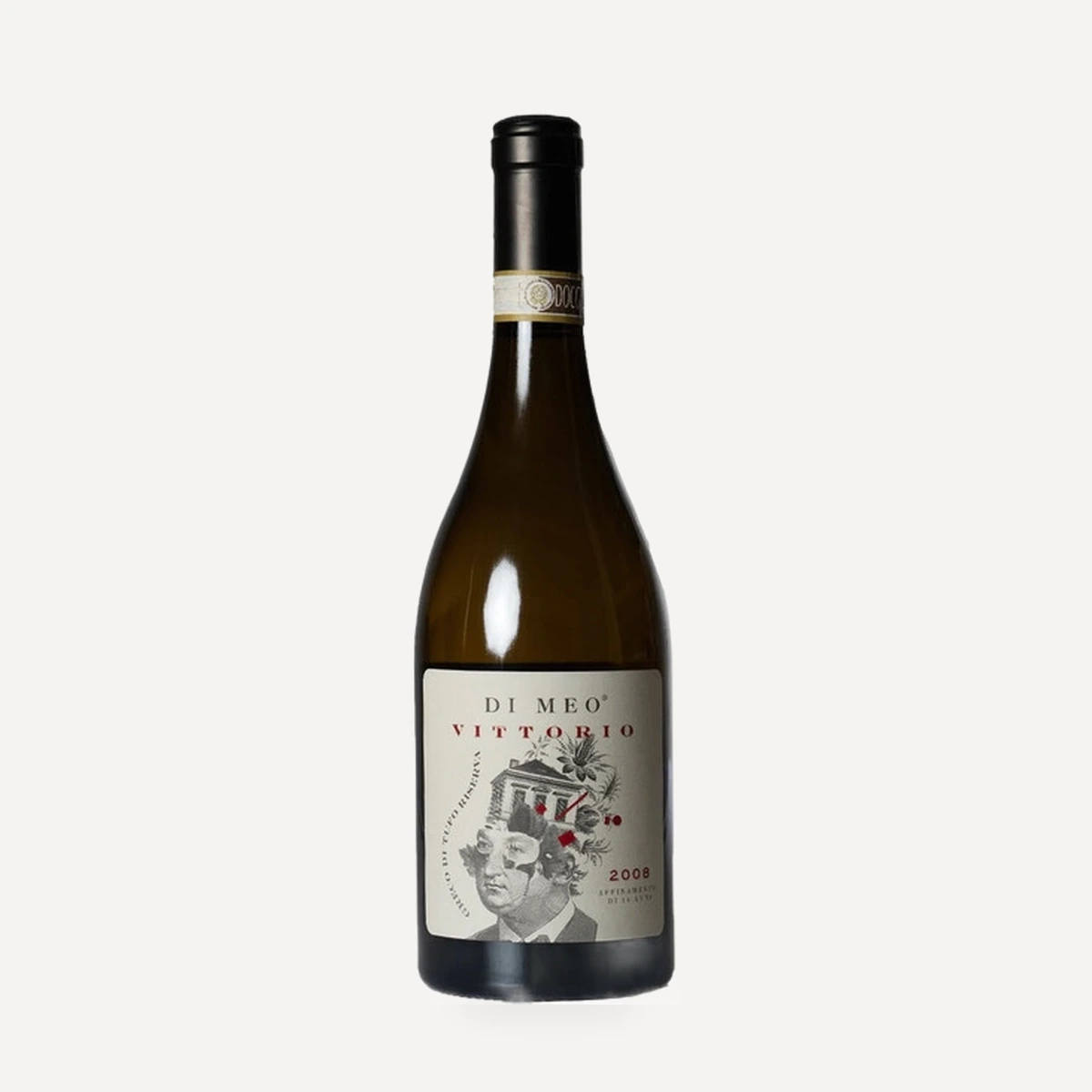
Vittorio Greco di Tufo Riserva DOCG
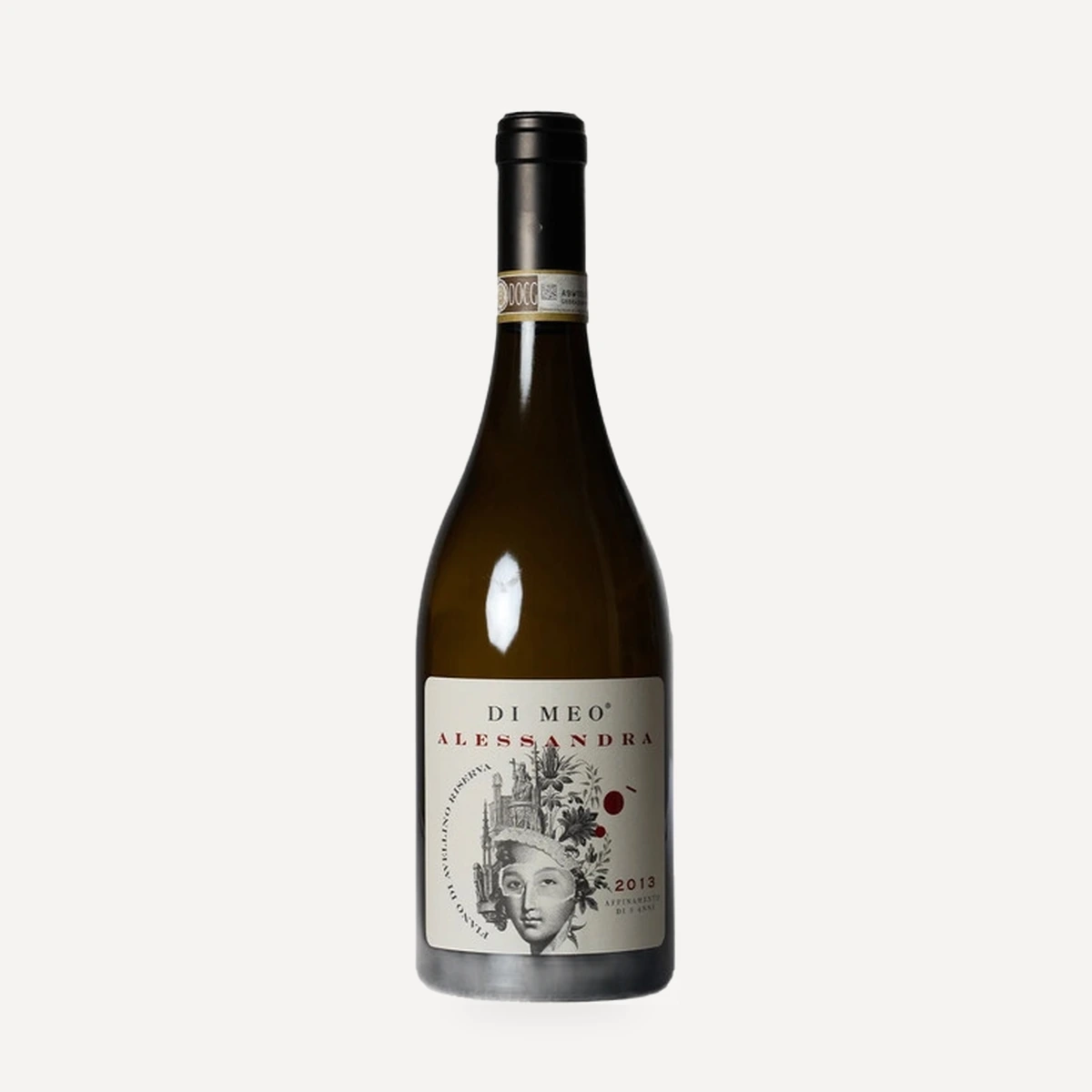
Alessandra Fiano di Avellino Riserva DOCG
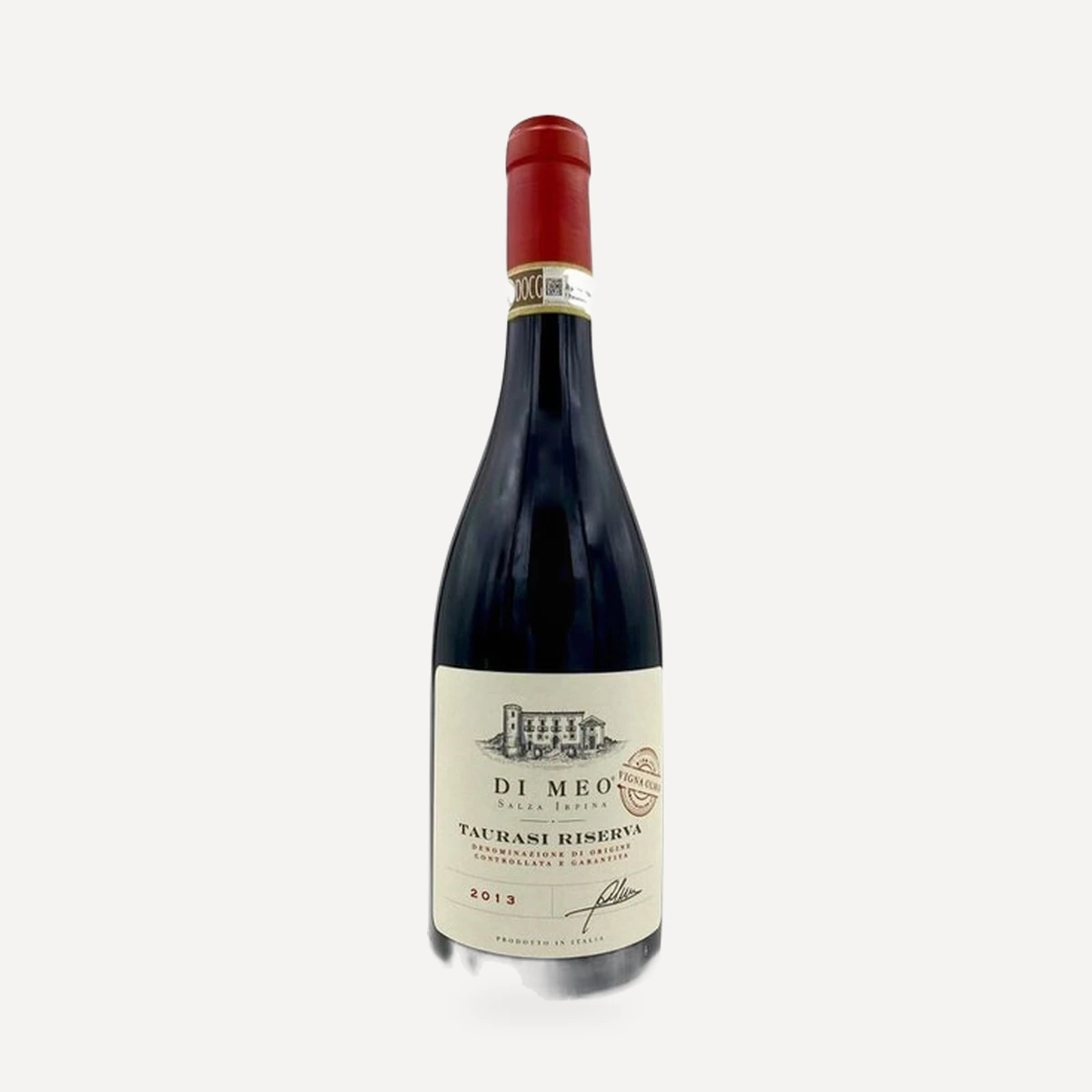
Taurasi Riserva DOCG
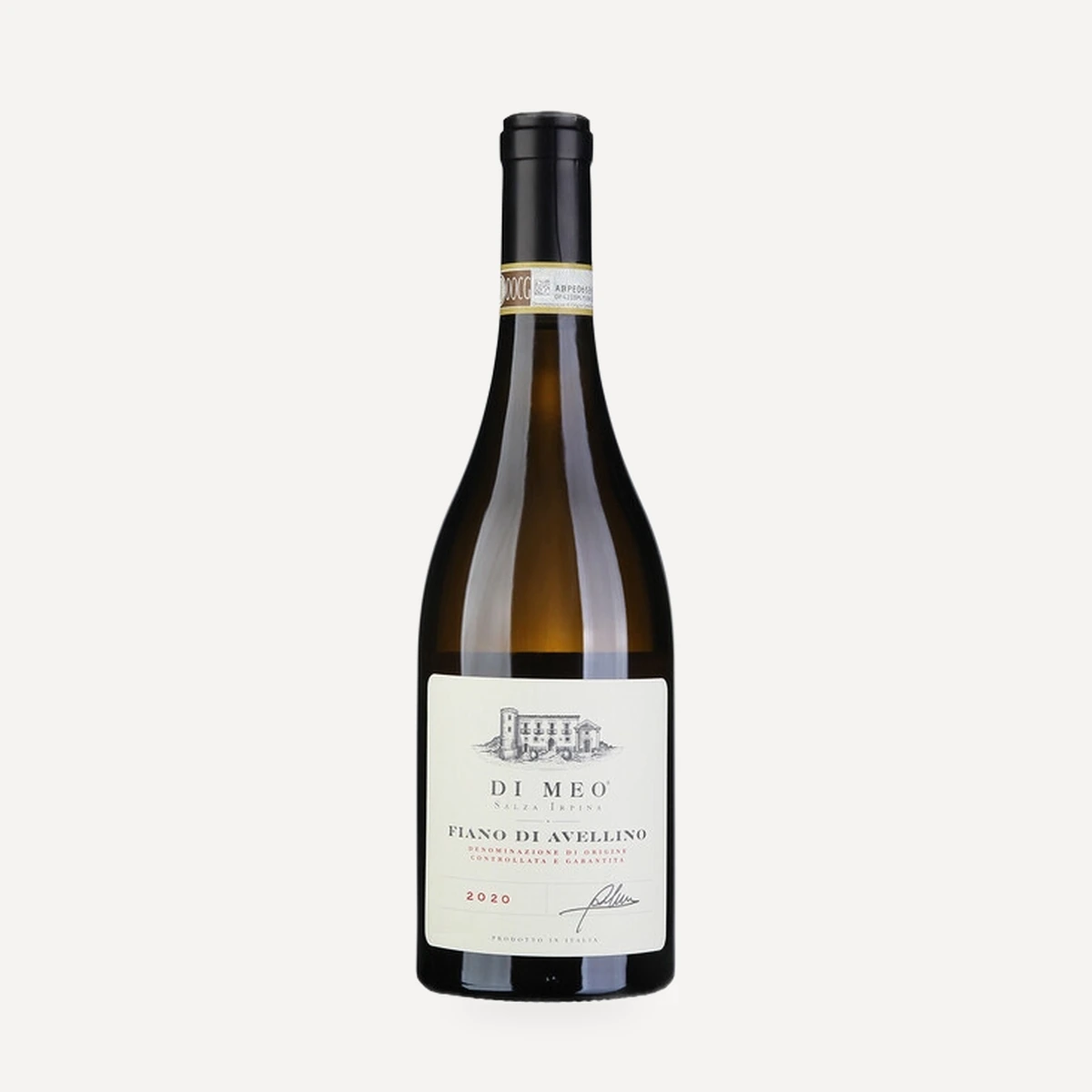
Fiano di Avellino DOCG
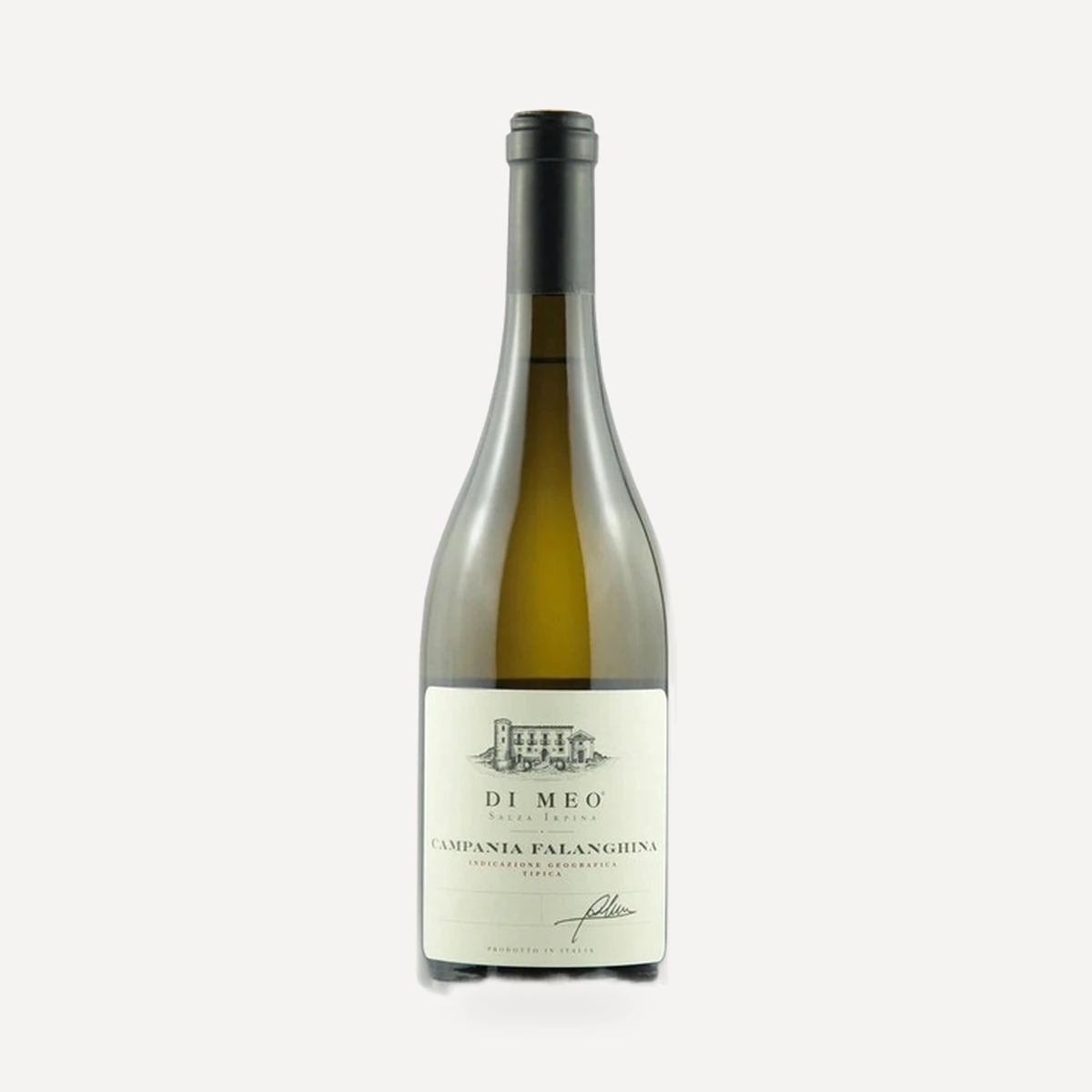
Campania Falanghina IGT
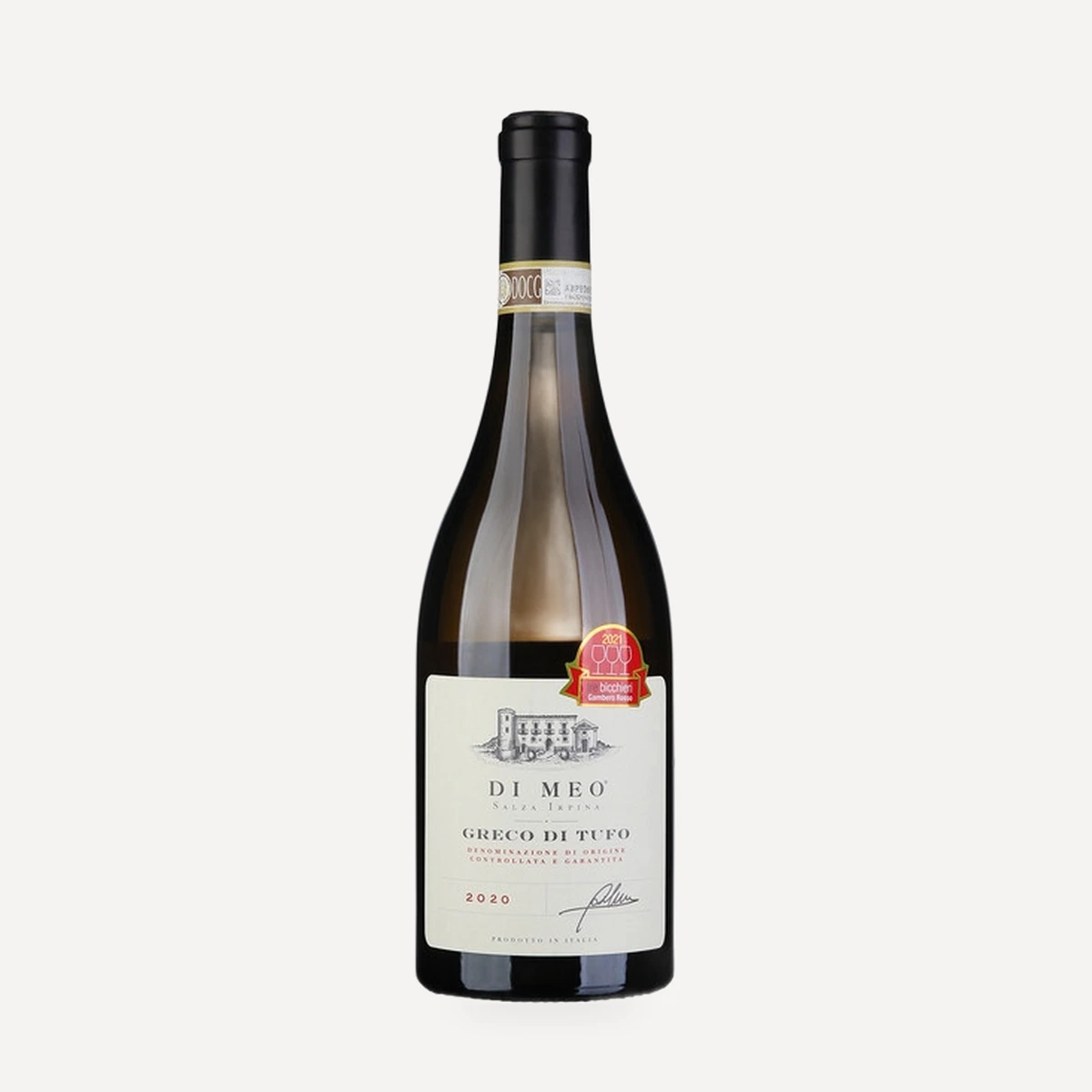
Greco di Tufo DOCG
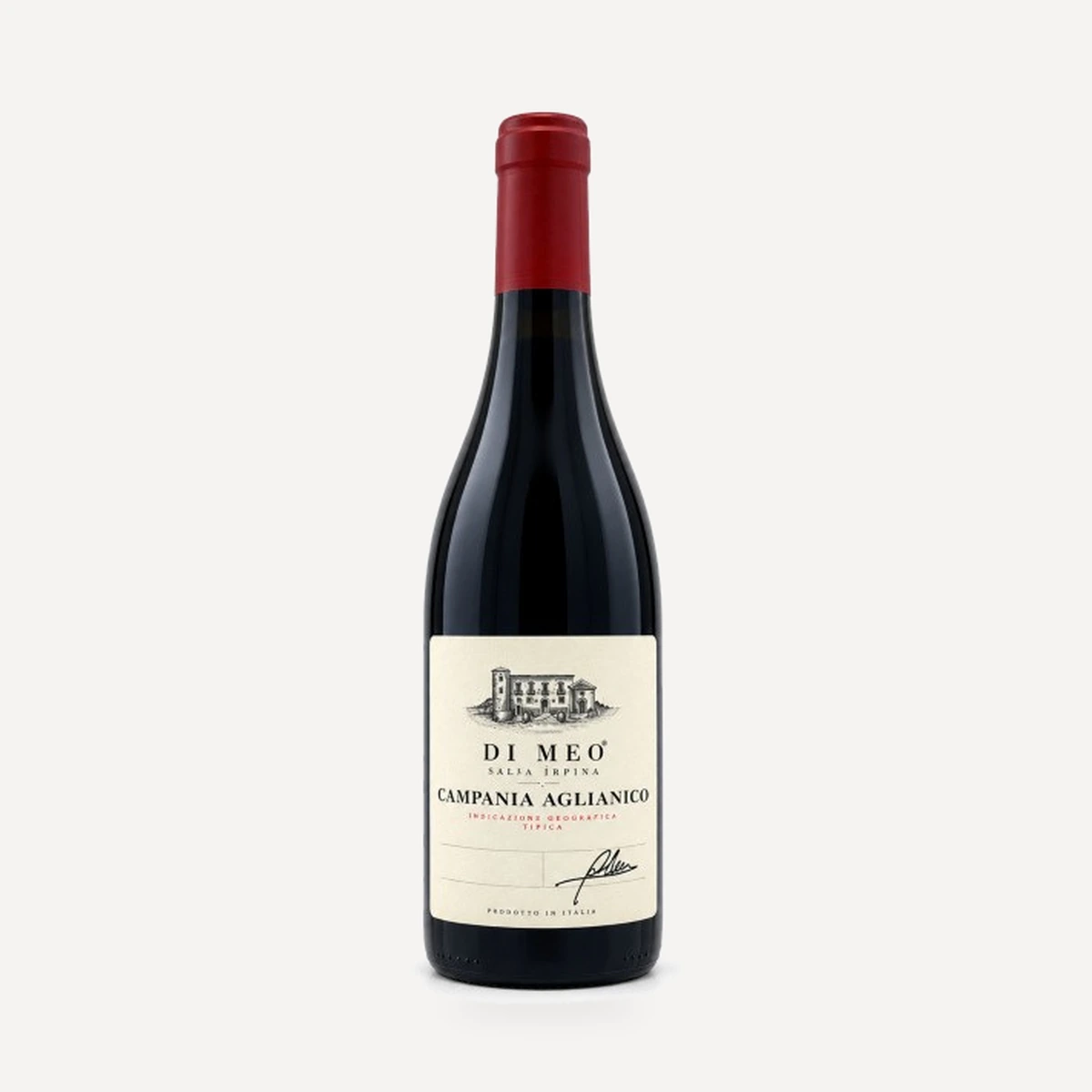
Campania Aglianico IGT
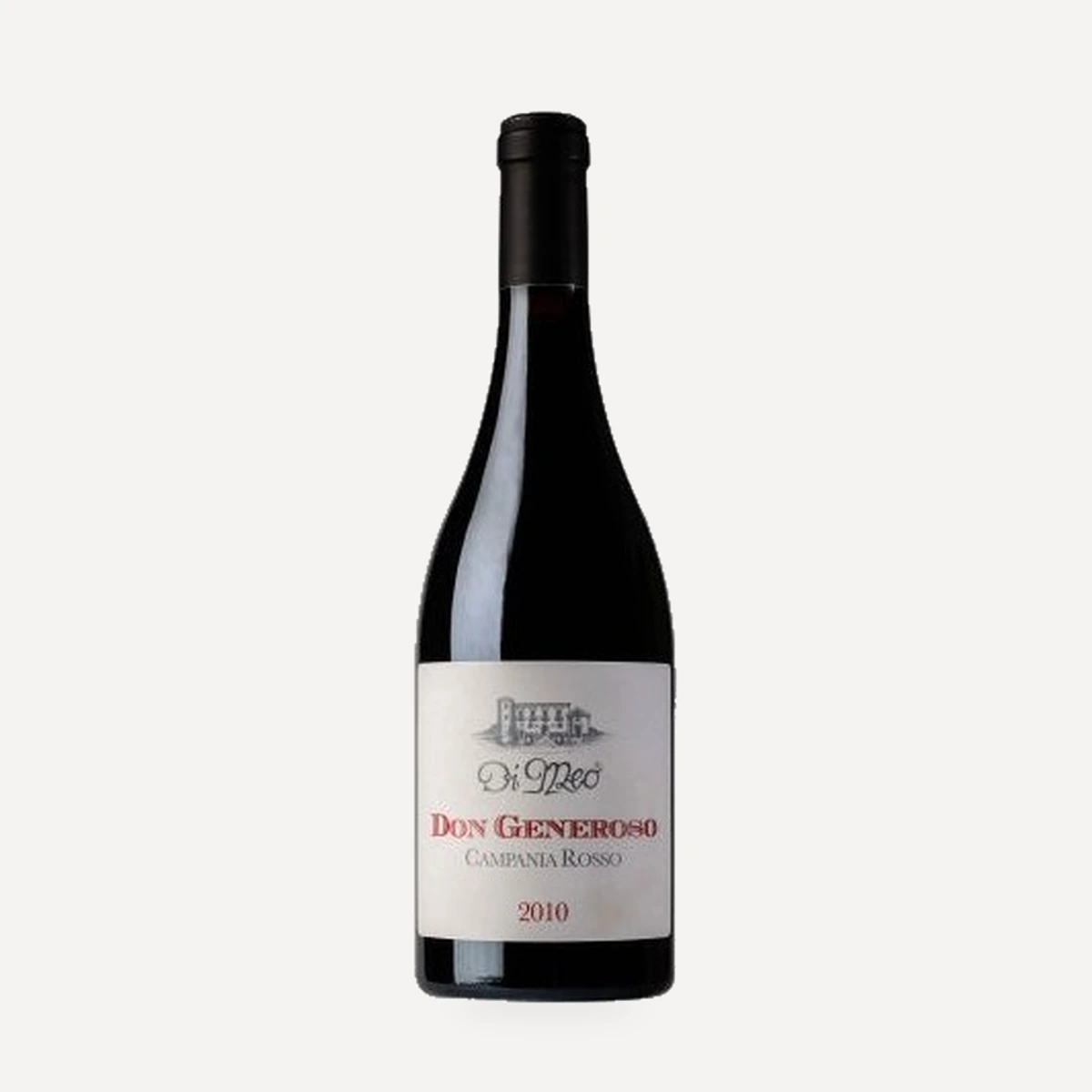
Campania Rosso Don Generoso