Storia
The family background and old vineyard
Distina grew from a family project intended to recover traditions shaped by agricultural work, sacrifice, everyday rewards and close contact with nature. Its starting point for wine production was an existing one-hectare family-owned vineyard. The estate’s oldest plant material dates to 1980, while a younger parcel was planted in 2012.
2015: the idea
The idea for Distina emerged in 2015. The family set out to create a closed agricultural cycle: grapes would be vinified, winemaking by-products would be distilled, and the remaining material would ultimately be returned to the land. Vittorio Capovilla and his family supplied the guidance and practical assistance needed to make distillation part of the project.
2016: the visual identity
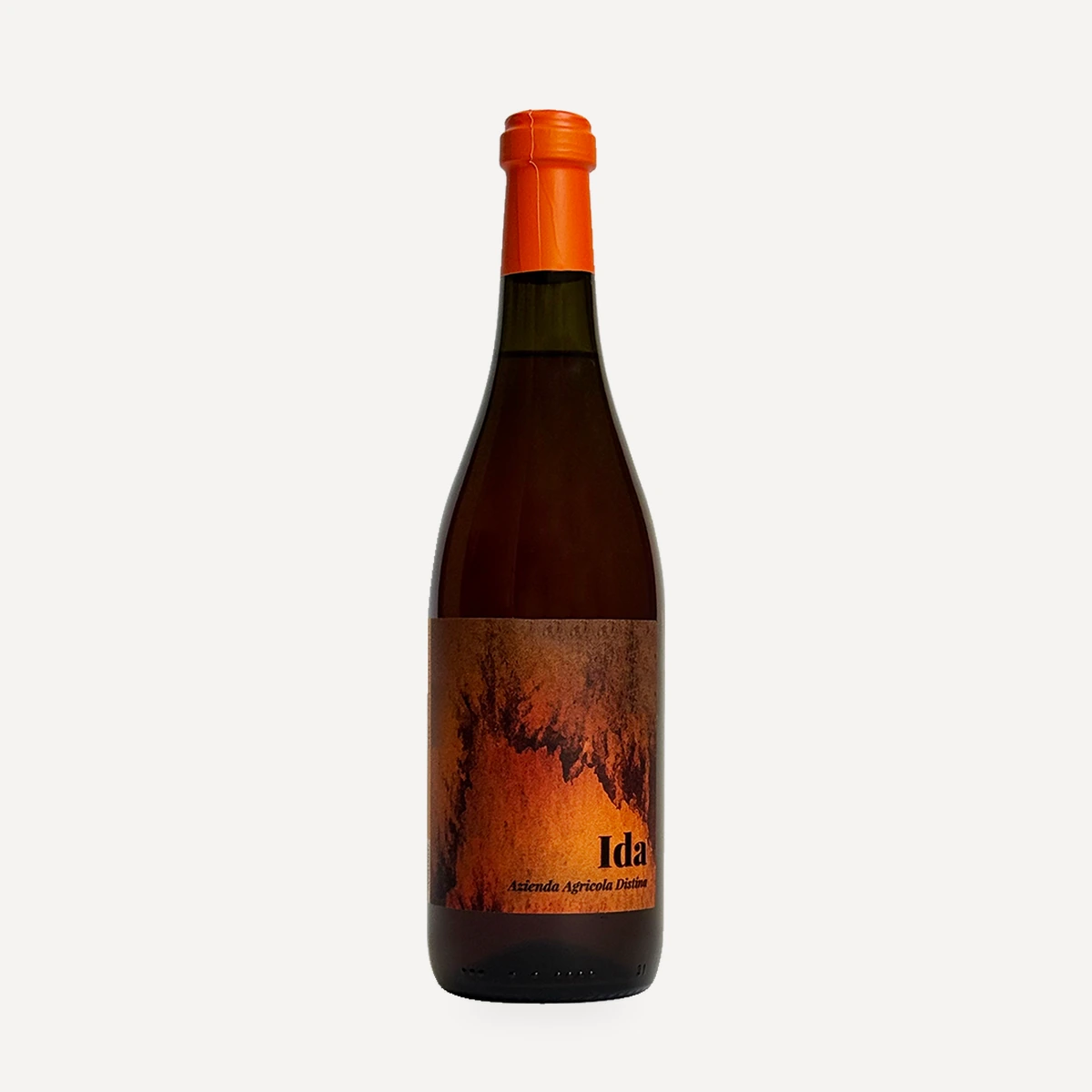
A visit to Rome in 2016, shortly before the enterprise began operating, inspired the wine labels. Their imagery reinterprets a work by Michelangelo through the artistic contribution of Claudio Campaner’s cousin.
2017: realization of the project
Distina became an operating enterprise in 2017, combining a winery and distillery under Claudio Campaner. The land was farmed organically from the beginning. The project developed from the original old hectare of vines into a six-hectare mixed farm comprising three hectares of vineyard, half a hectare of orchard and agricultural fields on the remaining land.
Wine and distillation form a single production cycle. Grape pomace remains with the must during fermentation, with the duration changing according to the vintage. After pressing, it is distilled and subsequently returned to the soil as organic fertilizer. The same commitment to local agricultural material extends to experiments with spontaneously fermented fruit and old fruit varieties from nearby valleys.
Terroir
Distina lies in the Colli Piacentini, between Val d’Arda and Val Ongina and close to the boundary with the province of Parma. The main estate description places the vineyards at approximately 250 metres above sea level, while individual vineyard-associated descriptions identify sites at 225 and 255 metres.
The land belongs to the Piacenziano fossil belt. White clays and sand sediments preserve evidence of the area’s marine past, and shells of different forms and sizes can still emerge when the soil is ploughed or dug. One north-west-facing site is described more specifically as Pliocene marine clay containing fossils; other vineyard descriptions characterize the soil simply as clay.
The soils are poor in nitrogen. Historically, this made it difficult for fermentations to consume all available sugar before bottling. Residual sugar in the must at bottling helped establish the local tradition of sparkling wine.
Vinificazione
All estate land has been managed organically since Distina began, and the farm is certified by Suolo e Salute. Vineyard protection is limited to sulfur and wettable copper.
Permanent or seasonal grass cover is maintained between the vines, with mowing postponed until late in the season. Pruning and every stage of harvesting are performed by hand. Grapes are collected in open crates holding approximately 20 kg, limiting the depth of fruit in each container.
The estate gives priority to varieties closely associated with its area, particularly Malvasia di Candia Aromatica, Moscato Bianco, Marsanne, Barbera, Croatina and Ortrugo. Its mixed six-hectare holding also includes a 0.5 ha orchard and agricultural fields, supporting a circular approach in which spent grape material is returned to the soil as organic fertilizer after distillation.
Wine production is based on spontaneous fermentation and minimal cellar intervention. The cellar uses only fiberglass and cement vessels. No clarification or filtration is performed.
Distina works to allow the wines to reflect the conditions of each vintage and their place of origin without corrective enological compromises or added winemaking chemistry. Cellar operations are reduced as far as possible and are timed with attention to lunar phases. Time and patience, rather than an extensive range of cellar technologies, are central to the approach.
The range includes still wines and sparkling wines made through spontaneous refermentation in bottle. Grape pomace remains in contact with the must during fermentation, with the duration varying from year to year. Once separated from the wine, the fermented pomace is ready for distillation; after that process, the remaining material is returned to the farm as organic fertilizer.
Filosofia
Distina defines itself as a family project devoted to recovering agricultural traditions and living in close contact with the surrounding natural environment. Its guiding concept is a closed production cycle: cultivate grapes, make wine, distil the resulting by-products and return what remains to the land.
The stated vineyard approach emphasizes respect for the soil, plants and wider environment. In the cellar, the objective is to minimize intervention and permit vintage and place to remain evident, without clarification, filtration or corrective enological compromises. The use of cement and fiberglass, spontaneous fermentation, patience and attention to lunar phases is intended to preserve the strongest possible expression of the territory.
The project also seeks to sustain locally rooted plant material. In the vineyard this means emphasizing Malvasia di Candia Aromatica, Moscato Bianco, Marsanne, Barbera, Croatina and Ortrugo. In distillation it includes the more technically demanding goal of working with spontaneously fermented fruit from old cultivars found in neighboring valleys.
Vini
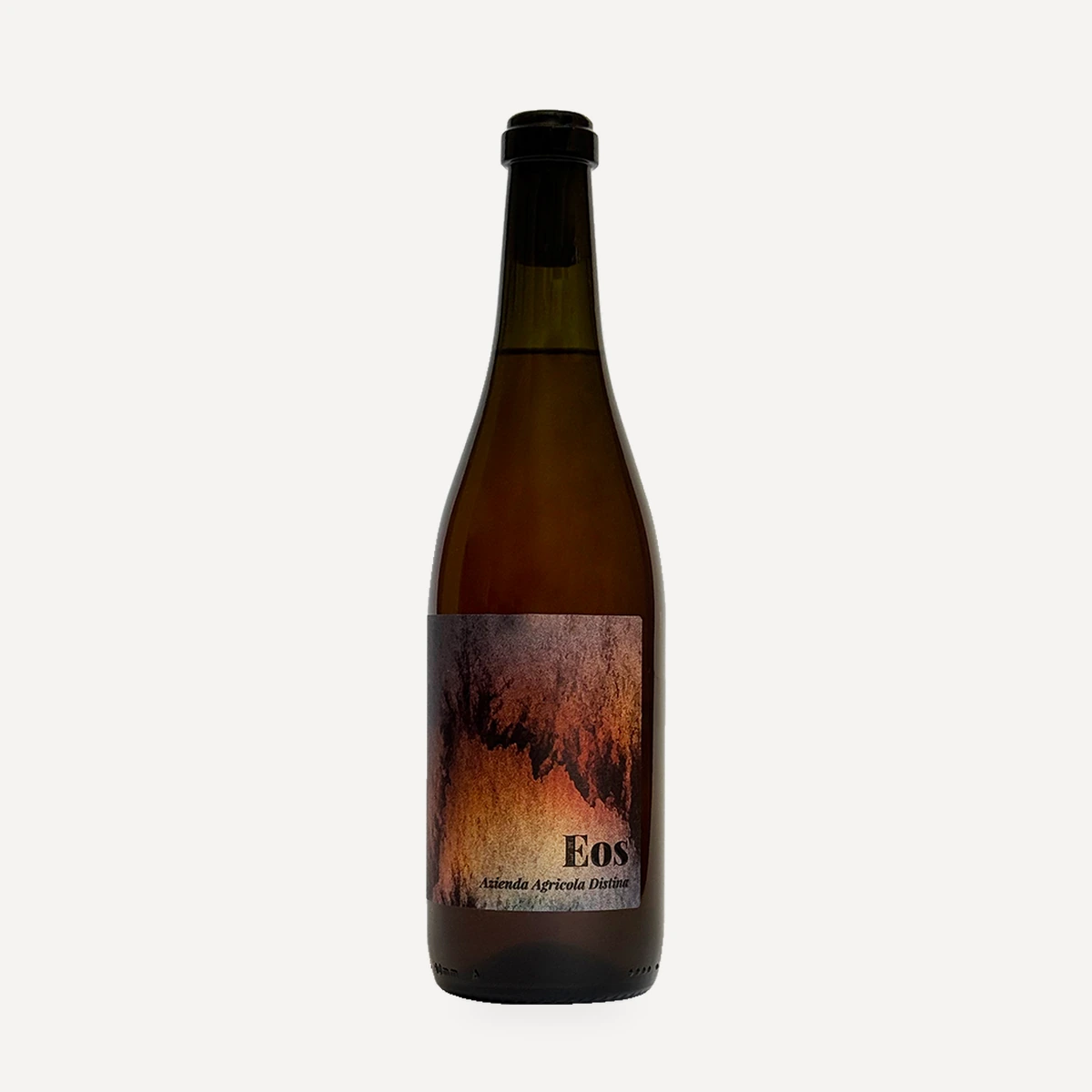
Eos