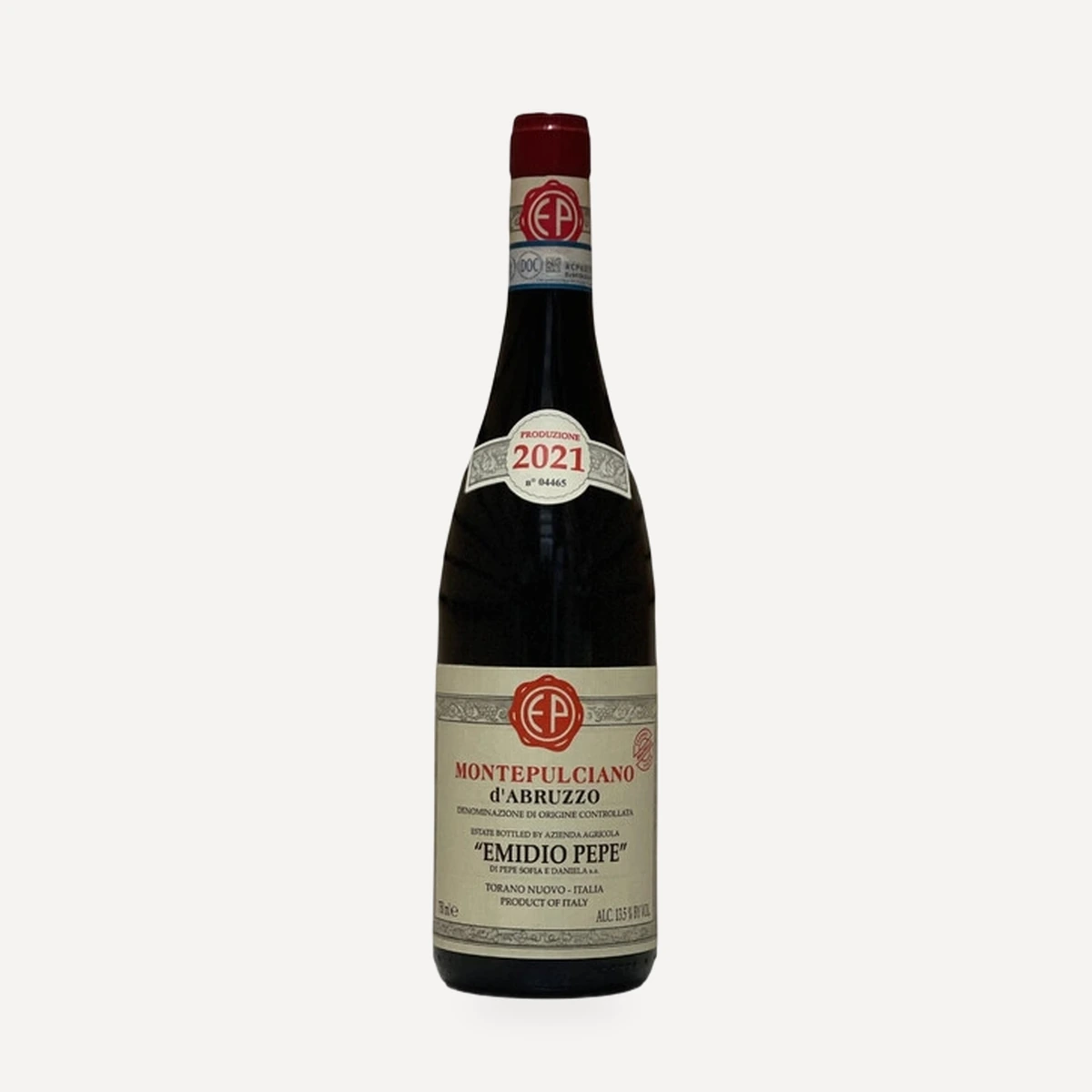
Questo vino
Vineyard and terroir
Branella is a 2-hectare historic vineyard situated 12 km from the Adriatic Sea and 43 km from Gran Sasso. It was planted in 1966, acquired by the Pepe family in 1981 and planted through massal selection, resulting in relatively uniform plant material. The pergola-trained vines grow on semi-level terrain with a slight southeasterly orientation, while the canopy provides a pronounced shading effect.
The vineyard contains at least two or three distinct geological zones. Blue clay-marls with speckled limestone material occur toward the northern and upper parts, while a fine-sand zone in the center has a lower, nearly neutral pH. The slopes are gentle and irregular, facing from south to southeast. Branella averages approximately 40% clay and 28% sand. Its soils are generally deeper, softer and more aerated than those of Casa Pepe, allowing roots to penetrate deeply. Although present in small quantities, iron and manganese are comparatively more abundant.
The higher proportion of sand gives the wine agility and a quicker rhythm. Fine, tight tannins and a strongly vertical profile are associated with the vineyard’s soil structure and calcium-carbonate component.
Grapes
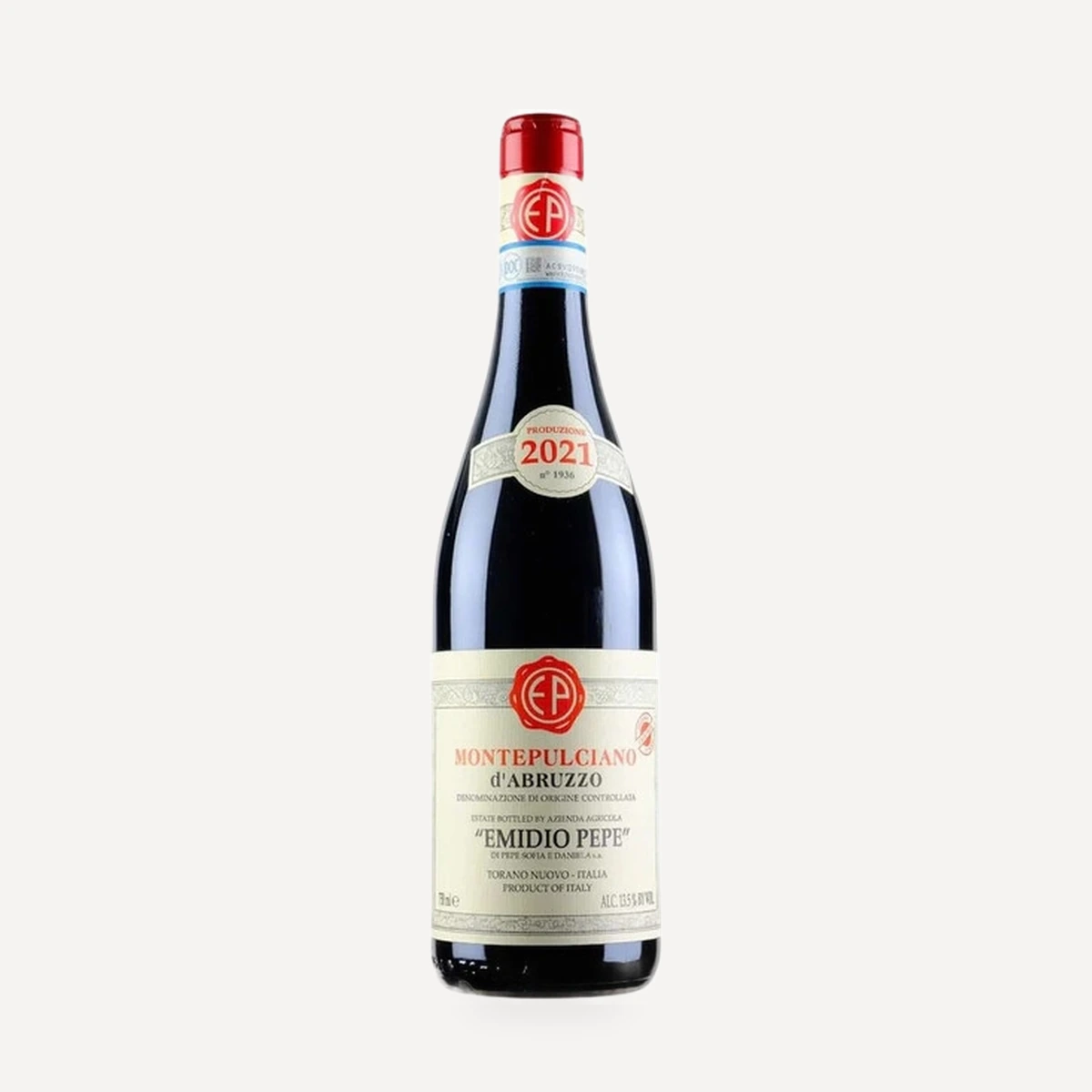
Montepulciano d’Abruzzo.
Tasting profile
Branella is energetic, fresh and high-toned, with a cool, fast-moving and dynamic profile. Rose petal, pomegranate and balsamic notes accompany slim, finely woven tannins. The acidity is gripping, while the structure is angular, wiry and vertical, with an ethereal quality and marked vigour.