Storia
Early 20th century: the Oberto family and its first wines
The Oberto family, descended from the branch known as “Severin” and more recently nicknamed the “Erbaluni,” has worked in viticulture and winemaking at La Morra since the beginning of the 20th century. Erbaluna represents the fourth generation of this family activity.
1915: the historic cellar
The historic cellar underwent its first renovation around 1915. That date remains impressed into an old brick wall. The cellar’s exposed-brick vaults and secluded bottle niches survive alongside modern stainless-steel tanks and contemporary equipment. Its large wooden casks remain in use for the slow maturation of Barolo.
The 1920s and 1930s: early Barolo records
Bottles of Barolo dating from the 1920s remain in the cellar. A diploma awarded in 1933 recognized the estate’s Barolo from the 1927, 1928, 1929 and 1930 vintages, documenting both production and an established concern for quality during that period.
From 1958: the vintage collection
The cellar preserves a collection representing every vintage from 1958 onward, in addition to the surviving bottles from the 1920s.
Mid-1980s: a new direction
In the middle of the 1980s, brothers Andrea and Severino Oberto reshaped the estate around organic farming. Their aim was to restore a direct relationship with the land that they believed had been weakened during the preceding decades. They gradually purchased additional vineyards, converted them to organic cultivation and initially directed sales toward northern Europe, where awareness of organic agriculture was already more developed. Distribution subsequently expanded to other international markets.
1986: conversion to organic methods
The decisive change came in 1986, when organic methods became the basis of both vineyard work and wine production. The Oberto family was part of a small circle of Piedmontese and Tuscan growers who exchanged knowledge, objectives and experience during the early development of Italian organic winegrowing.
The 1990s and 1993: hospitality and certified labeling
During the 1990s, five double rooms and an apartment in the late-19th-century family farmhouse above the cellar were renovated for agritourism. Original 20th-century furniture and beds once used by Uncle Luigi, the family’s twin aunts and the grandparents were incorporated into the accommodation.
In 1993, the wording “wine made from organic grapes” and the indication of the cultivation-practice certifying body appeared on Erbaluna’s labels under EC Regulation 2092/91.
2012: the European organic-wine framework
On 8 February 2012, the EU Standing Committee on Organic Farming approved Regulation 203/12 governing organic winemaking. When it entered into force on 1 August 2012, the regulation established rules for organic cellar techniques and oenological aids and made it possible to label qualifying products as “organic wine” with the European organic logo.
2013: renovation of the old porch
The farmhouse’s old porch was renovated in 2013. A new breakfast kitchen was created on the ground floor, while the first floor became a glazed tasting and meeting room with capacity for approximately 35–40 people.
The present generation
Andrea Oberto now operates Erbaluna with his wife, Monica, and their sons, Elia and Gioele. The family combines respect for inherited practices with attention to ideas emerging from the next generation. The estate produces and prepares certified organic wine and agricultural products at its La Morra unit, while the historic family house continues as an agriturismo above the cellar.
Terroir
Location and relief
Erbaluna is based at Frazione Annunziata Pozzo in La Morra, among the Langhe hills. Its documented wine parcels extend from approximately 210 to 400 metres above sea level and occupy eastern, north-eastern, south-eastern, southern and south-western exposures. This variation encompasses lower sites and small valleys as well as the markedly higher Castagni vineyard.
Soils
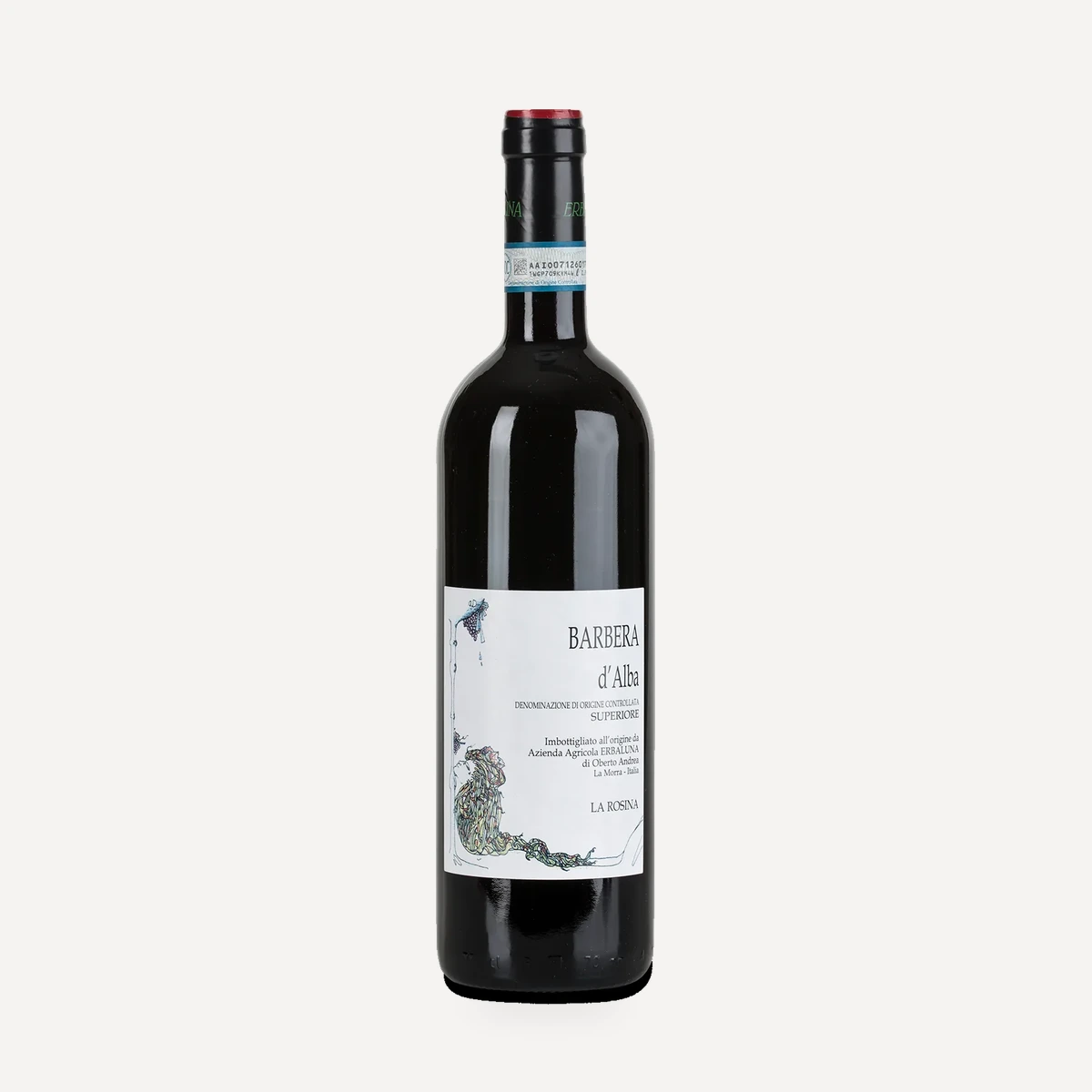
Calcareous clay is the recurring foundation of the estate’s vineyards, but individual sites display significant differences. Rocche dell’Annunziata has a calcareous-clay, loamy-silt texture with slightly more sand than clay and a substantial silt component. Castagni is crossed by layers or veins of gypsum. Arborina combines limestone, clay and very fine sand. La Rosina contains layers of tuff. Other sites are described more broadly as calcareous and clayey.
Exposures and mesoclimates
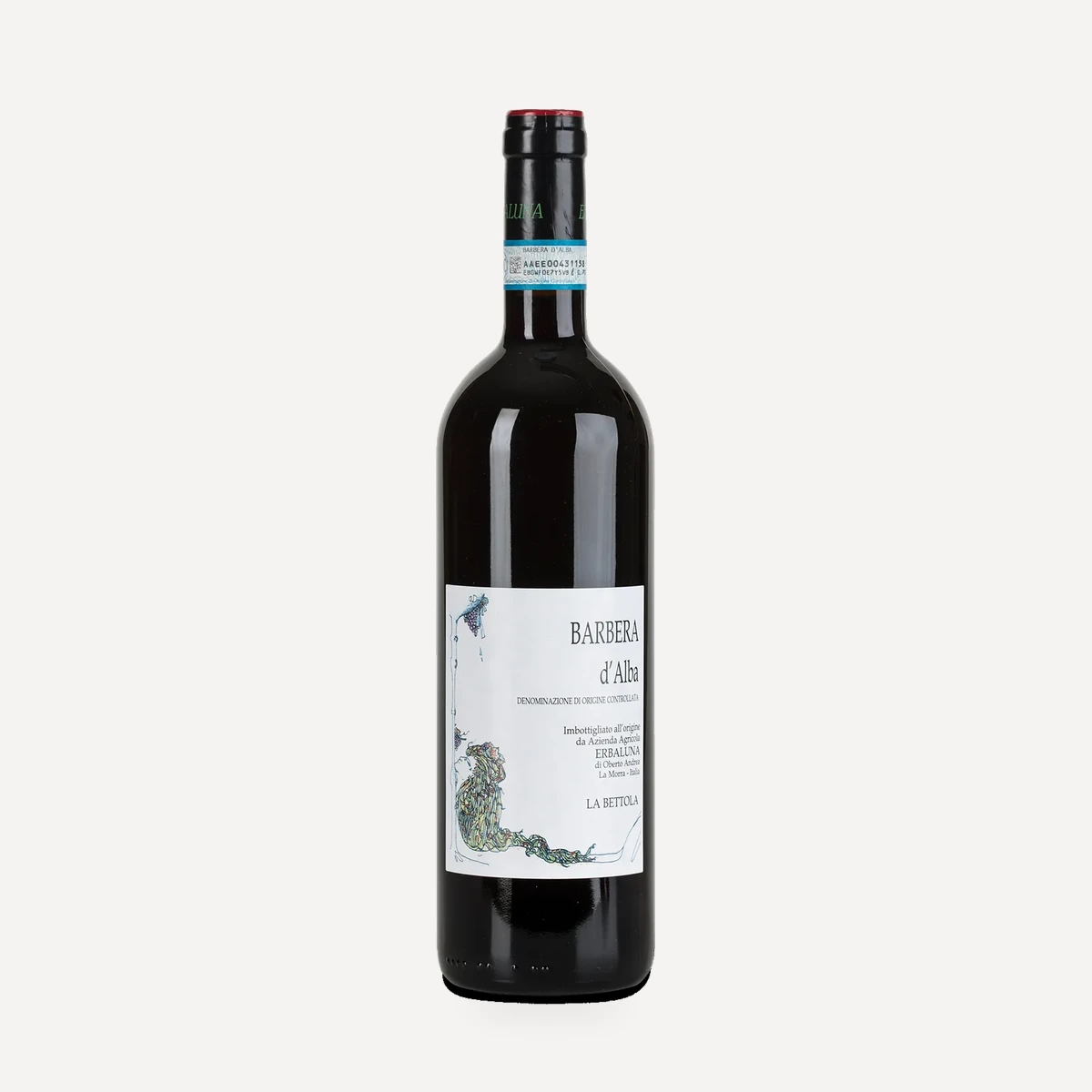
Rocche dell’Annunziata faces south to south-east at approximately 260–300 metres and combines mature vines with a favorable cru microclimate. Arborina faces south-east at 250–320 metres and receives regular ventilation in the late morning. Castagni faces east at 370–400 metres. The vineyards used for the multi-parcel Barolo face south-east at 250–280 metres, while the Langhe Nebbiolo site faces south-west at 240–250 metres. La Bettola occupies a small valley with a north-east to east exposure at approximately 220 metres; Le Liste faces east at approximately 210 metres.
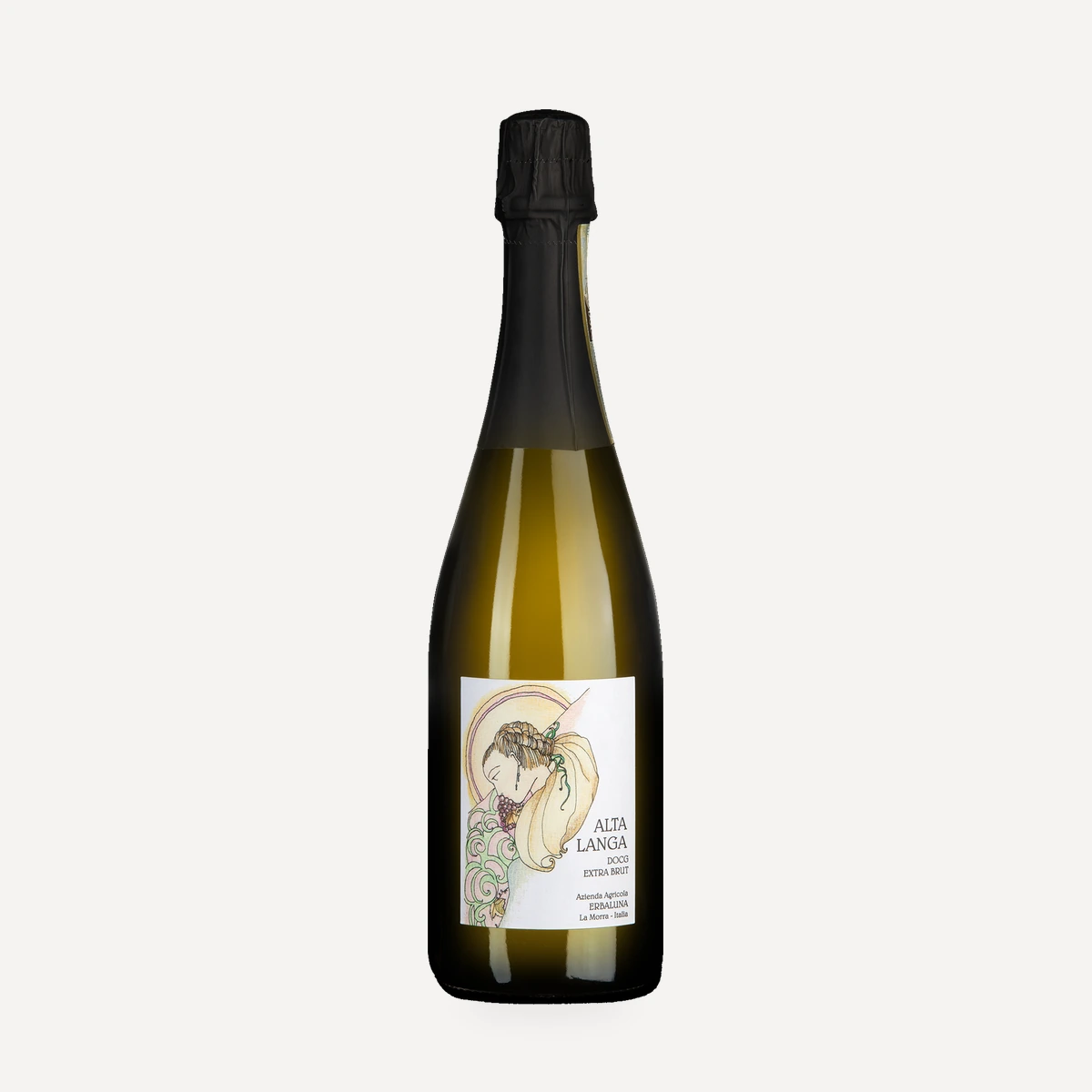
For Alta Langa Extra Brut, Erbaluna works in collaboration with the higher hills of Asti, where the relevant conditions are described as cool and ventilated, with marl, calcareous-clay and sandy soils at approximately 350 metres.
Vinificazione
Erbaluna has worked organically since 1986. Andrea and Severino Oberto introduced this direction to recover a closer relationship with the land, then gradually acquired additional vineyards and converted them to organic cultivation. The present organic certificate covers production and preparation under EU Regulation 2018/848 and identifies ICEA as the control body, with code IT-BIO-006. Plant and plant-product production is certified as organic and no longer in conversion.
The land registered under organic control totals 11.184 ha: 10.1946 ha of specialized arboreal crops, 0.0225 ha of woodland, 0.0928 ha of arable land, 0.39 ha occupied by structures, 0.0033 ha of non-grazable land and 0.4808 ha classified as ancillary or unproductive area.
Guyot is the training system identified across the documented wine vineyards. Harvesting is manual and includes grape selection. Depending on site and variety, picking extends from mid-August or early September for the Alta Langa grapes through the second week of October for the Barolo sites.
Rainwater from the roofs is collected in old barrels positioned beneath the downpipes and reused for vineyard treatments. The winery and residence also generate all the electricity they consume through photovoltaic panels installed on their roofs.
Erbaluna combines a historic brick-vaulted cellar and traditional large wooden casks with stainless-steel tanks and modern machinery. The old cellar, first renovated around 1915, remains active for maturation in 30-hectolitre casks.
For the estate’s still red wines, the documented approaches vary by parcel and intended style. Floating-cap fermentations or macerations generally last from 8 to 24 days, with three to six pump-overs per day. The Arborina parcel follows a distinct protocol of 25–30 days’ temperature-controlled maceration at 28–32°C.
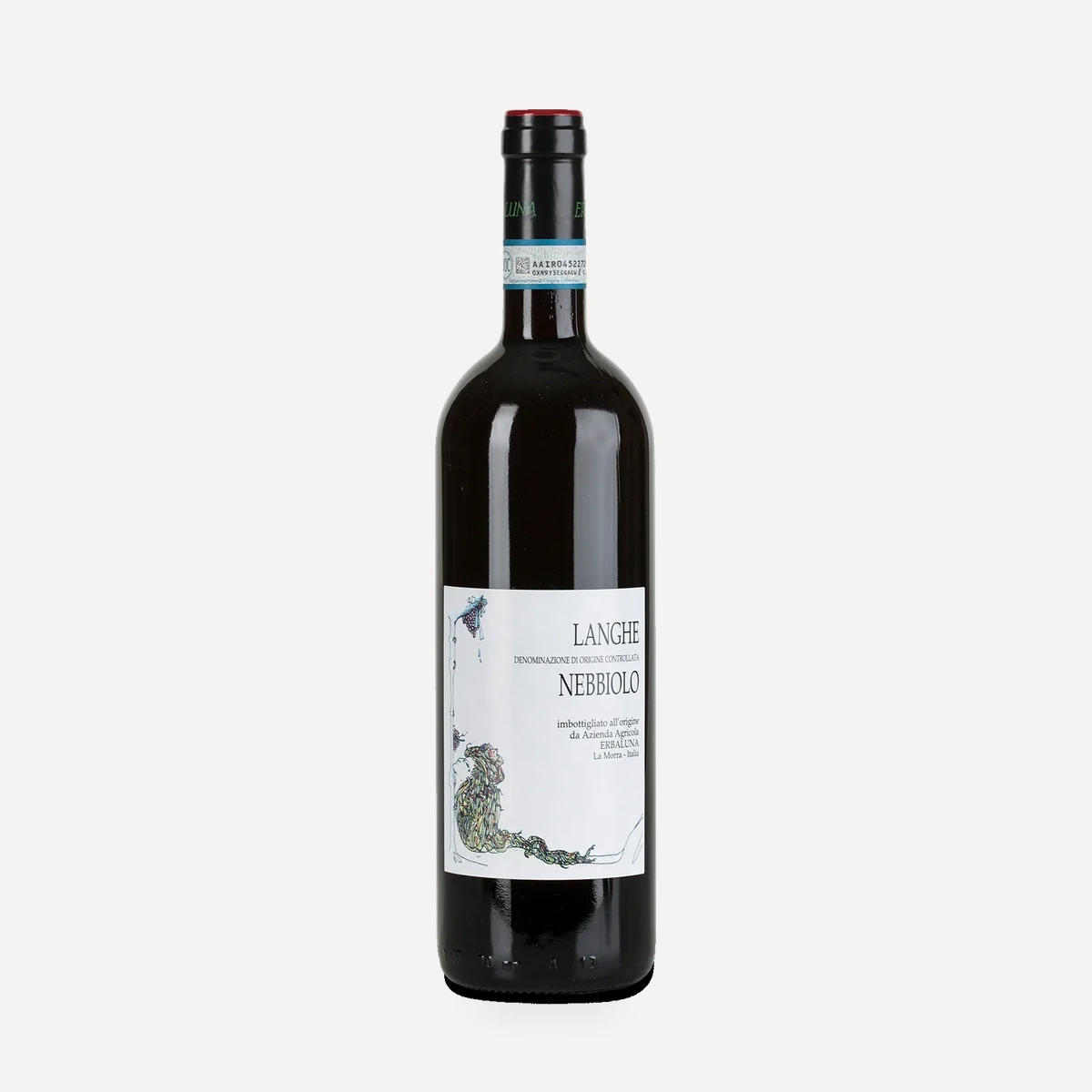
Ageing vessels range from stainless steel to 500- and 750-litre tonneaux, 30- or 33-hectolitre casks, 30-hectolitre oak casks and barriques. Dolcetto d’Alba Le Liste is matured in steel. Barbera d’Alba La Bettola normally remains in steel, with a passage through 30–33 hl casks in the best vintages. Langhe Nebbiolo spends approximately six to eight months in vessels ranging from tonneaux to large casks, while Barbera d’Alba Superiore La Rosina spends about one year in comparable formats. The main Barolo and Rocche dell’Annunziata mature for 24 months in 30–33 hl casks; Castagni spends 18–24 months in a 30 hl oak cask. The small Arborina production is aged for 18–24 months in barrique, an exception to the estate’s usual preference for larger wood, chosen to provide faster micro-oxygenation and soften the wine’s initial angularity. Erbaluna Rosso receives no ageing and is made without added sulphites.
Alta Langa Extra Brut is made by soft pressing, fermentation in stainless steel and at least 30 months of maturation on the lees. Its Pinot Nero and Chardonnay grapes come from a single harvest.
Filosofia
Erbaluna presents organic agriculture as an irreversible awareness grounded in personal sensitivity rather than as a temporary commercial choice. The approach developed through a younger generation’s willingness to challenge established practice and is now framed as a commitment that must remain coherent from vineyard to finished wine.
The family defines its work through the relationship between people and nature: harmony should not overpower natural forces, and wine should express the family’s long familiarity with land that has been its home for generations. Respect for climatic balances and the natural aptitudes of the Langhe soils takes precedence over imposing a uniform formula on the vineyards.
Tradition and contemporary methods are treated as complementary. Historic bottles, brick vaults and large casks coexist with stainless-steel tanks, modern machinery and careful monitoring of individual lots. The family retains large-cask ageing as its normal reference point but accepts alternatives where a parcel’s scale or character warrants them, as illustrated by the monitored use of barrique for Arborina.
Andrea, Monica, Elia and Gioele describe continuity as respect for inherited experience combined with openness to ideas emerging from the next generation. Erbaluna Rosso, made without added sulphites, is presented as an emblem of the desire for an authentic and minimally elaborated expression.
Vini
Alta Langa Extra Brut
Barbera d’Alba La Bettola
Barbera d’Alba Superiore La Rosina
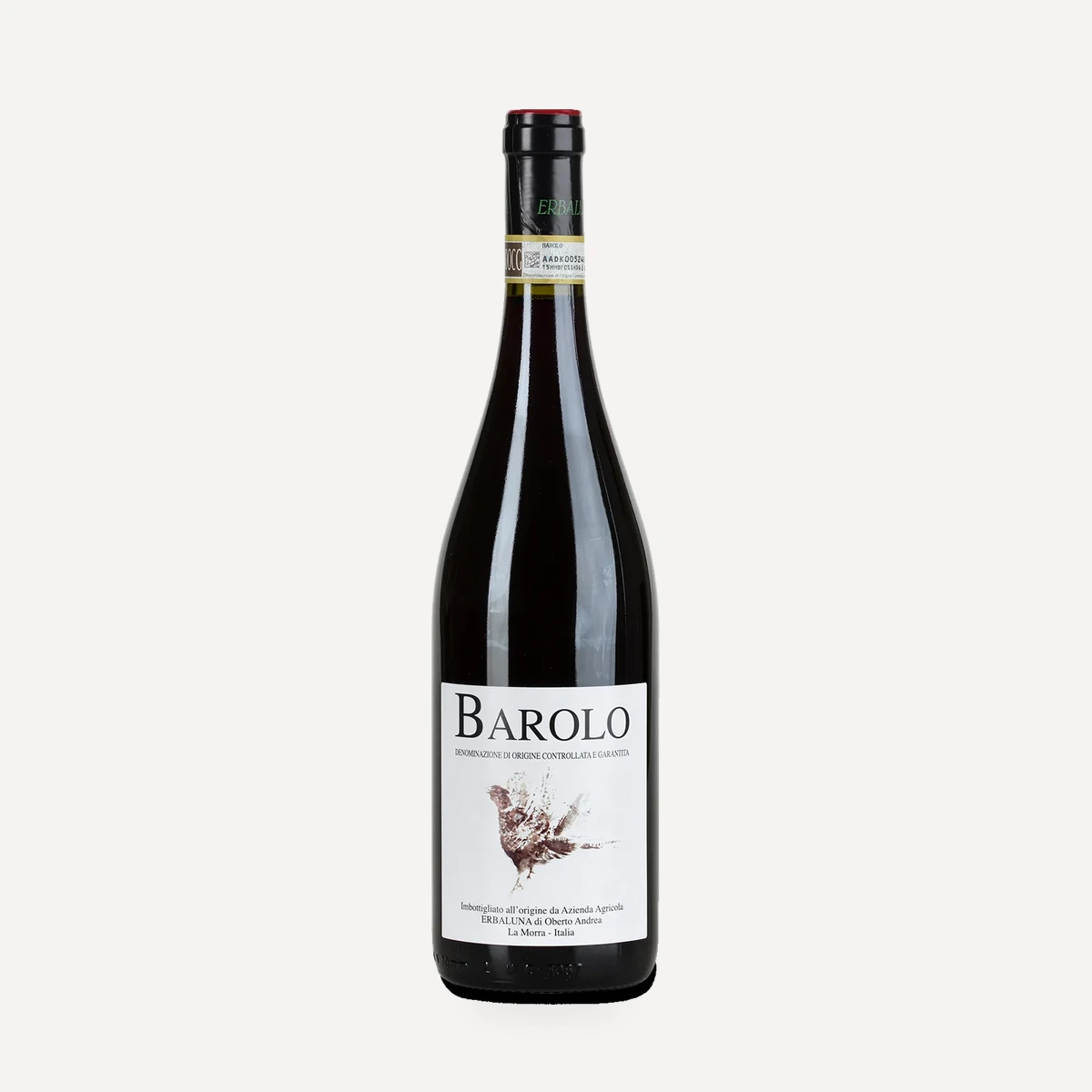
Barolo
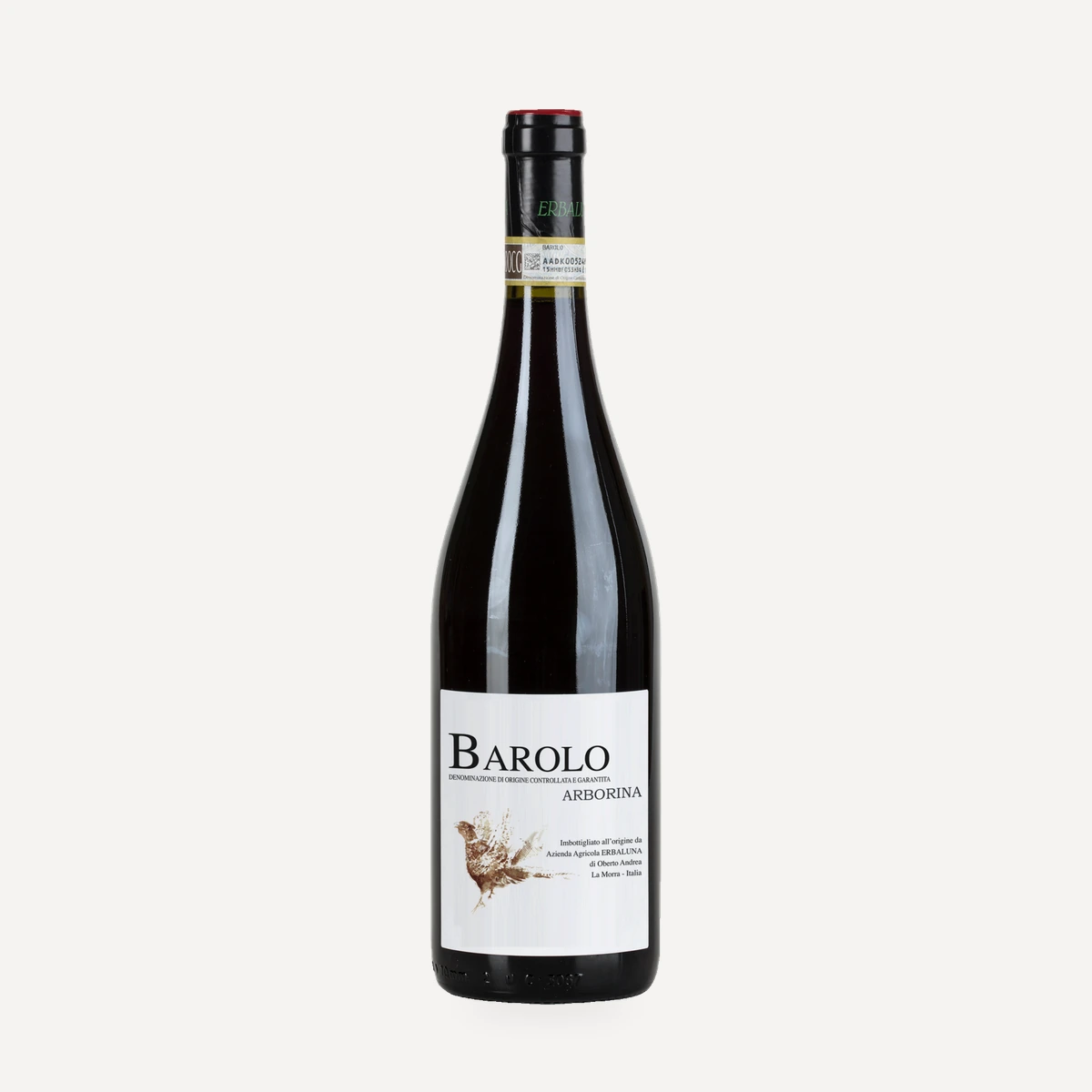
Barolo Arborina
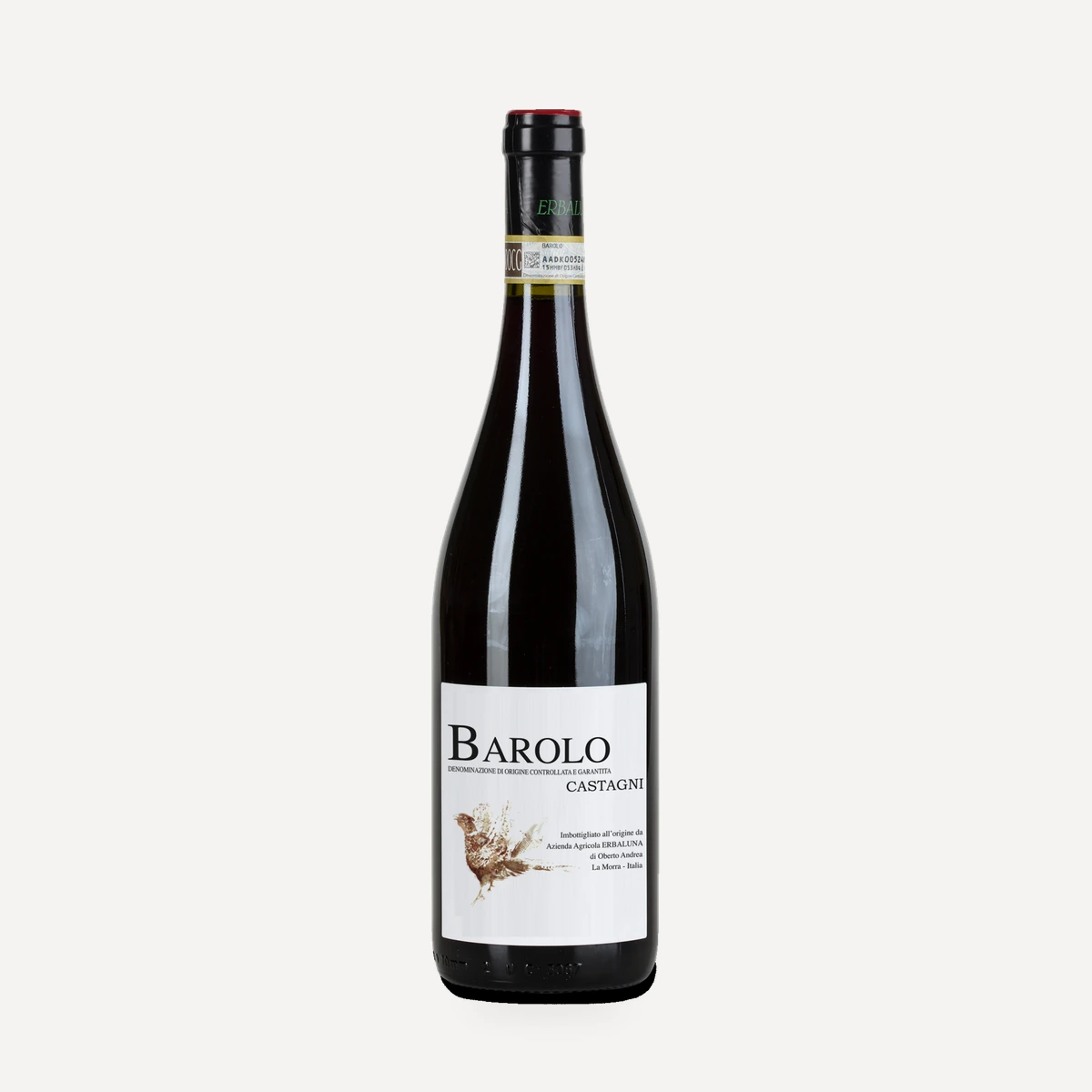
Barolo Castagni
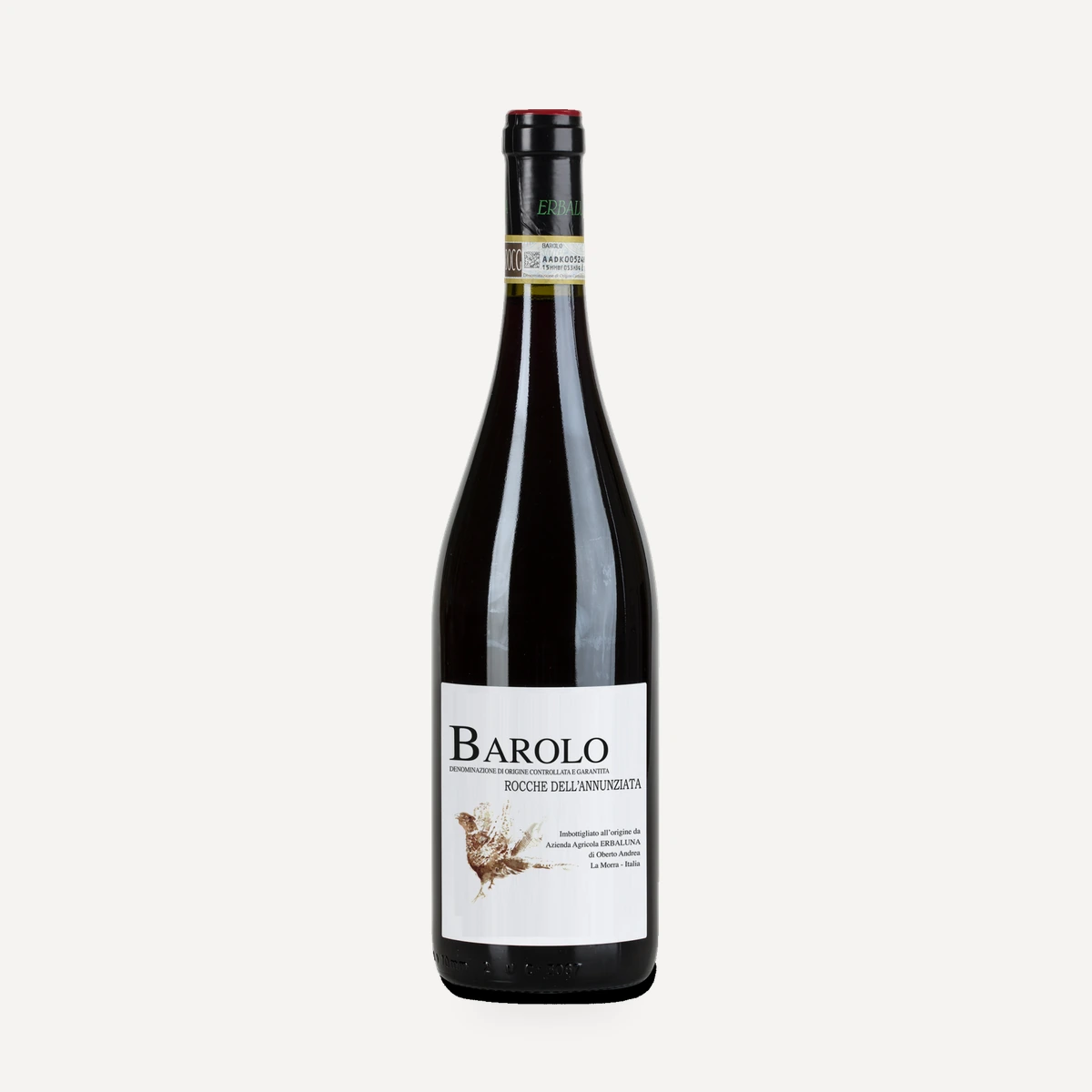
Barolo Rocche dell’Annunziata
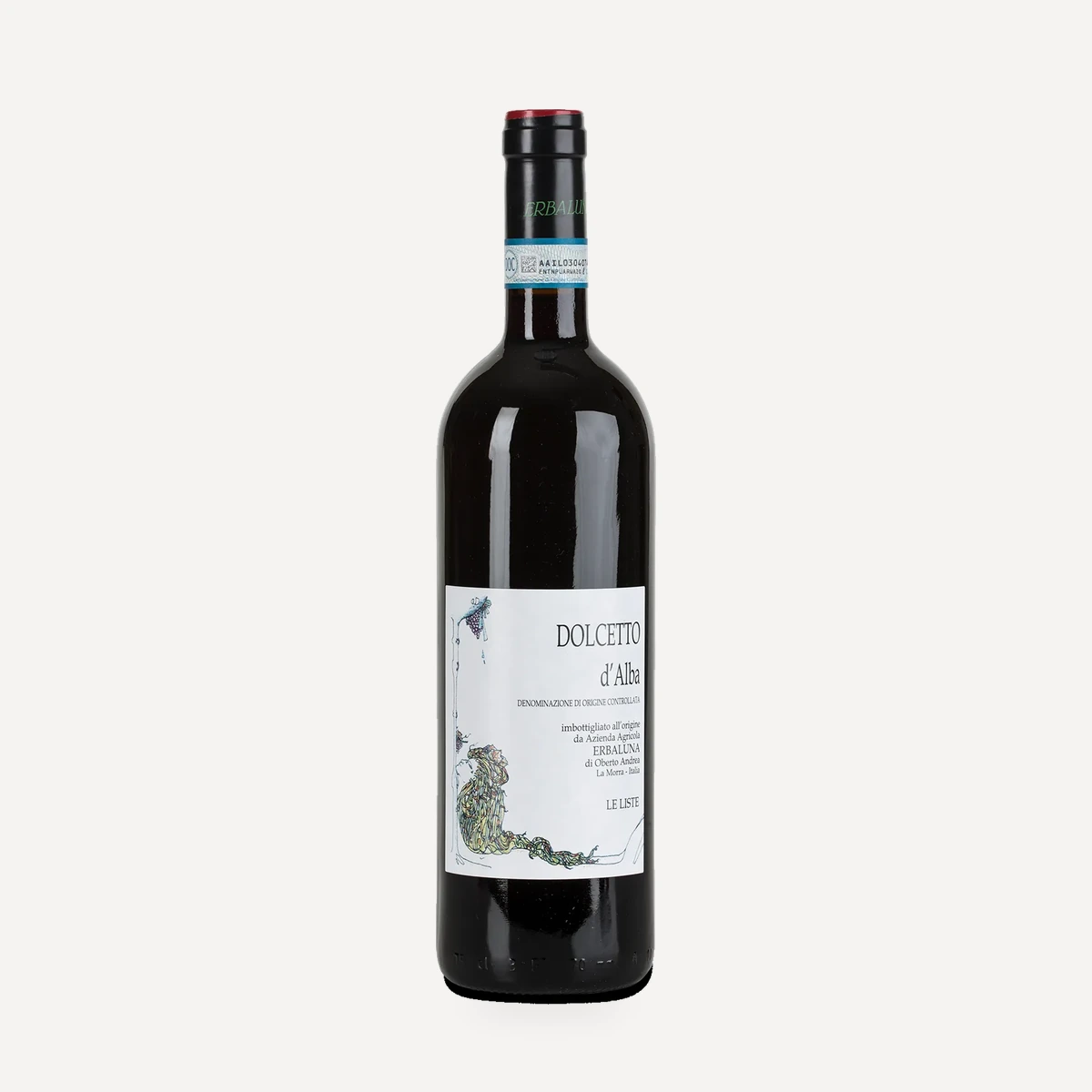
Dolcetto d’Alba Le Liste
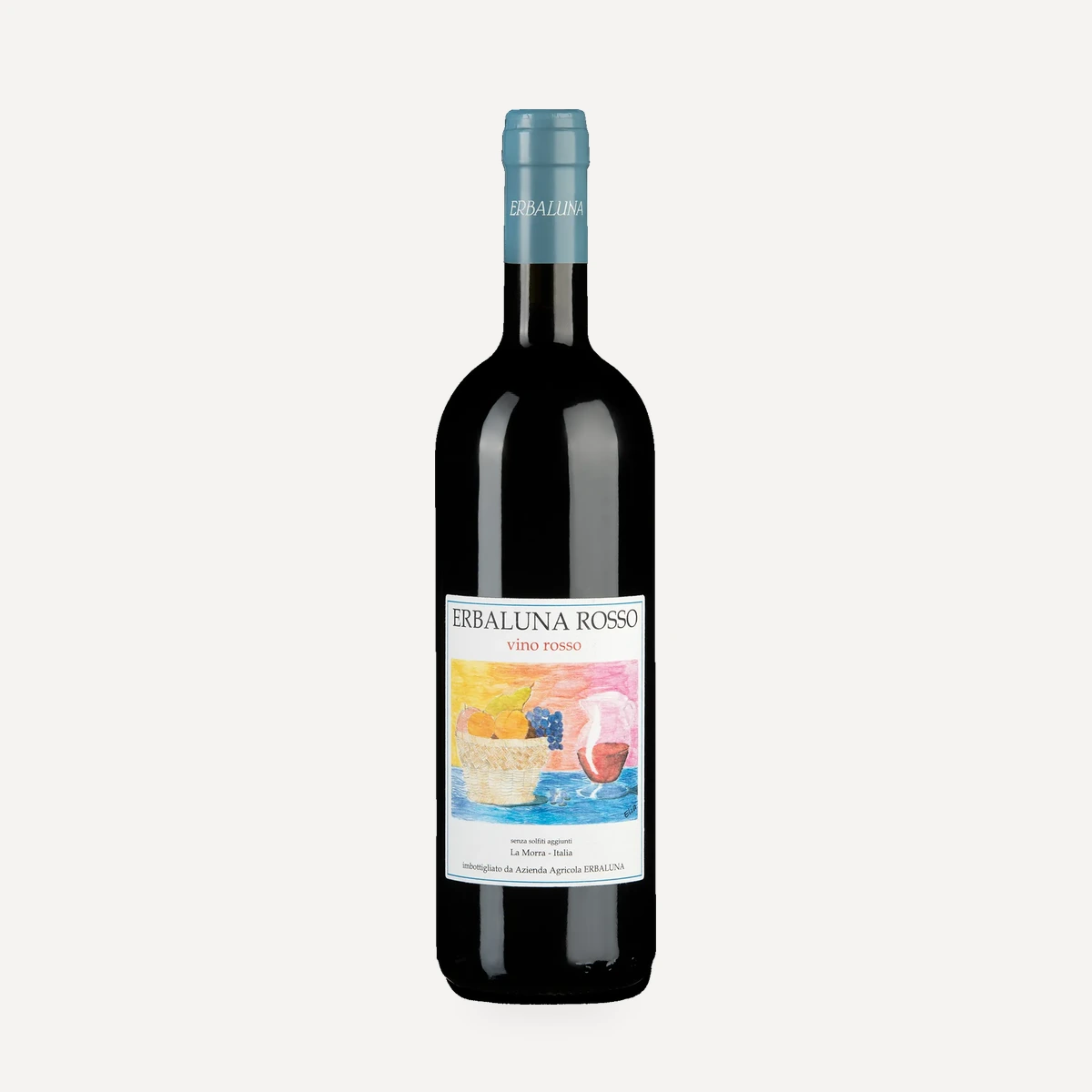
Erbaluna Rosso