Storia
Early vineyards
The holding’s oldest documented vineyard plantings date to 1967. A further single vineyard was planted in 1971 and remains part of the estate’s viticultural patrimony.
The creation of Erta di Radda
Erta di Radda began in February 2006 through Diego Finocchi’s attachment to his native territory and his ambition to make his own wine. At the age of 24, while completing the final year of a degree in Viticulture and Oenology, he had the opportunity to purchase 5 hectares of vineyard from an elderly farmer from Radda. The acquisition transformed him from a student into a winegrower and producer.
Part of the older vineyard area was renewed at the outset of the project: 1 hectare was replanted in 2006. During the first years, through the 2008 harvest, all the wine produced was sold to larger wineries or bottling companies rather than released under Diego’s own label.
Estate bottling and organic farming
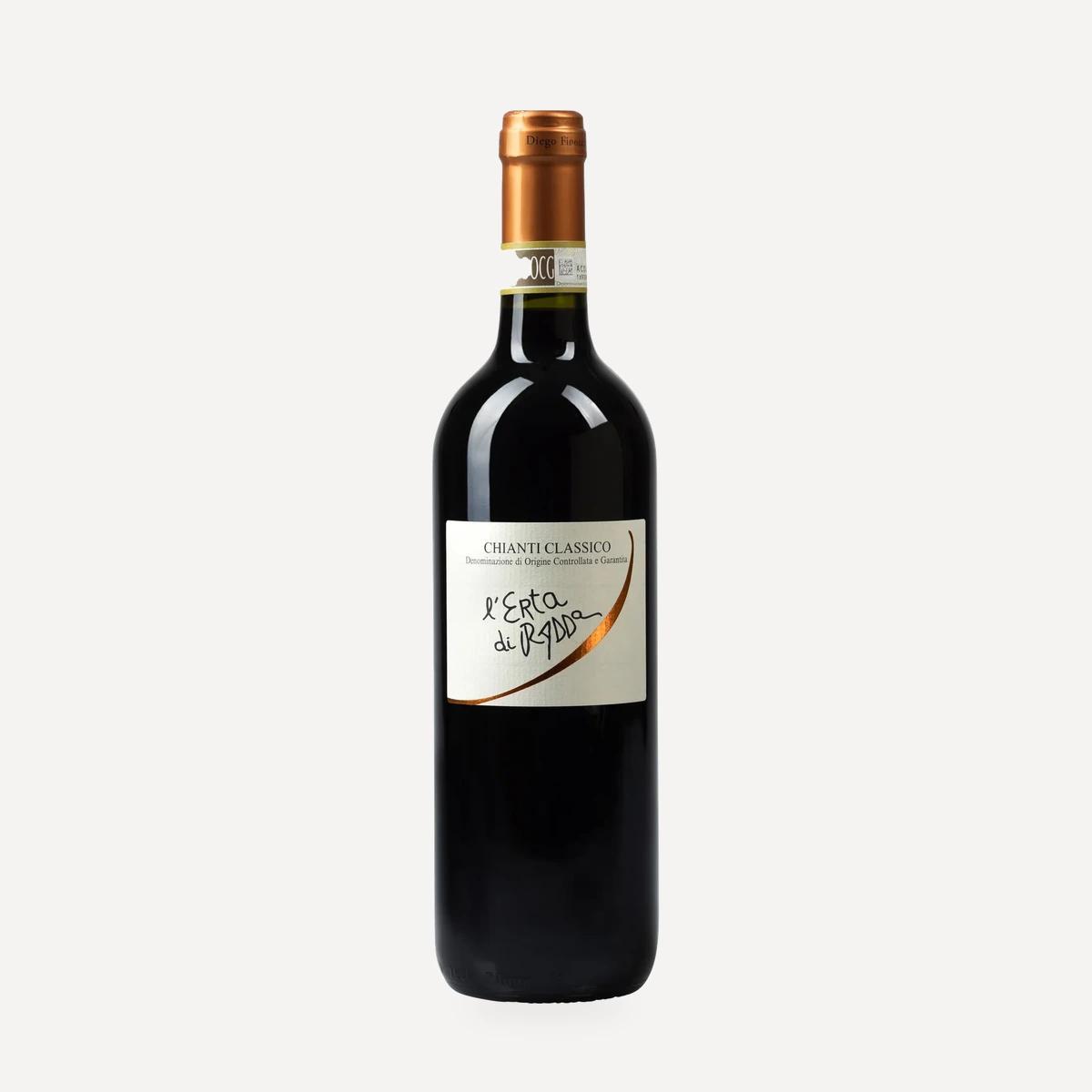
A second hectare was renewed in 2009. That year also marked two decisive changes. Diego began selecting grapes from the oldest vineyards to produce his own Chianti Classico, L’Erta di Radda, and the estate adopted the principles of organic production, with an emphasis on respect for the environment, soil and biodiversity.
The business remains small and personally managed by Diego. His involvement extends across the entire cycle, from pruning the vines to producing and marketing the finished wines.
Terroir
Erta di Radda’s vineyards occupy steep slopes a short distance from the historic centre of Radda in Chianti. The pronounced gradient is fundamental to the estate’s identity: erta means an ascent or steep rise.
The vineyards lie at 430 metres above sea level and face southeast. Their soils are described as clayey and sandy, with a substantial presence of galestro and alberese.
Vinificazione
Since 2009, production has followed organic-farming principles centred on respect for the environment, soil and biodiversity.
The estate combines older vines with progressively renewed blocks. One hectare was renewed in 2006 and another in 2009, while vines dating to 1967 remain part of the holding. The old vineyards are limited to 30 q.li/ha, compared with 50 q.li/ha in the newer plantings.
Harvesting is entirely manual. Trebbiano and Malvasia are normally picked at the end of September, while Sangiovese is harvested during the first half of October. Selection for the estate’s Chianti Classico begins in the vineyard, with grapes drawn from the older vines.
The cellar uses several traditional and low-intervention techniques across its production. The Chianti Classico wines are fermented without selected yeasts. Red-wine cap management includes pump-overs and punch-downs, with délestage also used. Decisions about separating the wine from the skins are made by tasting. Malolactic fermentation takes place in stainless steel and, for some lots, partly in wood.
Maturation vessels include stainless-steel tanks, cement vats, second-use French barriques and 2,000-litre oak casks. The estate also employs carbonic maceration for a field blend from its 1971 vineyard. Before the first alcoholic fermentation has entirely finished, that wine is racked and subjected to Governo Toscano, adding slightly dried grapes to initiate a second fermentation.
White grapes are harvested by hand and transported rapidly to the cellar to limit crushing and oxidation. They are pressed gently and fermented at low temperature in stainless steel to preserve primary aromas. During winter, the wine remains in stainless steel at very low temperature, encouraging natural clarification while retaining aromatic character.
For the estate’s sweet wine, hand-picked Trebbiano and Malvasia are dried naturally on wooden mats for approximately three months. Once sufficiently concentrated, the grapes are pressed and the must undergoes a slow alcoholic fermentation in small caratelli holding 50–80 litres. The wine is subsequently matured in caratelli.
Filosofia
Erta di Radda is rooted in Diego Finocchi’s personal connection with Radda and in direct responsibility for every stage of the work. The small scale of the business allows him to oversee activities from pruning through commercialization.
The vineyards’ steep slopes, old plantings and position near Radda’s historic centre are treated as defining elements of the estate’s identity. Since 2009, the agricultural approach has followed organic principles, with explicit attention to the environment, soil and biodiversity.
In the cellar, the approach combines traditional practices with decisions guided by the condition of the grapes and the development of each fermentation. Vineyard selection, fermentations without selected yeasts, tasting-based decisions on maceration and techniques such as Governo Toscano express this preference for direct observation and established local methods.
Vini
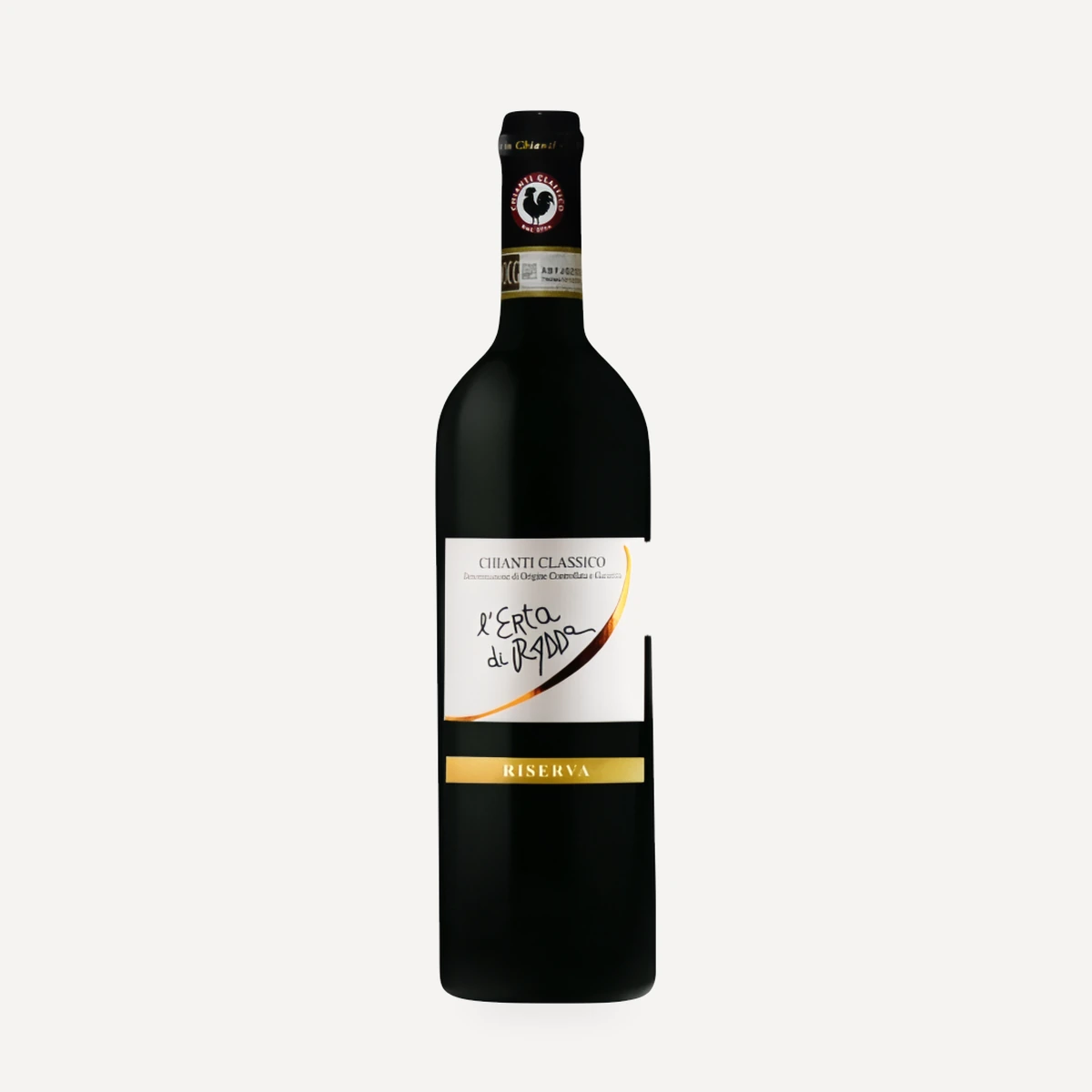
Chianti Classico Riserva
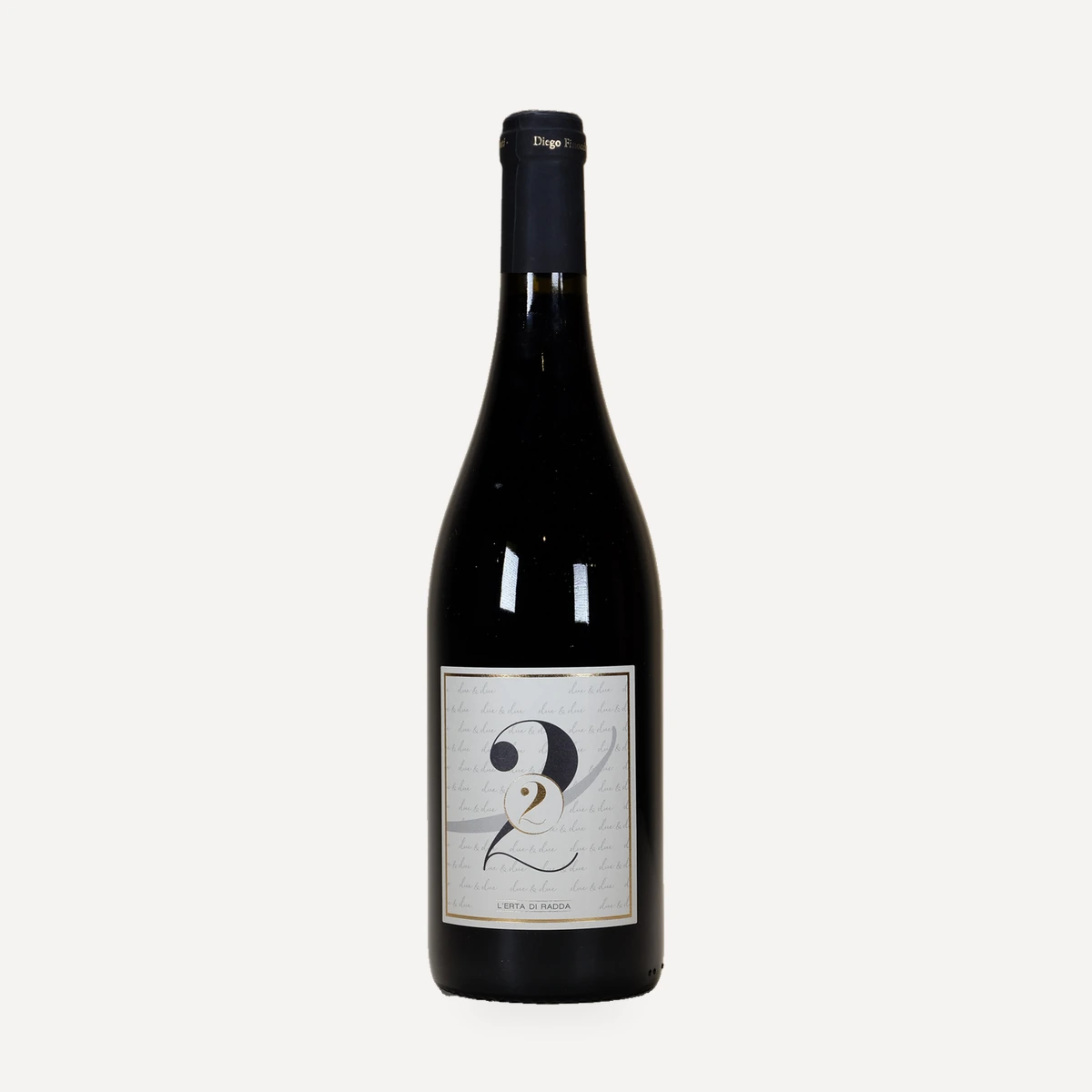
Due & Due IGT Rosso Toscana
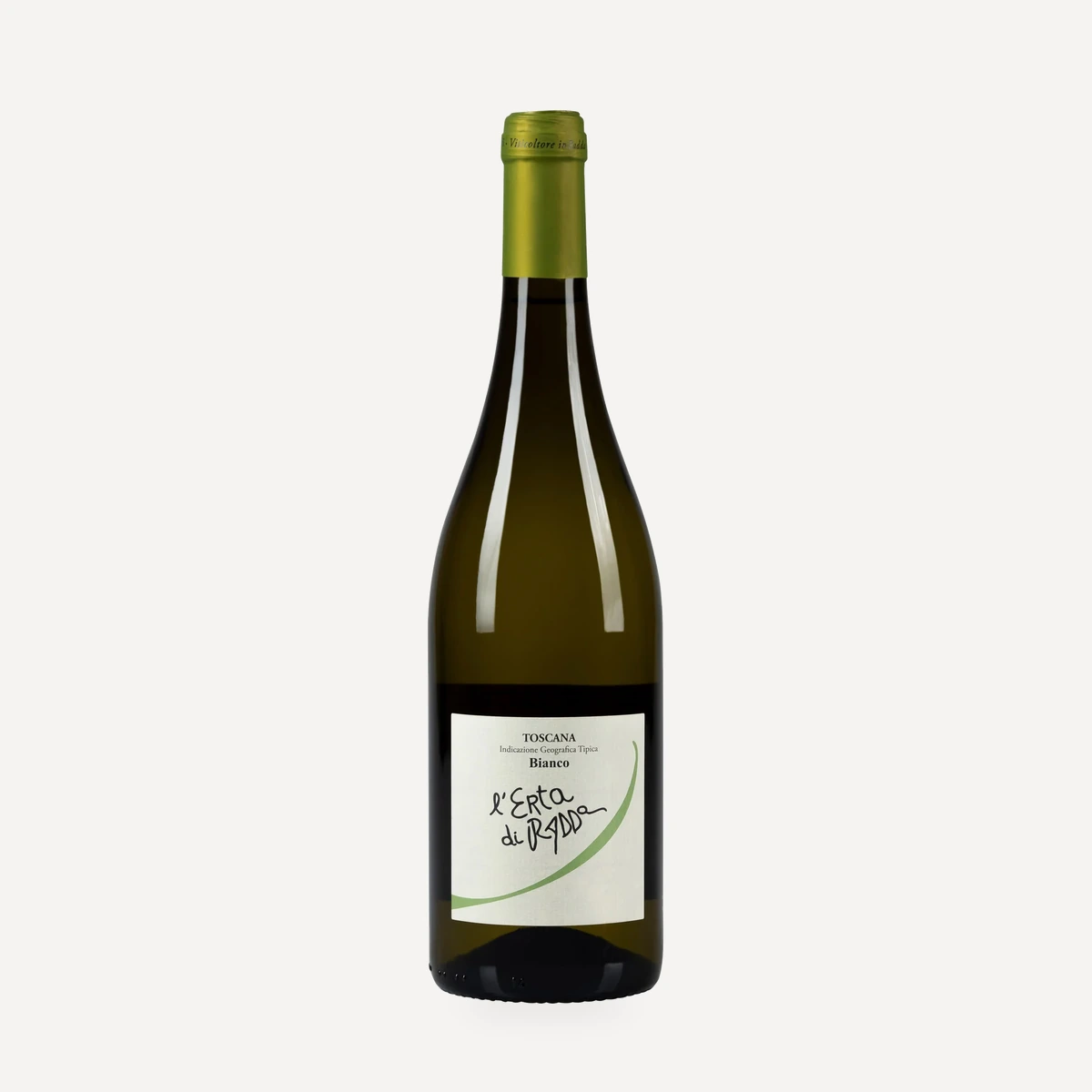
Il Bianco dell’Erta di Radda IGT Bianco Toscana