Storia
Earlier agricultural history
The property on the hills of Vinci has produced wine and olive oil since the early 1950s. Its oldest vineyard block was planted in 1972, principally with Trebbiano Toscano Rosa.
The Falzari project
Falzari dates its activity to 1998, an anniversary marked with the estate’s 25th year in 2023. The decisive personal moment came in the summer of 1999, when the future winegrowers worked together tying vines for the first time. Their enthusiasm for the land and the complementary characters within the family became the foundation of the project.
Sergio Falzari, who graduated in Veterinary Medicine from the University of Pisa in 1999, chose agricultural life over veterinary practice and began taking responsibility for the farm. He subsequently renewed the machinery and cellar and directed the redevelopment of the vineyards.
Establishing the cellar
The first Falzari vinification took place in 2000 in a friend’s cellar. In 2001, the family made wine in its own newly completed cellar. Farming was still chemical at that stage, but the following years brought a progressive change in direction.
The estate moved to integrated agriculture in 2002. In 2003, Sergio planted a new 3-hectare vineyard with Sangiovese, Cabernet Sauvignon and Merlot.
Organic and biodynamic transition
In August 2004, cultivation changed to organic methods. The formal organic-conversion process began in 2005, and ICEA certification was obtained from the 2007 harvest onward.
In March 2007, the estate adopted biodynamic agriculture, a system it continues to practise. The transition reflected Sergio’s spiritual outlook and the family’s intention to restore soil vitality, strengthen the relationship between plants and their environment, and make wines with spontaneous fermentations and minimal cellar inputs.
Recent development
A further 0.7 ha was planted in 2020, divided between Sangiovese and Vermentino. This brought the principal vineyard blocks to 3.3 ha of red varieties, 0.3 ha of Vermentino and 0.7 ha of Trebbiano Toscano.
In 2022, Falzari began an experimental programme with Selet, Damanhur’s Selfica laboratory and several researchers. Selfic devices were installed in part of the vineyards, and a separate device was developed for fermentation trials.
In 2023, the estate marked 25 years of activity and worked toward completing a panoramic tasting terrace above the cellar. The terrace overlooks the vineyards, olive groves, woodland and a tree-fringed lake in the valley.
Terroir
Falzari lies in Vinci, on the lower slopes of Montalbano in Tuscany, at approximately 60 metres above sea level. The vineyards have a south to south-southwest orientation.
The soils are calcareous and medium-textured, with approximately 35–40% clay. Their coarse mineral component includes nicchio, the Tuscan name for a white calcareous fossil marine shell. Clay is also central to the estate’s artistic work in ceramics and to its use of terracotta vessels.
The cellar and panoramic terrace occupy a hill above a broad valley. Below lies a lake surrounded by trees, including poplars, sweetgum and ash; the wider view includes vineyards, olive groves, woodland patches and interlocking hills.
Vinificazione
Falzari moved from chemical agriculture to integrated farming in 2002, adopted organic methods in August 2004 and entered formal organic conversion in 2005. ICEA organic certification began with the 2007 harvest. Biodynamic cultivation followed in March 2007.
Biodynamic management excludes herbicides, chemical fertilisers and synthetic plant-protection products. The farm treats the vineyard as a living ecosystem influenced by soil, plants, animals and wider terrestrial and cosmic forces, with the practical objective of creating balance and biological vitality.
To make cultivated land function more like a complex natural environment, mixtures containing numerous plant species are sown between the rows. These cover crops increase biodiversity and are intended to bring different root systems and forms of plant life into the soil. Falzari avoids relying on fertiliser inputs, including dead organic material, in favour of growing living plants and converting their biomass into humus.
The estate combines green manure with biodynamic preparation 500, or horn manure. Seeds are sown and preparation 500 is applied to stimulate microbial activity. In spring, the plants are cut, shredded and incorporated into the soil, where aerobic decomposition creates humus. This programme is intended to restore a basic soil function—the conversion of organic matter into humus—while counteracting compaction and reduced aeration caused by tractor traffic.
Humus is valued for providing balanced mineral nutrition through soil microorganisms and for regulating water: it absorbs and holds moisture, releases it during dry periods and helps the soil retain structure during heavy rainfall.
Harvest timing is decided primarily through repeated tasting rather than laboratory analysis alone. Picking begins when the seeds have become hard, woody and toasted in character and the berries have developed full flavour. Grapes are harvested by hand, with each bunch selected on the vine and unripe or unhealthy portions removed. The fruit reaches the cellar within one hour of picking.
Since 2022, part of the vineyard has hosted Selfica devices intended to support plant vitality and elasticity under drought, higher temperatures and more extreme climatic conditions. A related energy panel is used experimentally with seeds, fertilisers and plant-protection materials.
Reception, crushing and fermentation
Grapes are destemmed and crushed immediately after reaching the cellar, in a shaded working area. Crushing is deliberately gentle: the berries are lightly opened rather than broken aggressively. The must is transferred to stainless-steel vats.
The fruit enters vats already at approximately 15°C for a pre-fermentation maceration of two or three days. Alcoholic fermentation then begins spontaneously through indigenous vineyard yeasts. If fermentation has not begun after three days, it is encouraged by pumping the must over with exposure to air.
Freshly crushed fruit receives 4–6 g/hl of potassium metabisulphite, with the dose adjusted to the vintage and the sanitary condition of the grapes. Fermentation is maintained with two to four aerative pump-overs per day, according to fruit condition and the desired degree of extraction.
Temperature management and permitted inputs
Red-wine fermentation is kept below approximately 30–32°C and white-wine fermentation at 18–22°C. Instead of conventional glycol refrigeration, the vats are wrapped in cotton cloths that are kept wet and ventilated with fans. The purpose is to avoid contact between warm fermenting must and a tank surface chilled to 3–5°C, which Falzari considers potentially damaging during the rapid multiplication of yeasts.
No selected yeasts, enzymes, bacteria, yeast nutrients, powdered tannins, wood chips or aromatic additives are used. The cellar also excludes cryo-extraction, dealcoholisation, evaporation, reverse osmosis and other super-concentration techniques.
Maceration, pressing and malolactic fermentation
After alcoholic fermentation, extraction continues until the wine’s aroma changes slightly and the first reductive note is detected. Skin contact normally lasts 15–40 days, depending on variety and vintage; Trebbiano Toscano fermented in amphora may remain on its skins for three to four months. Free-run wine and press wine are then separated into different vessels.
Malolactic fermentation develops naturally, usually in autumn but sometimes in the following spring as the ambient temperature rises.
Maturation and bottling
Wines are stored in stainless steel, concrete or wood according to their needs. Terracotta amphora from Impruneta is also used for long Trebbiano maceration and maturation.
At bottling, no substance is added apart from very low sulphite doses. Bentonite, a natural clay mineral, may be used at a low dosage for the Trebbiano Tinnari only when protein instability is detected.
The normal bottling treatment is a light filtration through 5–10-micron cardboard filters, or coarser material, intended to limit sediment without excessively stripping the wine. Bottled wines have historically reached maximum total SO₂ levels of 50–70 mg/l, while the cellar has worked toward 40–50 mg/l and toward unfiltered, unclarified releases below 30 mg/l.
A Selfica device developed within the post-2022 experimental programme is being tested during fermentation. It is intended to favour useful indigenous yeasts and limit microorganisms associated with faults such as elevated volatile acidity.
Filosofia
Falzari treats wine as both an expression of place and a personal creative act. Sergio Falzari seeks the most authentic possible expression of variety and territory while interpreting each grape and vintage through his own taste, sensitivity and artisanal decisions. Harmony, elegance and the capacity to reveal different facets of the same variety are recurring objectives.
The family presents organic and biodynamic agriculture as the only coherent route for its idea of wine. The earth is considered sacred and total respect for it a prerequisite. The aim is to restore the soil-and-plant system as the principal actor in agriculture, understand and accommodate the vines’ needs and develop a collaborative relationship between the grower, the plants, the earth and wider natural forces.
Biodynamics is understood as work toward balance first at a subtle or energetic level and then at a material one. Falzari connects these principles with Damanhur, the spiritual federation to which Sergio belongs. Damanhur’s view of plants as intelligent beings capable of communication informs the desire to create a conscious, harmonious relationship with the vineyard.
Wine is also conceived as art: an annual work beginning with pruning and continuing through cellar and ageing decisions. This approach extends to handmade ceramics, sculpture, painted labels and the integration of art throughout the estate. The family favours naturalness without compromise and deliberately avoids standardised expression, even when working with internationally familiar grape varieties.
Vini
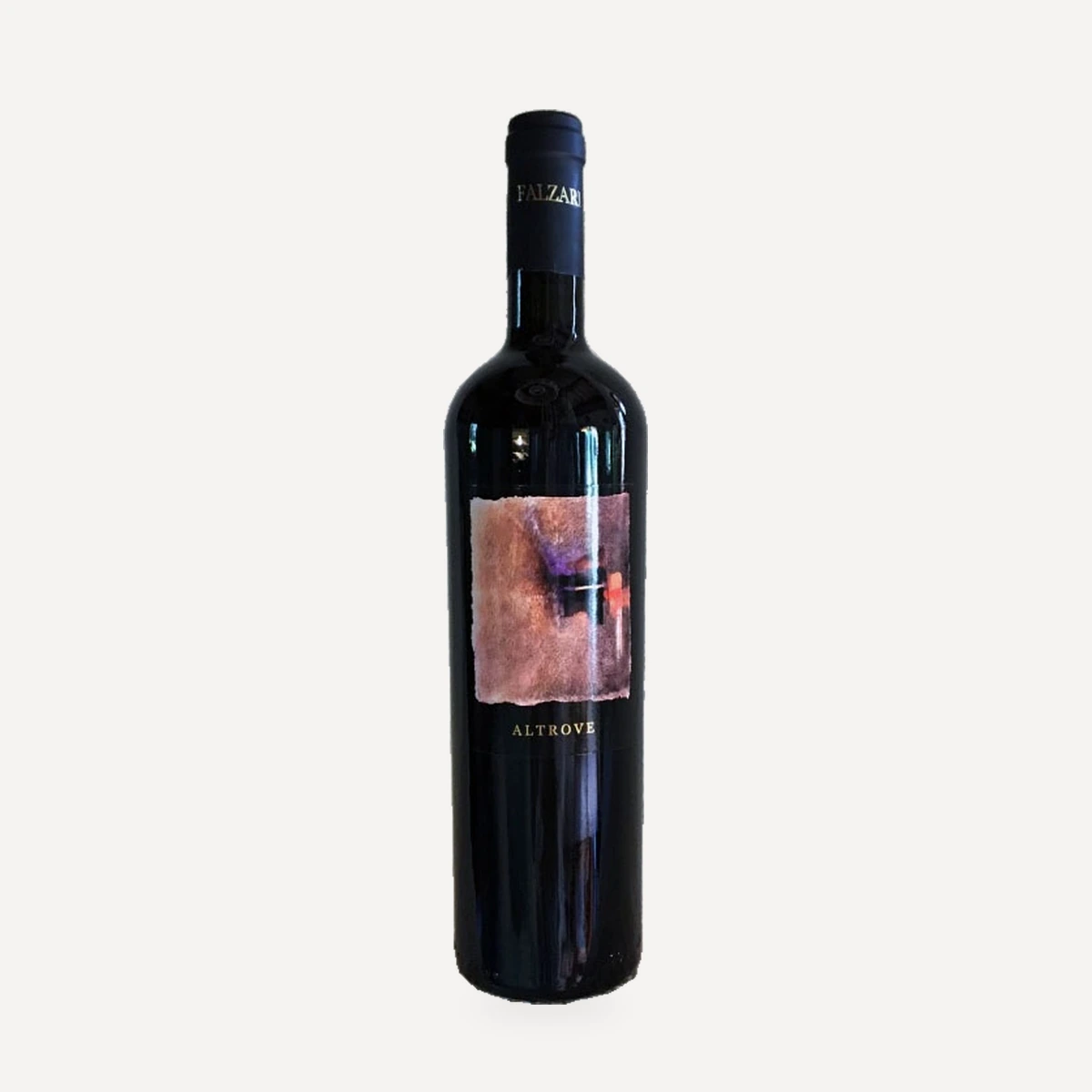
Altrove
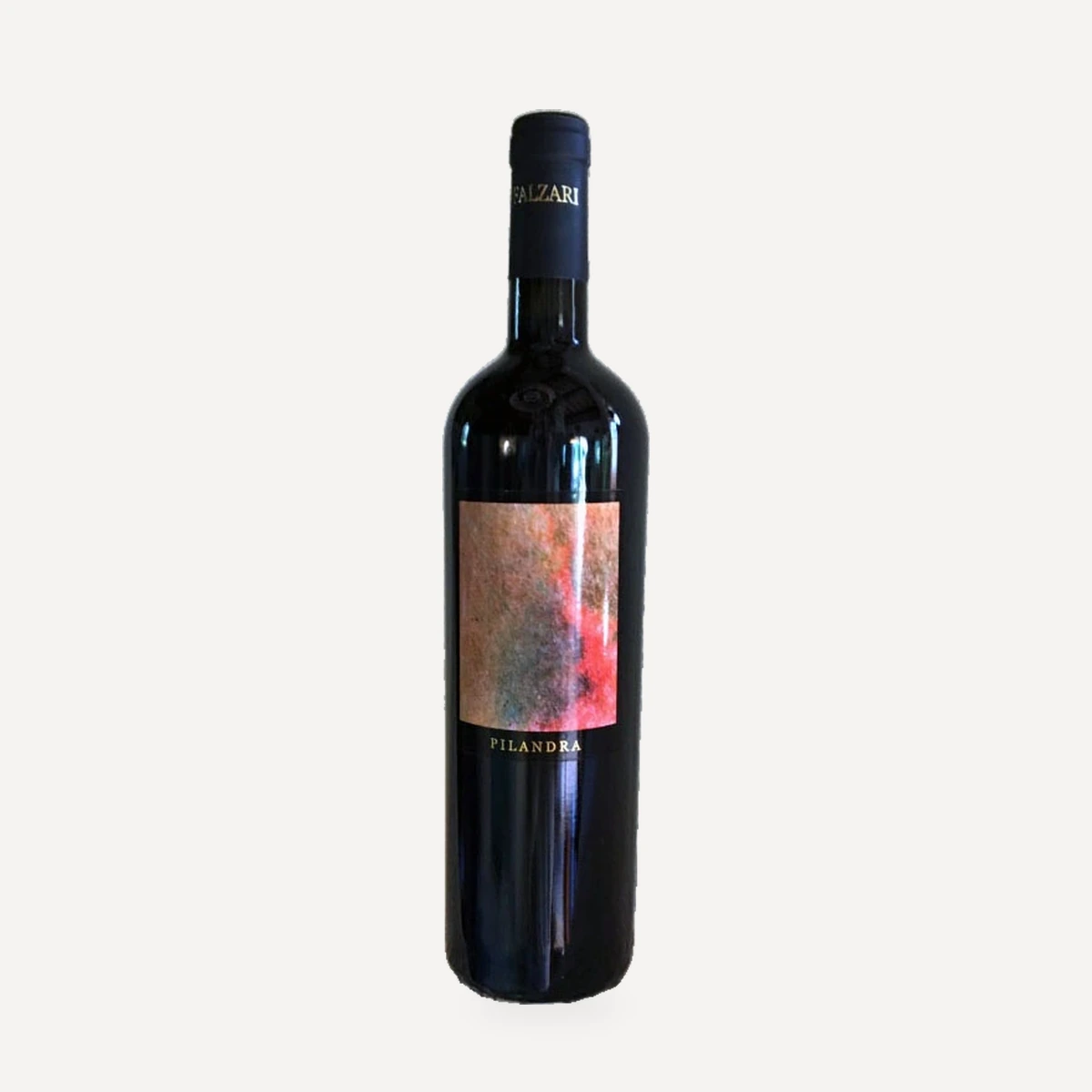
Pilandra