Storia
Origins on Spinomarino hill
Fatalone’s family tradition of artisan vine-growing began in the late 19th century. Nicola Petrera chose Spinomarino hill in Gaudella, southeast of Gioia del Colle, for its elevated, airy and sunny position and planted Primitivo there. The family cleared the land while relocating its trees elsewhere on the property, excavated cisterns to secure a water reserve and used the extracted stone to build the ancient masseria. A triangle carved into the building’s highest stone became the estate emblem; it identified the masseria as an old cartographic reference point and one of the area’s oldest rural buildings.
Nicola’s commitment to Primitivo passed from father to son together with the family maxim: “Who loves and respects Nature, loves God and himself.” His son Filippo Petrera, the second generation, was nicknamed Il Fatalone—a local expression for an irresistible seducer—and the nickname eventually became both the family sobriquet and the wine brand. Filippo lived to 98 and was remembered for breakfasting every morning, until his final day, on half a litre of fresh milk and half a litre of Primitivo.
Bottling and the Fatalone identity
The Petrera and Orfino family traditions were joined through the marriage of Rosa Orfino and Filippo Petrera of the fourth generation. The family already bottled Primitivo before the Fatalone brand existed: bottles made by the grandparents in 1969 and 1977 were later presented during a historic retrospective tasting.
In 1987, when widespread vineyard removal in favour of more productive varieties had left the family’s Primitivo among the few remaining examples around Gioia del Colle, the estate vinified its first vintage intended for commercial bottling as a pure varietal. It was the first producer to make and bottle Gioia del Colle DOC Primitivo as a single-variety wine. The first Fatalone-labelled bottle, from the 1987 vintage, emerged from the small rock-cut cellar in 1988.
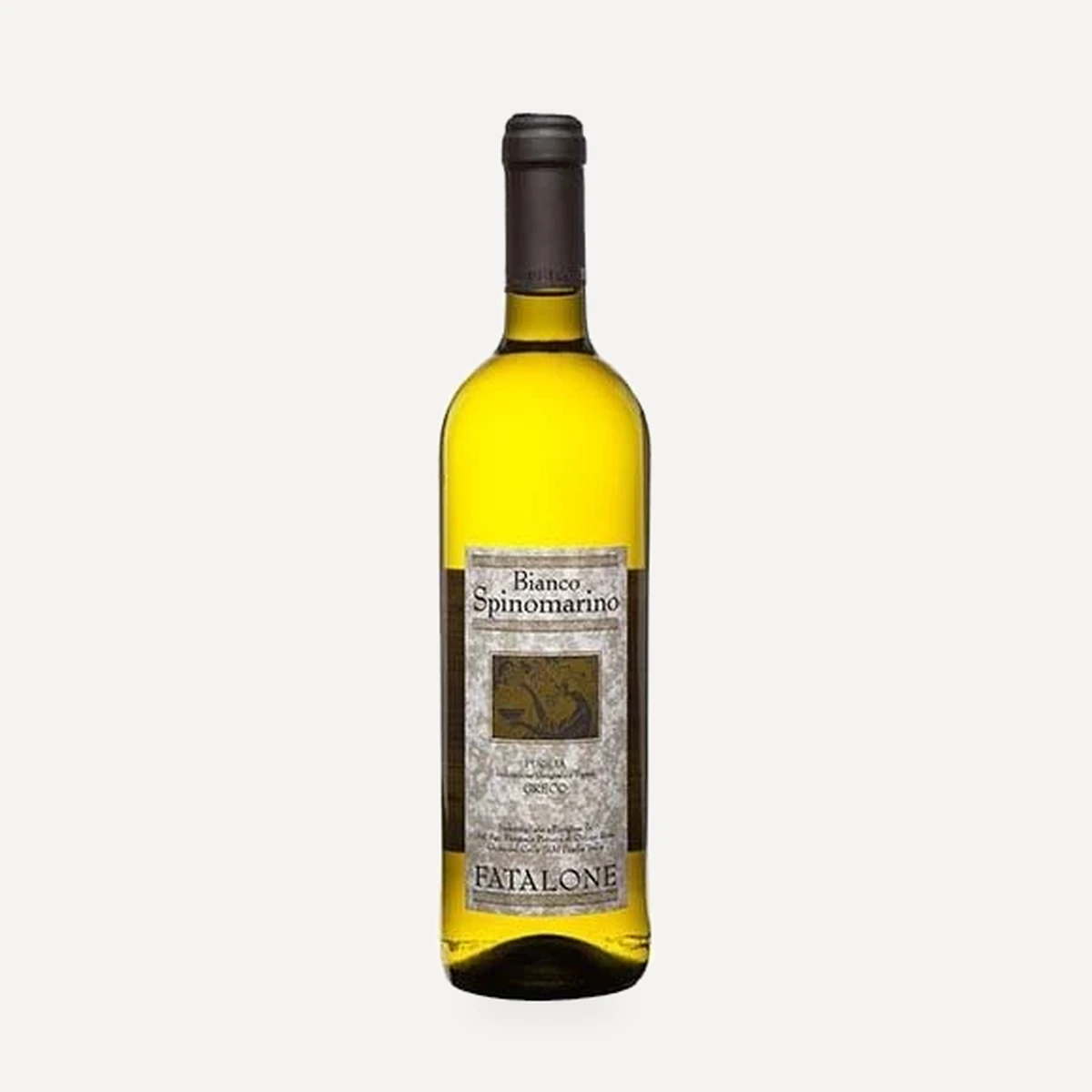
In 1993, Greco joined the range as a single-variety white. The same year brought an expansion of the production premises to improve the winemaking cycle.
Research, certification and a new cellar
In 1995, Fatalone began working with the Experimental Institute for Viticulture at Conegliano Veneto to compare its Greco material with other Greco vines. Tests excluded two viral complexes that can impair ripening and budbreak. Grafted plants derived from Greco “Spinomarino” buds were subsequently conserved at the Ministry of Agriculture’s Germplasm Conservation Centre in Montelibretti.
On 3 February 2000, Fatalone helped establish the voluntary Consortium for the Protection and Valorisation of Gioia del Colle DOC Wines with other local producers. The consortium received recognition from the Ministry of Agriculture and Forestry in 2003. Also in 2000, the estate obtained organic certification from ICEA, including conformity with the US National Organic Program, and joined a clonal-selection project run by the Viticulture Institute in Turi with Conegliano. This work focused on reproducing a virus- and disease-free Primitivo clone called “Primitivo Selezionato.”
A new cellar was completed in 2003, excavated into living rock beside the ancient masseria and combining traditional practice with modern equipment. That year also saw research partnerships with the University of Basilicata’s Faculty of Agriculture on the chemical characterization of southern Italian DOC and IGT wines, and with the University of Lecce’s National Research Centre on identifying, characterizing and selecting the indigenous yeasts found in Fatalone’s Primitivo.
From 2005 through 2007, the estate collaborated with Bari-based Panalisi on a Ministry-authorized study of strategies for preventing ochratoxin A contamination in wine. The University of Rome “La Sapienza” Chemistry Department assisted the project under the supervision of the Italian National Institute of Health.
Historic tastings and environmental programme
On 19 May 2007, the Council Chamber of Gioia del Colle City Hall hosted the first ten-vintage vertical tasting of Gioia del Colle DOC Primitivo. Marking 20 years since the 1987 debut, the tasting examined Fatalone Riserva vintages from 1994 through 2004. An eight-person panel of oenologists, specialist journalists and wine professionals assessed the wines, providing a demonstration of their capacity for extended ageing.
In the same year, Fatalone installed a photovoltaic system capable of powering the whole production cycle. The estate describes the resulting process as 100% sustainable and producing zero operational CO2 emissions, while using only estate-grown organic grapes located around the cellar.
In March 2018, Pasquale Petrera, representing the fifth generation, led a 15-vintage Fatalone Riserva tasting in London to celebrate 30 years of Fatalone wines. A further anniversary retrospective was held in New York in November 2018, beginning with the 1988 vintage and including the family’s pre-brand bottles from 1969 and 1977.
Fifth-generation stewardship
Pasquale Petrera now continues the family’s work at Masseria Fatalone. Production remains directly family-managed, from vineyard and cellar operations through bottling and commercial relationships. The estate works with oenologist Dr Benedetto Lorusso, plant-pathology agronomist Dr Gianni Masi and agronomist Dr Vincenzo Stea, while Panalisi supports the HACCP programme and weekly laboratory monitoring.
Terroir
Location and landscape
The vineyards lie at Spinomarino, 4.5 km southeast of Gioia del Colle, on the rocky Murgian hills south of Bari. Their documented elevation is 365 m above sea level. The site is approximately 45 km west of the Adriatic Sea and 45 km north of the Ionian Sea.
The hilly landscape provides a balance of sunlight, predominantly northern and southern winds, mild conditions and pronounced day-to-night temperature variation. The vineyards were positioned around the cellar so that harvested fruit could be transferred immediately for processing.
Geological origin and soils
During the early Oligocene, the area now occupied by Gioia del Colle lay beneath a broad marine strait connecting the Ionian and Adriatic seas between the Cretaceous platform around Bari and the southern Apennines. Marine fossils found in the estate’s ground preserve evidence of this origin.
Spinomarino is a rocky, karstic Murgian site. Its medium-textured soil combines clay and limestone, with thin layers of red earth containing limestone and silica over large monolithic stone blocks rich in marine fossils. The large stones were broken during vineyard preparation, creating both a rooting environment and natural drainage while retaining freshness around the roots. Fatalone associates this geological structure with the freshness and mineral character of its wines.
The place-name Spinomarino may refer to the locality’s ancient form as a narrow strip of land within the marine channel that submerged the surrounding lower ground.
Vinificazione
Fatalone works only with its own certified-organic Primitivo and Greco grown around the cellar. Organic management is treated as a family practice and way of life rather than a marketing category. ICEA certification has been in place since 2000 and also conforms to the standards of the US National Organic Program. The vineyards are not irrigated; spontaneous grassing and green manure are used, while organic manure and mineral amendments are applied every two to three years to complement the rocky soil.
The annual cycle resumes immediately after harvest with deep ploughing to aerate the ground and roots. From late November through late February, dormant pruning is performed. On the double-headed Primitivo espalier, two canes are retained, each carrying six to eight buds for further selection. Greco, trained on a two- to four-headed pergola, receives comparable dormant pruning followed by stricter green selection.
At the end of April, after the principal frost risk has passed, the terminal shoot—then approximately 15–20 cm long—is removed. This delayed sacrifice protects unopened buds from frost and redirects energy into their growth. Between the second half of May and the first half of June, shoot selection leaves three to five shoots on each Primitivo cane and two to three on Greco. From the second half of June to the second half of July, shoots are tied, older leaves are removed, unproductive secondary growth or femminelle is eliminated and bunches are selectively thinned.
Eight to ten bunches remain on each vine. Their combined weight is limited to no more than 2 kg per Primitivo vine and 4 kg per Greco vine. These operations are performed by hand in successive passes that follow the vines’ vegetative development.
Roses planted among the vines serve as sensitive early indicators of diseases shared with grapevines. The family maintains a regular presence in the vineyards, intervening only when monitoring indicates a need and then according to organic principles. Shallow ploughing and hoeing around the vine bases are performed twice a year, in spring and summer, both to control weeds and to create a thermal barrier protecting the cooler soil layer occupied by the roots.
Harvest timing is determined through chemical and organoleptic analysis of grape samples. Primitivo is generally picked in several selective passes around mid-September, choosing the ripest and most suitable bunches. Greco follows in the first half of October, and the secondary Primitivo crop known as racemi is collected around mid-October. The fruit is hand-harvested and transferred immediately from the surrounding vineyards to the cellar.
Cellar and grape reception
The original cellar was cut into rock, and the present facility, built beside the ancient masseria in 2003, extends approximately 3 m into the stone. It is equipped with dehumidification, temperature control and air conditioning that maintains an ambient temperature of about 20°C. Soundproofing is intended to keep the maturation environment quiet, while UV-C lamps, together with continuous ventilation, sterilize the air, equipment and working environment. Niches in the rock wall preserve a year-by-year museum of historic production.
Fruit is destemmed by a machine that separates berries from stalks without compressing the bunches. An helipump then moves the grapes slowly and gently into the fermenters.
Fermentation and extraction
Fermentations are spontaneous, temperature-controlled and driven by indigenous yeasts. Sulphites are not added during vinification. During the first 48 hours, the automatic system performs frequent, short pump-overs to keep the cap submerged. Once fermentation becomes fully active, longer open-cycle pump-overs introduce oxygen. Every one or two days, the entire liquid mass is drawn away from the pomace for several minutes while bars inside the fermenter break and crush the cap.
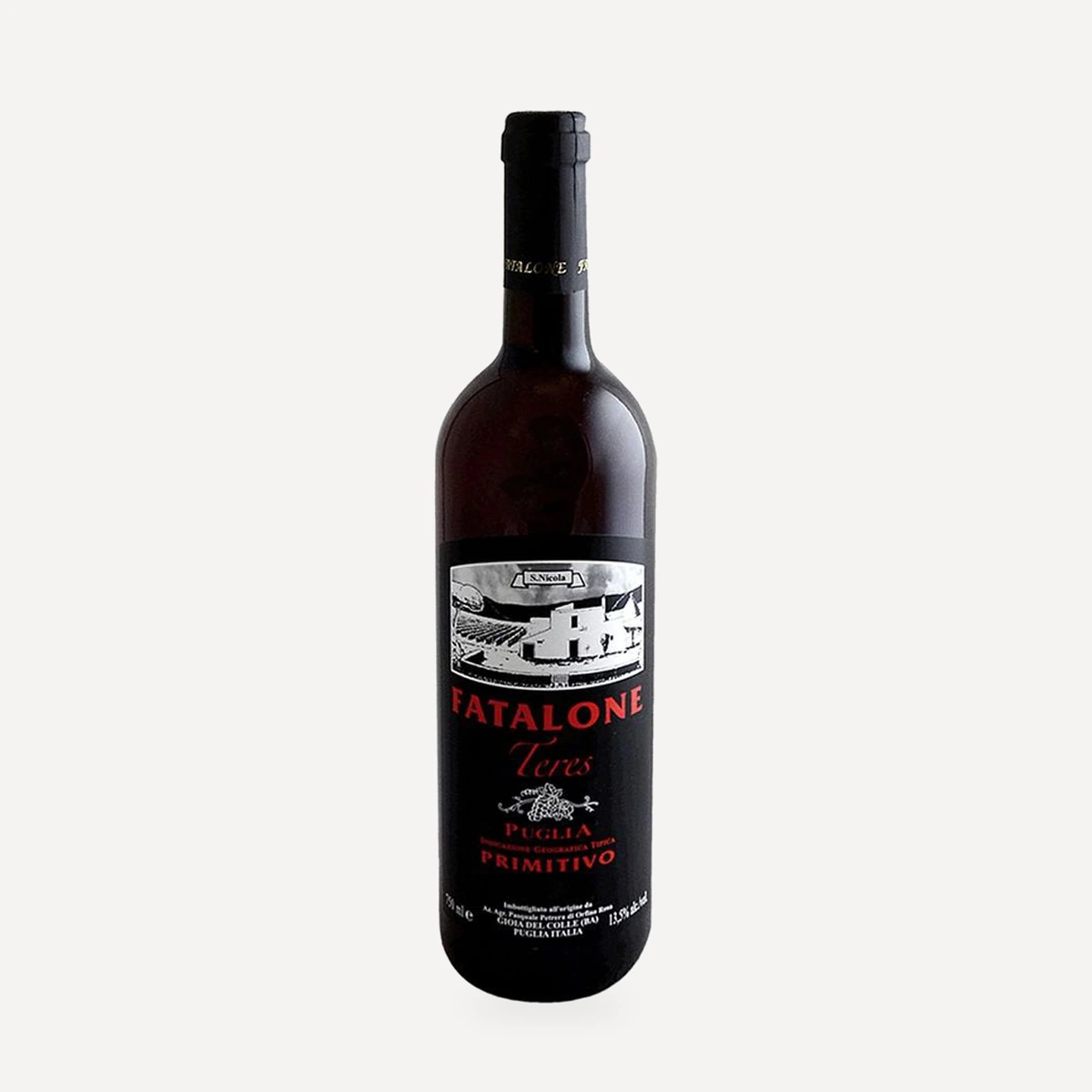
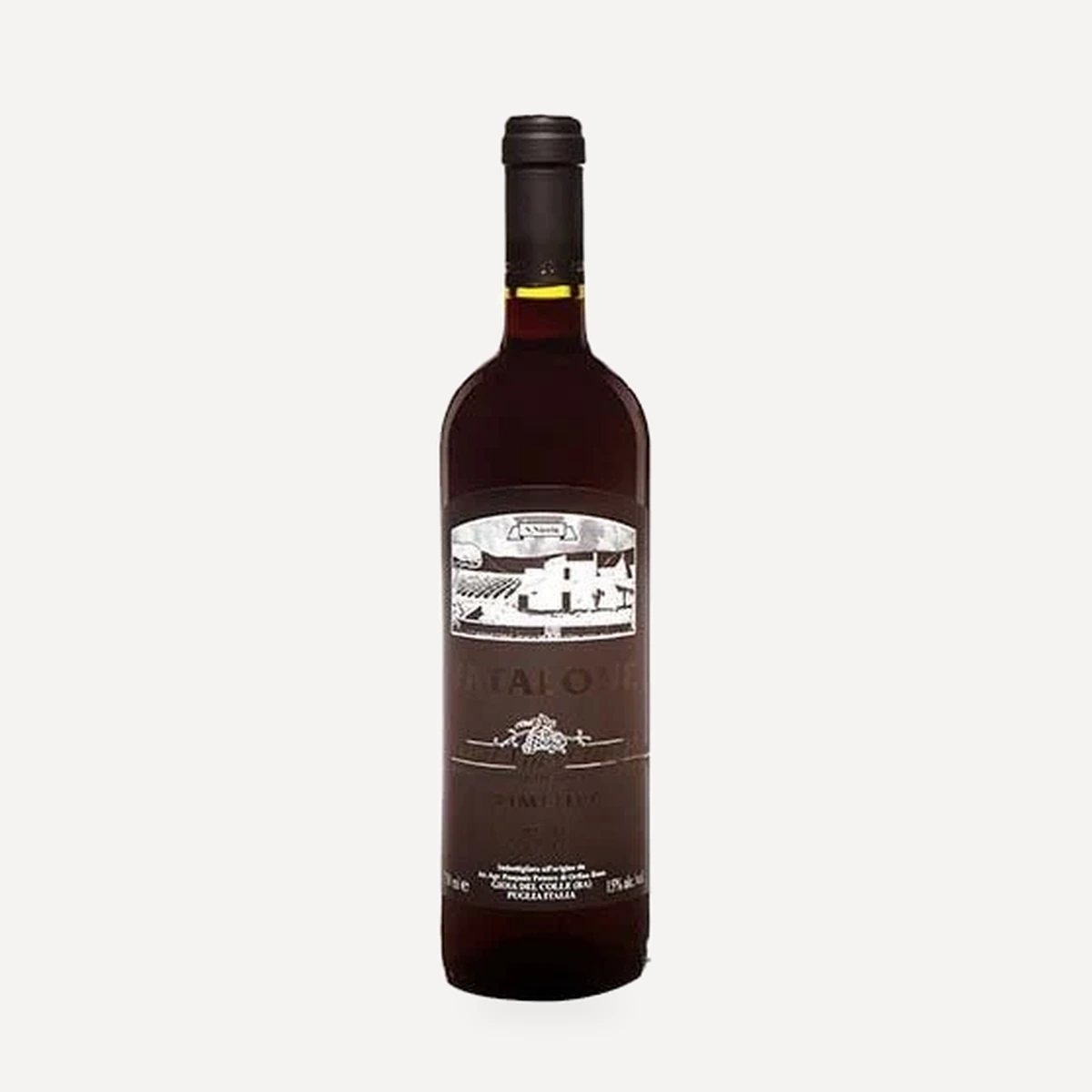
Current Primitivo protocols employ 240–300 hours of skin contact. The regular Primitivo and Riserva undergo open-cycle fermentation with frequent pump-overs and natural malolactic fermentation. Greco receives a 24-hour skin maceration followed by gentle pressing, spontaneous temperature-controlled fermentation and natural malolactic fermentation. The racemi-based Teres uses free-run juice obtained before pressing and receives approximately 30 hours on skins in a rosé-like process, followed by spontaneous fermentation and natural malolactic fermentation.
Following maceration, the liquid completes fermentation in temperature-controlled tanks. Skins are transferred to a pneumatic press for gentle extraction without crushing the seeds and releasing their more aggressive tannins. The fermenting lots are monitored by chemical analysis to determine their appropriate maturation path.
The first racking from gross lees occurs during fermentation. Further rackings between the end of fermentation and spring oxygenate the wine and remove the remaining deposits. Natural malolactic fermentation takes place in stainless steel. After malolactic fermentation, only the sulphites lost during processing are restored to the original natural level. The finished wines are bottled without filtration and with low total sulphites.
Maturation
The current regular Gioia del Colle DOC Primitivo matures for 9 months in stainless steel and 3 months in bottle. The Riserva spends 12 months in stainless steel, 12 months in 750-litre Slavonian oak casks and 6 months in bottle. Teres matures for 6 months in stainless steel and 3 months in bottle. Greco “Spinomarino” receives 6 months in stainless steel and 3 months in bottle.
Gravity is used when moving Primitivo into the Slavonian oak casks. Oak contact is intended to soften the wine without masking or standardizing its personality. During cask maturation, soft new-age and classical music mixed with natural sounds—wind, rain, moving leaves, flowing water and birdsong—is played at intervals. Fatalone applies this as music therapy, based on the belief that gentle vibration supports living microflora and the wine’s micro-oxygenation.
Control and energy
Panalisi of Bari supports an HACCP protocol with weekly oversight. Laboratory analysis covers vine health through leaf and shoot sampling; grapes, must and wine; cellar air and water; and the hygiene of equipment, machinery, surfaces and premises. Solar panels power the complete production process, which Fatalone describes as operating with zero CO2 emissions.
Filosofia
Fatalone treats vines and wines as living entities deserving the same care, comfort and attention as people. Daily presence in the vineyards, manual work and artisan practice are central to this approach. The family’s guiding maxim—passed down from Nicola Petrera—is that loving and respecting nature also means respecting God and oneself.
The estate’s quality philosophy begins with the roots: selecting appropriate ground, plant material, training systems and pruning methods, accepting low volumes and sacrifice in pursuit of quality. Vineyards were deliberately planted around the cellar to make daily contact possible and to minimize the interval between picking and processing. Only estate-grown, indigenous Primitivo and Greco are vinified, and the entire production is bottled by the family.
Fatalone seeks wines that reflect the territory, soil and people responsible for them. The stated aim is an authentic expression of the family’s grapes, land, personality and roots. Organic cultivation, dry farming, indigenous-yeast fermentation, restrained sulphite use, unfiltered bottling and renewable energy are presented as parts of one continuous environmental and production philosophy.
Tradition is paired with research and modern technology where these can improve quality without displacing the identity of the fruit. This includes clonal and sanitary selection, indigenous-yeast research, laboratory monitoring, temperature control and contemporary cellar hygiene. The same direct-management principle extends from vine to bottle and into sales, with customers selected for their understanding of the estate’s approach.
Vini
FATALONE® Gioia del Colle DOC Primitivo
FATALONE® Puglia I.G.T. Greco “Spinomarino”