Storia
From the original idea to the foundation, 2000s–2010
Antonella Manuli began imagining the project in the early 2000s. She had worked in the area since 1990 and had spent ten years at the nearby Terme di Saturnia Spa Resort, becoming increasingly drawn to the wild character of the hilly Maremma. Her intention was to express that environment through an agricultural enterprise founded on sustainability rather than to inherit or continue an existing family estate.
After searching for suitable land, she found the property in 2009. Its defining feature was an old, semi-abandoned mixed vineyard, later named Vigna Madre. The approximately 7,000 m² vineyard contained historic local material, including Procanico and Ciliegiolo, and became the genetic and agronomic reference for the subsequent vineyard programme. Fattoria La Maliosa was founded in 2010 and was organically certified from the outset.
The first vineyard plantings in the wider programme began in 2009. By 2010 the estate was producing wine, and the 2010 vintage subsequently became the first publicly presented certified organic and biodynamic La Maliosa vintage.
First wines and international introduction, 2012
In March 2012 the 2010 La Maliosa Rosso and La Maliosa Bianco were introduced at ViViT, the natural-wine section of Vinitaly. Later that year they entered the United States after the estate completed the necessary analyses and label approvals. The early project combined the recovery and classification of Vigna Madre’s varieties, biodynamic field management, harvesting at physiological ripeness and natural cellar work.
Lorenzo Corino and the expansion of the agricultural project, 2013
Agronomist and researcher Lorenzo Corino joined the project in 2013 after being introduced to Antonella Manuli through winegrower Riccardo Albani. Corino had spent approximately four decades in viticultural research, including service as Research Manager at the Asti Research Center for Oenology, and had worked on sustainable and organic viticulture since the 1970s.
During 2013 the estate inaugurated Podere Santa Francesca, introduced honey production and horses, prepared land for three hectares of new vineyards and began a long collaboration with Corino. The partnership progressively developed an agronomic system based on historic varieties, soil biology, vegetal mulch, closed nutrient cycles, restrained mechanisation and the matching of each planting to its geology and topography.
Three new hectares and a difficult season, 2014
In late April 2014, after repeated rain delays, the first hectare at Santa Francesca was planted. Work then continued at Scovaventi and Monte Cavallo, completing three hectares of new vineyards across geologically distinct sites. The rows were designed in relation to the contours and surrounding woodland rather than simply following the line of maximum slope.
The 2014 season brought exceptional rainfall and low temperatures: 94 mm fell in June, 137 mm over 14 rainy days in July, and floods struck Maremma in October. The team made four separate harvest passes and imposed rigorous selection both between and within bunches. Vineyard protection relied on copper and sulphur, with a targeted electric backpack sprayer reducing product use by approximately 55% compared with the mechanical sprayer. After only two days of olive harvest, the second major local flood in two years halted work; the estate then participated in rescue and clean-up operations.
Consolidation and closed-cycle farming, 2015–2016
The 2015 season consolidated the vineyard expansion. A hot, dry summer stressed young vines and produced smaller berries, while the historic and young olive groves delivered the first monocultivar Leccio del Corno oil. Agricultural management was refined around a fully vegetal closed cycle: no purchased fertiliser or animal manure, no artificial vineyard irrigation, and periodic use of estate-grown hay and other plant material as soil cover. Mulching was adopted to protect the soil against erosion, solar exposure and water loss while encouraging biological activity.
In 2016 the estate began renovating Vigna Madre through field grafting with its own buds, preserving its internal germplasm and the historic varietal heritage. The season was warm and dry but not extreme; drought from mid-June reduced growth, particularly in Sangiovese, while Procanico again demonstrated strong adaptation. Harvest began on 10 September with Ciliegiolo, followed by Cannonau grigio and Sangiovese, with Procanico picked after 20 September.
Vineyard growth and the codification of Metodo Corino, 2017
In 2017 the estate planted 1.5 ha at Monte Cavallo and named the site Vigna Corino al Monte Cavallo. Vigna Anfiteatro was created, Vigna Madre’s field-grafting programme continued and approximately 100 young olive trees were regrafted to Leccio del Corno.
After five years of collaboration, Antonella Manuli and Lorenzo Corino codified Metodo Corino, a registered trademark and patented procedure for producing grapes and wine. The method incorporated practices developed by Corino over some 40 years and tested and expanded at La Maliosa. La Maliosa Bianco 2016 and La Maliosa Rosso 2016 were the first bottles released with Metodo Corino identified on their labels.
The year also brought an exceptional drought: less than 200 mm of rain fell between October 2016 and October 2017, frost struck from 18 to 23 April, and summer temperatures remained high for more than 90 days, frequently exceeding 40°C. The volcanic vineyards, old vines and hay-mulched soils showed the greatest resilience. Harvest took place from 6 to 27 September.
Ten years of production and changing climatic conditions, 2018–2020
By 2018 La Maliosa marked its tenth production year and had reached economic sustainability after sustained investment in its agricultural system. The 2018 season was exceptionally wet and humid, with rain even in June, July and August. Hay had to be cut three times, and hail and violent winds damaged sections of vineyard and olive grove. Downy mildew pressure revealed differing varietal sensitivity: Cannonau grigio was the most susceptible, followed by Sangiovese, Ciliegiolo and, as the least susceptible, Procanico.
In 2020 one additional hectare of vineyard was planted. The estate also opened its online shop and launched its structured wine-and-oil tourism programme, including tastings, picnics, trekking, e-bike outings, yoga and StarsBOX experiences. That season brought fewer than 250 mm of rain between budbreak and harvest, severe summer heat and periodic warm winds. Volcanic sites remained comparatively resilient, whereas stony, freely draining vineyards suffered acute water stress. Grape production fell by about 45–50%, and harvesting began in August for the first time. In parallel, Antonella Manuli, Lorenzo Corino and Indaco2 contributed to international Product Category Rules governing the life-cycle assessment required for wine Environmental Product Declarations.
Scientific research and the loss of Lorenzo Corino, 2021
A three-year study undertaken at La Maliosa on land-use change, soil functionality and biodiversity in newly planted vineyards was published in Land on 1 April 2021. It examined how new vineyards could be established while conserving soil quality and ecosystem functions.
Lorenzo Corino died on 4 November 2021. He had learned of his illness shortly after joining La Maliosa in 2013 but continued his work with the estate throughout his final years. His contribution encompassed vineyard design, soil management, Metodo Corino, scientific and public communication, and the concept of the Vigne Giardino. The estate retained his principles of patience, pragmatic agronomy, biodiversity and minimal intervention as the foundation of its work.
Landscape architecture, certification and hospitality, 2022
In 2022 the estate obtained SQNPI certification for sustainable quality. Collaboration with Officina82 produced four StarsBOX micro-cabins—Aria, Terra, Uliveta and Maliosa—and the SkyDeck at the summit of Monte Cavallo. The circular SkyDeck was positioned within Vigna Corino and aligned with the vineyard’s geometry, creating a 360° viewpoint over Maremma.
Completion of the vineyard programme, 2023
In 2023 La Maliosa completed the agricultural development phase of its vineyard project. The final Pitigliano plantings were dedicated to white grapes, bringing the estate vineyard total to 9.5 ha. Approximately 25 ha of arable land were also brought into production with lucerne and mixed grasses to provide the estate-grown mulch required by the closed-cycle system.
Four IoT biodiversity-monitoring stations connected to the 3Bee platform were installed in June. Hospitality expanded substantially, with more than 2,200 visitors from 34 countries, 32% more than in 2022. The Saturnalia Wine Bar and farm kitchen opened in the village of Saturnia and served 13,613 guests during its first seven months. The estate employed 20 people by year-end.
The Scovaventi Deck was also installed in 2023 around a centuries-old oak. Its eight wooden steps bear the names of winds and form a walkable compass rose, seating area and belvedere. Construction began on a new winery, a Monte Cavallo tasting room, the restyling of Saturnalia Wine Bar and the renovation of five rooms in Saturnia.
A new production era, 2025–2026
The new winery became operational in September 2025 after more than six years of permits and construction. It introduced distinct areas for winemaking, fermentation and ageing; new stainless-steel fermenters; gentler grape-reception equipment; a crate-washing system; and a faster bottling line designed to reduce oxygen exposure. The estate also renewed its digital infrastructure and began a three-year ARTYBIO project with CREA researchers from Florence and Conegliano to study soil microarthropods and indigenous cellar yeasts.
Saturnalia Village Rooms completed its first full year of operation in 2025, offering five rooms in a 17th-century building in Saturnia. In December it received DSC_ESG Sustainable Structure Certification. At the end of the year La Maliosa joined the Associazione Grandi Cru della Costa Toscana.
The new underground winery was formally inaugurated on 18 July 2026. Designed by Fabrizio Fabbroni and Riccardo Pietrucci, it uses materials that support stable production temperatures and is concealed beneath a garden roof created by Officina82 with Botanical Dry Garden. The roof doubles as a hospitality area and hosts contemporary artworks. In November 2026 the estate was selected to host the first global Community Day of The Porto Protocol, devoted to strategic water management and climate resilience in viticulture.
Terroir
Two territories divided by the Fiora
La Maliosa operates in the hilly Maremma of southern Tuscany, between the basins of the Fiora and Albegna rivers. Its vineyards are divided between Saturnia and Pitigliano, with the Fiora marking a major geological transition: Saturnia is dominated by clay and ancient chaotic stone, while Pitigliano is volcanic.
The estate’s geological history spans approximately 10 million to 10,000 years, from the Miocene to the late Pleistocene. The wider landscape developed through major river floods and marine sedimentation. Higher ground represents former ridges, while surrounding zones correspond to deeper marine basins.
Monte Cavallo and Saturnia
Monte Cavallo rises to approximately 350 m. Its coarse torrent deposits and conglomerates date from roughly 10 million to 2 million years ago. These stony, freely draining, naturally infertile soils impose strong limits on vine growth and were deliberately selected for vineyards. Vigna Corino occupies a slope of about 30%, and the summit provides views toward the Tyrrhenian Sea, Monte Amiata, Saturnia, Viterbo, Pitigliano, Monte Argentario and, in clear conditions, Isola del Giglio.
Santa Francesca lies at approximately 220 m. Its soils contain clay sediments, marl, small pebbles and occasional gypsum crystals and date from about 1.8 million to 10,000 years ago. Their clay content supports steadier vine growth than the stony Monte Cavallo sites.
Pitigliano
The Pitigliano vineyards lie at about 300 m on volcanic soils. Vigna Formica has a deep layer of volcanic ash over tuff. These soils repeatedly showed strong drought resilience during the estate’s observations of the 2017 and 2020 seasons, retaining functional canopies and berry turgidity when younger vines and freely draining Saturnia sites suffered water stress.
Climate and ecosystem
The estate lies in a predominantly wooded territory with little residential or intensive agricultural activity for many kilometres. Vineyards, olive groves, arable fields, mixed grasslands and forest form a single mosaic. Warm, dry summers, periodic winds, irregular rainfall and meaningful night-time temperature changes shape the growing season, but individual years can be extreme. Floods occurred in 2012 and 2014; parts of 2016 and 2017 were severely dry; 2018 was exceptionally wet and humid; and 2020 combined fewer than 250 mm of growing-season rain with very high summer temperatures.
Wildlife includes wild boar, deer, porcupines, badgers, pheasants, other birds and wild Vitis vinifera subsp. sylvestris. The latter climbs trees in the woods and bears small berries, surviving as evidence of an environment spared intensive agricultural transformation.
Vinificazione
Metodo Corino and the closed vegetal cycle
Viticulture follows Metodo Corino, the registered system developed by Antonella Manuli and Lorenzo Corino. Its central objectives are environmental health, living soils, the health of growers and consumers, and the preservation of each site’s agricultural and scenic character. Sustainability is assessed through Biological Quality of Soil measurements and life-cycle carbon-footprint analysis.
The farm works as a polycultural mosaic of vines, olives, woodland, lucerne, mixed grasses and other crops. Approximately 25 ha of arable ground produce hay and plant material for the vineyards. No animal manure or purchased fertiliser is used in the closed-cycle system. Periodic hay mulch protects the surface from erosion, intense sunlight and water loss; supports capillary movement and nutrient availability; and encourages soil organisms. The estate’s life-cycle assessment found that its woods and meadows absorbed approximately 100 times the greenhouse gases emitted by the business at the time of the study.
Soil, water and canopy management
Mechanical work is deliberately restricted to limit compaction and soil degradation. Earlier work also incorporated manual labour and animal traction. Vineyard sites are selected on poor, stony or otherwise marginal agricultural ground rather than fertile soils more suitable for other crops. Levelling, major earthmoving and destructive stone grinding are rejected.
The vines are dry-farmed without artificial irrigation. Historic varieties and genetically diverse selections are favoured for their adaptation to the local climate. Wild vegetation is allowed to grow and is cut only after going to seed, progressively increasing botanical diversity. The canopy is arranged without topping so that leaf activity continues late into the season. Landscape-oriented plantings follow contour lines, reducing erosion and making manual work easier. Some vines are trained as alberello; espalier and Guyot systems are also present in the older Pitigliano vineyards.
Plant protection is designed to be compatible with the surrounding ecosystem. Earlier biodynamic management used carefully controlled copper and sulphur treatments. In 2014 an electric backpack sprayer enabled more targeted applications and reduced product consumption by approximately 55% relative to the mechanical sprayer. Rock powders are also used as a natural defence strategy in the olive groves.
Biodiversity and research
The vineyards are embedded in woodland, olive groves and grasslands rather than isolated as a monoculture. Wild vines, spontaneous flora, insects, birds and mammals form part of the managed ecosystem. Since 2013 the estate has collaborated with agricultural researchers on soil biology. A three-year vineyard study published in 2021 examined how land-use change and vineyard establishment affect soil functionality and biodiversity.
Four IoT monitoring stations linked to the 3Bee/XNatura platform were installed in June 2023 to measure wild-pollinator activity and produce a quantitative biodiversity index. In November 2025 the three-year ARTYBIO project began with CREA researchers from Florence and Conegliano, focusing on soil microarthropods and indigenous cellar yeasts.
Harvest
Harvest is manual and includes rigorous bunch selection. In difficult seasons the team may make several passes through a vineyard: four passes were required in 2014, including selection within individual bunches. Picking dates respond to physiological and phenolic maturity rather than sugar accumulation alone.
Metodo Corino in the cellar
The grape is treated as the sole material from which wine should arise. Fermentation proceeds naturally through indigenous yeasts and bacteria. Human intervention centres on judgement during racking and ageing rather than corrective treatments. Additives, including added sulphites, and invasive chemical or physical technologies intended to alter the wine’s origin or natural development are excluded. No animal-derived products are used in either vineyard or cellar.
Fruit is manually selected and handled gently. Metodo Corino wines rely on spontaneous fermentation, with cellar work adapted to the character of the grapes and vintage. The estate’s technical material documents periodic punching down, soft pressing, stainless-steel or wooden ageing according to the intended wine, and total sulphite levels below 10 mg/L in representative releases; these are cuvée-specific applications of the broader low-intervention method.
New underground winery
The winery that became operational in September 2025 and was formally inaugurated in July 2026 has separate spaces for grape processing, fermentation and ageing. New stainless-steel fermenters dissipate heat efficiently and simplify sanitation. New reception equipment transfers crushed fruit to the vessels with minimal stress, leaving berries largely intact. A dedicated washing system sanitises harvest crates between picking days, while a faster bottling machine reduces the wine’s exposure to oxygen during filling.
The underground structure was designed by architects Fabrizio Fabbroni and Riccardo Pietrucci. Its construction materials help maintain suitable production temperatures, while a garden roof integrates it into the landscape. The facility was conceived to support precise but limited care, improving quality while retaining the estate’s minimal-intervention approach.
Filosofia
La Maliosa’s founding principle is that agriculture should work with the landscape, soil and ecological balance, adding value without overturning them. Its three stated priorities are quality, beauty and environmental health. Ethics and aesthetics are treated as inseparable: vineyard layout, architecture, hospitality and artistic installations are intended to enhance the agricultural landscape as well as produce wine and oil.
The estate defines quality through artisanal work, transparency and complete respect for the finite resource of land. Its approach is deliberately pragmatic rather than ideological. Each decision should have a concrete agronomic purpose and should be open to measurement through soil biology, carbon accounting and scientific collaboration.
Metodo Corino embodies this position. Complexity and biodiversity are understood as the prerequisites for minimal intervention: considerable work is undertaken to establish balanced soils, adapted plant material and resilient ecosystems so that intervention in the vineyard and cellar can subsequently remain limited. Waiting for nature, respecting its timing and accepting vintage variation are central principles.
Historic varieties are not treated as nostalgic objects but as living material adapted to the place. Natural seasonal variation is preserved as evidence of time and climate. The ambition is for the wines to express their sites and varieties with authenticity, elegance and finesse rather than technical uniformity.
The estate also connects agricultural sustainability with economic and social durability. Antonella Manuli’s view is that the land must support its owners, workers and surrounding territory; otherwise environmental ideals cannot endure. Training local employees, creating hospitality and building regional networks are therefore part of the agricultural project rather than separate commercial activities.
Vini
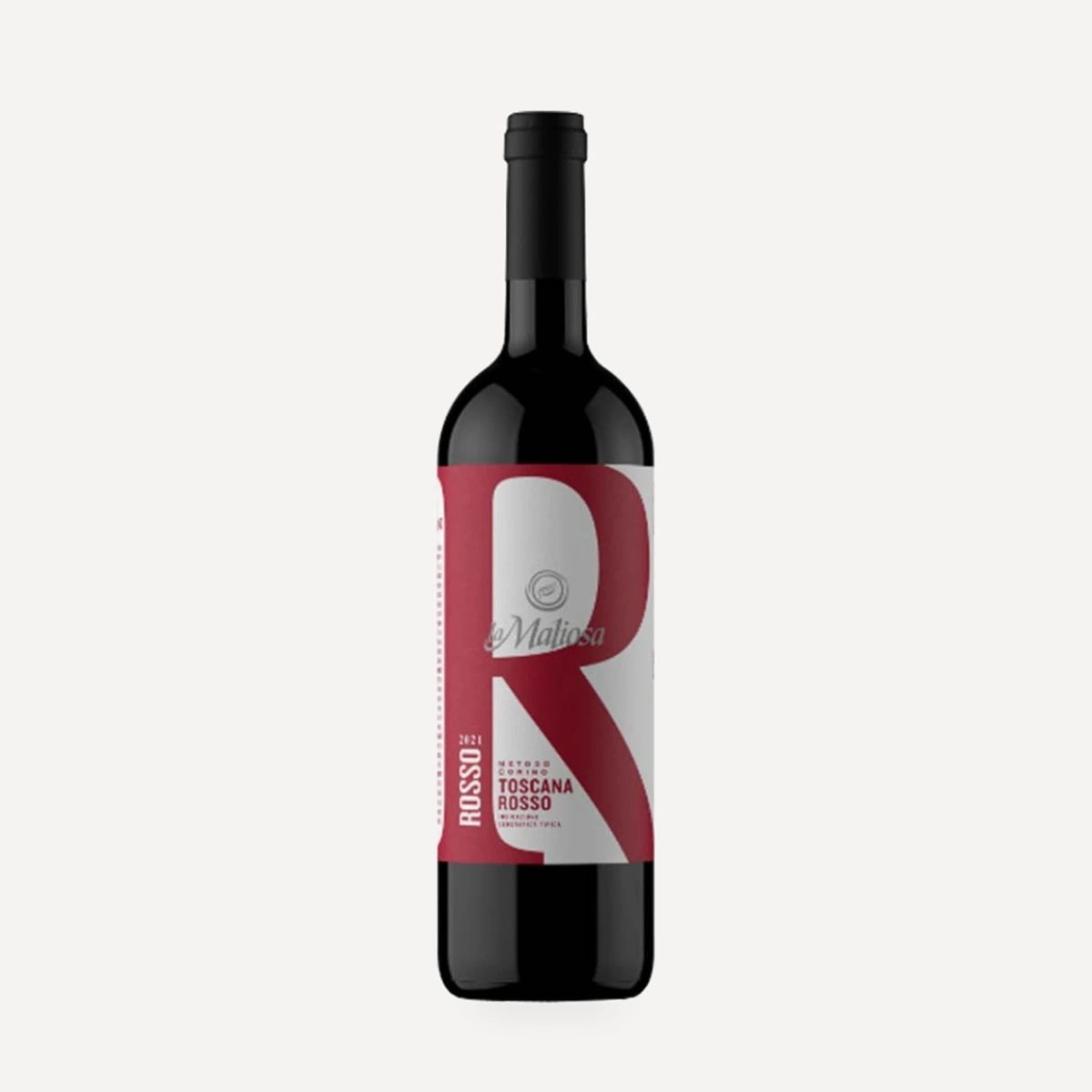
La Maliosa Rosso
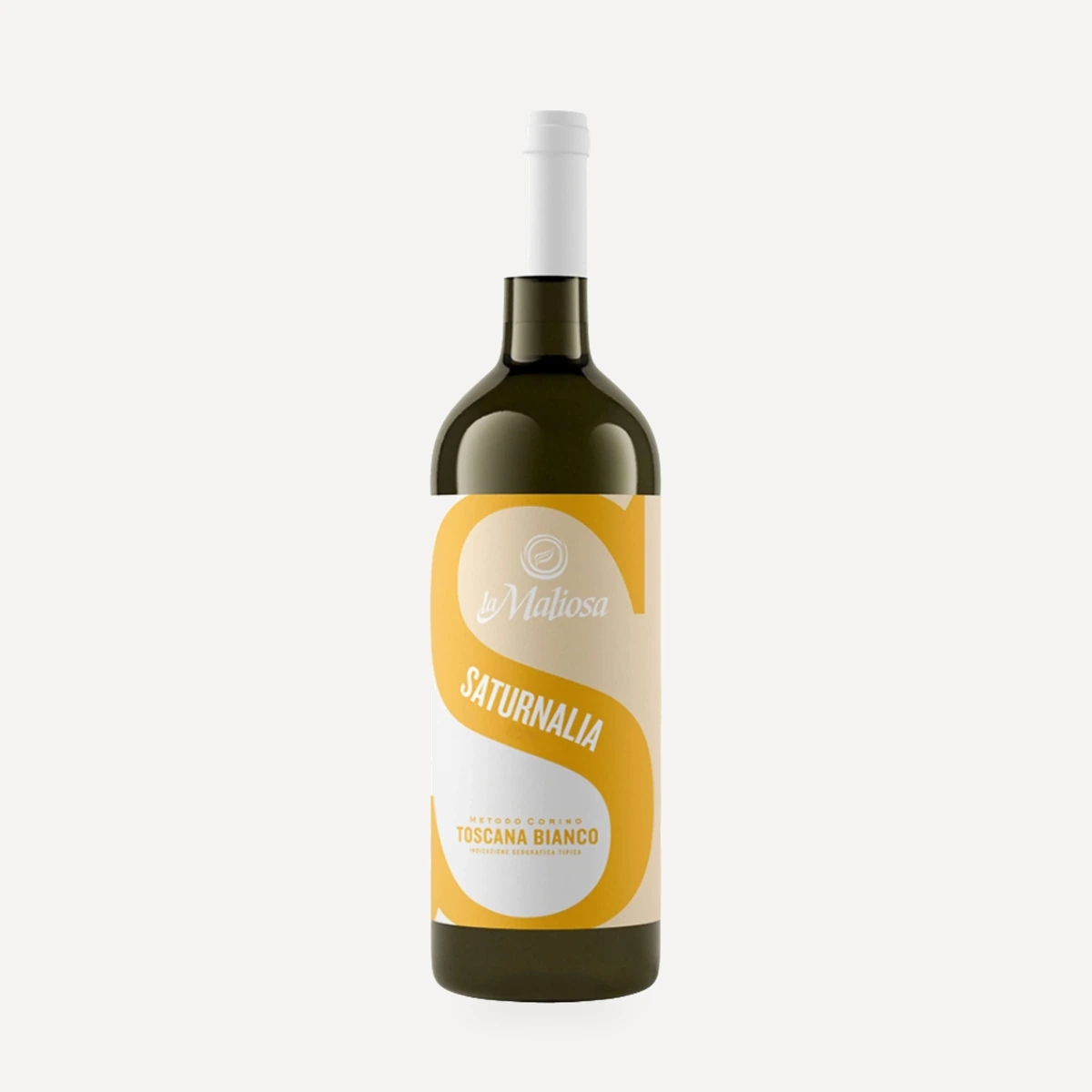
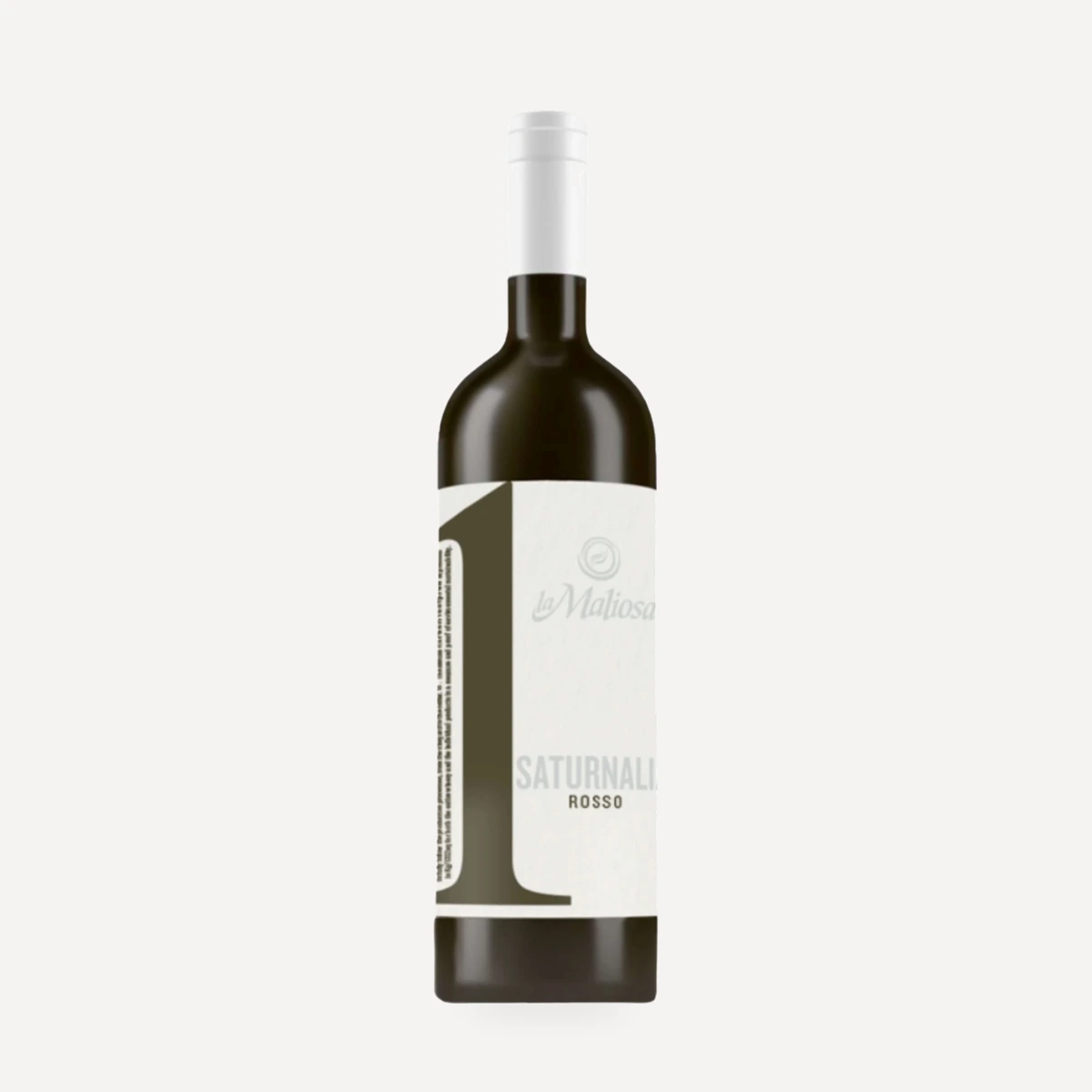
La Maliosa Saturnalia bianco