Storia
From sharecropping to abandonment
Fietri’s history is rooted in a small agricultural settlement whose houses, stables and storehouses were constructed gradually, particularly in years when plentiful harvests made further building possible. The irregular geometry of the surrounding vineyards preserves evidence of centuries of agricultural work.
The borgo was almost completely abandoned during the 1960s, following the end of the sharecropping contracts that had sustained its agricultural life.
Revival in the 1980s
Fietri began to recover in the 1980s. Its revival was encouraged by renewed interest in Chianti Classico and by the emergence of agritourism as a way to sustain and repopulate rural estates. Existing buildings were restored and the countryside reorganized with the stated intention of respecting the area’s established agricultural traditions.
New vineyards and an estate cellar
During the 2000s, new vineyards were carefully planned and planted for quality-focused production. The vineyard holding eventually reached 8 hectares. Vigna Carletti, one of the individually identified sites, was planted in 2004.
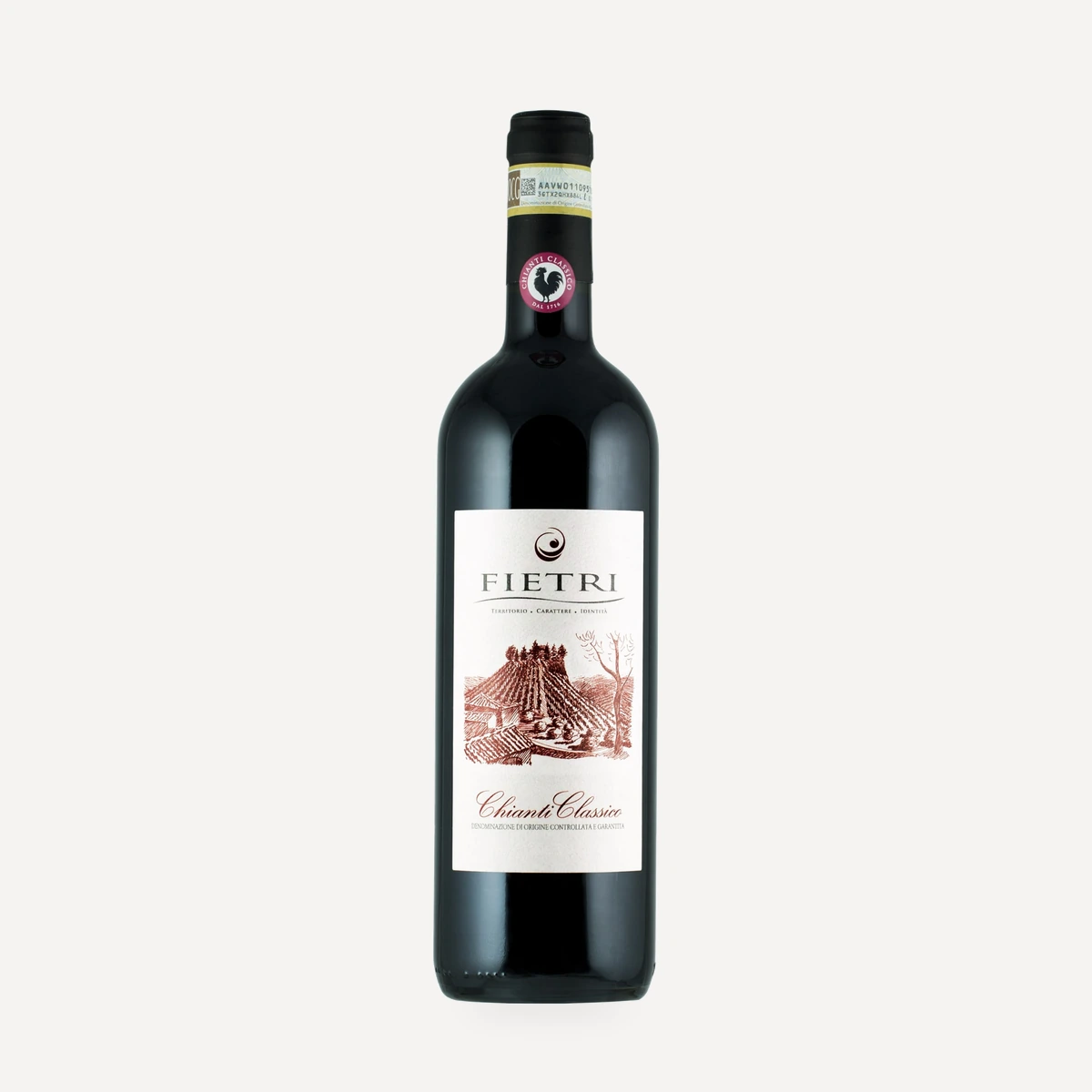
A new temperature-controlled cellar equipped with stainless-steel tanks enabled Fietri to begin producing and bottling wine directly at the estate in 2006. The ageing area was furnished with oak vessels of 5, 7 and 18 hl. The first Fietri Chianti Classico and Chianti Classico Riserva were produced that year.
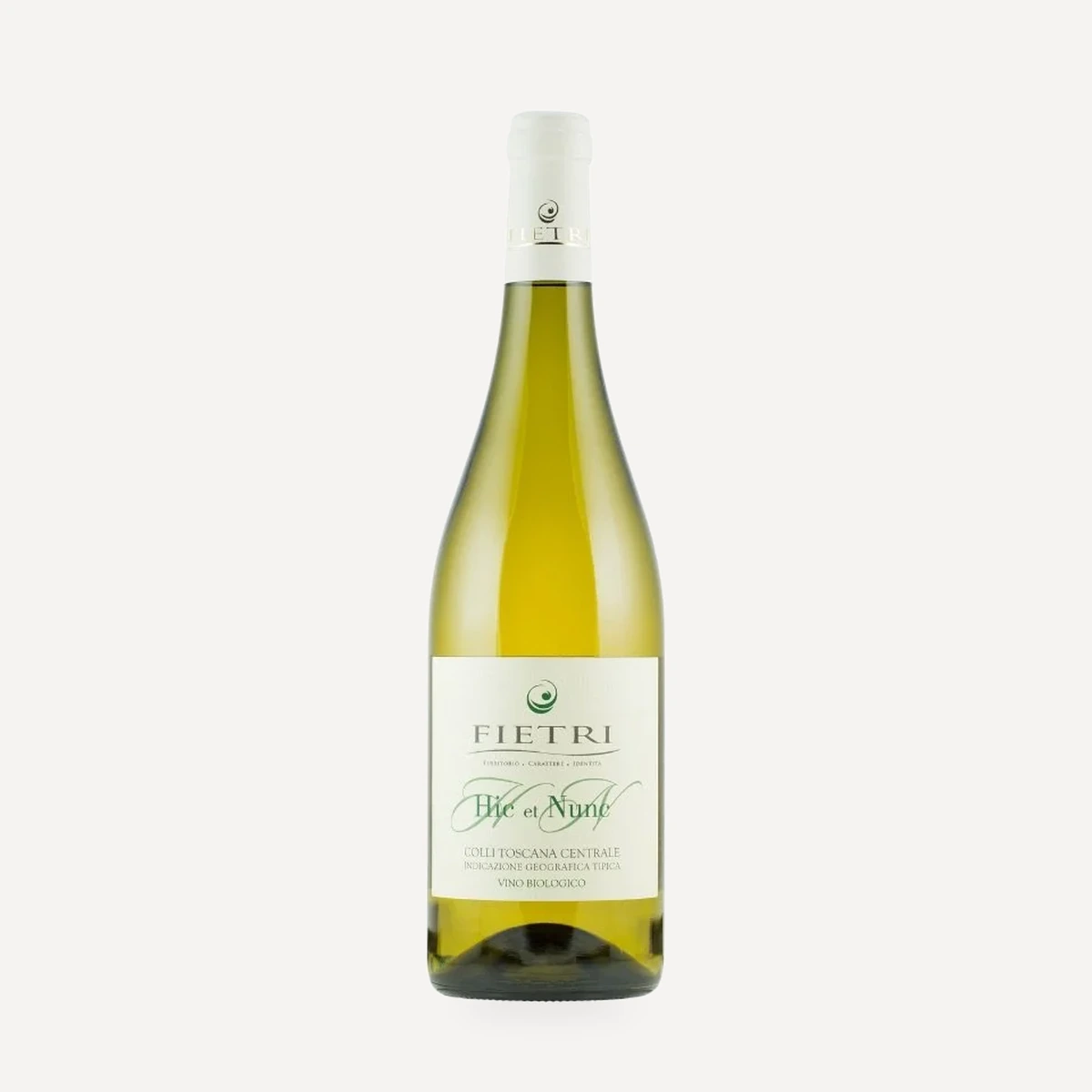
Rosato di Sangiovese followed in 2007. The first vintages of Alius et Idem, Dedicato a Benedetta and Hic et Nunc were produced in 2010. The first Kallisté Metodo Classico rosé base wine was made from the 2011 harvest.
A family dedication and organic certification
The first bottles of Dedicato a Benedetta, made from the 2010 harvest, became wedding favours for a family marriage in 2012. The wine’s oak barrels had been selected by the owners as a tribute to their daughter.
Fietri’s wine production has been certified organic since the 2016 harvest. The estate now works with Sangiovese, Chardonnay, Viognier, Merlot and Alicante Bouchet across its Chianti Classico DOCG, Toscana IGT and Colli della Toscana Centrale IGT production.
Terroir
Fietri lies in the small hilltop Borgo di Fietri, within the municipality of Gaiole in Chianti in the province of Siena. The vineyards occupy elevations of approximately 460–580 metres above sea level; Linari reaches 580 metres and is among the estate’s highest sites.
The vineyard soils have a clayey-sandy loam texture with abundant stony galestro. Carletti is distinguished by galestro derived from sandstone, while Linari is described as an ancient, mineral-rich galestro site. The vineyards form an irregular patchwork across the slopes, bordered by chestnut, holm-oak and pine woodland.
Aspect varies by site. Carletti faces south, while Linari’s white-grape section faces north-east. At Linari, bright daytime light is followed by cooling night-time dew. The surrounding woods support wild boar, porcupines, badgers, roe deer and foxes and create a close transition between cultivated land and forest.
Vinificazione
Fietri’s wine production has been certified organic since the 2016 harvest. The vineyards are primarily described as spur-pruned cordon plantings.
Site-specific crop management is documented at Vigna Carletti, where Sangiovese vines are thinned to approximately 1 kg of fruit per plant, concentrating the crop in fewer clusters. At Linari, the Sangiovese block used for the 2011 sparkling base wine had a density of 5,950 vines/ha and yielded 40 q/ha. That harvest was collected in baskets on 5 September 2011.
The cultivated landscape is closely bordered by chestnut, holm-oak and pine woodland, with wild boar, porcupines, badgers, roe deer and foxes present in the surrounding habitat.
A modern, temperature-controlled cellar has allowed Fietri to vinify and bottle its wines directly at the estate since 2006. Fermentation facilities include stainless-steel tanks, while the ageing room contains 5, 7 and 18 hl oak vessels. Stainless steel is used for the estate’s principal Sangiovese vinification and for fresh white and rosé components; oak formats include barrels, barriques, tonneaux and an oval Allier-oak vat, depending on the programme.
The cellar employs both temperature-controlled stainless-steel fermentation and oak ageing. Documented maturation regimes range from 12 months in the general cellar programme to 15–18 months for selected red wines, followed in some cases by bottle ageing. The white-wine programme separates Chardonnay, matured for six months in barrique, from Viognier, kept for six months in stainless steel before blending.
Rosé production combines 60% directly pressed juice with 40% saignée, followed by vinification in steel. The Metodo Classico programme includes chilled fruit, destemming, short cold maceration in the press, gentle pressing, cold static clarification, temperature-controlled fermentation, tirage, secondary fermentation in bottle, prolonged ageing on the lees, remuage, disgorgement, dosage and further bottle maturation.
Filosofia
Territory
Fietri frames its work through three words: Territory, Character, Identity. Territory is treated as the starting point for wine, olive oil and hospitality: the land, climate and inherited working methods make each activity inseparable from its location.
Character
The estate defines character through will, determination, patience, intelligence and strategy—the human effort needed to transform the possibilities offered by the land into finished products.
Identity
Identity emerges from the combination of place and human character. Restoration of the borgo, renovation of its agricultural buildings and reconfiguration of the surrounding countryside were undertaken with respect for pre-existing rural traditions. The same outlook connects wine, olive oil and hospitality as different expressions of Fietri.
The estate also presents winegrowing as a demanding activity requiring constant commitment and work, with quality understood through the landscape, environment, air and resulting wines. Individual wines are associated with particular vineyards and family memories, creating what Fietri describes as an eno-geographic record of the estate.
Vini
Chianti Classico DOCG