Storia
Origins and the Novelli family
The estate’s rural origins date to 1790, when a small single-storey house was built on land belonging to the Counts Gancia. It contained a living room, one bedroom, one window and a single door, and still survives. The Novelli family moved there from another side of the hill. They were agricultural labourers who cultivated the land and constructed their homes by hand from local Langa stone, including stone roofing. The consolidation of the agricultural holding is documented from 1826, while the stone cave-cellar and part of the farm buildings date from the end of the eighteenth century.
After three generations, the Novelli family acquired the first residential nucleus from the Gancia family in the mid-nineteenth century. The sale formed part of a wider disposal of landed property prompted by Savoy fiscal policy and the expenses of the wars of independence. In 1851 the Novelli family enlarged the house to two storeys. A residential wing followed in 1910 and porticoes in 1947. These phases remain legible in the building: the twentieth-century section is plastered yellow with pastel-blue windows, while the older portions retain thick, dry-laid, exposed-stone walls without cement.
The Novelli family made wine for household use and a small local market over several generations. Tommaso Novelli was the first family member to develop the tradition of Moscato Passito. He wrote both the wine name and the vintage entirely in words on long labels; when this design was revived and supplemented with the legally required information in the 1980s, the resulting label wrapped around the bottle four times.
The Novelli–Scaglione family
Tommaso’s only daughter, Teresa Novelli, met Egisto Scaglione during the 1930s. Egisto came from a prosperous farming family, owned an agricultural holding and helped operate a public weighbridge. A motorcycle enthusiast, he had considered racing before opening a Piaggio and Guzzi dealership in Alba. He met Teresa while travelling between farms to sell a Guzzi Alpino motorcycle to Tommaso.
Teresa and Egisto married in the late 1930s, joining the Novelli and Scaglione agricultural properties. Giancarlo Scaglione was born in 1941. With Egisto managing both farmsteads, Giancarlo was encouraged to study. He graduated in oenology in 1961 and immediately began working in the two cellars.
Giancarlo Scaglione’s professional formation
Generational disagreements over cellar management led Giancarlo to work outside the family holdings. In 1964 he joined the cooperative winery at Castagnole delle Lanze and in 1965 moved to the cooperative at Cossano Belbo, working as an oenologist and production manager. He subsequently graduated in microbiology, developed specialist knowledge of wine fermentation and began teaching at the Alba wine school in the early 1970s.
In 1977 Giancarlo became production director at Gancia. He left in the early 1980s to work as a consultant, entering the professional circle of producers including Giacomo Bologna, the Coppo brothers, Michele Chiarlo and Bruno Giacosa.
Revival of the Loazzolo farm
A severe storm destroyed the Piasa Rischei vineyard in 1936; it was replanted in 1938. The surviving old vineyard later became central to the revival of Loazzolo’s passito tradition.
After the deaths of his father and grandfather, Giancarlo inherited the Loazzolo farm and resumed its management in 1985. The vineyards and equipment were old and Moscato Passito was little known. Until then, most grapes had been sold and only a small volume vinified for family consumption.
Giacomo Bologna, then seeking a producer capable of making a high-quality Moscato Bianco, encouraged the project and undertook to distribute the wine. Giancarlo began the commercial production of Moscato Passito Piasa Rischei, refining the historic label and placing the wine in leading Italian restaurants. The fruit came from a steep Moscato vineyard planted in 1937 and was treated through the traditional appassimento method once widely practised locally.
Giovanni and his sister Silvia began helping while Giovanni was still at secondary school because Giancarlo’s consulting work prevented him from rebuilding and managing the cellar alone. Giovanni entered the Faculty of Agriculture, while Silvia studied business administration. The family concentrated on small-volume wines for a selective market, particularly meditation wines and late-harvest styles.
Recognition of Loazzolo DOC
Luigi Veronelli visited the cellar in 1988 and encouraged the family to seek a denomination confined to the municipality of Loazzolo. Giacomo Bologna inspired the revival, Vittorio Gancia supported recognition of the production rules, and Carlin Petrini backed the wine as an important expression of Italian oenology. Mayor Giovanni Satragno also contributed to the process.
Loazzolo Vendemmia Tardiva DOC was published in the Italian Official Journal on 19 May 1992. Its restrictive rules covered a very small vineyard surface, steep old vines with favourable exposure and a maximum yield below 2,750 litres per hectare. It became Italy’s smallest municipal denomination.
Environmental programme and the present generation
In 2001 Giancarlo offered approximately 6 hectares of family property, partly occupied by Bosco della Luja near Santa Libera and the hamlet of Teola, as the nucleus of a proposed protected area. WWF Asti, approximately twenty neighbouring landowners and the municipal administration joined the initiative. On 27 July 2003, Loazzolo formally requested the creation of the approximately 100-hectare Riserva Naturale Speciale Boschi di Loazzolo.
Twenty-two photovoltaic panels were installed on the south-facing winery roof in June 2004. On 7 February 2005 the installation was formally recognised as Piedmont’s first photovoltaic electricity plant serving a non-residential wine-production facility.
In 2007 Forteto della Luja became a WWF Affiliate Oasis and began converting all its vineyards and land from eco-compatible to organic agriculture under ICEA certification. In 2011 it became a teaching centre associated with the University of Gastronomic Sciences in Pollenzo.
The estate has passed to Giovanni Scaglione through the maternal line of his father, Giancarlo. Giovanni manages the vineyards and the nature oasis as an eco-winegrower and winemaker, while Silvia has handled commercial and administrative work. In 2020 the family introduced Pasucrà, presented as the first dry Piedmont Moscato with DOC status.
Terroir
Forteto della Luja lies at Regione Candelette in Loazzolo, in southern Piedmont’s Langa Astigiana, close to the boundary with the Langa Albese and a few kilometres from Canelli. The estate coordinates are 44°41′16″ N, 8°15′7″ E. The family describes its immediate setting as mountainous, at approximately 550 metres above sea level; the municipality rises to around 600 metres.
The vineyards occupy steep hillsides and sunny ridges. Local favourable exposures are known as suri, ranging from southeast through south to southwest. Individual sites range from above 300 metres to more than 450 metres, with the Piasa Rischei slope exceeding 50%. Dry-stone Langa-stone walls, terraces and contours stabilise the hillsides. Woodland surrounds and interleaves the vineyards, while the Rio Luja crosses the woods facing the estate and ultimately flows into the Bormida di Millesimo.
Calcareous marl is a recurring foundation. Vineyard descriptions add Miocene–Langhian loose calcareous marl, clay, sandstone and sand; other sectors contain decarbonated neutral soils with clay-loam, silt-loam or sandy-loam textures and evolved yellow or reddish profiles. The range of exposures, elevations and soil textures supports Moscato Bianco, Brachetto, Barbera and Pinot Nero.
The surrounding oak, flowering-ash, Scots-pine, chestnut and riparian woods contribute to a varied microenvironment. Dry ridge grasslands and warmer Mediterranean-influenced sectors support thyme, broom, orchids and numerous insects, while cooler slopes and the river corridor carry chestnut, alder, willow and poplar. The wooded areas immediately beside some vineyards are considered important to their ecological equilibrium.
Vinificazione
The vineyards and other estate land entered organic conversion in 2007 and are certified by ICEA, the Istituto Certificazione Etica e Ambiente. Vineyard protection relies on natural products, while fertilisation is limited to organic materials such as manure and compost. Herbicides are not used.
Permanent grass cover is maintained on steep ground to limit erosion. On the oldest sites it is cut by hand only once a year, between late June and early July. This late mowing allows grasses and flowers to grow, providing habitat and food for insects before cutting. Cover cropping and crop distribution or rotation are adapted to the biological requirements of the soil.
Vine training, pruning, cultivation and harvesting are performed manually. Horses assist on steep vineyards and in narrow rows planted during the 1930s, where tractors cannot operate. Dead old vines are replaced progressively at a rate of approximately 2% per year rather than clearing and replanting entire sites.
Harvesting is manual, selective and often staggered. Grapes are chosen carefully and carried in small perforated crates. In the late-harvest Moscato vineyard, picking extends from late September into November through successive selections of bunches and individual berries affected by noble rot.
Biodiversity measures include wooden nesting boxes for birds, permanent grass cover, the retention of dry-stone walls, woodland and dry grasslands, and deliberately late mowing. The affiliated oasis contains 21 recorded wild-orchid species, eight occurring in vineyards, as well as numerous butterflies. The wider habitat supports diurnal raptors, woodland birds, roe deer, badgers, foxes, wild boar, squirrels and many insect groups.
The historic production complex includes an eighteenth-century stone cave-cellar and a barrel room devoted to maturation. For generations, only small quantities were vinified for household and local consumption; most grapes were sold until the modern estate project began in 1985. Annual production is now approximately 50,000 bottles, with Italy as the principal market.
The estate’s approach begins with manual, selective harvesting and intact fruit transported in small perforated crates. Several wines employ house-maintained starter yeasts. Small temperature-regulated tanks are used for red-wine fermentation, and winter temperatures provide natural cold stabilisation. Depending on the style, élevage takes place in small oak barrels, including seasoned barrels intended to refine rather than dominate the wine.
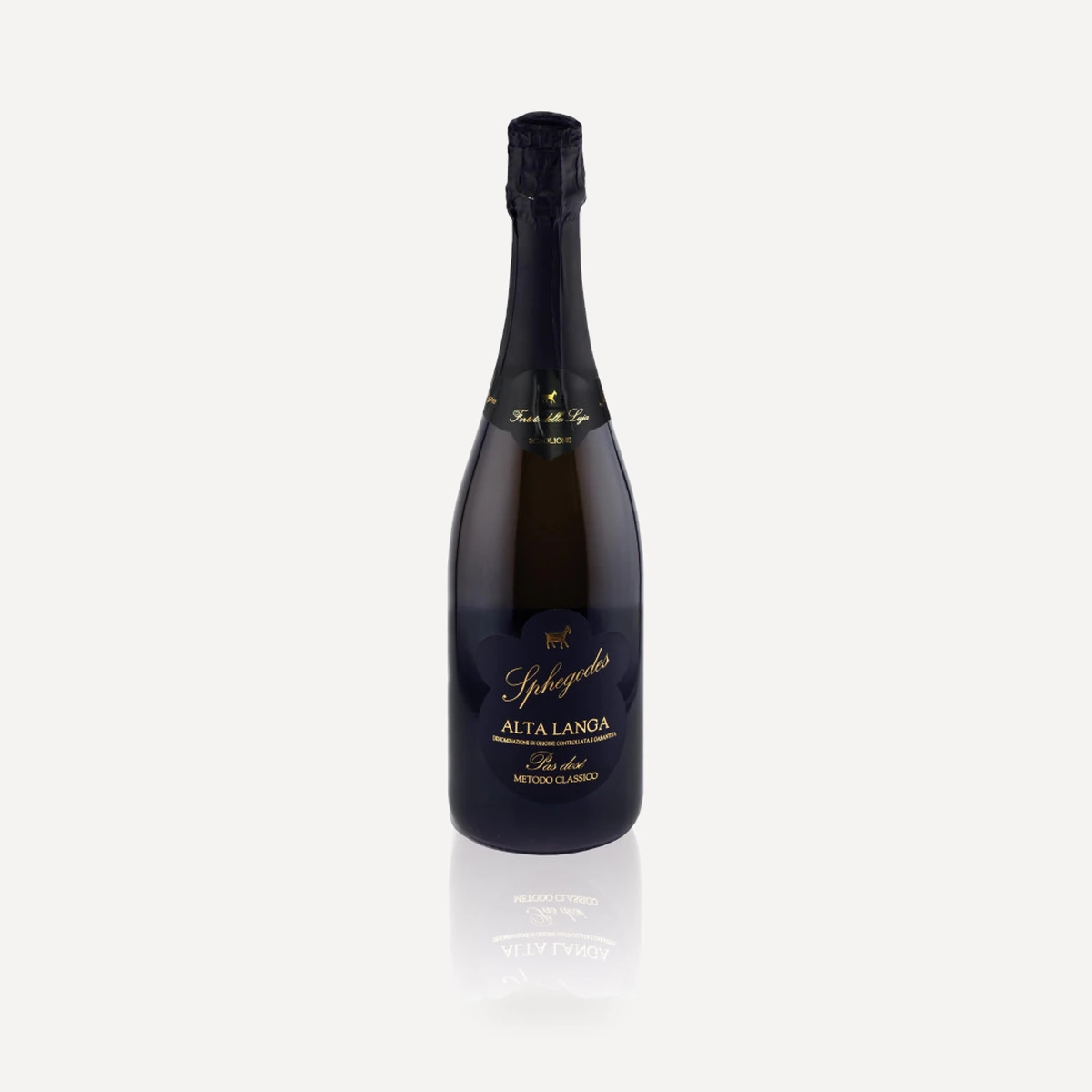
Traditional passito production remains central. Late-picked or noble-rot-affected grapes may receive additional natural drying on mats in a fruttaio, followed by slow, gentle pressing. Fermentation can proceed slowly in small oak barrels, with bottling delayed until later years. The cellar also works with short cold skin maceration for dry Moscato and with bottle refermentation, lees ageing, manual riddling and manual disgorgement for Alta Langa. These techniques coexist with the family’s stated preference for small lots, long-lived wines and sensitivity to vintage and vineyard conditions.
Filosofia
Giovanni Scaglione presents the family estate as a means of deepening his bond with the landscape rather than as an isolated production facility. Vineyard, forest, wildlife, soil and cellar form a connected ecosystem, with the woods facing the farm understood to interact directly with the vines.
The family’s principles combine the preservation of inherited techniques with technical training. Moscato appassimento, hand cultivation, old vineyards, dry-stone walls and long ageing coexist with fermentation expertise, controlled vessels, photovoltaic electricity and formal organic certification. Small production is directed toward wines capable of expressing slow ripening, late harvesting and the distinctive conditions of Loazzolo.
Environmental protection is treated as part of winegrowing rather than as a separate activity. Old vines are retained through individual replacement, permanent vegetation protects steep soils, mowing is delayed for flowers and insects, and woodland and vineyard habitats are managed together. The declared goal is quality viticulture conducted with respect for tradition and for the delicate equilibrium of the surrounding ecosystem.
Vini
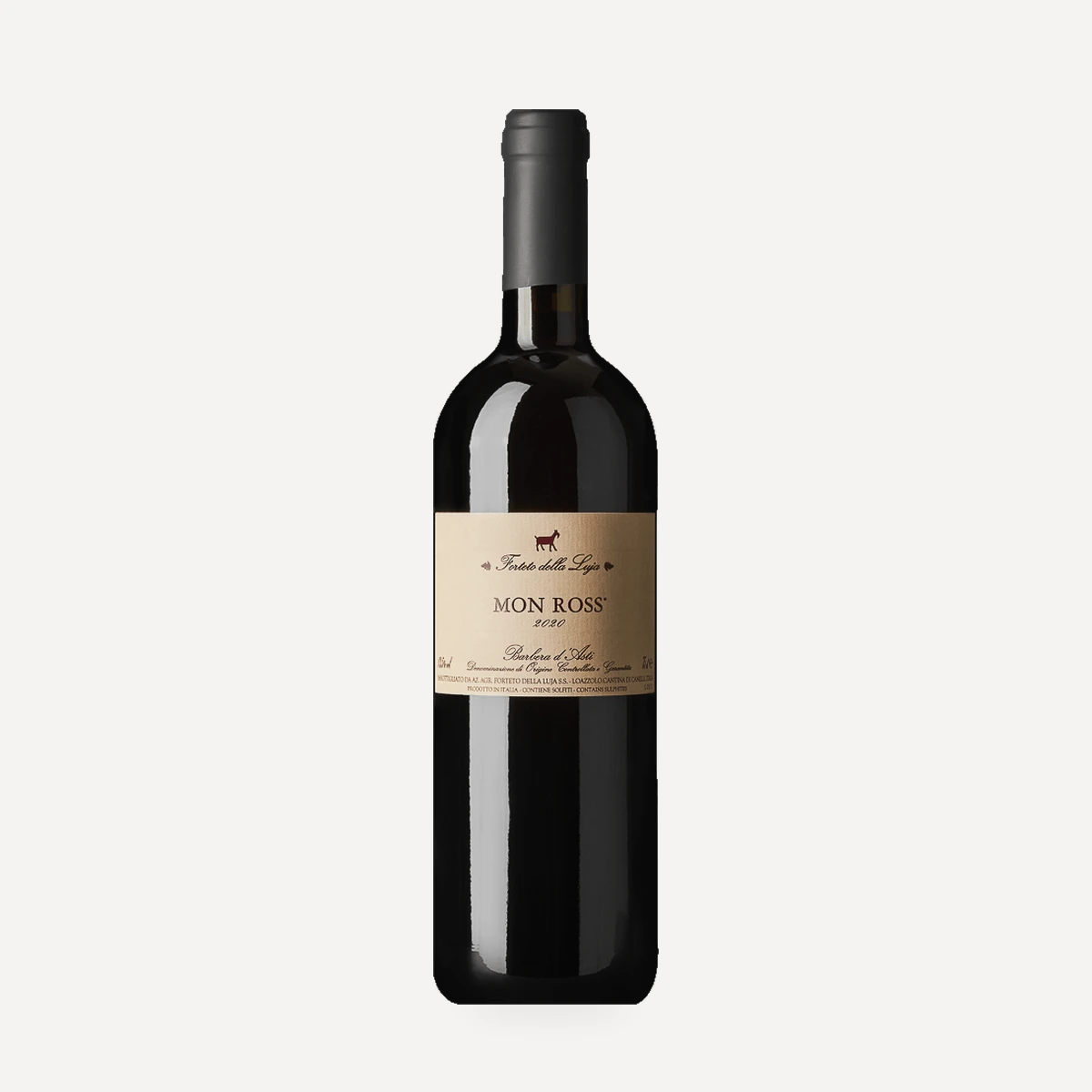
Mon Ross
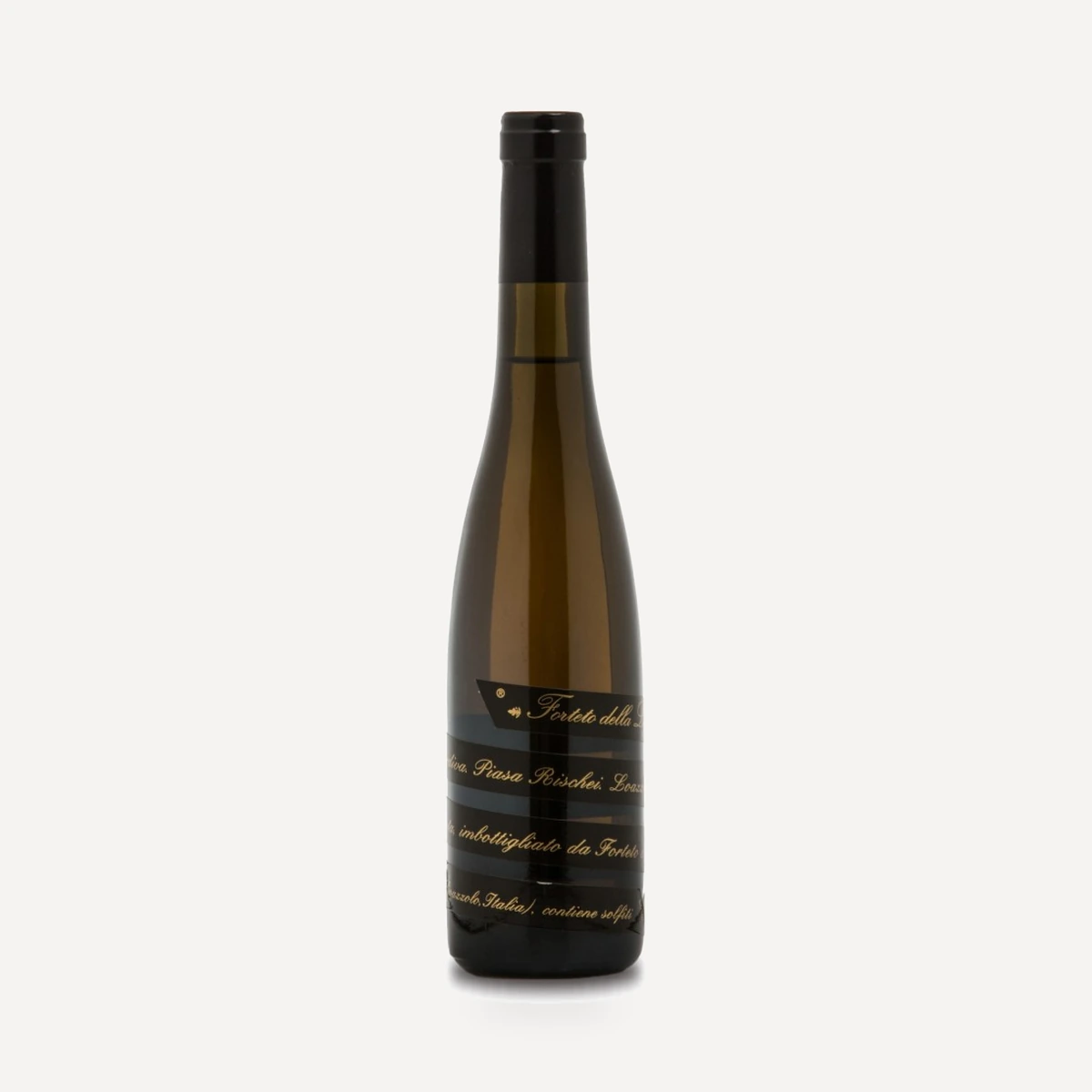
Piasa Rischei