Storia
The early property
The estate takes its name from two elements: Manfredi Martini and the podere known as “Il Paradiso.” Its farmhouse was built in the early nineteenth century. Manfredi, an experienced farmer, was born in Montalcino in 1914. Around 1950, he and his wife Fortunata, herself an experienced farmer, purchased Il Paradiso.
Foundation in 1956
Manfredi and Fortunata founded the agricultural estate in Montalcino in 1956. They were the parents of Rosella Martini. From the beginning, the family placed product quality ahead of volume, combining vineyard care with an artisanal approach to every phase of production. Manfredi devoted his work to expressing the identity of Montalcino while respecting the land and the characteristics of the estate’s territory.
The Brunello consortium
In 1967, Manfredi joined other growers and producers in founding the Consorzio del Brunello di Montalcino.
A new visual identity
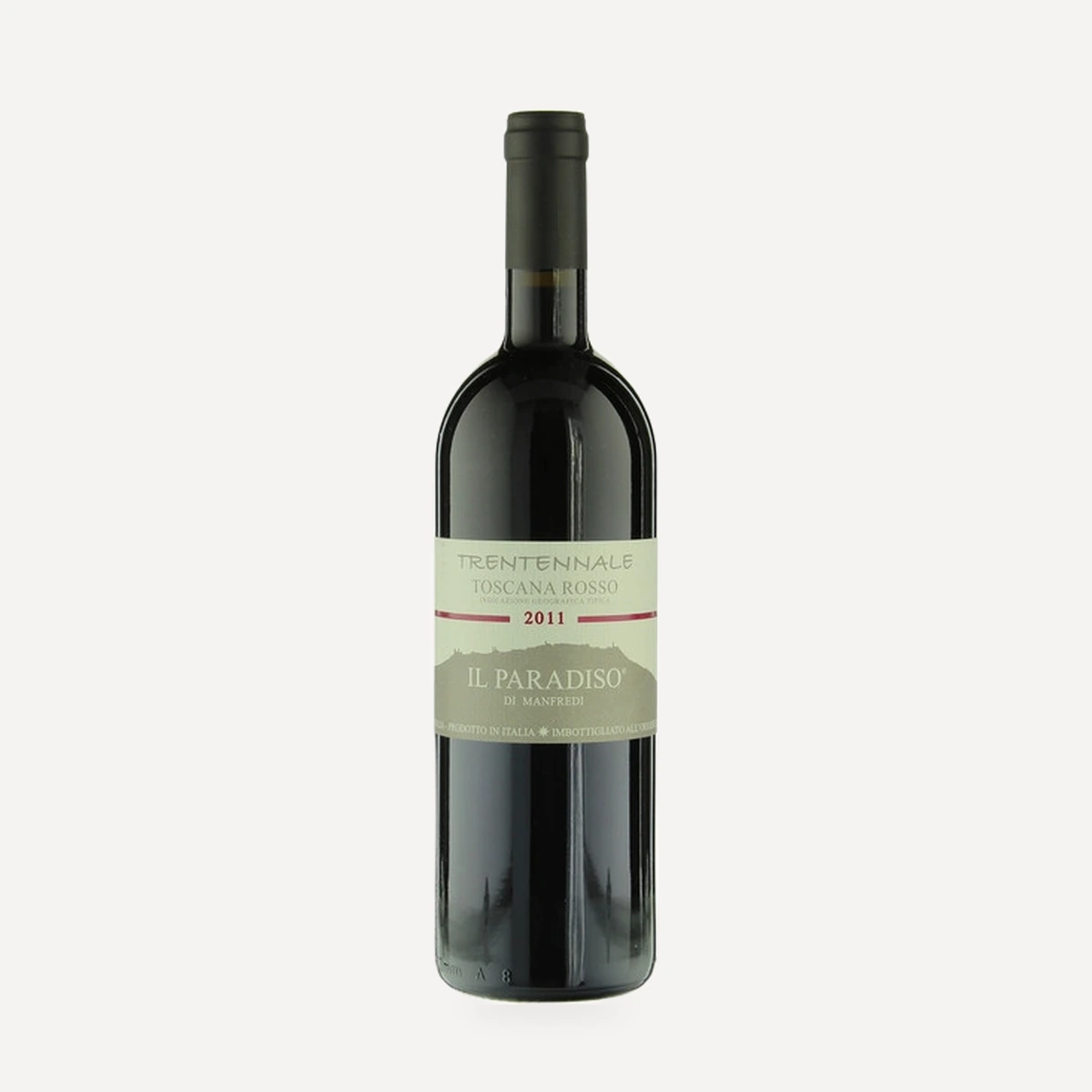
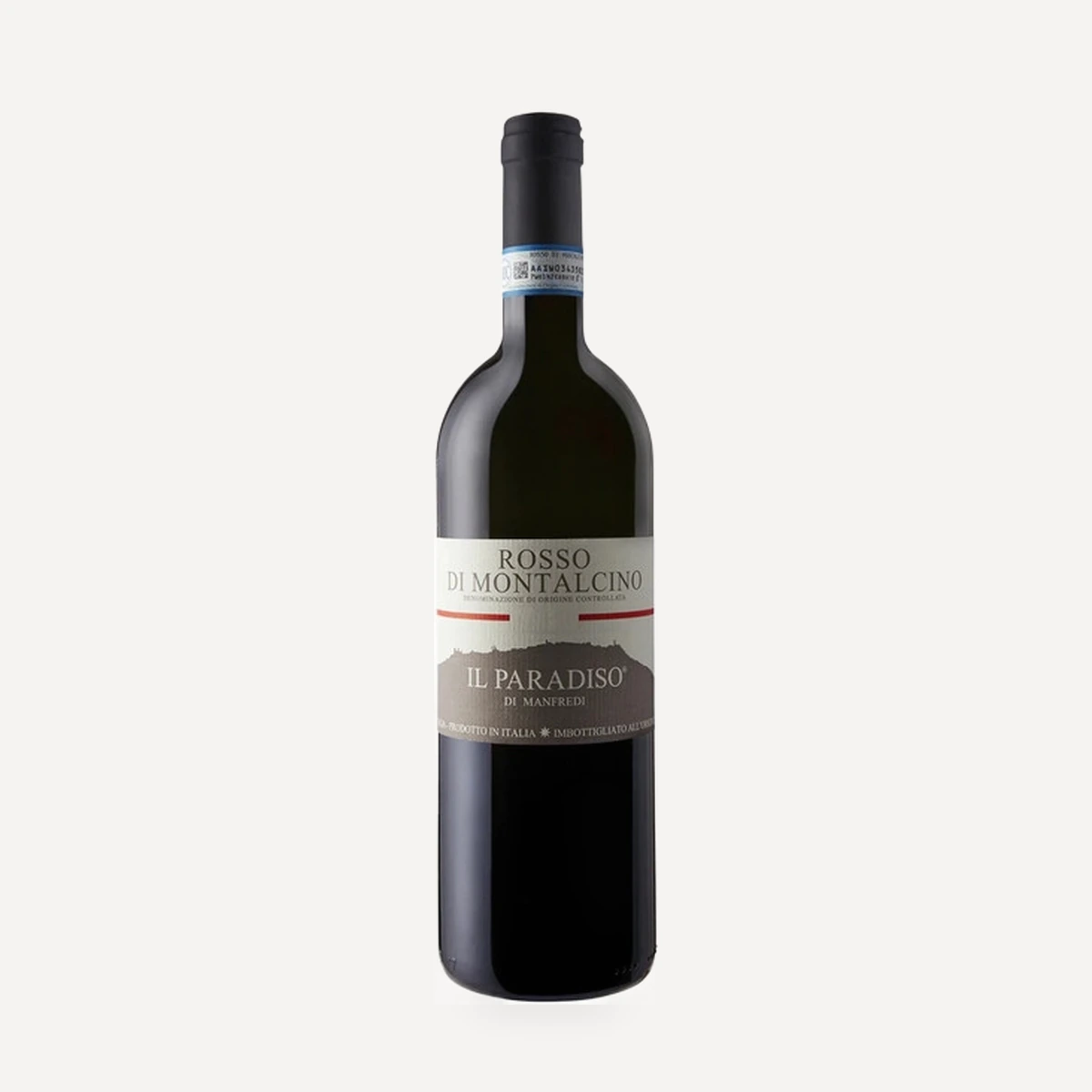
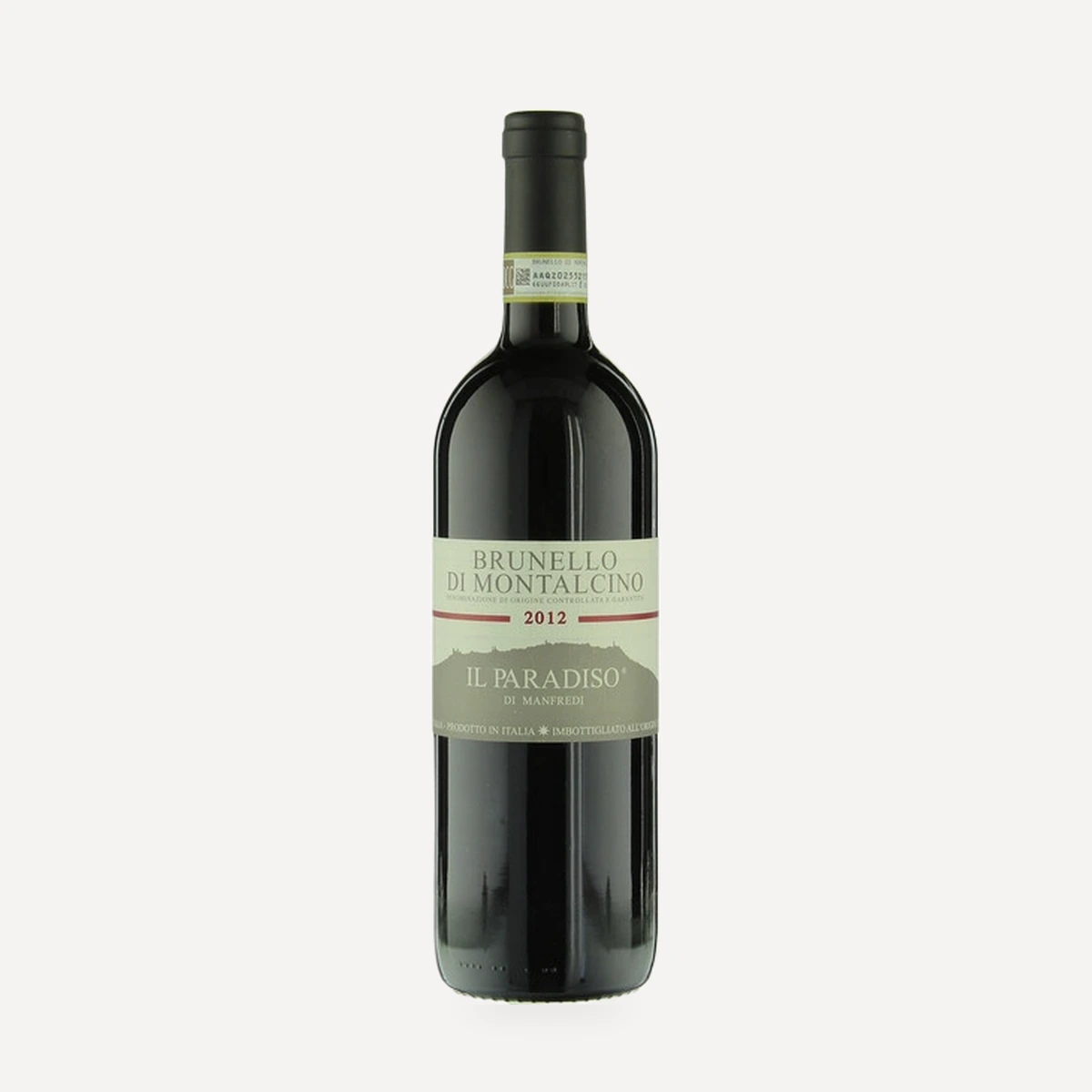
In the mid-1980s, artist Christoph M. Mann was commissioned to create a distinctive identity for the estate. He developed wraparound labels differentiated by product-specific colour codes. Their landscape motif depicts the hills of Montalcino and continues onto the packaging.
Family continuity
The estate remains under family management. Florio Guerrini, the founders’ son-in-law, manages it together with Gioia and Silvia. Their work continues the family’s emphasis on tradition, authenticity, respect for the land and the characteristic viticulture of Montalcino.
Terroir
The estate lies on the hill of Montalcino in Toscana, within the commune of Montalcino in the province of Siena. Its vineyard occupies eight terraces at an average elevation of approximately 350 metres and faces north to north-east.
The soil contains minerals of marine origin dating to the Pliocene, interspersed with rock strata formed approximately 30 million years ago. Related Pliocene rock and sediment layers are visible inside the bottle-ageing cellar, where they were uncovered during construction excavations. These strata occupy almost one quarter of the cellar and help maintain its temperature and humidity.
The interaction of this soil, the site’s microclimate, its exposure and vineyard care shapes the balance and properties of the grapes. Vintage variation is retained rather than suppressed, allowing the land to present a different expression each year.
Vinificazione
Winter pruning
The annual cycle begins in January with the first dry pruning, timed to what the family regards as the appropriate lunar phase.
Shoot and crop management
A first green pruning takes place during the last ten days of April or the beginning of May, before fruit set. Superfluous buds, shoots and some small bunches are removed to balance the productive zone, improve ventilation and encourage successful fruit set.
Further green pruning is carried out repeatedly through the following months and at veraison. Decisions are adapted to the season’s weather and to experience transmitted within the family. Some bunches are removed so that each vine carries an appropriate crop capable of reaching the desired ripeness.
Pre-harvest and harvest selection
Several days before harvest, bunches that fall short of the required quality are cut; these grapes are used to make grape juice. Individual unsuitable berries are also removed in a process the family calls “schiccolatura.” Selection continues twice during harvest: first while the grapes are picked and again immediately before destemming and crushing.
Soil and crop protection
The vineyards receive no fertilizer. Green manure is made solely from spontaneous herbs growing on the estate. Treatments are based on copper salts, pure sulfur or wettable sulfur, used in quantities described as consistently well below those permitted in organic farming. Herbicides have never been used. The estate holds no farming certification.
Cellar organization
The cellar is divided into three areas dedicated respectively to vinification, barrel ageing and bottle maturation.
The ground-floor vinification room has stone walls and remains at approximately 15 °C throughout the year. It contains glass-lined concrete vats in different sizes, with a maximum capacity of 50 hl. A modern destemmer-crusher and pumps are installed, while pressing follows the estate’s traditional method in a hydraulic press fitted with a stainless-steel basket.
Grape reception and fermentation
Grapes are selected during picking and again before destemming and crushing. The must moves by gravity into traditional small- and medium-sized glass-lined concrete vessels. Fill levels vary with the conditions of the vintage.
Fermentation is spontaneous, slow, naturally prolonged and conducted at low temperature using only indigenous yeasts associated with the estate’s grapes and vineyard environment, including its fruit trees and spontaneous aromatic herbs. After the wine is drawn off, it clarifies gradually through natural settling.
Barrel ageing
At the appropriate stage, the wine is moved into the ageing cellar. This occupies the ground floor of an early nineteenth-century stone building whose stable conditions protect the wine from temperature fluctuations without air conditioning.
Ageing takes place in high-quality Slavonian oak casks of approximately 25–30 hl; the working description elsewhere gives a representative size of about 26 hl. The precise duration responds to the vintage and determines whether the wine is released as Rosso di Montalcino, Brunello di Montalcino or Brunello Riserva. The production account specifies more than 12 months in cask for Rosso, more than 36 months for Brunello and more than 48 months for Riserva. Brunello and Riserva subsequently receive more than 30–36 months of bottle maturation before release.
Bottling and maturation
Following recognition by the commission of the Consorzio del Brunello and the Camera di Commercio di Siena, the wine is bottled by gravity to avoid the mechanical stress of pumps. No technical adjustments are made. Clarification occurs naturally through settling, and the wines continue to evolve during extended bottle ageing.
Annual production is approximately 9,000 bottles across Rosso, Brunello and Riserva, all derived from pure Sangiovese grosso. The estate regards them as one underlying quality of wine whose designation changes according to time in cask. The finished wines are presented as suitable for vegetarians and vegans.
Filosofia
Il Paradiso di Manfredi defines its work through quality rather than quantity and through the preservation of the site’s typicity, natural character and the integrity of the wine. Its aim is to let the soil, Sangiovese grosso and indigenous yeast population remain legible in the finished wine rather than standardizing each vintage.
The family treats annual differences as an expression of the land’s individuality. Vineyard decisions respond to seasonal conditions, while winemaking relies on spontaneous fermentation, natural settling, gravity movements and long maturation. Tradition is retained in concrete fermentation vessels, hydraulic basket pressing and large Slavonian oak casks, alongside modern destemming, crushing and pumping equipment where appropriate.
Family continuity, authenticity and respect for the territory are central to the estate’s self-understanding. The current generation frames its responsibility as preserving the history, traditions and viticultural identity of Montalcino while maintaining the environmental care practised in both vineyard and cellar.
Vini
Rosso di Montalcino
Brunello di Montalcino