Storia
From the late eighteenth century
The Cini family has lived at Vocabolo Petroso since the end of the eighteenth century. Earlier generations combined several rural occupations: some family members were millers, operating a watermill whose surviving building is known as Molinella, while others worked as blacksmiths. The farm economy already encompassed vines, olive trees, cereals and vegetables, together with livestock raised both for sale and household use.
Bonaventura and the family holdings
Bonaventura Cini farmed the poderi of Petroso, Vergnola and Casalino. He made wine and olive oil and sold them in bulk, in demijohns, to shops in neighbouring villages.
The 1970s: Aristide and Adriana
During the 1970s, Bonaventura transferred responsibility to his son Aristide Cini. Aristide enlarged the agricultural area and began mechanising the farm. This process continued and expanded after Adriana Fratini joined him.
Aristide and Adriana subsequently added the Borgonovo holding. During the 1990s and 2000s, land there that had previously been used for arable crops was progressively converted to vineyards and olive groves. Their children, Riccardo and Clelia, inherited both the family’s attachment to farming and its respect for rural work.
2003–2005: creation of La Casa dei Cini
La Casa dei Cini was created in 2003 by Clelia, Riccardo and Aristide. A more detailed account dates its establishment as an agricultural enterprise to 2005, driven by Clelia and Riccardo. Both studied at the University of Perugia’s Faculty of Agriculture: Clelia graduated in Agricultural and Environmental Sciences, while Riccardo graduated in Viticulture and Oenology.
The family developed La Casa dei Cini as a multifunctional organic farm. Wine and olive oil remained its principal products, while production expanded to include aglione, grape juice and jelly, honey, lavender, raspberries, walnuts and other crops. The business also became an educational farm.
Vineyard renewal and continuity
The vineyards were modernised through new plantings without abandoning the family’s traditional approach. Riccardo designed most of the newer vineyards using the practice described as taglio in vigna: each vineyard is planted with the varieties and percentages needed for its corresponding wine. The varieties can therefore be harvested and fermented together, continuing the method formerly used in Bonaventura’s vineyards. Techniques were refined during the first years of production to make fuller use of the land’s qualitative potential.
Individual plantings record several stages of this renewal. Borgonovo was planted in 2003, Filara in 2005, Quattroà in 2008 and Malandrino in 2009. The older Morselli vineyard, planted in 1980, was converted to Guyot in 2017. The farm’s first rosé was made from its Sangiovese in 2019.
2015: illustrated labels
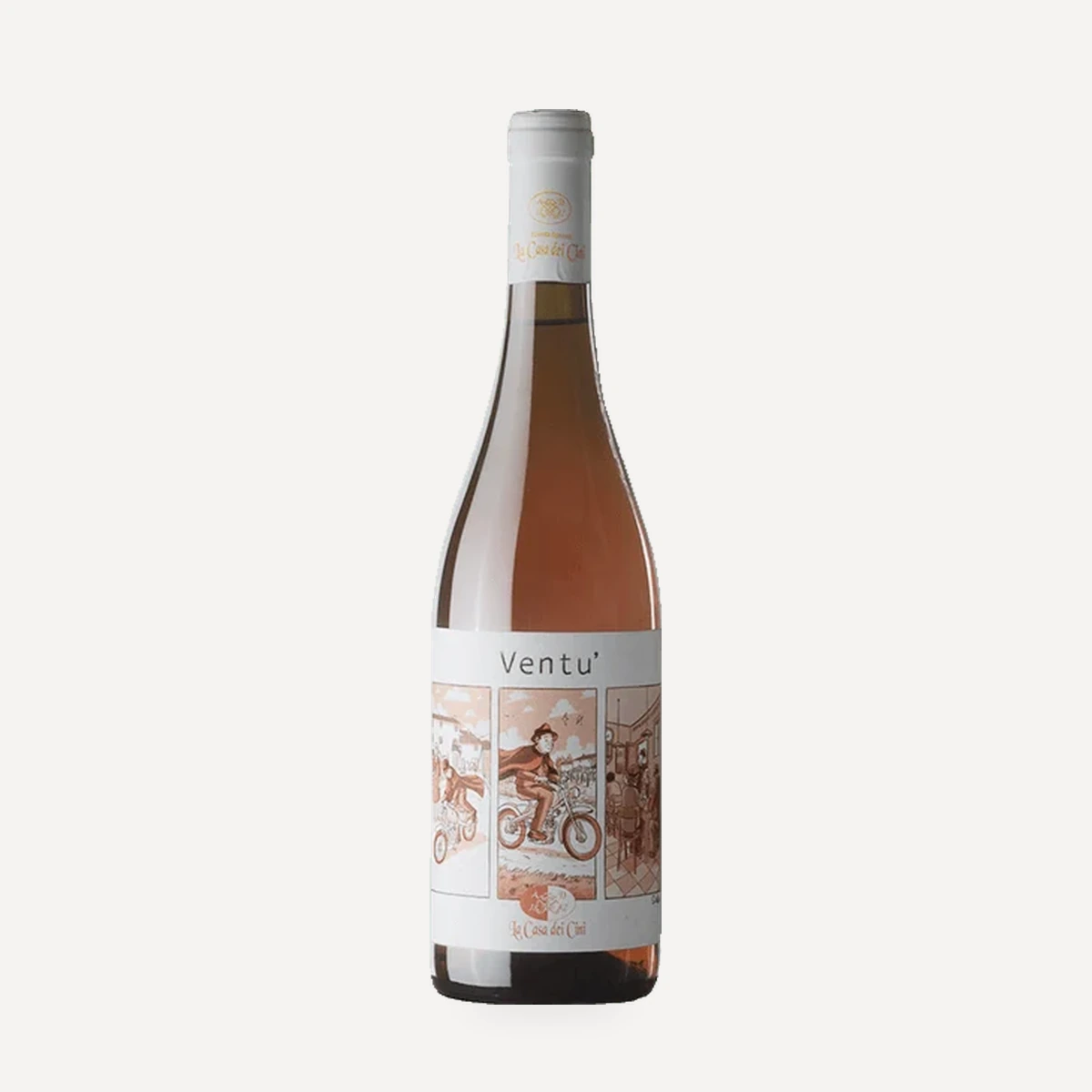
In 2015, the farm began collaborating with the Umbrian comic artist Sualzo, the professional name of Antonio Vincenti. He created an individual illustration for each wine label.
2017 onward: recovery of Dolciame
A new project began in 2017 to establish 1.5 ha of Dolciame, a white grape native to Umbria that had nearly disappeared after being omitted from the regional vine register. The work began with five mother vines and assistance from the University of Perugia’s Faculty of Agriculture. Each year, canes taken from those mother plants are grafted directly onto rootstocks in the field with the help of Gaetano Calciaia, a master grafter from Gradoli.
Dolciame is related to Trebbiano Toscano and has compact, cylindrical bunches and very thick skins. Its name probably arose because it was traditionally picked with Trebbiano but ripened earlier and tasted notably sweet.
Terroir
La Casa dei Cini lies at Vocabolo Petroso near Pietrafitta, in the gently rolling hills of Valnestore in Umbria. Woodland borders the farm.
The documented vineyards occupy hilltops and slopes between 320 and 340 metres above sea level. Filara and Quattroà lie astride hill crests at Borgonovo. Malandrino occupies a north-east-facing slope, while Borgonovo is on a west-facing slope. Rows are predominantly oriented east–west, although parts of Borgonovo also run north–south.
Soils vary by site. Morselli is clay, Filara, Quattroà and Borgonovo are loamy-sandy, and Malandrino combines clay, loam and sand. Planting layouts of 2.7 × 1 m or 3 × 1 m are designed to support vegetative development while preventing one row from shading another.
Vinificazione
The entire farm is managed under organic-agriculture rules and is certified by ICEA under operator code LC68. Organic farming is applied across the named vineyards, and no purchased grapes are used in the five documented wine lots.
Permanent grass covers the vineyard rows. Soil fertility is supported with leguminous green manure and animal manure. Copper and sulphur provide crop protection; in a normal season, approximately five or six treatments are made, with the exact number adjusted to seasonal conditions.
Guyot is the principal training system. Vineyard density is approximately 3,300–3,700 vines/ha, depending on the site. Planting layouts of 2.7 × 1 m and 3 × 1 m are intended to give the vines sufficient vegetative development while limiting row shading. Manual summer leaf removal is used at Malandrino and Borgonovo to improve grape composition, while Quattroà may receive post-flowering leaf removal when the vintage and the vines’ vegetative condition call for it.
Most newer vineyards follow Riccardo Cini’s taglio in vigna design. Each vineyard contains its intended varieties in the percentages required for the corresponding blend, allowing the grapes to be harvested and fermented together in continuity with the practice used in Bonaventura’s vineyards.
Harvesting is manual into crates. The documented sequence generally runs from the final week of August at Morselli, through early September at Filara and Malandrino, late September at Quattroà, and early October at Borgonovo. Pomace is returned to the fields after vinification.
The Dolciame recovery programme uses annual field grafting from five surviving mother vines. It combines direct grafting onto rootstocks with collaboration between the family, the University of Perugia’s Faculty of Agriculture and master grafter Gaetano Calciaia.
Grapes are destemmed after manual harvesting. A horizontal disc press is used, including particularly gentle pressing for short-maceration red grapes. Fermentation vessels include stainless-steel tanks and a truncated-conical wooden vat.
White and rosé lots are vinified without skin maceration and fermented in steel. The rosé destemming process leaves whole berries by working without crushing rollers. Short-maceration reds spend approximately four to six days on their skins without temperature control before pressing; fermentation then finishes off the skins in stainless steel. The longest-macerated red remains on its skins for approximately 20–25 days without temperature control, continuing until the sugars are exhausted.
Selected yeasts are not used. Red fermentations employ a prepared fermentation starter. No fining, filtration or dedicated stabilisation is used, and the documented wines receive no corrections, concentrated or rectified must, concentration or saignée treatment.
Metabisulphite additions vary by lot. Documented additions include 2–3 g/q at destemming for reds, approximately 2 g/hl after white fermentation, 1 g/hl at rackings and, for wines bottled young, 2 g/hl at bottling. Red wines typically undergo two rackings.
Ageing ranges from seven or eight months in stainless steel for white and rosé wines to split maturation for one red, with half the volume in steel and half in wood for seven months followed normally by at least six months in bottle. The longest-aged red matures for about two years in a 23 hl wooden cask and at least six months in bottle before release. Grape-to-wine yield is approximately 60–65%. Pomace is returned to the fields, and it is not used for estate grappa or other distillates.
Filosofia
La Casa dei Cini defines itself as a small, multifunctional family farm centred on organic agriculture, crop diversification and protection of the soil. Its decision to farm organically reflects a commitment to preserving the land, respecting the wider environment and safeguarding it for future generations, even when adverse weather makes particular vintages more difficult.
The vineyard approach combines renewal with continuity. New plantings and modernised systems coexist with taglio in vigna, which preserves the family practice of planting, picking and fermenting complementary varieties together. The aim is to use the qualitative potential of each site while retaining a direct connection to the way Bonaventura’s vineyards were worked.
The family’s diversification into olive oil, aglione, beekeeping, grape juice and jelly, lavender, raspberries, walnuts and educational activities forms part of the same multifunctional model. The reintroduction of bees was motivated primarily by the desire to support an ecologically important insect rather than by commercial return. The Dolciame project similarly expresses a commitment to preserving local agricultural heritage through the recovery of an almost-lost Umbrian grape.
Vini
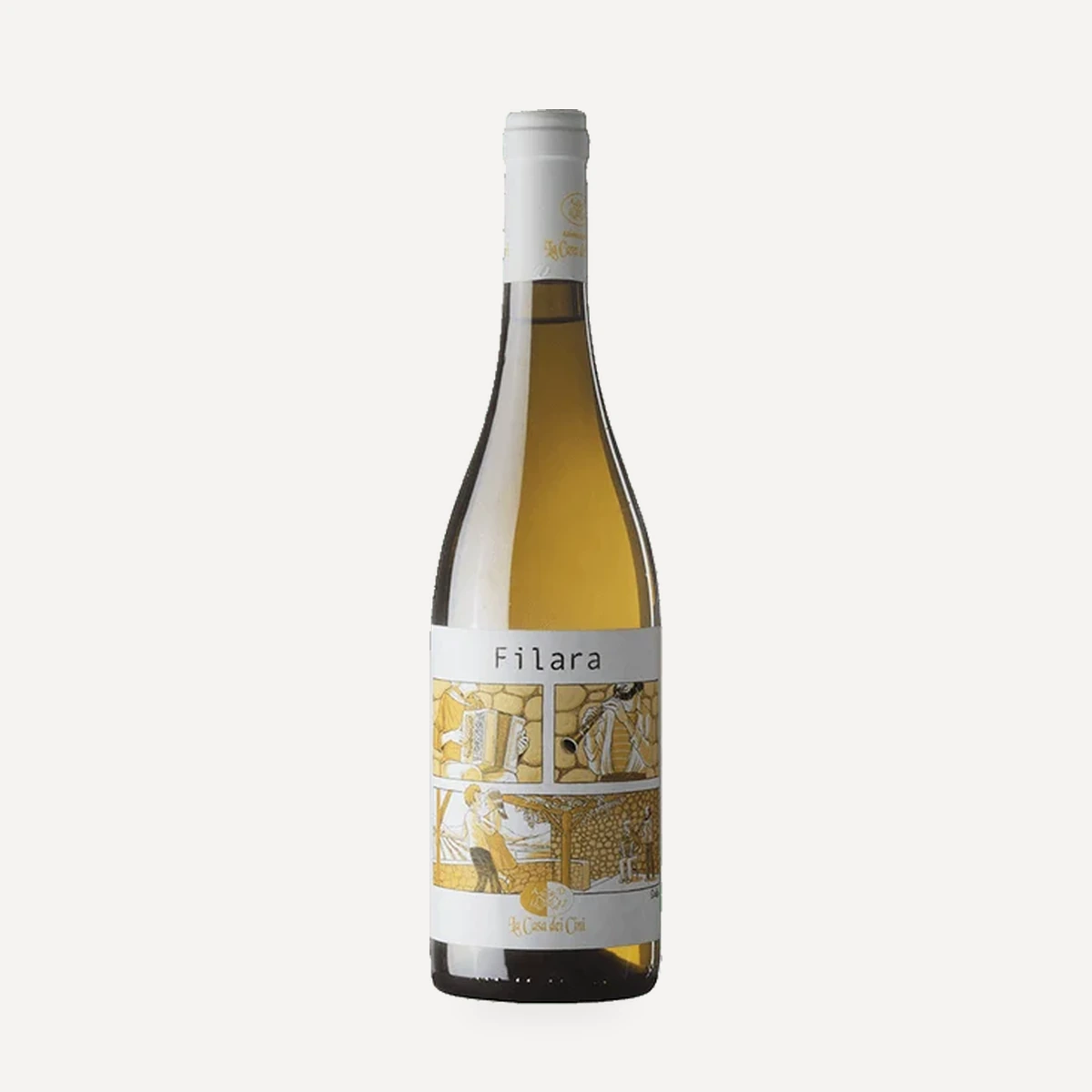
Filara
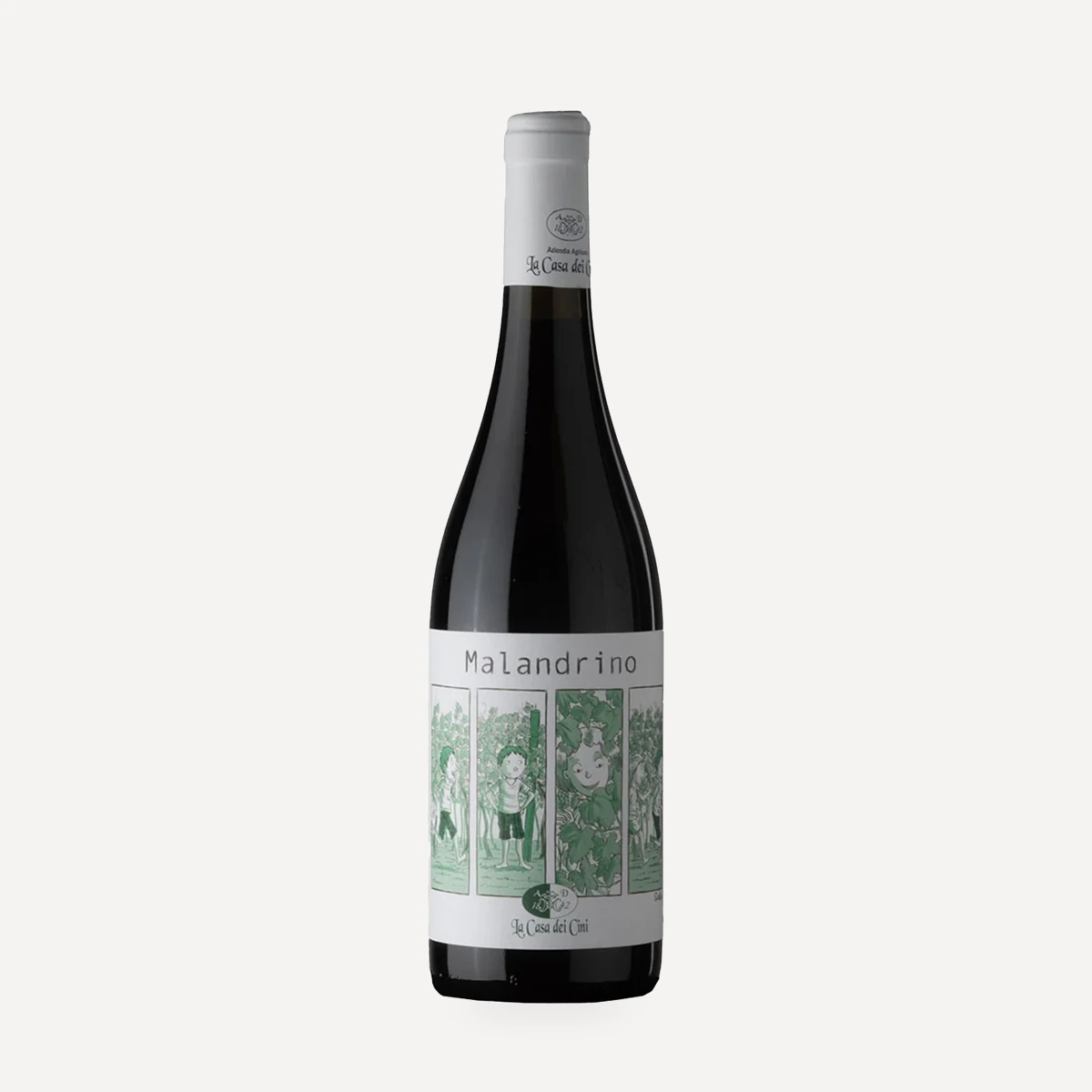
Malandrino
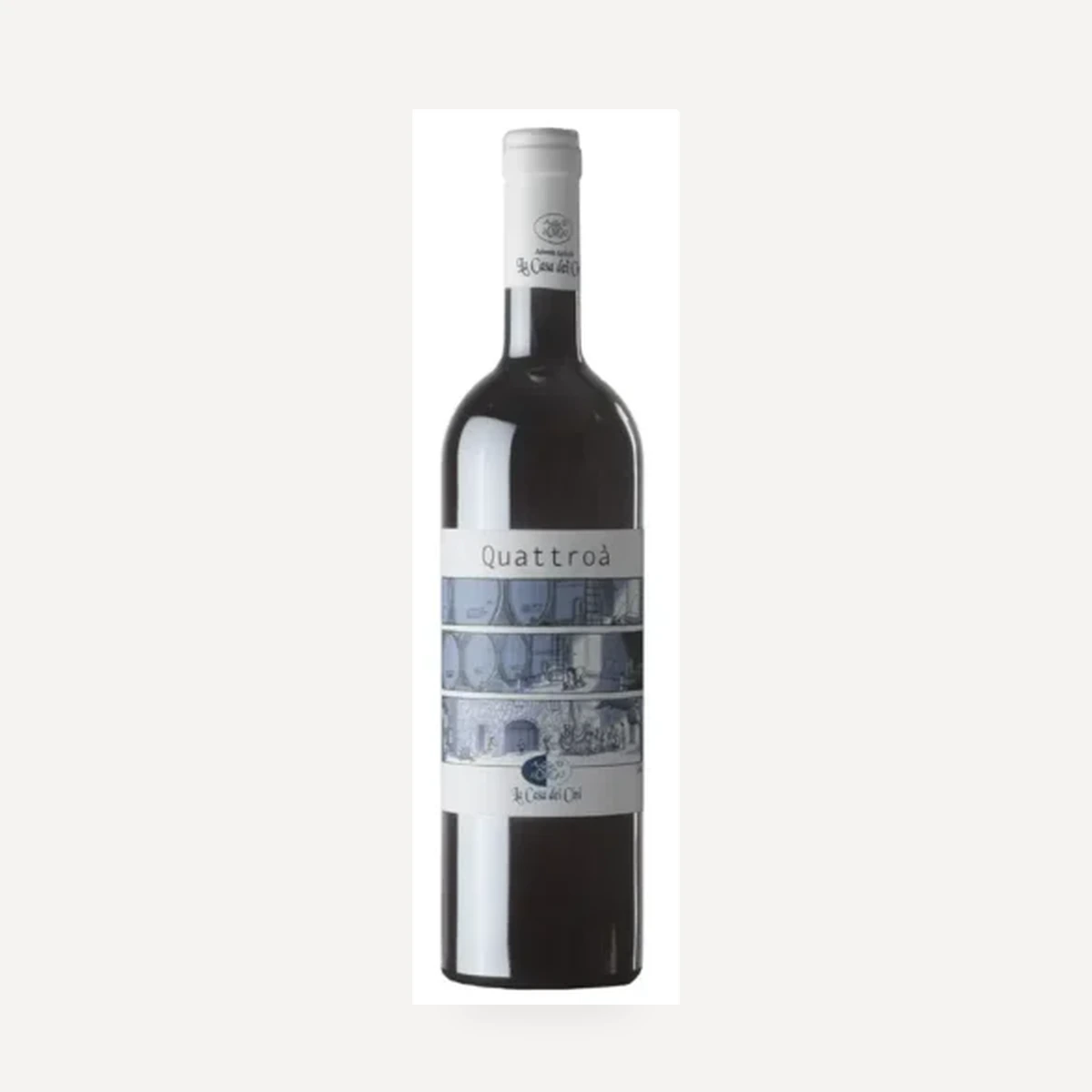
Quattroà