Storia
Family origins and the enological-machinery business
The Galandrino family’s relationship with vines predates La Gironda. Although the family never completely stopped cultivating vineyards, it left winemaking to pursue a strong interest in mechanics. For more than 30 years, its industrial activity centred on designing and manufacturing machinery for the wine sector.
2000: a return to wine
In 2000, Agostino Galandrino and his family decided to leave the industrial activity behind and return full-time to their original occupation: cultivating grapes and making wine. They established the new estate on the Bricco di Nizza, specifically in the Bricco Cremosina area of Nizza Monferrato, only a few kilometres from the family’s earlier place of origin.
La Gironda began producing wine from estate-grown fruit. Its vineyards were divided between several parcels in Nizza Monferrato and a site at Calamandrana Alta. Existing old vineyards—some already more than 50 years old by the early 2010s—were progressively joined by new plantings.
Development of the estate
An old farmhouse became the centre of the property. Its restoration preserved the environment and the historic architecture of Monferrato. The cellar was finished with exposed brick and included dedicated rooms for maturation in barrels, while a tasting room and a panoramic terrace provided spaces for receiving visitors.
Management developed as a family enterprise. Agostino worked alongside his daughter Susanna Galandrino and her husband, Alberto Adamo. Susanna and Alberto became the principal day-to-day figures associated with the estate, with Susanna also taking an active public role in promoting Nizza Monferrato and the development of the Nizza subzone.
Environmental programme
La Gironda obtained ISO 14001 environmental certification in 2004. Its environmental programme encompassed vineyard and cellar operations, including reduced water consumption, mechanical rather than chemical weed control, avoidance of anti-mould and anti-botrytis products, exceptional rather than routine use of systemic treatments, and the use of environmentally compatible products. The estate also received EMAS certification and later an Ecofriendly award for its management of environmental resources.
Expansion of the range
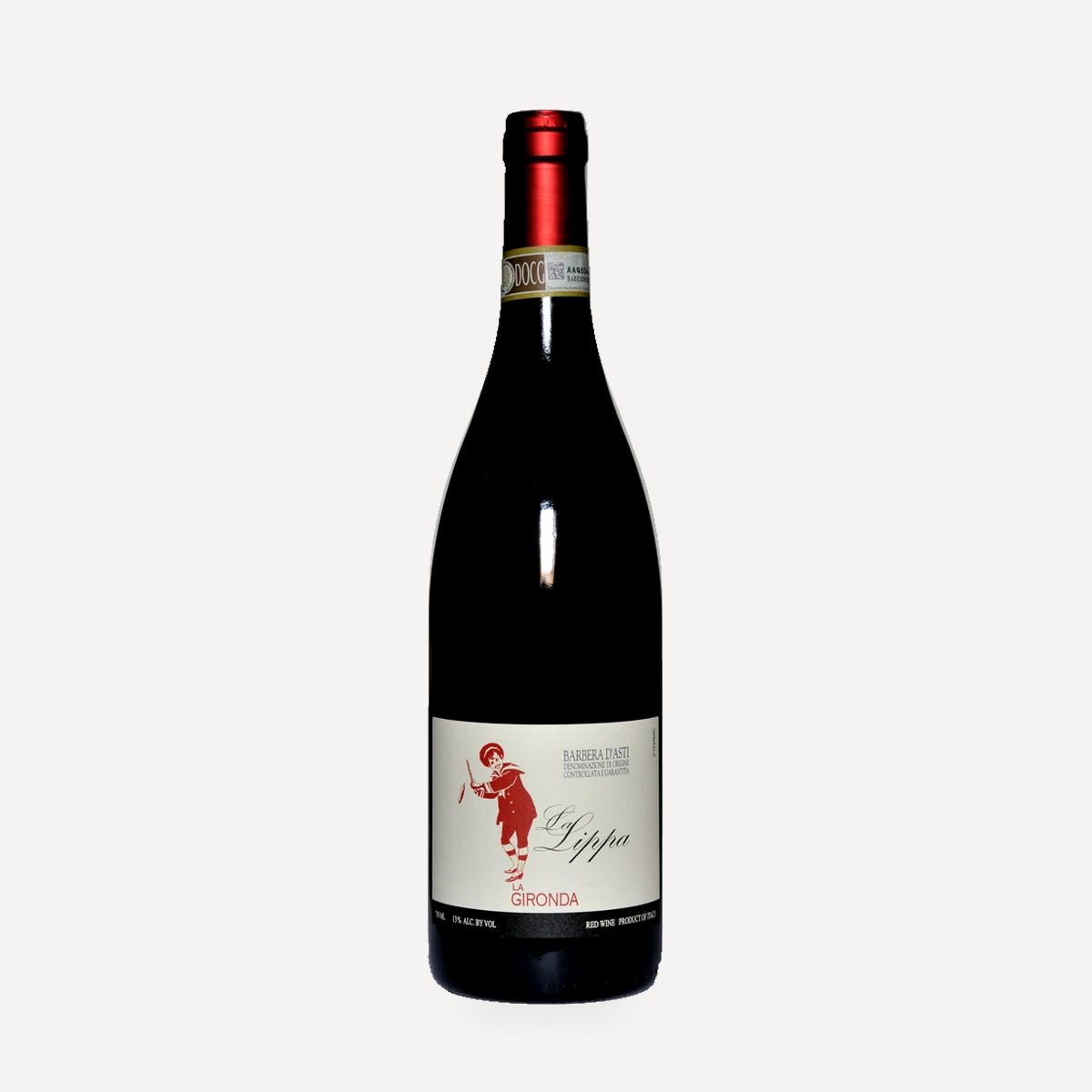
Barbera remained the central variety and was interpreted through several labels, including Le Nicchie, La Gena and La Lippa. The range expanded to Moscato d’Asti, Brachetto d’Acqui, the white L’Aquilone and the red Chiesavecchia, which combined local and international varieties. Soul, a varietal Nebbiolo Monferrato Rosso, subsequently joined the portfolio. Throughout this development, the wines continued to be made exclusively from estate-grown grapes.
Terroir
La Gironda stands on the hills above Nizza Monferrato, on the Bricco di Nizza in the Bricco Cremosina area. The estate lies a short distance from the town within a vineyard-covered natural amphitheatre.
The vineyards are divided among several parcels in Nizza Monferrato and one site at Calamandrana. Both localities have very pale soils rich in limestone and grey marl. The Calamandrana vineyard is distinguished by particularly steep slopes, favourable exposure and effective natural ventilation.
Bricco Cremosina is the historic nucleus of the estate’s Barbera vineyards. Some vines there were already more than 50 years old by the early 2010s. The surrounding slopes and the Calamandrana site provide distinct vineyard settings while remaining within the estate’s broader Monferrato identity.
Vinificazione
Viticulture follows an environmentally managed approach supported by ISO 14001 certification, held since 2004, and EMAS certification.
Chemical herbicides are not used; weeds are controlled mechanically. Anti-mould and anti-botrytis products are avoided, while systemic treatments are reserved for exceptional circumstances. Other treatments are kept to a minimum and environmentally compatible products are favoured. Particular attention is paid to canopy management, especially in relation to exposure and vineyard health.
Old vineyards are maintained alongside newer plantings. All wines are made from estate-grown grapes cultivated in Nizza Monferrato and Calamandrana. Environmental management extends beyond the vines to include reduced water consumption and controls within the cellar.
La Gironda’s winery occupies a restored historic farmhouse on the Bricco di Nizza. The renovation retained the traditional architecture of Monferrato and incorporated an exposed-brick cellar with dedicated rooms for maturation in barrels.
The estate processes only grapes from its own vineyards. Winemaking is overseen by enologists Giuliano Noè and Beppe Rattazzo and forms part of the same ISO 14001 and EMAS environmental-management framework applied in the vineyards, including attention to resource use and water consumption.
Filosofia
Wines rooted in place
“Vini del territorio”—wines of the territory—encapsulates La Gironda’s stated direction. Barbera occupies the central position, interpreted in several forms, while other local varieties and a measured contribution from international grapes broaden the range.
The family’s return to wine in 2000 was framed as a return to its origins rather than the creation of an unrelated new business. The vineyards, the Bricco di Nizza farmhouse and the historic architecture of Monferrato are treated as parts of the same project.
Environmental responsibility
Environmental management is integrated into both vineyard and cellar work. The practical expression of this approach includes mechanical weed control, very limited treatments, avoidance of anti-botrytis and anti-mould products, exceptional rather than routine systemic treatments, environmentally compatible inputs and reduced water consumption. ISO 14001 and EMAS provide the formal framework for these commitments.
Vini