Storia
The historic hamlet
Le Filigare occupies a hill in the Chianti Classico countryside between Florence and Siena. The estate takes its name from this hill and encompasses two historic settlements: Le Filigare in Barberino Tavarnelle and Le Macine in Castellina in Chianti. The more recent estate history dates the historic village to the 17th century and records its earlier name as Fiaccole di Sopra. That name recalls the torches once lit around the village during celebrations for its patron saint.
1716: within the historic Chianti boundaries
In 1716, the Grand Duke of Tuscany defined the territory recognized for the production of genuine Chianti wine. Le Filigare lay within those historic boundaries, establishing its geographical connection to the delimited Chianti wine area long before the modern estate took shape.
1876: Pope Pius IX at Le Filigare
Pope Pius IX visited Le Filigare in 1876 after an invitation from a member of Tuscany’s ruling house. The visit included the local wines and cuisine and became one of the estate’s enduring historical episodes.
The Cassetti family background
The modern family story begins in Florence. In 1926, Renzo Cassetti established a goldsmith’s workshop after spending his youth among the artisan workshops around Ponte Vecchio. The business developed across four generations while retaining its connection to Florentine craftsmanship.
Maria Grazia Cassetti became an important figure in that development. From the 1950s, she introduced unconventional combinations of silver, crystal and porcelain, later travelled in search of rare gemstones and created pieces for an international clientele. The family presents the same values of craftsmanship, precision, continuity and attention to materials as a link between its Florentine work and Le Filigare.
The family arrives in Chianti
The Cassetti family acquired Le Filigare as a Chianti farm in the 1980s. Carlo Burchi, husband of Maria Grazia Cassetti, initially took responsibility for bottling the estate’s wine and olive oil. He devoted approximately 30 years to recovering and restoring the property. Their son Alessandro Cassetti Burchi subsequently joined the management and helped define the estate’s later direction.
Restoration, winery development and new plantings
The principal building and neighboring farmhouses were restored. A modern winery was constructed and equipped with contemporary machinery and barriques for maturation. The vineyard holdings were expanded, and Cabernet Sauvignon, Merlot and Syrah were introduced alongside the traditional Sangiovese. Carlo Burchi played a central role in bringing these international varieties to the estate.
The distribution network was reorganized around a stronger emphasis on quality. Other farmhouses were converted for agritourism, and a panoramic swimming pool was created. These developments gradually transformed the original farm into Le Filigare Wine & Country Relais, integrating wine, olive oil, accommodation, events and rural hospitality.
Organic conversion and contemporary management
In 2016, Le Filigare began its move toward organic production in the vineyards and olive groves. Environmental care, sustainability, naturalness and the quality of the raw material became explicit priorities. The current range is presented as entirely organic.
Alessandro Cassetti Burchi now leads the estate with his wife Deborah and their son Lorenzo. Fourth-generation family involvement continues through Lorenzo, while Pietro and Maria Vittoria also represent this generation in the wider family story. Lorenzo and Maria Vittoria have given their names to estate wines, as has Pietro. Alberto Antonini collaborates as oenologist, Andrea Biondi supervises the cellar, and Alessandro Arretini and Gianluca Grassi guide the vineyards as agronomists.
2026: a family centenary
In 2026, the Cassetti family marked the centenary of the Florentine business founded in 1926. A commemorative book brought together the family’s work, people, places and memories, including Le Filigare as a major chapter in its Tuscan history. By this point, the restored estate had developed into a Wine & Country Relais offering accommodation, tastings, celebrations and weddings alongside organic wine and olive-oil production.
Terroir
Le Filigare lies in the Chianti Classico hills between San Donato in Poggio and Castellina in Chianti, midway between Florence and Siena. The 60 ha property encompasses the hamlets of Le Filigare in Barberino Tavarnelle and Le Macine in Castellina in Chianti. Its vineyards stand between 450 and 550 metres above sea level and receive favorable sunlight.
The higher slopes contain abundant stony alberese, while the lower ground is characterized by clay-rich, calcareous galestro. These soils provide useful water retention. Differences in soil and microclimate occur across the estate rather than forming a single uniform growing environment.
A dense belt of woodland shelters the vineyards and olive groves from cold northern winds. Conditions are dry but moderated by breezes arriving from the Tyrrhenian Sea; maritime pine trees are presented as a visible sign of this influence. Marked differences between daytime and nighttime temperatures support ripening and contribute aromatic complexity to the grapes.
Vinificazione
Le Filigare began its organic-production path in 2016, extending the approach across both vineyards and olive groves. All current wines are presented as organic, and the estate frames this as a practical commitment to protecting the land, improving sustainability and preserving the identity of its raw materials.
The 13 ha of vines are managed under agronomists Alessandro Arretini and Gianluca Grassi. Sangiovese occupies the central place in the vineyard, supported by Canaiolo and Colorino and by the international varieties Cabernet Sauvignon, Merlot and Syrah. Grape selection continues at the winery through a linear destemmer and roller sorting table.
Le Filigare combines a restored historic property with a modern winery constructed during the Cassetti Burchi family’s redevelopment of the estate. The facility was equipped with contemporary machinery and barriques, while maturation across the range is described as taking place predominantly in large casks.
Andrea Biondi supervises cellar operations. Incoming grapes are selected through a linear destemmer and a roller sorting table. Alcoholic fermentation takes place in temperature-controlled stainless-steel tanks, an approach intended to retain the fruit’s freshness and aromatic intensity. Malolactic fermentation follows in small, temperature-controlled concrete vats.
Maturation is conducted principally in large casks so that Sangiovese can retain its integrity. Barriques are also part of the cellar’s aging equipment. Alberto Antonini personally oversees the selection of wood each year, seeking a balance between maturation and the expression of the estate’s fruit and terroir.
The estate also produces a traditional-method rosé sparkling wine. Its disclosed process includes temperature-controlled stainless-steel maturation, a second fermentation in bottle, 36 months on the lees before disgorgement, and a further six months in bottle.
Filosofia
Le Filigare presents its work as a meeting of time, care, respect for raw materials and a close relationship with the land. Its stated objective is to protect the identity of the place while balancing established practices with contemporary sensitivity.
The family connects winegrowing with the values inherited from Florentine craftsmanship: detailed manual attention, precision, respect for tradition, considered innovation and the ambition to make products capable of enduring. Quality is associated with measured decisions rather than volume, and the estate describes its labels as limited, carefully made expressions of the property.
Organic farming is treated as a central part of the estate’s identity rather than simply a product category. The family links it to daily care of the soil, environmental responsibility, naturalness and the quality of both wine and olive oil. In the cellar, the emphasis on controlled fermentation, careful selection and restrained wood use is intended to preserve fruit character and communicate differences arising from altitude, soils and microclimate.
Vini
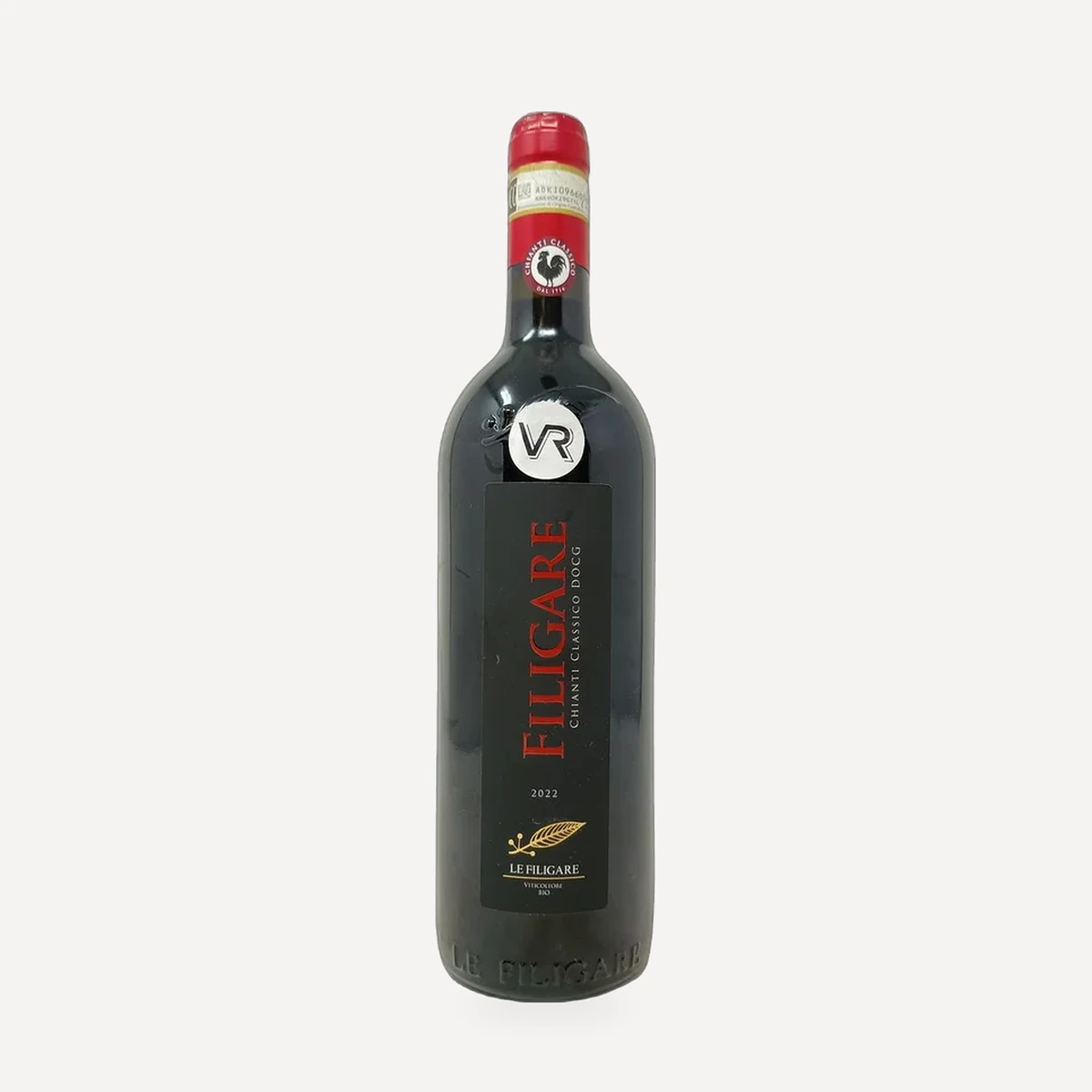
Chianti Classico DOCG
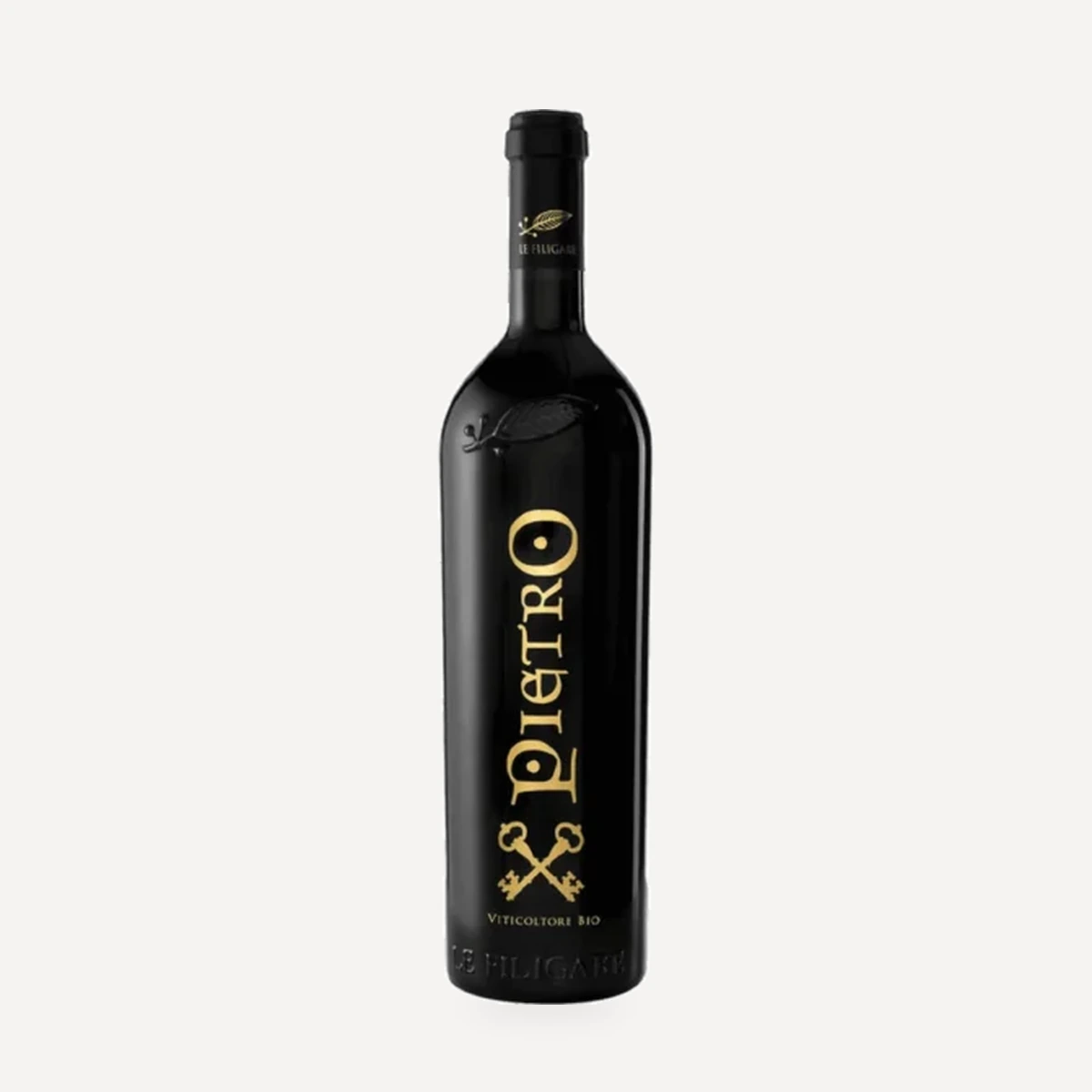
Pietro – Super Tuscan IGT
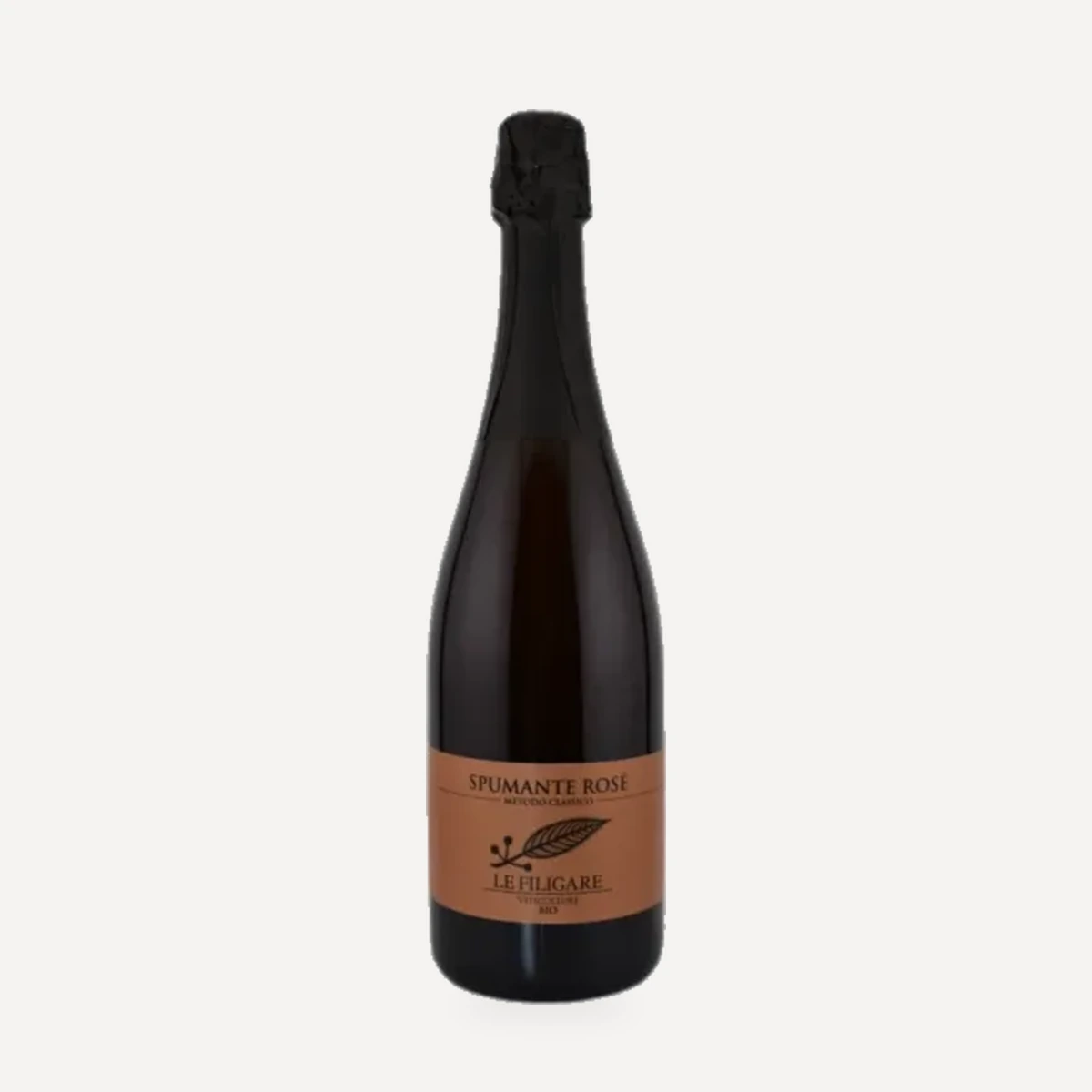
Spumante Rosè Metodo Classico Le Filigare