Storia
1993: the partnership begins
Le Strie’s story began in Sondrio in 1993, when Stefano Vincentini and Paolo Culatti met through their work in agriculture. Both held degrees in agricultural science. Paolo worked as a field technician, while Stefano held an administrative position in the agricultural sector. Their wives, Luciana Apis and Marisa Scatto, worked in other fields. None of the four came from Valtellina: Paolo and Marisa were from Venice, Luciana from the Marche, and Stefano from Rome.
1995: first vineyards
Stefano and Paolo began cultivating vines in 1995. Initially, their activity centred on growing grapes rather than making and commercialising their own wine.
2002: estate vinification
In 2002, the partners decided to vinify their grapes themselves instead of continuing to sell them. Their objective was to make personal, artisanal wines rooted in Valtellina and capable of expressing the local character of Nebbiolo.
The vineyards were progressively converted from the traditional archetto valtellinese system to single-cane Guyot. Old vineyards were retained wherever practical to conserve their genetic diversity, with missing vines replaced individually. Parcels were uprooted and replanted only where preserving the existing planting was no longer worthwhile. Obsolete supports were replaced with concrete posts and double wires, enlarging the leaf wall and improving the conditions for grape ripening.
2003: establishment of Le Strie
Società Agricola Le Strie was established in 2003 by Stefano, Paolo, Luciana and Marisa. The operation developed as a very small, family-run enterprise in which the partners directly handled vineyard cultivation, vinification, promotion and sales.
Le Strie subsequently came to cultivate a little over 2 ha directly and to produce approximately 10,000 bottles in an average year. Most grapes are estate-grown, supplemented by a small purchased quantity.
Recent development
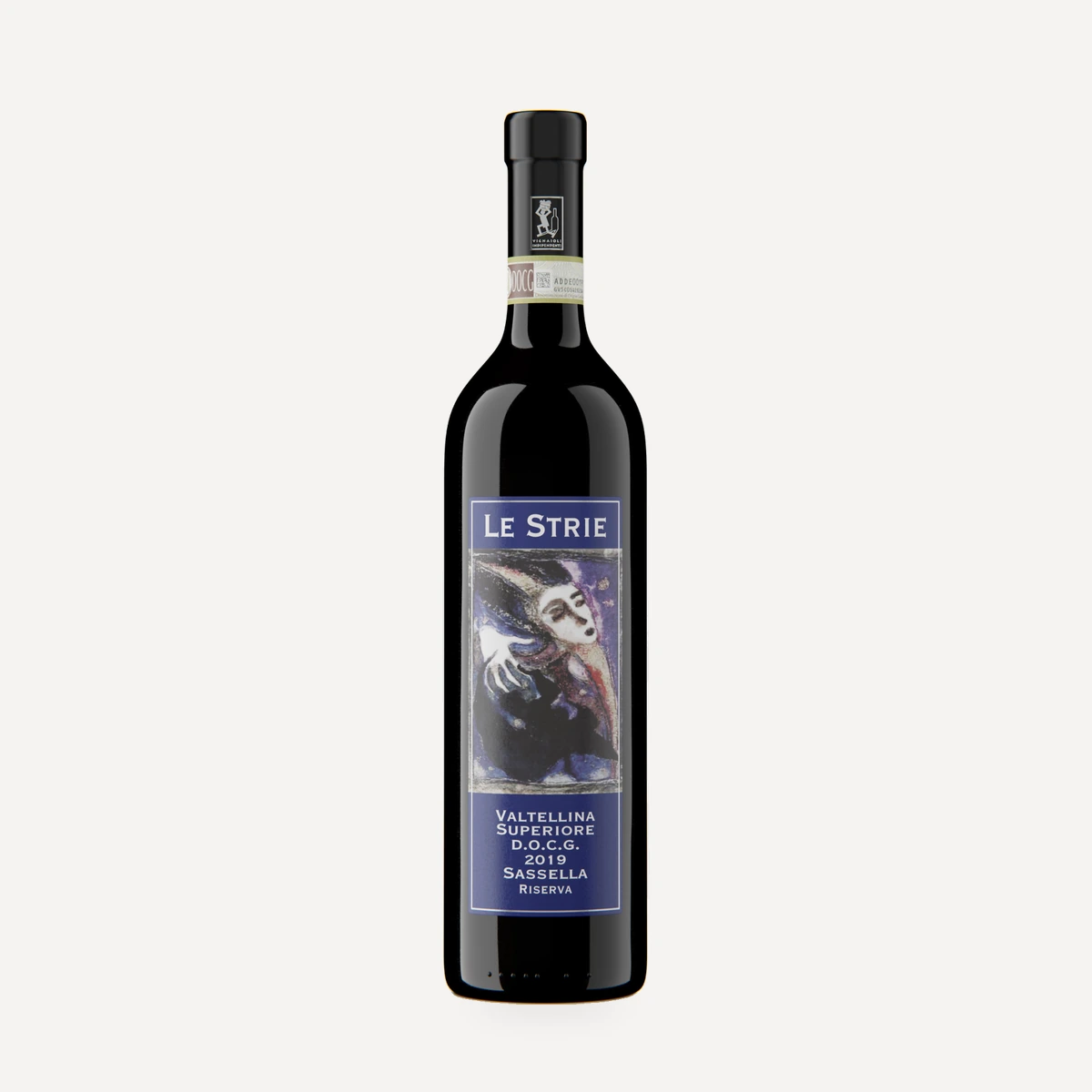
The range expanded to five principal expressions: Valtellina Superiore DOCG, Sforzato di Valtellina DOCG, Rosso di Valtellina DOC, Alpi Retiche Nebbiolo IGT and Valtellina Superiore DOCG Sassella Riserva. The Sassella Riserva is based on the single vineyard called Confeggi.
Under intervention SRD04 of Lombardy’s 2023–2027 rural-development programme, Le Strie restored dry-stone walls on several estate properties. The work improved vineyard safety and reinstated the walls’ original contribution to the terraced landscape. Public support totalled €50,000: €20,350 in European Union cofinancing, €20,755 from national funds and €8,895 from regional funds.
Terroir
Le Strie works in Valtellina, in Lombardy, northeast of Milan and in the heart of the Alps. The valley lies between Lake Como to the west, the Swiss border and the Rhaetian Alps to the north, and the Orobic Alps to the south.
The vineyards occupy the terraced Rhaetian side of the valley and face south. Across the area they range from approximately 300 to 650 metres above sea level; estate holdings described for Sassella and Valgella lie principally between 400 and 650 metres, while Confeggi occupies a lower band between 310 and 380 metres.
Centuries-old dry-stone walls support the terraces. Their construction involved carrying soil up from the valley floor. The resulting soils are sandy, shallow and acidic, with a high proportion of stones and coarse mineral material.
Nebbiolo, locally known as Chiavennasca, is the dominant variety. Le Strie associates the combination of the valley’s microclimate, south-facing terraces and sandy, stony soils with aromatic finesse, structure and long ageing capacity. Valtellina is also presented as a probable place of origin for Nebbiolo and, together with Piedmont and Valle d’Aosta, as one of the Italian areas where the variety has a substantial presence.
Vinificazione
Le Strie regards vineyard work as the decisive stage in wine quality. Its objective is to bring sound, fully ripe grapes to the cellar and then handle them as little as possible.
The vineyards were progressively converted from the traditional archetto valtellinese to Guyot to reduce yields. They are trained to a single fruiting cane, with 8–12 buds depending on the planting. Old wooden supports and wires were replaced—elsewhere described more specifically as concrete posts and double wires—to enlarge the leaf wall and improve ripening.
Most older vineyards were preserved rather than replanted so that their genetic variability would not be lost. Missing vines were replaced individually. Complete uprooting and replanting were reserved for parcels where maintaining the old planting was no longer practical. Confeggi exemplifies this mixed-age approach, combining young replacement vines with plants 70–80 years old.
All work is performed manually because the dry-stone terraces largely preclude mechanisation. The soil carries spontaneous vegetation, managed by mowing and brush cutting rather than herbicides. Plant protection follows integrated-pest-management principles: low-impact products are applied at minimum doses and only when required by weather, the vine’s phenological stage, or observed disease and insect pressure.
Harvesting is manual, with an exacting selection into crates. Small cranes are used on steep terraces to move fruit without crushing it; at Confeggi, the 2019 crop was lowered by helicopter. A recent publicly supported project restored dry-stone walls on several properties, improving working safety while returning the terraces to their intended landscape form.
Le Strie follows an artisanal, low-intervention model centred on high-quality fruit and the fundamentals of cellar practice. The founders personally oversee the chain from vineyard work and hand harvest through vinification, bottling, promotion and sale.
Grapes are selected by hand, collected in crates and transported to the cellar, where they are crushed and destemmed. Primary fermentation takes place in stainless-steel vats. All wines other than Sforzato di Valtellina undergo spontaneous fermentation with yeasts naturally present on the grape skins; selected yeasts are used for Sforzato.
Maceration lengths vary by expression. The documented cellar work includes délestage to extract colour and skin-derived aromatic components, provide oxygen for yeast activity and, in some cases, remove a substantial proportion of seeds to limit excessive tannin extraction. Alcoholic fermentation is allowed to continue to sugar depletion, followed by malolactic fermentation where required.
The maturation programme uses stainless steel and large or medium-capacity oak casks. The fresher Nebbiolo expression remains in steel, while the longer-aged wines spend extended periods in oak followed by further time in steel and bottle. Grapes destined for Sforzato are naturally dried in small crates for roughly three months before crushing.
Sulfur dioxide is used sparingly, with an average total level of approximately 40–50 mg/L, well below the legal limit. No other additives are used. The wines are not fined and receive only a light coarse filtration before bottling.
Filosofia
Le Strie’s stated aim is to make personal, artisanal wines that express Nebbiolo as grown in Valtellina. Elegance, aromatic finesse and longevity are treated as the variety’s defining local qualities.
The approach begins with vineyard quality rather than corrective cellar work. Fruit is cultivated for low yields and full ripeness, then manipulated as little as possible during vinification. Preserving old vineyards and their genetic variability is part of this principle; replanting is undertaken only when maintaining the existing vines is no longer worthwhile.
Tradition is expressed through terraced, manual viticulture, Guyot-trained old vineyards, spontaneous fermentation for most wines, restrained sulfur, the absence of other additives and fining, and maturation in steel or large oak rather than an overtly technological style. The partners remain directly responsible for cultivation, winemaking, presentation and sales, maintaining the operation’s small, family-run character.
Vini
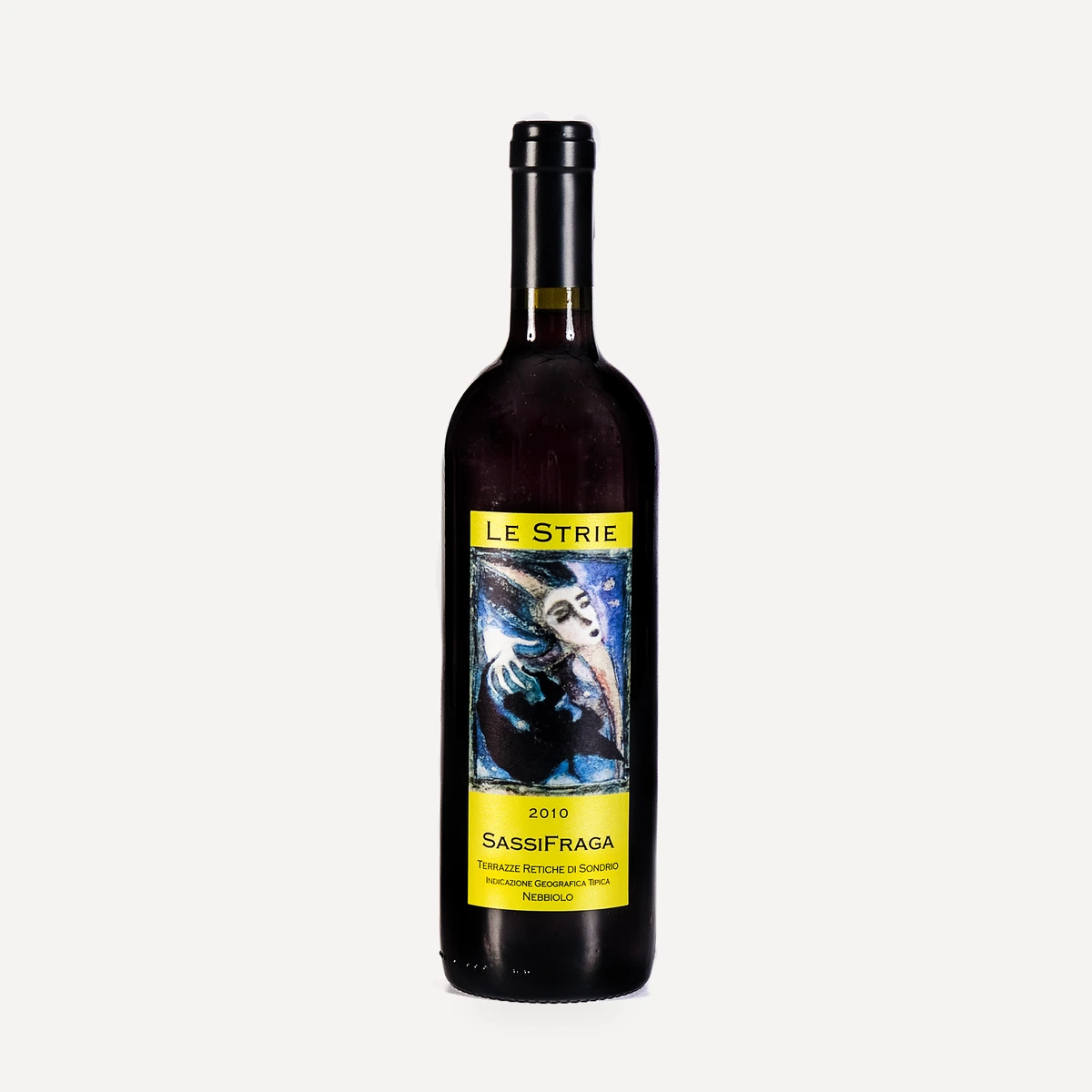
Alpi Retiche Nebbiolo IGT “Sassifraga”
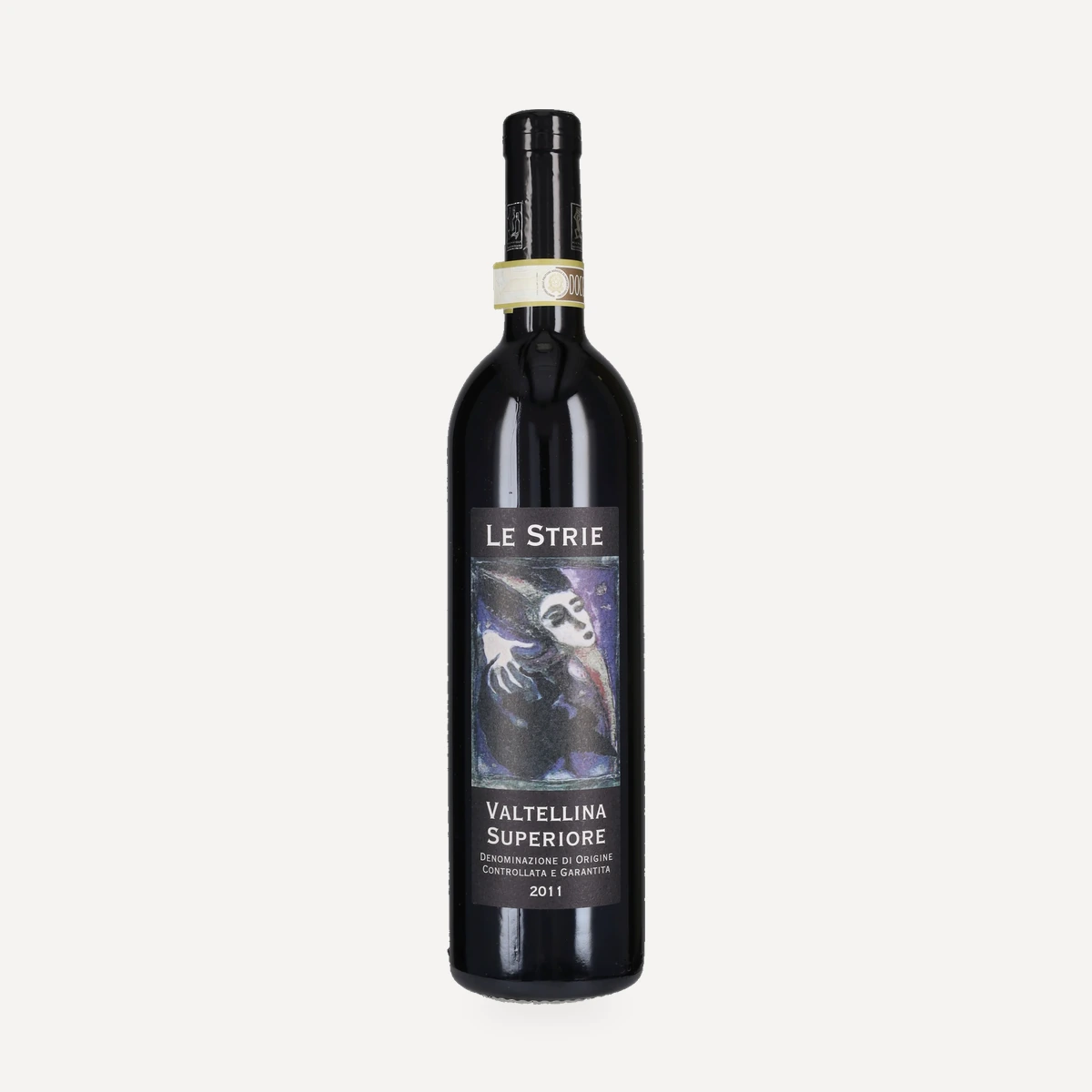
Le Strie Valtellina Superiore DOCG
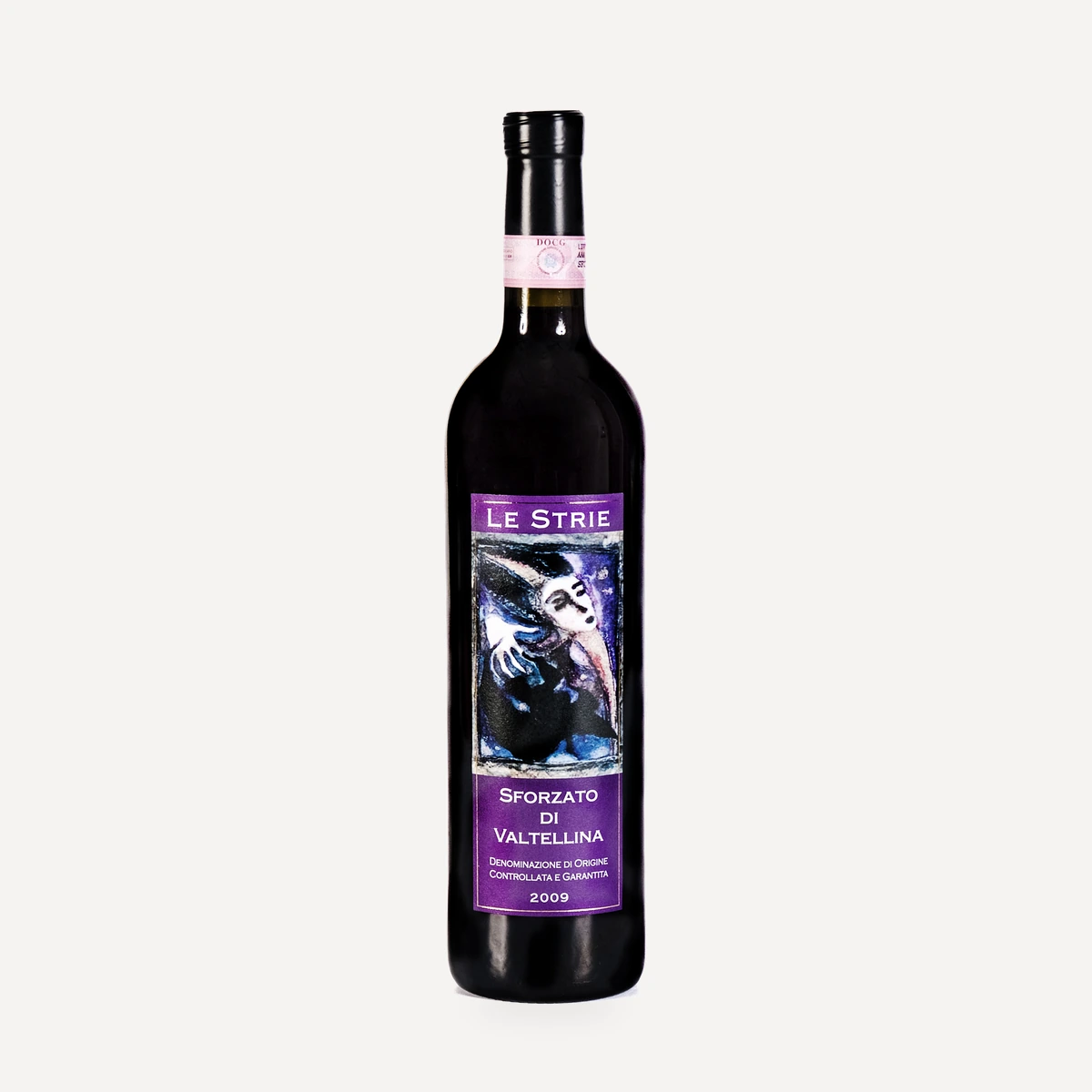
Sforzato di Valtellina DOCG