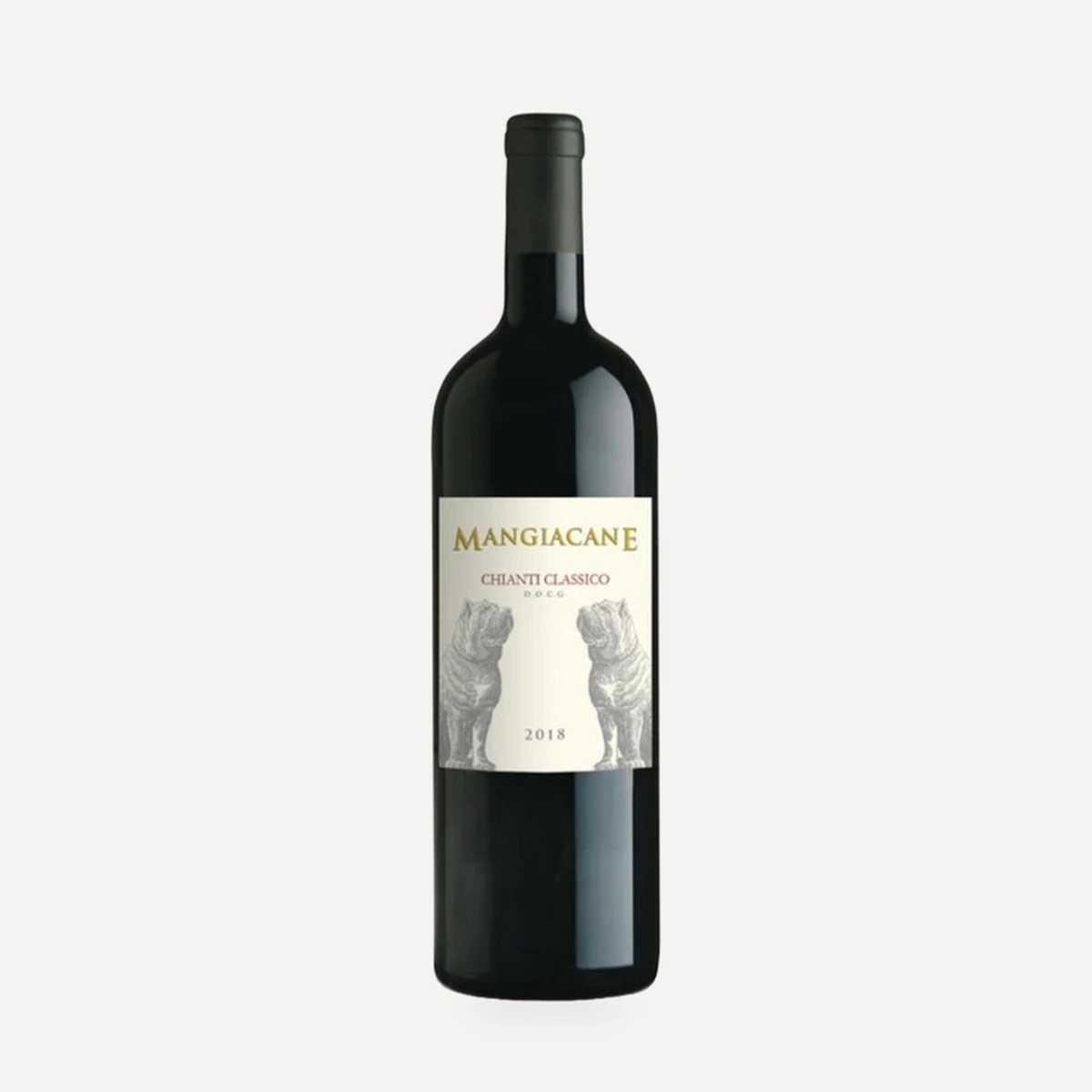
Storia
The Machiavelli family
In 1393, Buoninsegna Machiavelli and Lorenzo di Filippo inherited the abandoned Castle of Montesertoli in the Val di Pesa. As the family's wealth and standing increased, it acquired further property from the powerful Pitti family, including a holding on the Roman Road at Sant’Andrea where the present villa stands.
Bernardo Machiavelli, a doctor of law, inherited the property in 1428 from his cousin Totto, the son of Buoninsegna. Bernardo's son Niccolò Machiavelli inherited the estate in 1511. Niccolò died in the family home in Florence on 21 June 1527. The estate is linked by a path to the Albergaccio, where Niccolò wrote The Prince.
Two marriages subsequently connected members of the family with the Strozzi: Ristoro Machiavelli married Maria Strozzi in 1542, and Benedetto Machiavelli married Lucrezia Strozzi in 1553.
The estate expanded through a sequence of acquisitions. The Machiavelli family bought the Macinaia farm opposite the villa in 1575. In 1598, architect Giorgio Vasari il Giovane published La città ideale del Cavalier Giorgio Vasari, including his plans for a second phase of additions to the villa. Filippo Machiavelli acquired the adjacent Certo farm in 1614 and the Trebbio estate in 1618, consolidating the properties. When Filippo died in 1624, his assets, including the Mangiacane estate, passed to his children.
In 1646, Villa Mangiacane and its four adjoining estates were sold to Senator Mazzeo Mazzei, ending more than two centuries of Machiavelli-family ownership.
The Mazzei family
Mazzeo Mazzei died without heirs in 1649 and left the property to his nephew Zanobi Mazzei. Following Zanobi's death, the estate passed in 1660 to his son Filippo. A later namesake, Filippo Mazzei, was born in 1730 and became a physician, libertarian and close friend of Thomas Jefferson.
In 1884, historian Alfredo Melani published Architettura Italiana Antica e Moderna, in which he attributed the villa to Michelangelo. The estate continues to associate Palazzo Machiavelli with Michelangelo, although its historical overview also presents his involvement as a legend. Original plans for the villa, including Giorgio Vasari il Giovane's proposed new wing, are preserved in the Uffizi Gallery.
A severe earthquake on 18 May 1895 badly damaged the villa. In 1913, Raffaello and Eugenio Mazzei signed an act protecting it as a historic building of major importance. Raffaello's daughter Giuseppina Mazzei partly inherited the villa in 1926 and married Armando Buresti.
During the Second World War, the German army used the estate as a command centre between 1943 and 1945. After the area was liberated in 1944, Allied forces converted it into a hospital.
Mazzei-family ownership ended in 1956, when Adriana Buresti and Lapo Jacopo Mazzei sold the property to Ferdinanda Quintavalle and Guido da Bagno.
New ownership, restoration and renewal of wine production
Ferdinanda Quintavalle and her husband Guido da Bagno held the estate from 1956 to 1979. During their tenure, the ruined east wing was removed and changes were made to the main entrance and piazza.
In 1979, Guido da Bagno sold Villa Mangiacane to Antonio, Pasquale and Massimo di Leo. In 2001, Pasquale di Leo transferred the property to the present, unnamed owners, whose objective was to restore the villa to its former condition.
Replanting of the vineyard beside the villa began by 2002. During that work, an unexploded Allied bomb was discovered and safely detonated by a local bomb-disposal unit.
The Mangiacane Art Foundation completed plans in 2004 for an exhibition of Shona sculpture in the gardens, while a South African art collection was installed inside the villa. A new technical wine cellar equipped with modern technology for Chianti Classico production was completed in 2005. Restoration of the estate was finished in 2007, when the villa opened as a small luxury hotel. The property now combines wine and olive-oil production with private hospitality in Palazzo Machiavelli and Villa Mazzei.
Terroir
Villa Mangiacane occupies 306 ha among the rolling hills of Chianti in Tuscany, at elevations between 250 and 300 m above sea level. The estate lies at San Casciano in Val di Pesa, approximately 12 km from Florence.
Vineyards and thousands of olive trees shape the property, with olive groves occupying most of its land. The elevated landscape offers views across the surrounding Chianti hills and toward the Florence skyline, including Brunelleschi's dome. Approximately 43 ha are devoted to wine production.
Vinificazione
Wine and olive-oil production follows organic methods intended to respect nature and the land. Sangiovese is the dominant grape across approximately 43 ha devoted to wine production. The vineyard beside the villa underwent replanting in 2002.
Environmental measures connected with agricultural production include on-estate solar generation used to power the winery. The wider property also contains extensive olive groves, an orchard, a herb garden and a forest trail.
A new technical wine cellar was completed in 2005 and equipped with modern technology for Chianti Classico production. The estate also maintains a barrique cellar on the ground floor of the residence, where part of the winery's barrel stock is kept.
Solar energy generated at the property helps power the winery. Total production is approximately 50,000 bottles per year, most of which is exported.
Filosofia
Villa Mangiacane Winery frames its agricultural work around respect for the land, organic methods and the pursuit of quality in both wine and olive oil. Its products are intended to embody Tuscany's agricultural and culinary heritage.
The broader estate philosophy links environmental sustainability with social well-being and treats incremental practical measures as a path to meaningful change. Solar power for the winery and electric-vehicle charging stations are part of this approach. Conservation, charitable work and preservation of art extend that philosophy beyond wine production.
Vini
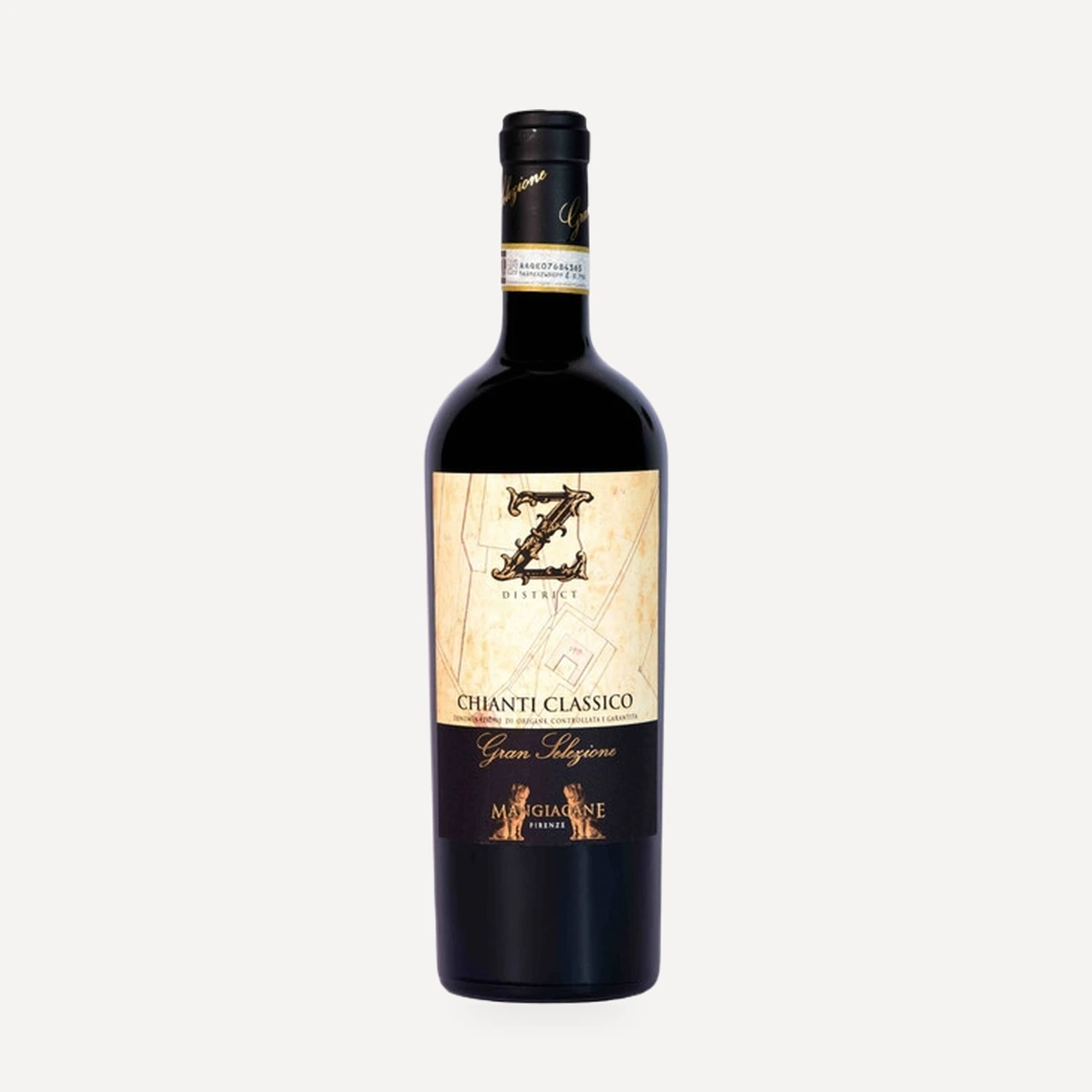
Z District Chianti Classico Gran Selezione DOCG
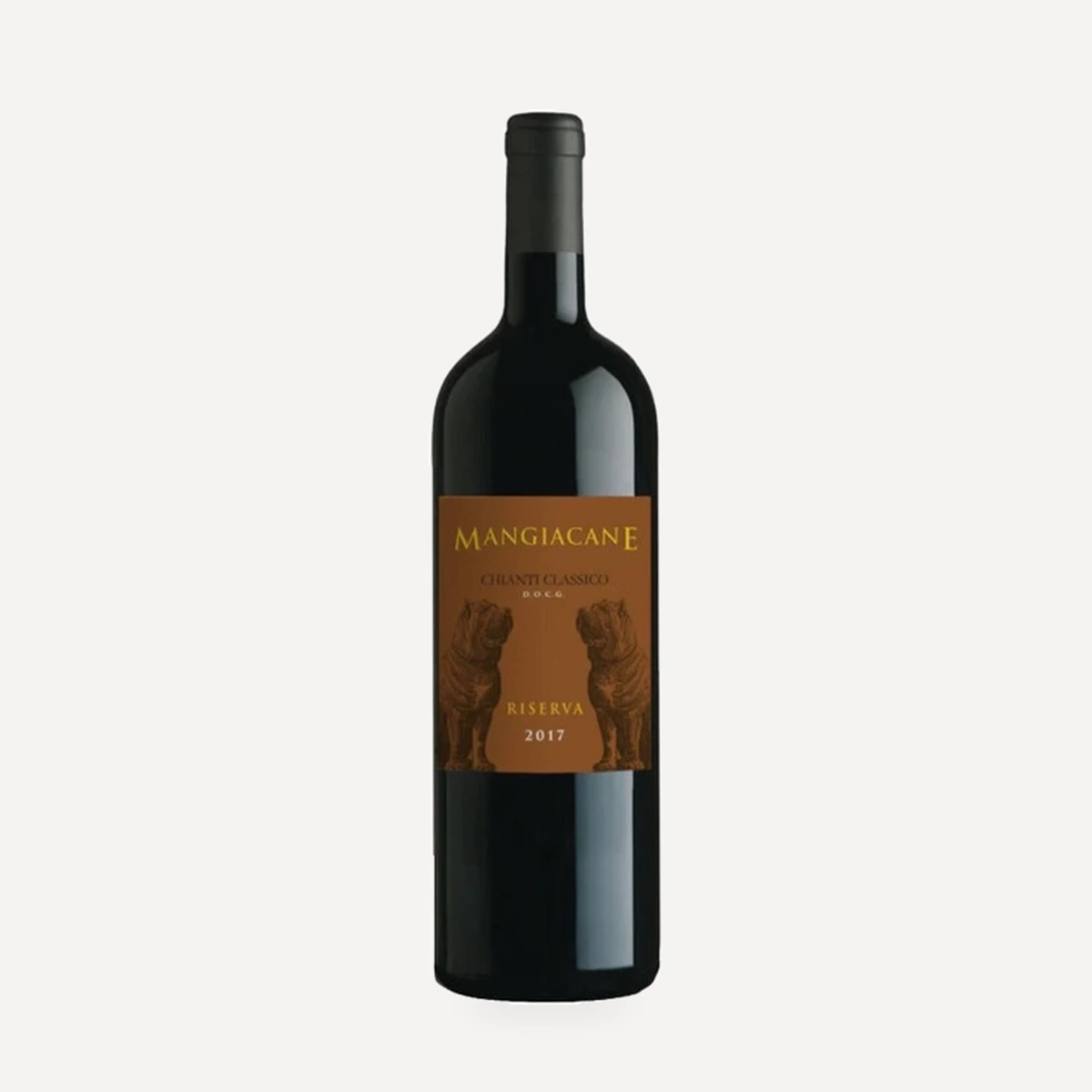
Chianti Classico Riserva DOCG
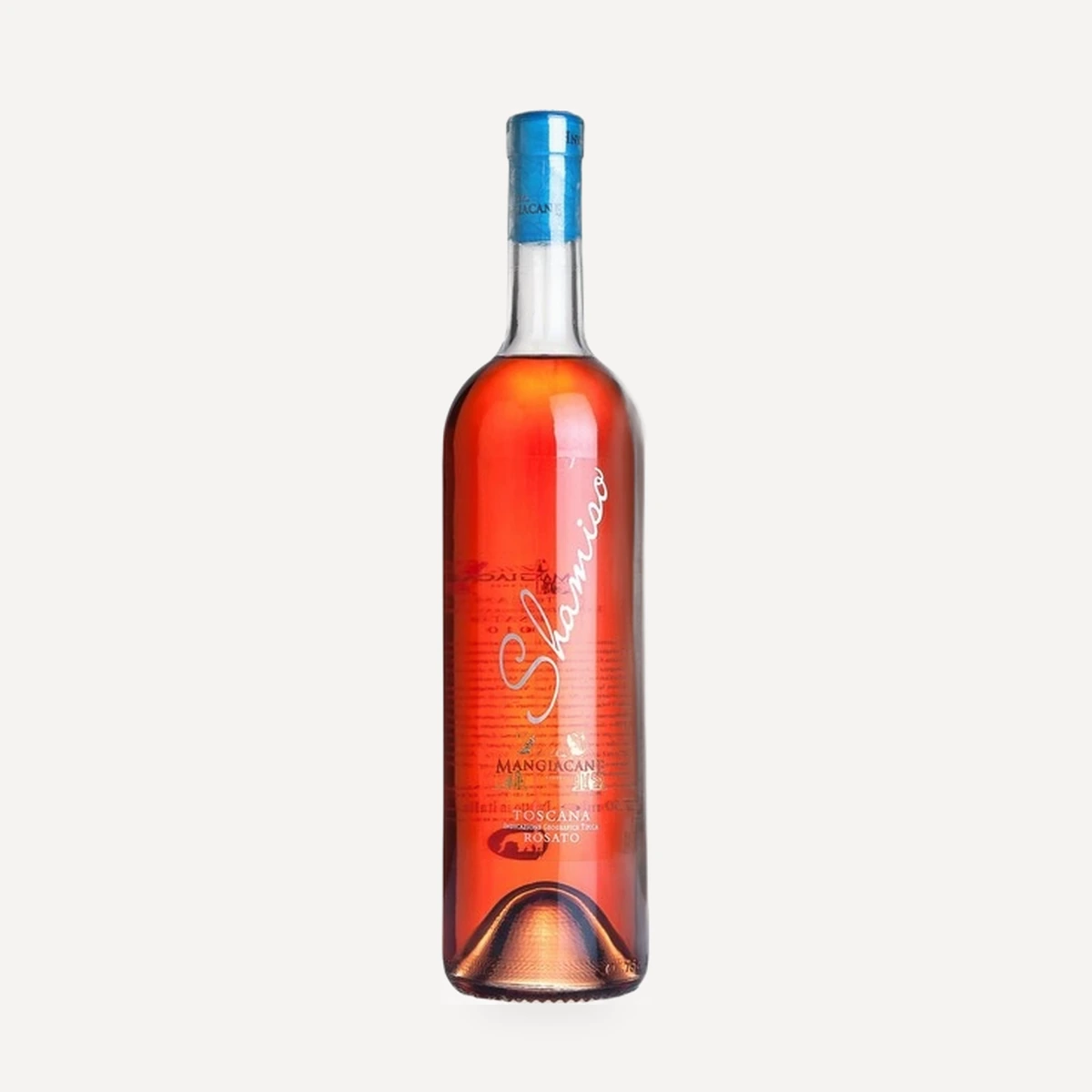
Shamiso Rosato Toscana IGT
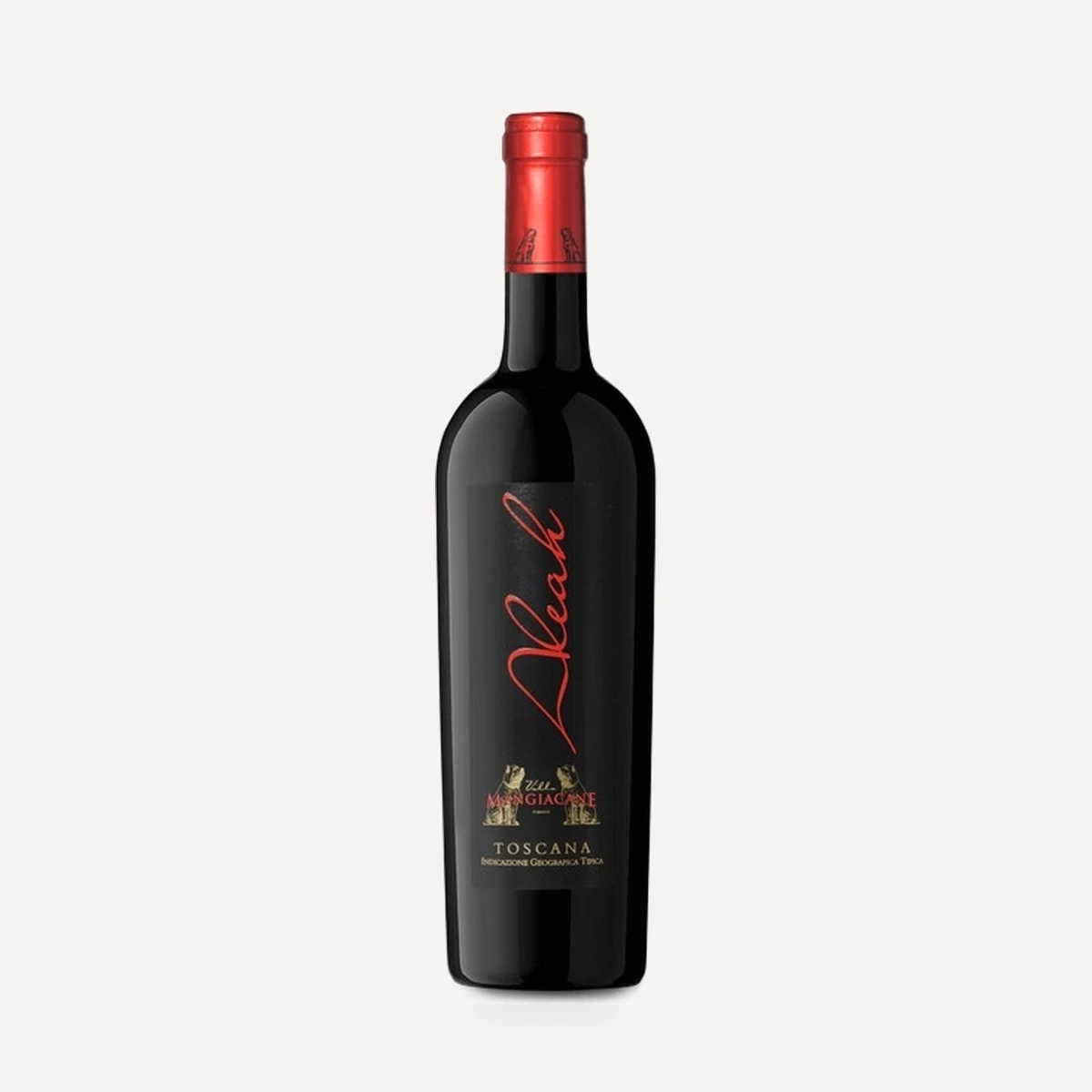
Aleah Toscana IGT
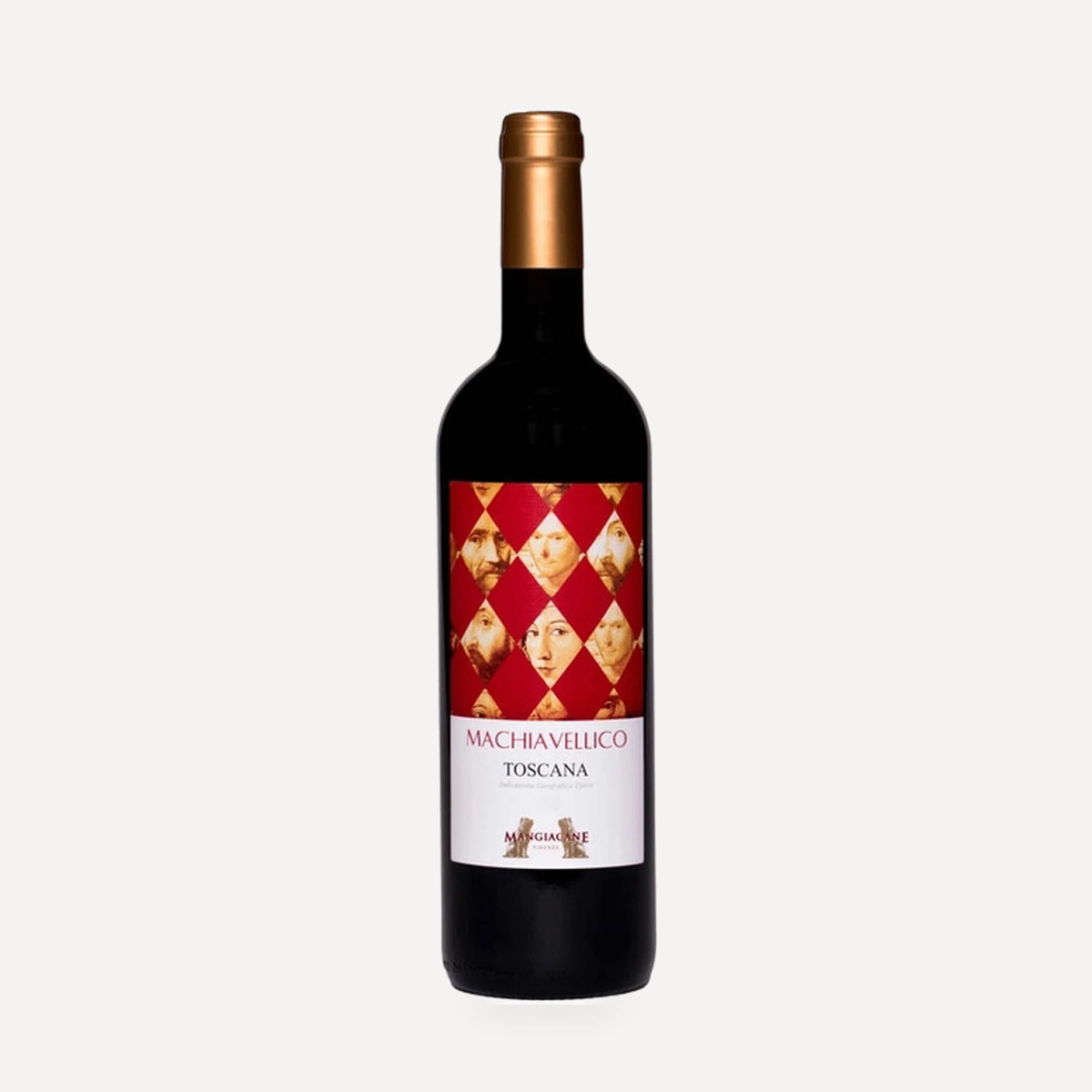
Machiavellico Toscana IGT
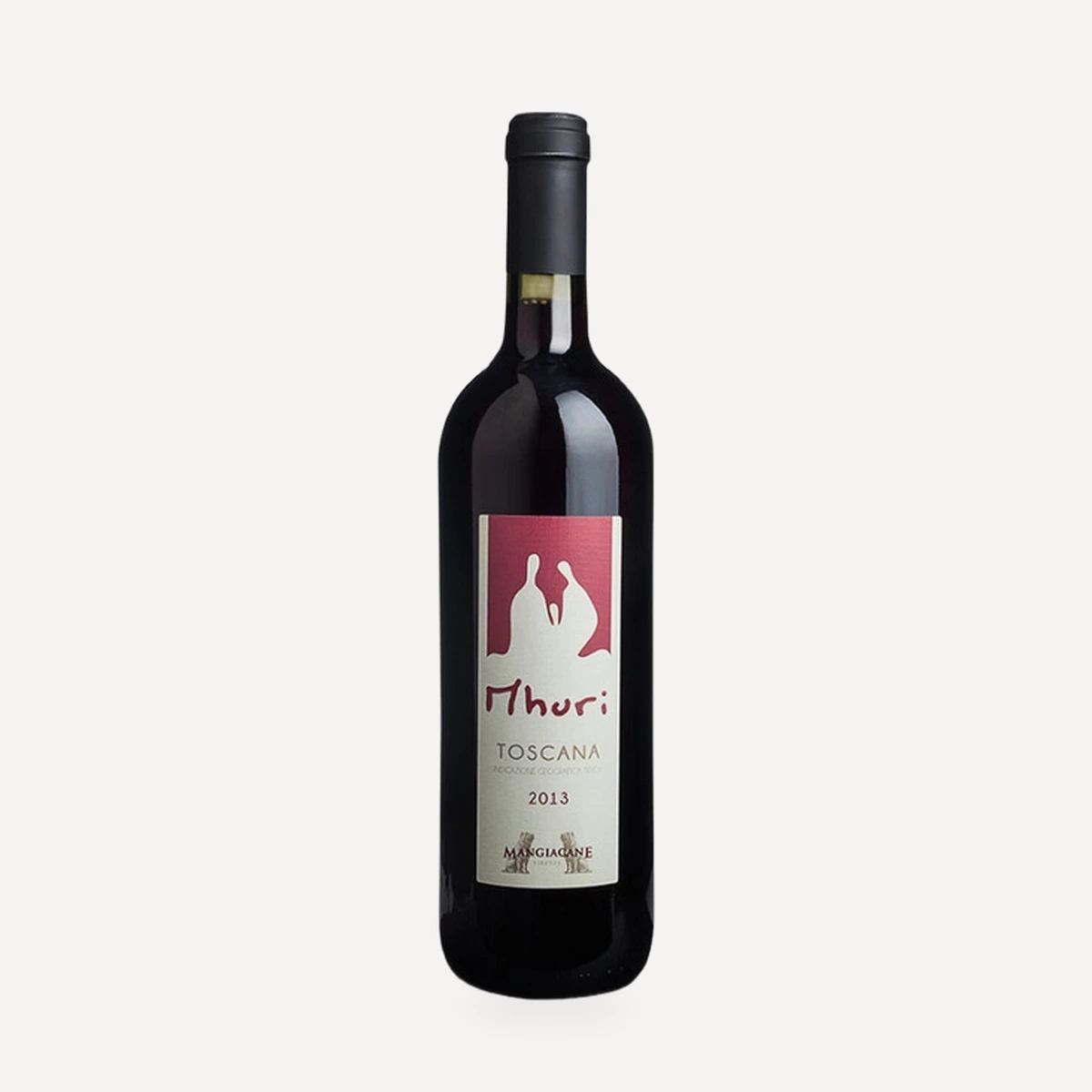
Mhuri Toscana IGT