Storia
Agricultural roots
Maria Bortolotti grew up with farming. As a student in the 1950s, she spent her holidays helping her father in the fields and her mother in the kitchen. These experiences introduced her to agricultural work and to the knowledge, flavours and customs of rural life. Her grandfather Armando, pictured working in the 1930s, provided an important viticultural reference through the remembered aromas and flavours of his wines. Her grandmother Dina was remembered for handmade sfoglia, tagliatelle and tortellini.
1987: a return to rural life
After approximately 25 years away from agriculture, Maria had an opportunity to return to that way of life in 1987. She settled in the house at Ponte Ronca, understanding it in the traditional rural sense as both a dwelling and a place of production. Its secluded natural setting, combined with its openness to visitors, became central to the project.
1988: establishment of the agricultural company
The company was established in 1988 through the acquisition of 5 ha of vineyards adjoining the house. The family studied viticulture while drawing on the remembered practices and wines of grandfather Armando. Environmental care and the health of agricultural workers were adopted as guiding principles, associated with organic and biodynamic agriculture and with organic, natural and vegan wine.
The project joined Giorgio Celli’s Vino del parco initiative at the end of the 1980s. From the beginning, the farm also welcomed adults and children interested in the countryside, vines and wine, leading to the creation of an educational farm.
1992: certified organic farming
Organic farming was adopted in 1992. The company joined AIAB, the Italian Association for Organic Agriculture, while ICEA audited and certified compliance with European organic-farming rules. Organic cultivation was conceived as a search for balance in the fields, excluding synthetic pesticides and chemical fertilisers while protecting the health of farmers and consumers and maintaining the biological relationships that support biodiversity.
Development of La Roverella
An agriturismo grew from the same rural and family traditions. It was named La Roverella after the century-old downy oak that shades the courtyard. Its cooking recalled the handmade pasta traditions associated with grandmother Dina.
Since 2000: natural transformation of the grapes
Since 2000, the grapes have been transformed according to a natural-wine approach intended to preserve the expression of nature, the vineyard and the individual growing season. Indigenous vineyard yeasts, minimal sulphur dioxide, limited filtration and the avoidance of numerous corrective cellar techniques became defining practices.
The present property
The agricultural property now comprises 6 ha of vineyards, a residence and a winery. The original buildings date from the late nineteenth century and were renovated during the 1970s and 1980s. A newer winery was constructed in keeping with the existing architecture. The whole operation is powered by renewable energy generated on site.
Terroir
Setting
The property lies at Ponte Ronca in the municipality of Zola Predosa, 15 km west of Bologna, on the first slopes of the Colli Bolognesi above the SS569 Bazzanese road. It occupies a panoramic position facing the Pianura Padana; on clear winter days the view reaches the snow-covered Prealps. The Lavino valley meets the plain at Zola Predosa.
The vineyard landscape is characterised as terre rosse, or red earth. The nature and exposure of the land are considered suitable for vines, while the local climate is described as favourable. No individual elevations or compass exposures are defined.
Vegetation and vineyard habitat
The vineyards are integrated into a mixed ecosystem of grassland, hedges and trees. Oaks, acacias, hawthorn, dog rose, blackthorn and downy oak occur either spontaneously or through reintroduction. More recent hedge plantings include sea buckthorn and viburnum. These plants are protected as habitats for animals and, particularly, insects beneficial to the vines.
Plum, pear, apple, walnut and olive trees have been planted around the vineyard margins. The programme also envisages old fruit varieties that need little plant protection. Wild mint, lesser calamint, radicchio and chicory grow in the meadow areas, alongside cultivated aromatic plants such as sage, thyme and rosemary.
Viticultural history of the locality
Zola Predosa belongs to the Colli Bolognesi wine-production zone. Archaeological remains found on the first hills between Ponte Ronca and San Martino in Casola attest to very early human settlement. A parchment preserved at the Abbey of Nonantola records that in 1033 Abbot Rodolfo granted vineyard land at Predosa under emphyteusis, with annual payment specified as eight measures of good wine or must.
Zola Predosa’s first complete land assessment, dated 1517, recorded 203 tornature of vineyards—approximately 406 ha using the stated conversion of about 2,000 m² per tornatura—with vines trained together with trees and interspersed with arable land. Abbot Calindri wrote that the territory produced abundant and valuable grapes at the end of the eighteenth century. In 1870, Genoese shipowner Angelo Calcagno bought and improved extensive vineyards on Zola Predosa’s lower hill slopes, made wine in a large cellar in the former Albergati villa and exported it as far as the United States.
Vinificazione
Organic farming is understood as a means of respecting the territory while consuming as little of it as possible. The system seeks to increase the soil’s organic structure and adapt cultivation to the soil’s characteristics.
Alternate vineyard rows are worked with simple, lightweight machinery. The soil is kept permanently or nearly permanently grassed to improve biodiversity and limit degradation. Fertility is managed through the grass cover, green manure with nitrogen-fixing legumes and, when needed, manure. Legumes and alternate-row cultivation are intended to create a better soil texture and increase the soil’s ability to retain water for vine roots.
Synthetic pesticides and chemical fertilisers are excluded. Fungal diseases are managed with very low doses of copper and sulphur salts. The mixed ecosystem of meadow, hedges and vines is intended to make the farm more self-sustaining and reduce the need for plant-health interventions.
Native insects and plants are protected throughout the vineyard—from its grass and surrounding hedges to its vine varieties and biotypes and the trees planted along field boundaries. Native and reintroduced hedges provide habitat for animals and beneficial insects, while fruit and olive trees increase structural diversity. The complexity of this ecosystem, including the diversity of yeasts living on the grape skins, is treated as fundamental to the complexity sought in natural wine.
From July through October, bunches are selected repeatedly so that the grapes with the best colour, sugar accumulation and maturity remain on the vines. Harvesting is manual and is timed for optimal phenolic maturity, including the ripeness of skins and seeds.
The company has farmed organically since 1992, when it joined AIAB and obtained ICEA certification under European organic rules.
Winery and fermentation
The winery is a newer structure built in keeping with the architecture of the late-nineteenth-century farm buildings. Cellar work is intended to preserve what occurred in the vineyard and the character of each growing season.
A small pre-harvest is used to prepare a pied de cuve. Alcoholic fermentation is then carried out by indigenous yeasts originating on the skins of the estate’s grapes. No enzymes are used to extract colour, accelerate maceration or increase aromatic range, and no selected bacteria are introduced for malolactic fermentation.
Hygiene and the duration of maceration receive particular attention, allowing sulphur dioxide additions to be kept as low as possible. Fermentation with indigenous yeasts and limited sulphur is intended to preserve a broad range of aromas, particularly in Barbera, with its high sugar and acidity, and Pignoletto, with its abundant polyphenols.
Additions and physical processing
The wines are not clarified and are filtered as little as possible. Reverse osmosis and concentrators are not used. The cellar also excludes tannin extracts, oak chips, concentrated must, ascorbic acid and acidification with tartaric acid. The wines are not deacidified, and post-filtration yeast or fermentation extracts are avoided.
Wine is kept with its lees—where yeasts, proteins, amino acids and vitamins settle—until bottling instead of being deliberately separated from them. Sulphur dioxide is used only at a minimal level.
The wider portfolio demonstrates natural refermentation in bottle, maceration, fermentation and maturation in wooden vessels, and maturation in oak, but these treatments are attached to particular wines rather than presented as universal cellar procedures.
Filosofia
Maria Bortolotti’s philosophy begins with life inside the vineyard rather than treating it solely as a production site. Vines, trees, grasses, flowers and animals are regarded as members of the same living household. The aim is to work as both residents and winegrowers, respecting every manifestation of nature and seeking harmony between farming and the surrounding ecosystem.
Environmental protection and the health of agricultural workers were founding principles. Organic agriculture is understood as a search for balance that protects farmers and consumers, maintains biological relationships and reduces the social costs associated with pollution and ill health. Biodiversity is not treated only as an environmental objective: the complexity of the meadow–hedge–vineyard system and its microbial life is considered essential to the complexity of natural wine.
The cellar follows the same logic. Its purpose is to respect and convey the events of the vineyard and the course of the season rather than correct the wine toward a standard model. Vintage differences, including sensations that may not appear conventionally balanced, are accepted as part of the wine’s account of the agricultural year.
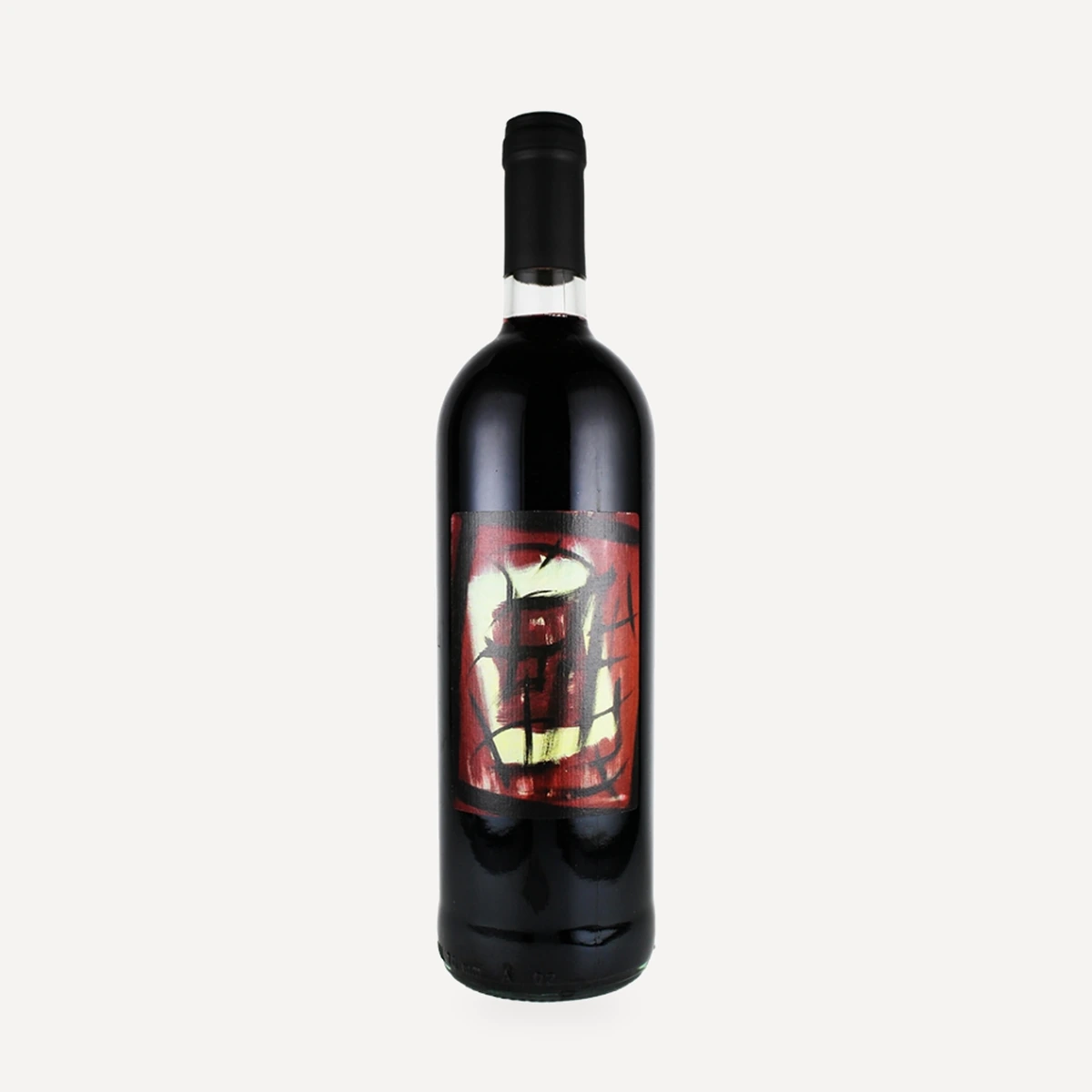
The La XII Notte concept takes its name from Shakespeare’s Twelfth Night and from Epiphany—the moment when what was concealed becomes visible and the darkest part of the year gives way to nature’s reawakening. Each bottle is conceived as a fragment recording not only its vineyard and vintage but the entire natural context that generated it.
These wines are not intended to be monochromatic, technically constructed or scientifically balanced. Colour, flavour and aroma are allowed to remain vivid and outside standardised expectations, forming a collective expression of nature and place. The Dionysian idea—the god of wine understood first as a god of nature—serves as the central metaphor. The drinker is encouraged to move beyond detached tasting technique, attend to the sensations in each sip and listen to the story carried by the wine.
Vini