Storia
The building before Masca del Tacco
The Erchie winery occupies a building formerly known as the Cooperativa Comunale dei Produttori di Erchie, a cooperative active from 1949. The history of the vineyards reaches nearly as far back: the earliest recorded plantings date to 1953, when Negroamaro was established at Silicati in the province of Brindisi.
Expansion of the vineyards
Production extended into the Paticchi area of Brindisi province in 1977. The plantings were subsequently broadened with Syrah, Pinot Nero, Cabernet Sauvignon, Chardonnay and Lambrusco, while Primitivo, Negroamaro and Fiano remained the principal varieties. Susumaniello joined the vineyard holdings in 2001, reviving an old local variety valued for its pronounced varietal character.
The creation of Masca del Tacco
In 2010, Felice Mergè purchased the former Erchie cooperative with the guidance and experience of his father, Armando. He restored the rural building, renamed it Masca del Tacco, and equipped it with modern machinery and production technology. The project was conceived to improve quality while preserving the traditional identity of the wines and their native varieties.
Following the acquisition, the estate enlarged its vineyard base around Veglie, in the province of Lecce, and Torricella, in the province of Taranto. Together with Masseria Paticchi in the Brindisi countryside, these holdings gave Masca del Tacco distinct production areas associated with Negroamaro, Primitivo, Fiano and Susumaniello.
Development of the range
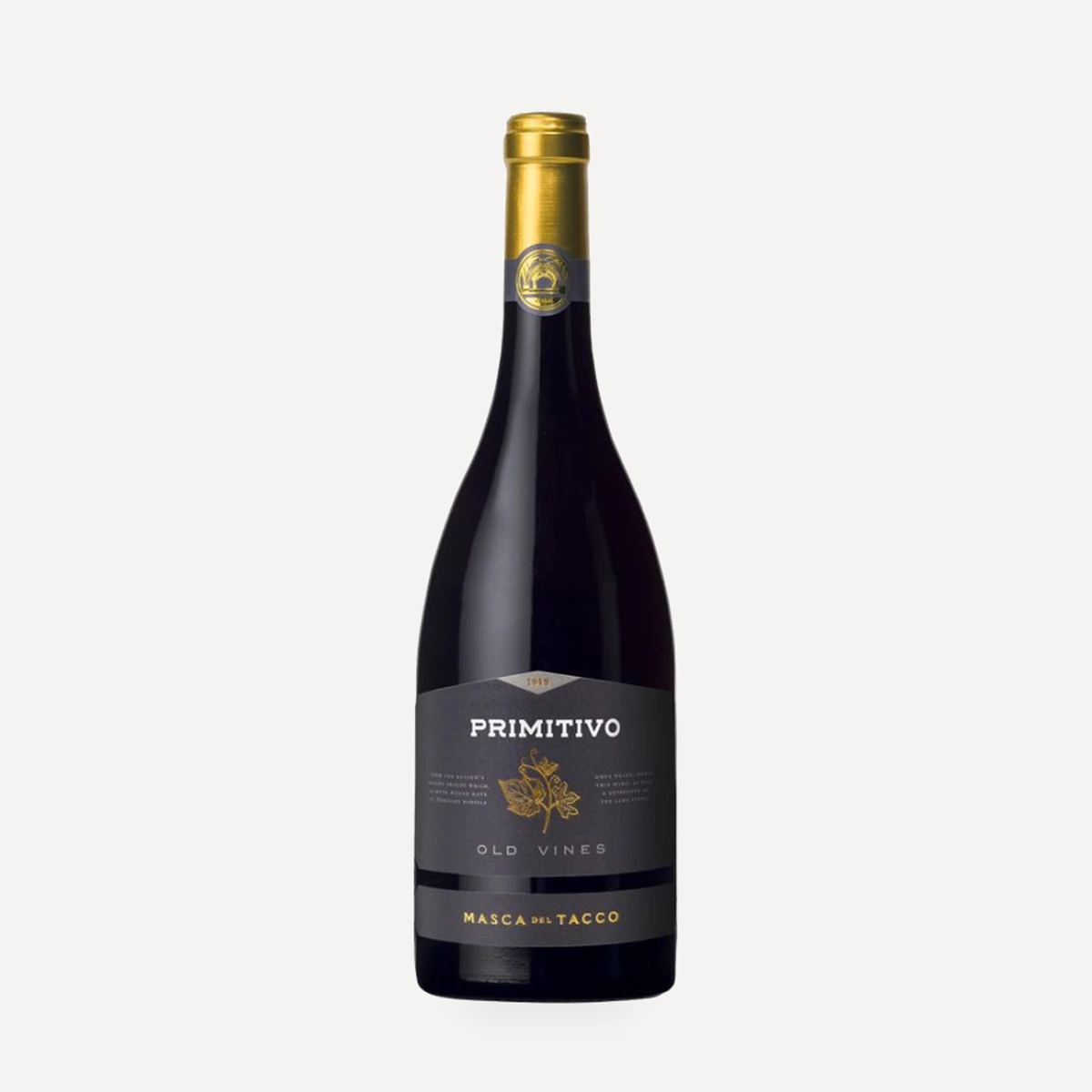
Masca del Tacco developed red and rosé expressions of Susumaniello before producing Ro’si, its first sparkling rosé from the variety. The estate also established a reserve tier focused on Primitivo: Li Filitti and Piano Chiuso are derived largely from old, bush-trained vineyards and are released later than the minimum period required for their respective wine types. Piano Chiuso grew from Felice Mergè’s project to interpret a very small, dry-stone-walled parcel of more than 70-year-old Primitivo near Manduria.
Terroir
Masca del Tacco’s vineyards are distributed across several parts of Puglia: the Brindisi countryside, Torricella in the province of Taranto and Veglie in the province of Lecce. The warmth of the land, the climate and the maritime influence of the Salentina peninsula shape the estate’s growing conditions.
The Masseria Paticchi vineyards occupy the Brindisi countryside and support a mixed varietal composition. Villa Maria at Torricella lies within the Primitivo di Manduria area and is dominated by Primitivo. The Veglie property is closely associated with Negroamaro.
Some Susumaniello vineyards grow on red, iron-rich soils over a calcareous base. These sites are strongly exposed to winds arriving from the sea. Near Manduria, the Piano Chiuso project centres on a small area of ancient, bush-trained Primitivo enclosed by a dry-stone wall. Its conception treats the enclosed parcel as a distinct micro-site whose soil can give the fruit an individual expression.
Vinificazione
Vineyard work is performed manually, with emphasis placed on careful grape selection. The estate combines traditional Puglian bush training with vertically trained vines; the Susumaniello vineyards documented for the sparkling-wine project use spurred cordon and Guyot.
The vineyard base includes owned and leased land and preserves substantial areas of mature vines. Some bush-trained vines are at least 50 years old, while the Primitivo vineyards at Villa Maria in Torricella exceed 70 years. The estate’s approach prioritizes local varieties and the character of individual production areas. Susumaniello, added in 2001, forms part of an effort to renew attention to an old Puglian variety through red, rosé and sparkling interpretations.
Grape quality is supported by work in the vineyard, selection of fruit and careful choice among outside growers supplying the broader production. No organic, biodynamic or other agricultural certification is identified.
Masca del Tacco restored the rural fabric of the former Erchie cooperative while equipping the winery with modern machinery and production technology. The operating principle is to place advanced equipment at the service of an established wine tradition rather than use technology to erase varietal or territorial identity.
Winemaking is described as traditional and closely controlled. Grapes are selected carefully, and experienced personnel oversee production and conservation. Wood is used with restraint during maturation so that it does not dominate the finished wine. The intended result is a pure expression of the fruit, native varieties and growing areas.
The estate also delays the release of the Primitivo reserves Li Filitti and Piano Chiuso beyond the minimum periods prescribed for their types, seeking wines that are more developed on release and retain potential for further cellaring.
Filosofia
Masca del Tacco’s philosophy joins tradition, identity and territory with passion, commitment and experience. Its goal is to improve wine quality without diminishing typicity. Native grapes and the potential of the soils are central to an approach intended to give historic wine heritage a contemporary expression.
The estate presents advanced equipment as a tool in the service of tradition. Manual vineyard work, careful grape selection, traditional vinification and restrained use of wood are intended to preserve purity rather than impose a uniform cellar style. Attention to denomination identity and control of the winemaking process are also treated as fundamental quality principles.
The vineyards’ mature bush vines and the revival of Susumaniello embody this balance. Older agricultural forms and regional varieties are retained, while new interpretations—including rosé and sparkling Susumaniello—extend them into a modern range.
Vini

Anniversario Cuvée Puglia Indicazione Geografica Protetta Rosso
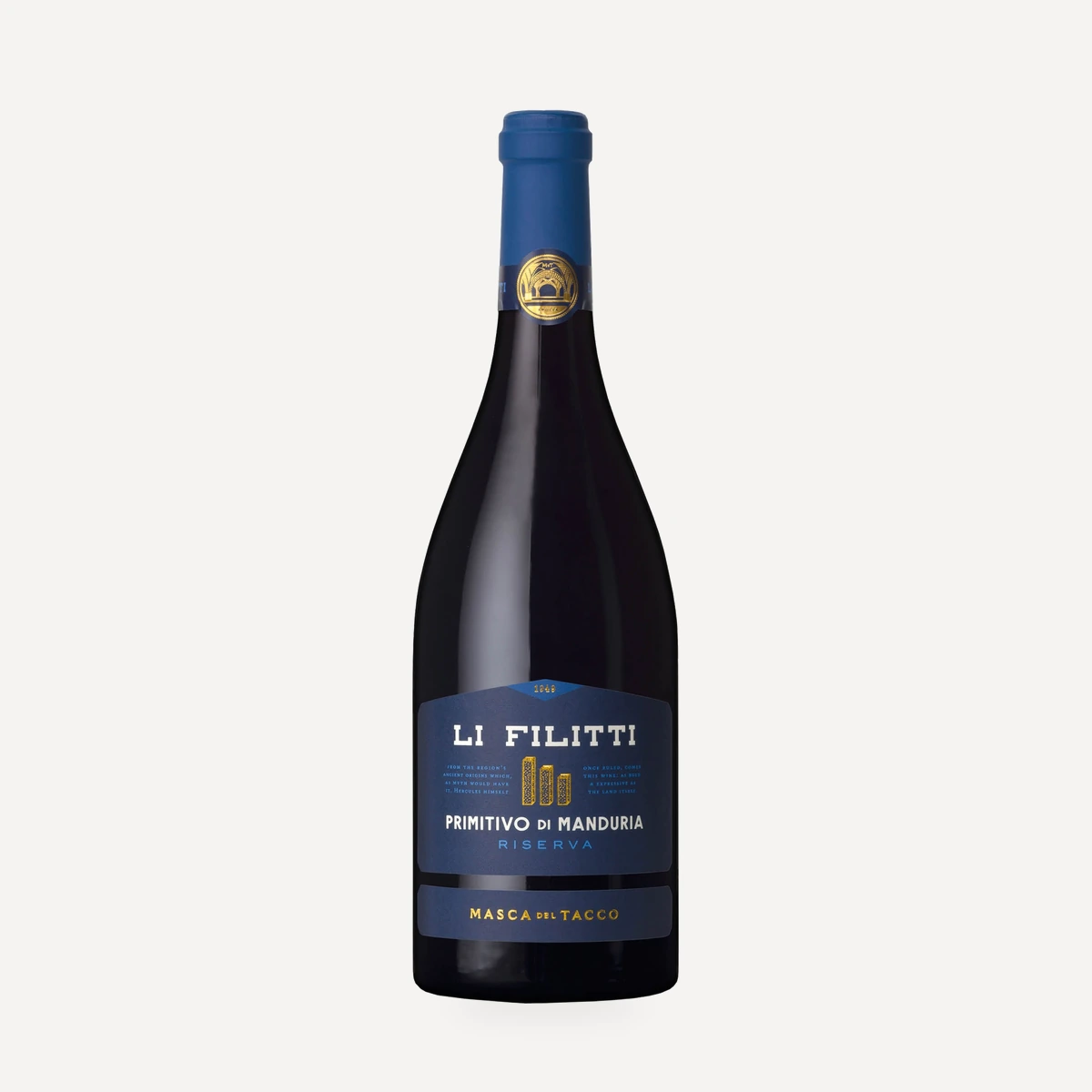
Li Filitti Primitivo di Manduria DOP Riserva Rosso

Lu Rappaio Primitivo di Manduria DOP Rosso

Piano Chiuso Primitivo di Manduria DOP Riserva Rosso

Susumaniello Puglia Indicazione Geografica Protetta Rosso