Storia
The sustainability programme before 2021
Masseto and Ornellaia began developing a jointly managed sustainability programme several years before its first certification. Its scope extended beyond vineyard management to cellar operations, packaging, resource consumption, supplier relations and social policy.
2021
The shared sustainability-management programme received its first certification in 2021. Analysis of water and energy consumption also began that year. The initial work identified heavy plastic consumption in pallet wrapping and initiated a broader programme to reduce bottle weight and packaging impacts.
2022
Experimental vineyard work included UV applications, research into natural antagonists of the principal disease-carrying insects, studies of interactions among insect populations, and efforts to induce natural plant resistance through strengthening substances and biostimulants. Forecasting models were adopted to improve the timing of antiparasitic treatments, reduce active-substance use and give particular attention to substances hazardous to human health.
Water-use analysis was divided into vinification, ageing and bottling. Meter readings measured the combined consumption of oenological operations, while digital litre counters permitted more detailed measurement of bottling. Water generated by osmosis was reused for purposes including lawn irrigation. At the end of 2022, a computerized system was installed in the Ornellaia and Masseto cellars to monitor water and energy associated with production; it was scheduled to begin monitoring electricity in January 2023 and water in July 2023. The system incorporated more than 50 measurement points covering machinery, control panels, workrooms and lighting.
The estates also strengthened selective waste collection, trained personnel in waste management and expanded the use of stretch film made from 60% recycled and recyclable plastic. A biomass heat-production system was revamped, cutting LPG consumption by more than 98% compared with previous years. The production-area and warehouse conversion to LED lighting was completed, while a single, more efficient heat pump replaced the former two-part heating and cooling arrangement in the temperature-controlled finished-product warehouse.
2023
The computerized monitoring programme became operational. Monthly consumption tracking supported a reduction of 108,907 kWh, equivalent to 11% compared with 2022. Aggregate water consumption for cellar and bottling operations fell to 5.4 litres per litre of wine, excluding osmosis losses, a 12% reduction from 2022. Washing procedures on the bottling line were revised, while cellar washing practices were critically reviewed because tanks and barriques account for substantial water demand.
A joint initiative reduced the glass used for Masseto and Poggio alle Gazze dell’Ornellaia bottles by 13.3 metric tons. The estates continued replacing paper processes with digital tools, preferred FSC-certified cartons for packaging and adopted recycled-paper thermal packaging for summer shipments.
Two years of on-site biodiversity analysis assessed soil, air and surface water through biological indices across 12 plots belonging to the combined vineyard system. The work also examined hedgerows, woodland, springs, a permanent freshwater basin, riparian vegetation, refuge areas and ecological corridors.
2024
Masseto and Ornellaia completed the process for SQNPI certification under Italy’s National Quality System for Integrated Production. The voluntary scheme recognizes crops produced with integrated techniques intended to reduce synthetic chemical inputs, optimize agricultural practices and protect both the environment and human health.
Following two years of soil studies and biodiversity-index assessments, the estates also obtained Biodiversity Friend certification from the World Biodiversity Association. Continued certification requires protection of soil fertility, hedgerows, woods, meadows, nectar-producing species, agricultural biodiversity and the rural landscape.
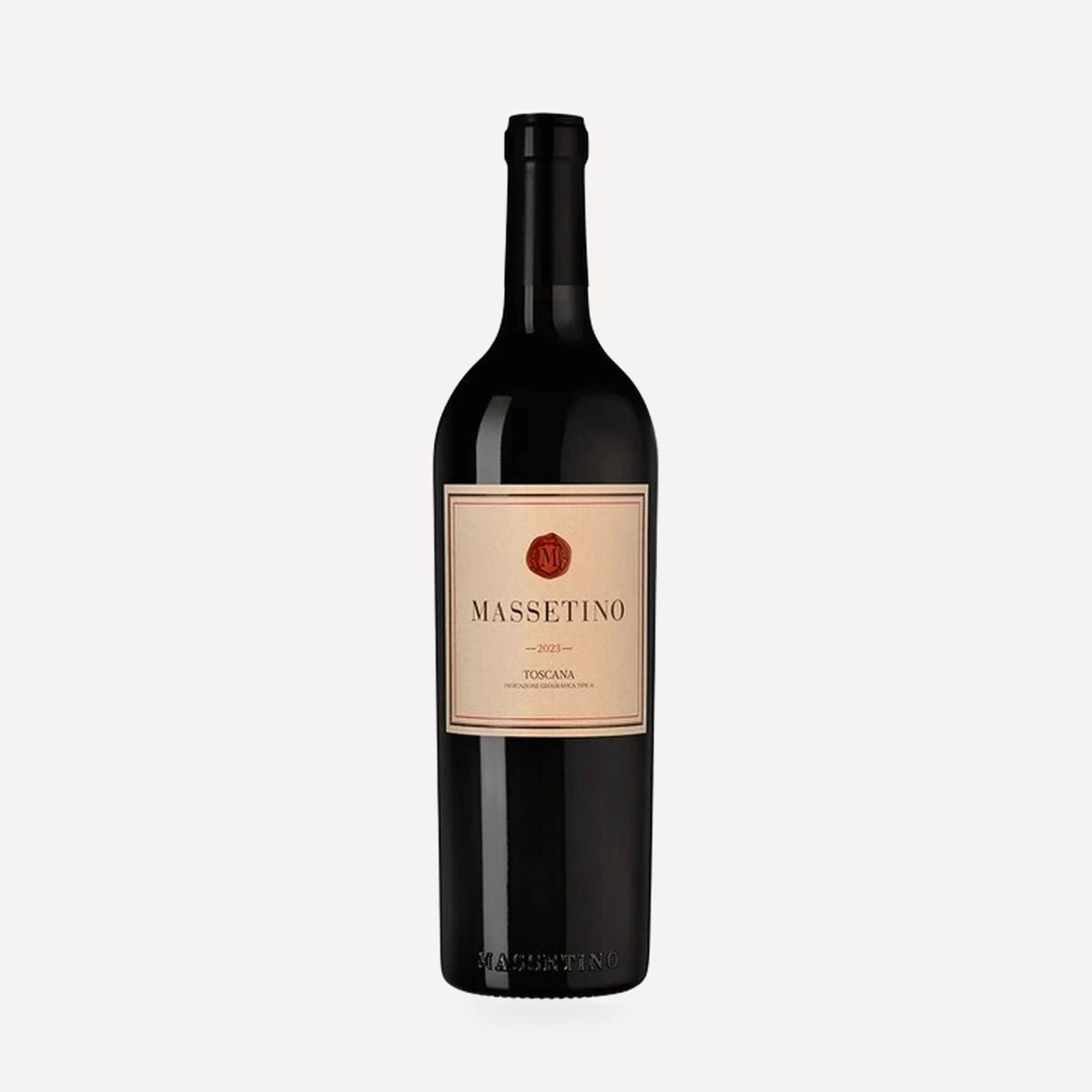
Carbon and Water Footprints were calculated for the first time in 2024. The combined assessment identified packaging-material production as the principal emissions component, representing 85.56% of the measured footprint. All wooden cases used for Masseto and Ornellaia bottles were converted to PEFC-certified timber from responsibly managed forests. The Massetino bottle was lightened, saving 3 metric tons of glass during the year; this formed part of the bottle-lightening programme begun in 2021, which had achieved a cumulative saving of 100 metric tons of glass across the joint operation.
Aggregate water use declined by 9% from 2023 and 20% from 2022, reaching 4.9 litres per litre of wine, excluding osmosis losses. A remotely operable CIP system was validated for automatic cleaning of the bottling monoblock. At Masseto’s winery and Casa Masseto, the air-conditioning system was revamped and its heat pump replaced and relocated to a dedicated external facility.
Continuing programme
The two estates continue to apply responsible agricultural practices, precision viticulture and digital technologies to environmental protection and resource management. A production-space Improvement Plan introduced in 2023 remains under management review, with potential upgrades to work areas, machinery and related services considered over a three-year planning horizon.
Vinificazione
Masseto’s viticultural programme combines responsible agriculture, precision viticulture and digital monitoring intended to optimize natural-resource use and respond to climate change.
Experimental practices have included UV applications, research into natural antagonists of the principal disease-carrying insects, study of interactions among insect populations and induction of natural plant resistance with strengthening substances and biostimulants. Forecasting models are used to plan antiparasitic treatments, with the goal of reducing active-substance use over time and limiting substances hazardous to human health.
The Biodiversity Friend programme evaluates the vineyard environment through soil, lichen and aquatic biodiversity indices. Its management framework protects soil fertility and preserves hedgerows, woods, meadows, nectar-producing plants, spontaneous flowering shrubs, riparian strips, wetlands, agricultural biodiversity and the rural landscape. These features provide refuge and ecological corridors for insects, amphibians, reptiles, birds and mammals.
In 2024 the estate completed SQNPI certification under the National Quality System for Integrated Production. The scheme covers integrated cultivation methods designed to reduce synthetic chemical substances, optimize agricultural practice and safeguard environmental and human health. The same year, after two years of soil studies and biodiversity assessments, Masseto and Ornellaia obtained Biodiversity Friend certification from the World Biodiversity Association.
Masseto’s production facilities form part of a joint resource-management and quality system operated with Ornellaia. Water consumption is measured across vinification, ageing and bottling. Digital litre counters permit detailed monitoring of bottling operations, while computerized metering tracks electricity and water use across machinery, control panels, work areas and lighting.
In 2022, aggregate cellar water consumption, excluding losses from osmosis, was 6.38 litres per litre of wine. Water recovered from osmosis was reused for activities including lawn irrigation. Revised washing procedures, monitoring and controls subsequently reduced the figure to 5.4 litres in 2023 and 4.9 litres in 2024. The 2024 result represented reductions of 9% from 2023 and 20% from 2022.
A remotely operable CIP system was validated for automatic cleaning of the bottling monoblock, enabling more precise control of wash cycles, water consumption and sanitizing agents. A new hot-water system improved the effectiveness of selected sanitation processes and reduced sanitizer use without increasing cleaning-water volume. Procedures governing cellar and bottling-line cleaning and the use of oenological products and cleaning agents are continuously monitored for hygiene, safety, legality and traceability.
Energy-management measures include computerized monitoring, LED lighting and upgraded heating and cooling equipment. In 2023, monthly monitoring contributed to an aggregate saving of 108,907 kWh, or 11% compared with 2022. During 2024, the air-conditioning system serving the Masseto winery and Casa Masseto was revamped; its heat pump was replaced and relocated to a dedicated external facility.
Equipment and machinery follow structured monitoring and maintenance plans, with replacement schedules informed by life-cycle analysis. Employees receive regular operational and regulatory training, supplemented by department-specific annual courses. An Improvement Plan introduced in 2023 considers possible upgrades to work areas, machinery and associated services as production requirements develop.
Filosofia
Masseto’s shared sustainability philosophy treats environmental, economic and social responsibility as interdependent. Its stated direction is an ecological transition towards renewable energy, agroecological practices, regenerative models and circular processes, supported by continual innovation and annually renewed objectives.
The estate’s principles place responsible agricultural practice, precision viticulture and careful resource use at the centre of environmental and production management. Innovation is intended to improve quality while reducing waste, consumption and pressure on primary resources. Research, staff development and supplier training support this approach.
Sustainability also encompasses ethical conduct, worker rights, inclusivity, professional development and collaboration with local communities. The estate aims to generate economic value through local employment and suppliers while supporting cultural and social initiatives. Quality, customer needs, traceability and responsible supply-chain relationships are integrated into the same framework.
The relationship with the land is expressed as a commitment to environmentally respectful viticulture, preservation of natural resources and local heritage, and production capable of reflecting its place. The wider objective is a responsible development model that anticipates climate and resource pressures through concrete, measurable action rather than responding only after impacts occur.
Vini
Masseto