Storia
Foundation and first release
Ornellaia was established in Bolgheri in 1981. From the outset, its development centred on interpreting the potential of the land through detailed vineyard management and a continuing pursuit of higher quality.
The first Ornellaia was launched in 1985. The estate’s subsequent development encompassed the historic vineyards and Bellaria, the introduction of Le Serre Nuove dell’Ornellaia—the first Italian second vin—and the later creation of Ornellaia Bianco.
People and ownership
Ornellaia is owned by the Frescobaldi family, whose winemaking history spans 700 years. The family’s stated approach is to cultivate the diversity of individual territories while preserving the identity and independence of each estate. Ornellaia is led by President Marchese Ferdinando Frescobaldi alongside Marchese Lamberto Frescobaldi, supported by Technical Director Marco Balsimelli and an international team.
Axel Heinz served as Estate Director and was identified as winemaker or oenologist across numerous vintages. Olga Fusari was subsequently identified as winemaker in material covering vintages from at least 2016 through 2021. By the 2023 sustainability cycle, Marco Balsimelli was identified as Technical Director.
Vendemmia d’Artista
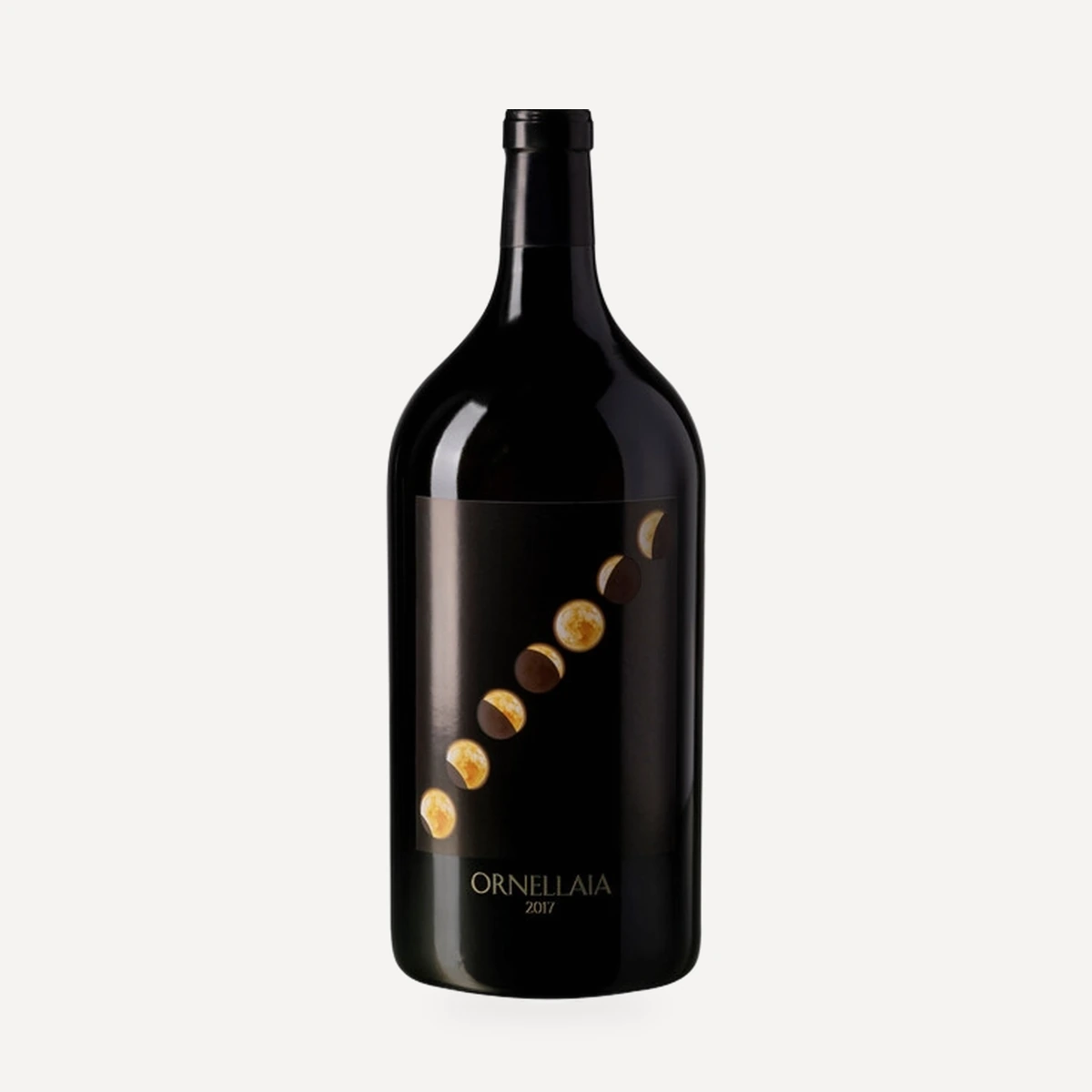
The Vendemmia d’Artista project began with the release of Ornellaia 2006. For every edition, a contemporary artist interprets a word selected to express the vintage’s character, producing a site-specific artwork and limited-edition labels.
Since 2009, the proceeds from the project’s charity auctions have been donated to art foundations and museums. Since 2012, each case of Ornellaia has included one bottle bearing the relevant artist’s label. In 2019, the project began a continuing relationship with the Solomon R. Guggenheim Foundation, initially supporting the Mind’s Eye accessibility programme and later the conservation of important works from the collection.
Archive and hospitality
The Ornellaia Archivio Storico was inaugurated in 2017. Located in the cellar, it preserves every Ornellaia vintage under controlled conditions. Bottles released from the collection bear a limited Archivio Storico label and a Prooftag™ authentication mark.
Ristorante Ornellaia opened in Zurich in 2018. Designed by Swiss architect Tilla Theus to evoke the estate’s Mediterranean setting, it offers current releases, mature vintages from the archive and large formats.
Sustainability milestones
Ornellaia received Equalitas “Sustainable Organization” certification under the SODP standard in 2021 and issued its first annual sustainability report that year. Monitoring and reduction programmes subsequently addressed vineyard biodiversity, plant protection, water, energy, packaging, waste, transport and employee development.
In 2022, the estate introduced a lighter proprietary Ornellaia bottle, reducing glass use by 10 metric tons; completed the conversion of production and warehouse lighting to LED; expanded electric transport; and installed a computerized water-and-energy monitoring system. A revamped biomass system reduced cellar-production LPG use by more than 98%.
The monitoring system became operational for electricity in January 2023 and for water later in 2023. The 2023 programme recorded reduced water and electricity use, continued the replacement of paper with digital tools, increased the use of recycled-content materials and completed a two-year biodiversity study across 12 vineyard plots.
In 2024, Ornellaia completed its first Carbon Footprint and Water Footprint calculations. It also completed SQNPI certification for integrated production and obtained Biodiversity Friend WBA certification following two years of soil studies and biodiversity-index assessments. All wooden cases were converted to PEFC-certified material. Water use across the jointly reported winery and bottling operations fell to 4.9 litres per litre of wine, excluding osmosis losses—9% below 2023 and 20% below 2022. A more efficient chiller was installed for Ornellaia’s barrel cellar and semi-finished-goods warehouse, while a new hot-water system reduced reliance on sanitising agents.
Terroir
Ornellaia extends between Bolgheri and the coast, in a landscape shaped by the relationship between land and the Tyrrhenian Sea. Sea, wind, sun and deep soils combine to form the estate’s microclimates, while Mediterranean scrub and forest surround and separate the vineyards.
Part of the estate was once covered by the Mediterranean Sea. Its retreat left sand, marl and marine fossils. At higher elevations, clay emerges with limestone pebbles of varying sizes. Across the estate, the soils reflect marine, alluvial and volcanic origins and change substantially as the vineyards rise toward the hills.
The vineyard is divided into dozens of parcels. Each is treated as an individual microcosm with its own soil, conditions and expressive identity. Most parcels face southwest, receiving the late sunlight over the sea.
The principal red varieties are Cabernet Sauvignon and Merlot, followed by Cabernet Franc and Petit Verdot. White plantings include Sauvignon Blanc, Petit Manseng, Viognier, Verdicchio and Vermentino; Sémillon also appears in the estate’s 2024 white-wine production. The mild, breezy autumn conditions of Bolgheri also permit late harvesting in a tiny parcel used for sweet wine.
Vinificazione
Parcel-level management
The vineyard is broken into dozens of small parcels, each receiving individual care. Varieties and blocks are kept separate through harvest and vinification so that their distinct characteristics can be evaluated before blending. Harvest dates can therefore be selected independently for each parcel and variety.
Grapes are harvested by hand into 15 kg crates. White grapes are picked in the early morning and chilled immediately on arrival to protect their aromatic compounds. Red bunches are selected manually on two sorting tables, before and after destemming. Optical sorting has supplemented manual selection since 2016.
Plant health and precision viticulture
The environmental programme combines responsible agricultural practices with precision viticulture, digital technologies and forecasting models. Trials have included UV treatments; research into natural antagonists of the principal disease-carrying vineyard insects; study of interactions between insect populations; and stimulation of the vines’ natural resistance with strengthening substances and biostimulants. Forecasting models guide the timing of pest-control treatments with the objective of reducing active substances, particularly those hazardous to human health.
SQNPI certification, completed in 2024, recognizes integrated production intended to reduce synthetic chemical inputs, protect human health and optimize agricultural practices.
Biodiversity
Biodiversity Friend WBA certification followed two years of analysis in 12 plots. Soil quality was evaluated through invertebrates such as annelids, springtails, mites and isopods; air quality through epiphytic lichens; and surface-water quality through aquatic macro-invertebrates with differing pollution tolerances.
Management practices include retaining herbaceous and shrubby cover in ditches and riparian strips, maintaining spontaneously flowering shrubs, managing woodland and caring for natural and constructed wetlands. These features support insects and higher fauna, including amphibians, reptiles, birds and mammals. Vineyards are interspersed with hedgerows, woods, springs, a permanent freshwater basin, riparian vegetation, refuges and ecological corridors.
The certification’s Biodiversity Decalogue also requires protection of soil fertility, hedgerows, woods, meadows, nectar-producing plants, agricultural biodiversity and the rural landscape.
Red-wine production
Red grapes are harvested by hand into 15 kg crates. Bunches pass over a double manual sorting table before and after destemming and are then softly crushed. Optical sorting, introduced in 2016, adds a further selection stage. Each variety and single vineyard block is vinified separately.
For the estate’s principal red-wine process in 2023, fermentation took place in stainless-steel and concrete tanks at 26–30°C for one week. Approximately 15 days of maceration followed, giving about three weeks in vat. Malolactic fermentation took place mainly in oak barrels, 70% new and 30% once used. The wine matured in barriques for about 18 months: blending followed the first 12 months, after which the assembled wine returned to barrel for another six months. A further 12 months of bottle ageing preceded release.
Other red lots are fermented separately in small stainless-steel tanks to preserve varietal identity. Depending on the wine, malolactic fermentation may also occur in steel, followed by maturation partly in barriques previously used for Ornellaia and partly in concrete or other tanks.
White-wine production
White bunches are picked by hand into small 15 kg boxes during the early morning, chilled immediately at the cellar and selected carefully. Whole clusters undergo very slow, gentle pressing with protection against oxidation, followed by static settling.
The 2024 white-wine process used 24 hours of static settling. Must was distributed among new and used barriques, stainless-steel and concrete tanks, amphorae and Wine Globes. Fermentation remained below 20°C and malolactic fermentation was prevented. The wine matured for eight months on fine lees with regular bâtonnage, received light fining before bottling and rested for another eight months in bottle.
Cellar and resource management
The barrique cellar uses French oak and is maintained under controlled conditions. From vinification through bottling, operations are continuously monitored for hygiene, legality, quality and traceability.
A computerized monitoring system measures water and electricity use across the production process. The Ornellaia winery has a main water inlet meter, six additional control points in critical areas and 50 electricity-metering points across machinery, panels, workspaces and lighting. Washing and sanitation procedures have been reviewed, and the bottling monoblock can be cleaned through a remotely operated CIP system that permits more precise water and sanitiser management. A new hot-water system installed in 2024 further reduced the use of sanitising agents.
The cooling system serving the barrel cellar and semi-finished-goods warehouse was replaced with a more efficient chiller in a dedicated external facility. Production and warehouse lighting is fully LED, while a biomass heating-system upgrade sharply reduced LPG consumption.
Filosofia
Ornellaia describes quality as the result of sensitivity, detailed observation and continuous improvement rather than a single intervention. Intimate knowledge of the vines and individualized attention to small parcels are intended to reveal the identity of each part of the estate.
The approach joins terroir with independent thought, intuition and courage. Nature supplies the resources and diversity of the estate; human knowledge is expected to interpret them without suppressing vintage or parcel differences. Long maturation is used to allow the wines to develop their intended finesse and generosity over time.
The Frescobaldi family’s ownership philosophy emphasizes continuity, curiosity and measured evolution while preserving the autonomy and identity of each estate. Within Ornellaia, this has produced an international team integrated into the broader family structure.
Sustainability is defined across environmental, social and economic dimensions. Its guiding ideas include protection of water, soil and biodiversity; movement toward renewable energy, agroecological and circular models; continuous innovation; respect for workers and human rights; staff education; local employment and suppliers; and support for social and cultural initiatives. Each action is expected to be environmentally safe, socially fair and economically viable.
Vini

ORNELLAIA Bolgheri Superiore Rosso DOC

Ornellaia Bianco Bolgheri Bianco DOC

Le Serre Nuove dell'Ornellaia Toscana Rosso IGT

Le Volte dell'Ornellaia Toscana Rosso IGT

Poggio alle Gazze dell'Ornellaia Toscana Bianco IGT

Ornus dell'Ornellaia Toscana Bianco IGT

Variazioni in Rosso dell'Ornellaia Toscana Rosso IGT
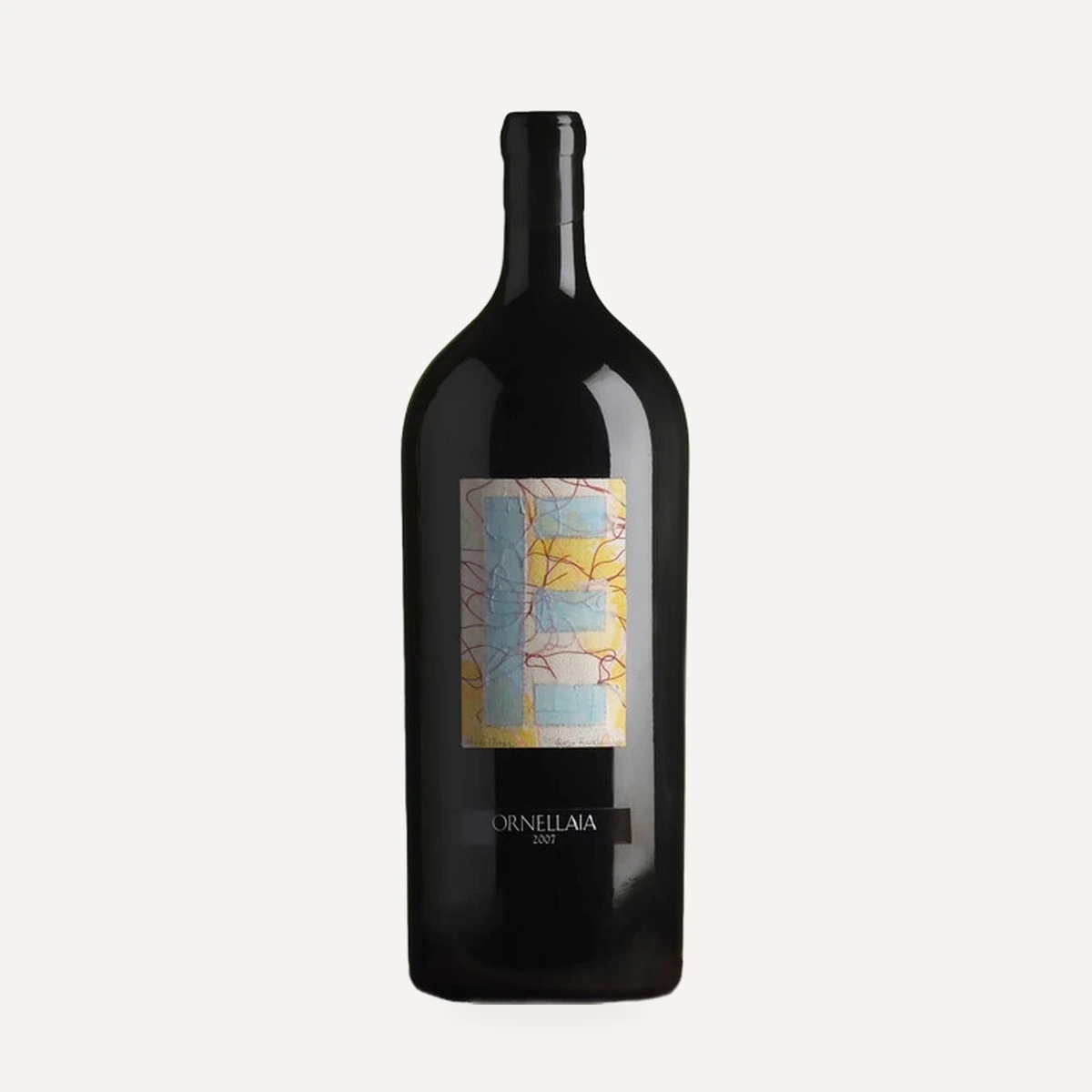
Vendemmia d'Artista ( L'Armonia )
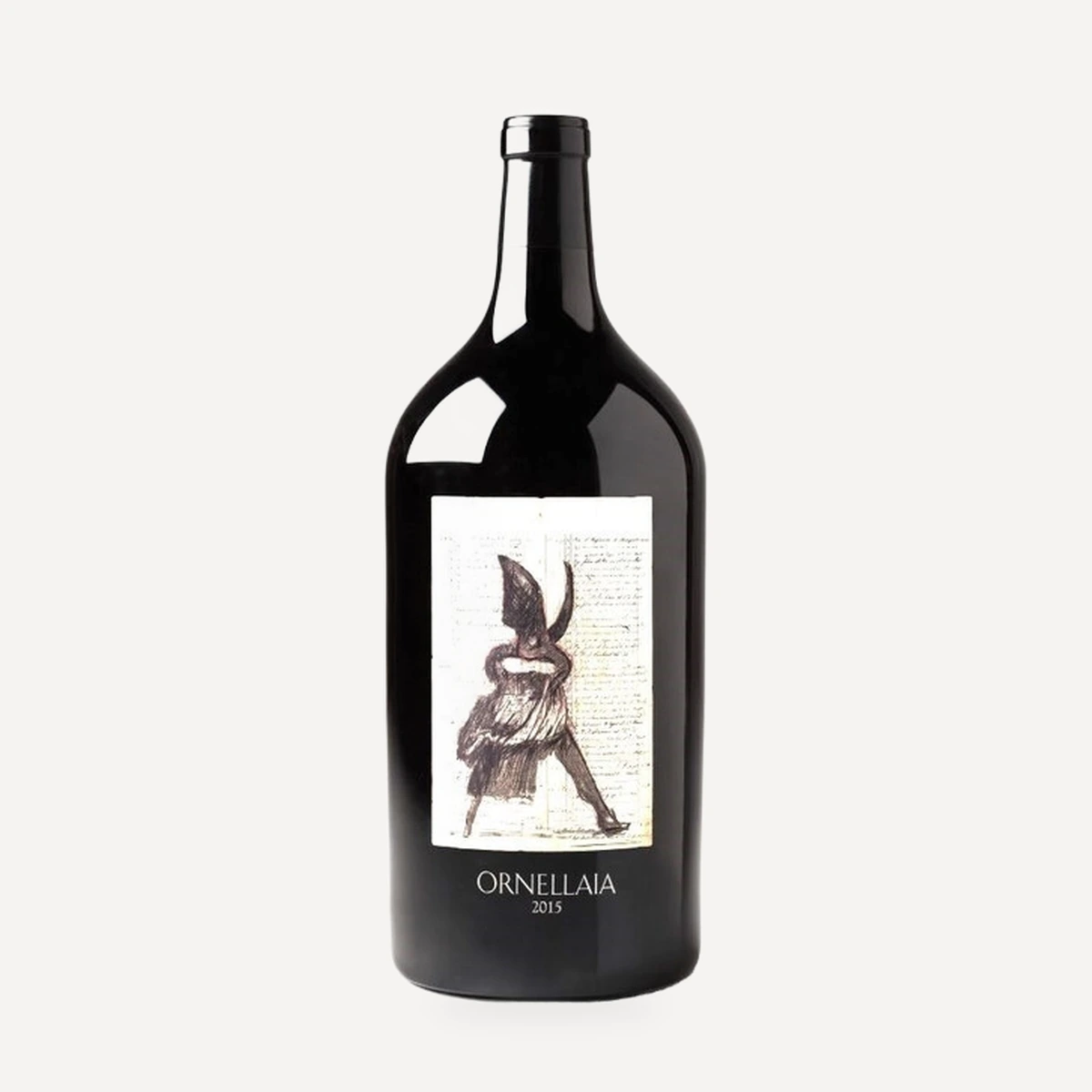
Vendemmia d'Artista ( Il Carisma )
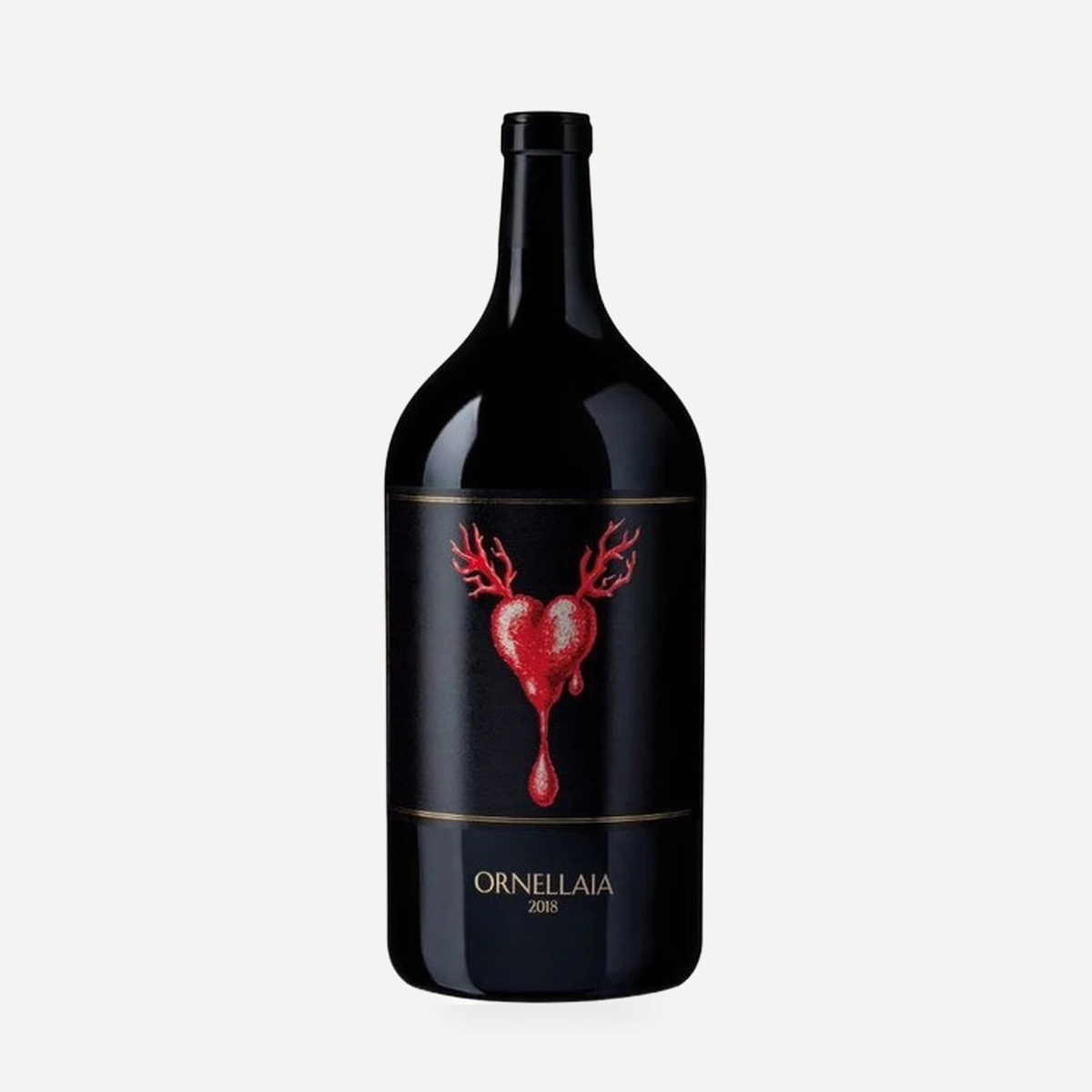
Vendemmia d'Artista ( La Grazia )