Storia
Origins of the place
Montevertine has been inhabited since the 11th century. Traces of its original structure, apparently built for defensive purposes, remain visible; the building was subsequently converted into a rural residence.
Sergio Manetti and the beginning of wine production
In 1967, steel industrialist Sergio Manetti bought Montevertine as a holiday home. He restored the house, planted 2 hectares of vines and fitted out a small cellar, initially intending to make wine for friends and business clients.
The first wine was produced from the 1971 harvest. Encouraged by the result, Manetti sent several bottles to Vinitaly in Verona through the Siena Chamber of Commerce. The estate wine was marketed as Chianti Classico Montevertine from 1971 through 1981.
The vineyard base developed alongside production. Le Pergole Torte had been planted in 1968, Il Sodaccio followed in 1972, and the first vintage of Le Pergole Torte was made in 1977. It was the first pure Sangiovese produced in the Radda in Chianti area.
Departure from the Chianti Classico consortium
Montevertine left the Consorzio del Chianti Classico in 1982. From that year, its historic wine ceased to carry the Chianti Classico Montevertine name and was released simply as Montevertine. The 2.5-hectare Montevertine vineyard was also planted in 1982.
The artistic labels created by Alberto Manfredi for Le Pergole Torte form a long-running visual sequence represented by editions beginning with 1982 and continuing across numerous subsequent vintages.
Expansion and replanting
Il Casino was planted in 1999. Il Sodaccio, originally planted in 1972, was completely replanted in 2000, while La Casa contains plantings dating from 2000 and 2008. Selvole and Pian del Ciampolo were planted in 2003. The Montevertine vineyard was partially replanted in 2008.
Beginning with the 2009 vintage, the vineyards were placed under fully organic management. Villanova was replanted in 2010, while the 3.85-hectare Docciole vineyard was planted in stages from 2010 through 2014.
Recent documented vintages
The 2020 growing season was regular, with timely rain and summer temperatures that were not excessively oppressive. The surrounding woods remained green, vineyard infections were minimal, treatments were consequently kept to a minimum, and ripening and final yields were favorable. Harvest for the documented 2020 wines began on 26 September.
Spring frost reduced production potential in 2021. A generally regular start to summer was followed by two exceptionally hot weeks in August, with temperatures exceeding 40°C. Strong day–night temperature variation protected the grapes from heat damage, and rain at the end of August supported correct ripening. Harvest began on 5 October, with grape quality exceeding expectations.
Terroir
Montevertine lies at 425 metres above sea level in the hills of Chianti, within the commune of Radda in Chianti. Its nine named vineyard zones span a broad range of aspects: Le Pergole Torte and Docciole face north to northeast; Montevertine faces southeast to south; Il Sodaccio faces southeast; Il Casino, La Casa and Villanova face south; and Selvole and Pian del Ciampolo face west to northwest.
Woodland surrounds the estate and supplies some of the botanicals used for its gin. The olive groves occupy elevations of 380–420 metres and extend across aspects from northeast to south.
Recorded vintage conditions
The 2020 season was regular, with rain arriving at useful moments and without oppressive summer heat. The woods remained green, vineyard infection pressure was minimal, fewer treatments were required, and ripening proceeded regularly.
In 2021, spring frost reduced potential production. After a relatively regular early summer, the middle two weeks of August brought exceptional heat above 40°C. Pronounced day–night temperature variation protected the fruit from heat damage, while rain at the end of August supported correct maturation before the October harvest.
Vinificazione
Montevertine farms approximately 18 hectares of vineyards. Sangiovese accounts for about 90% of the planted vines, with Colorino and Canaiolo together making up the remaining 10%. Only these three traditional Chianti varieties have been planted during the estate's history.
Planting density is 5,000 vines per hectare in vineyards established from 1997 onward and 3,200 vines per hectare in older vineyards. Older vines are trained by the Guyot system, while newer plantings use cordon spur training.
The estate adopted fully organic vineyard management beginning with the 2009 vintage. Vineyard rows are maintained with permanent grass cover, and estate-produced compost is used as fertilizer. Vine protection relies on copper and powdered sulfur. Grapes are harvested by hand.
The 2020 season brought minimal infection pressure and consequently required very limited treatments. In 2021, spring frost reduced the initial crop potential; strong day–night temperature variation later protected the grapes during an August heatwave, and late-August rain allowed balanced maturation before harvest.
Montevertine follows a deliberately traditional vinification method that has remained consistent since its earliest harvests. Hand-picked grapes ferment in glass-lined concrete vats without temperature control. Two pump-overs are carried out each day to keep the cap wet and promote slow extraction of tannins from the skins.
After the wine is drawn off, malolactic fermentation also takes place in glass-lined concrete vats. Once malolactic fermentation is complete, the wines rest in wood. The cellar uses Slavonian and Allier oak casks ranging from 5.5 to 18 hectolitres, together with 225-litre Allier barriques. The wines are never filtered and are bottled by gravity.
Filosofia
Simplicity, respect, attention to every detail and practical savoir-faire guide work at Montevertine. Its approach links identity directly to the traditional grapes of its territory: Sangiovese, Canaiolo and Colorino. The estate has never introduced alternative grape varieties and aims to produce wine that fully reflects its land.
This position is expressed through continuity in the cellar as well as the vineyard. The vinification method has remained fundamentally unchanged since the first harvests, while organic management, grassed rows, estate-made compost and limited vineyard treatments reinforce an emphasis on restraint. The team characterizes its work as personal and passion-driven, with the people behind the estate prepared to identify themselves directly with what they produce.
Vini
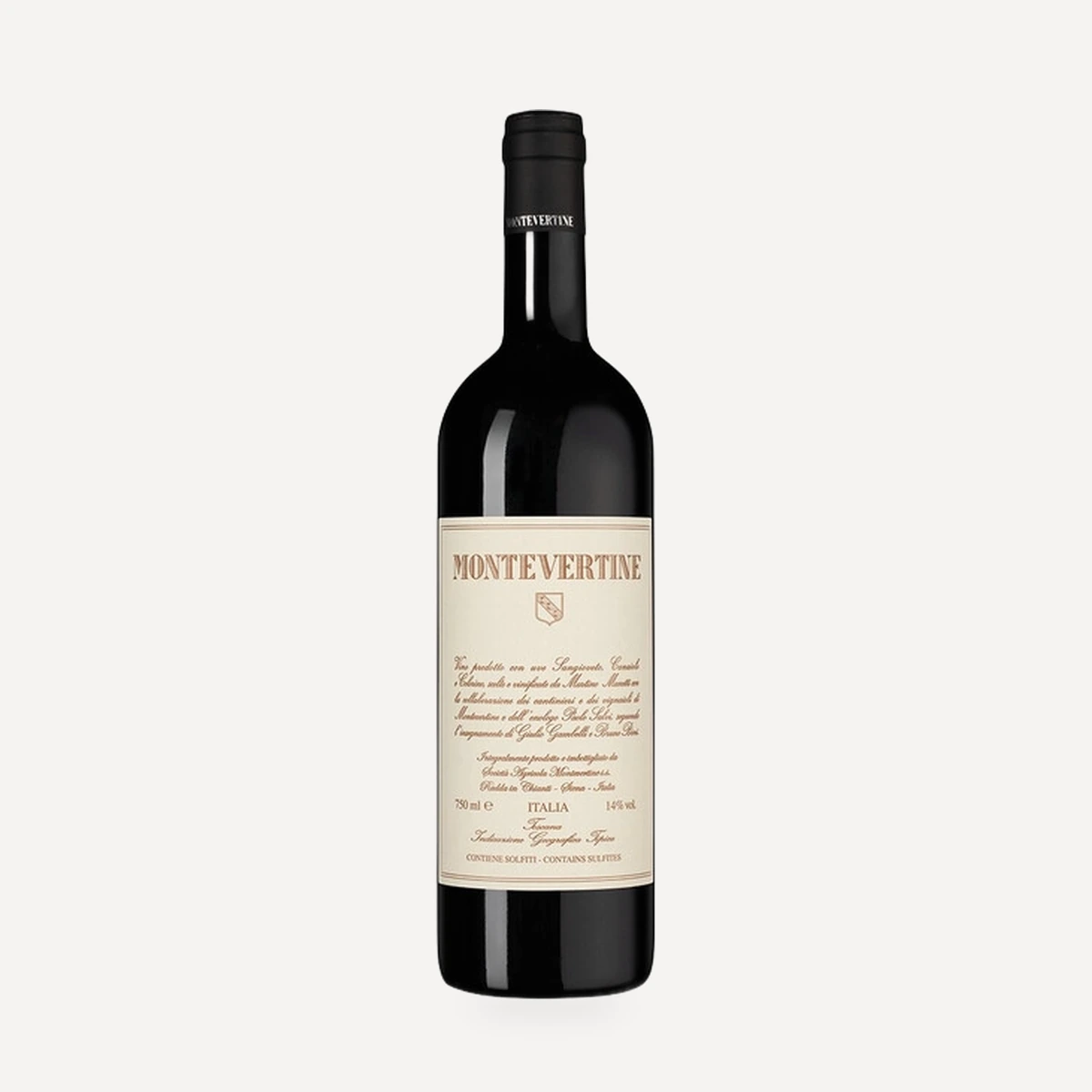
Montevertine Toscana IGT
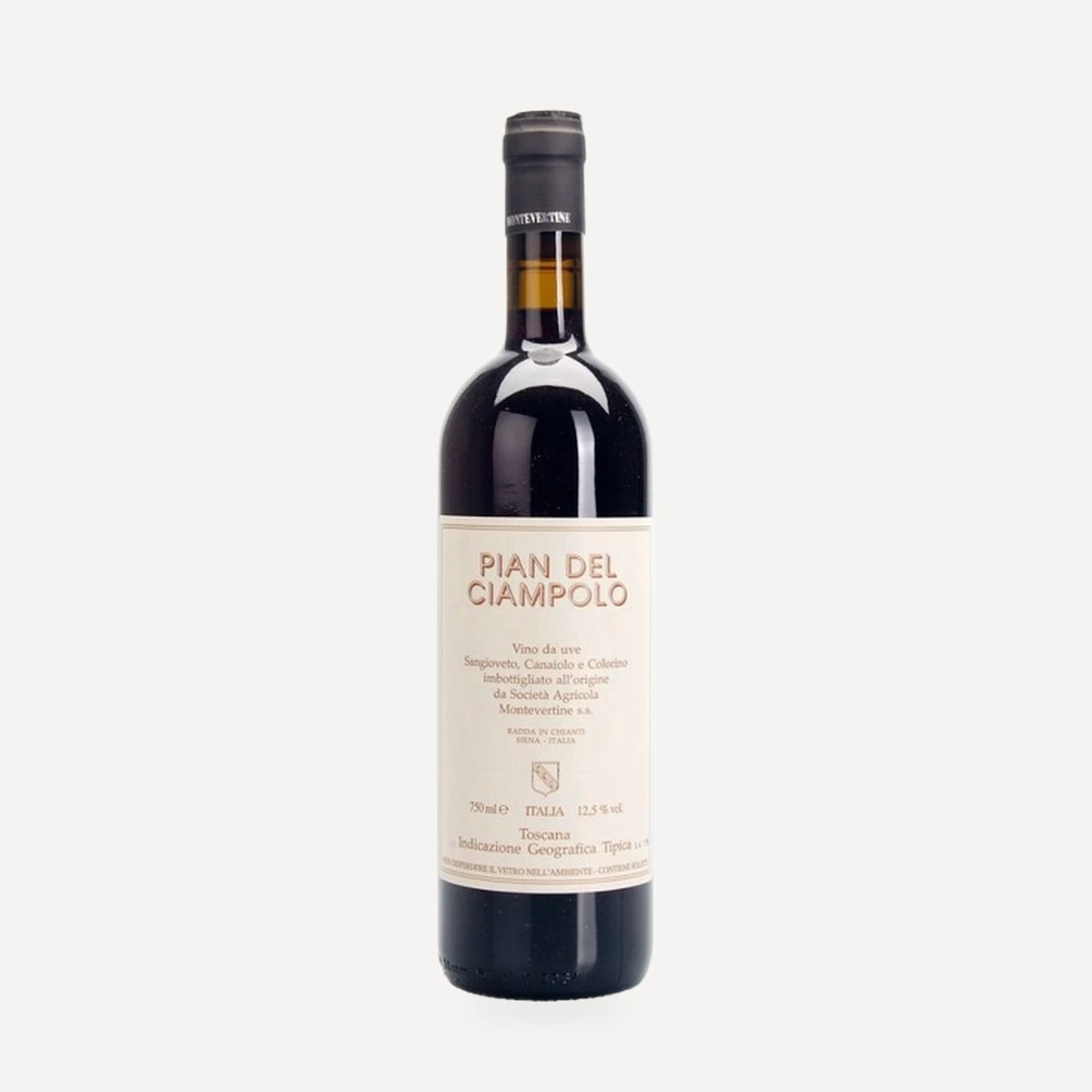
Pian del Ciampolo Toscana IGT