Storia
The historical setting
Cori traces its identity to a history that began between the tenth and ninth centuries BC, before the foundation of Rome, and to traditions connected with heroes of the Trojan War. The ancient settlement was known as Cora. Its surviving archaeological landscape includes polygonal walls, pagan temples and other structures that remain part of the setting around Pietra Pinta's vineyards.
The estate's name recalls a later episode in the area's history: the civil war between Gaius Marius and Lucius Cornelius Sulla. The local tradition places the decisive encounter in 80 BC. According to the legend, a stone was stained or painted red in remembrance of the blood shed in the fighting. This pietra pinta—literally, “painted stone”—gave the estate its name.
The Ferretti family's agricultural beginnings
The Ferretti family began producing wine and olive oil in the Cori area in the early nineteenth century. The estate developed among the hills between Cori, south of Rome, and the natural and historical landscape of the Giardino di Ninfa. Olive cultivation is specifically traced to the middle of the nineteenth century, including trees on old limestone terraces and later plantings on the plain.
Innovation within the family's agricultural tradition became a defining theme. Bruno Ferretti introduced and consolidated mechanisation, while research and experimentation were developed as principles of the enterprise.
Experimental viticulture
In 1988, the work of the brothers Francesco and Cesare Ferretti led to recognition as an experimental winery in the Lazio Region. This work included the recovery and study of indigenous grape varieties and trials with international varieties that had not previously been cultivated locally. Collaboration with regional bodies and scientific institutes supported this experimental direction.
The estate subsequently made native varieties—particularly Nero Buono di Cori and Bellone—central to its interpretation of Cori, while also cultivating Malvasia Puntinata and a substantial group of international and other Italian varieties.
Expansion beyond wine
A modern olive mill designed for cold extraction began operating in 1993. By keeping the milling operation within the estate, the family established direct control and traceability from the olive tree through processing and bottling.
Pietra Pinta now combines a winery, olive mill and agriturismo. Its public-facing activities include tastings, vineyard visits, accommodation, private events and night-harvest gatherings. The estate also participates in the Movimento Turismo del Vino and the Strada del Vino della Provincia di Latina.
Terroir
Pietra Pinta lies in the countryside of Cori, south of Rome, between the town's hills and the landscape surrounding the Giardino di Ninfa. Cori is set against the Monti Lepini, while its vineyards descend toward the Pianura Pontina and open toward the Mediterranean and the Circeo.
The vineyards grow in soils of volcanic origin described as fertile and mineral-rich. The gentle slopes of the Cori hills provide natural drainage. Breezes rise from the Lazio coast and the Tyrrhenian Sea, while the Monti Lepini shelter the hills. Mild conditions and abundant spring water also shape the growing environment.
This meeting of volcanic ground, slopes, mountain protection, spring water and maritime air supports both vines and olive trees. Nero Buono di Cori and Bellone are identified as the two native varieties most closely associated with the Cori DOC landscape.
Vinificazione
Viticulture follows the principles of integrated farming, with the aim of maintaining natural balance while limiting environmental impact. The approach includes measured and rational use of natural resources and recovery or transformation of agricultural by-products.
Research is a longstanding component of vineyard management. Work with Lazio regional bodies and scientific institutes has focused on rediscovering indigenous grapes and experimenting with international varieties in the Cori environment. Native Nero Buono di Cori and Bellone have an especially prominent place, alongside Malvasia Puntinata and the estate's wider varietal collection.
Night harvesting is a recurrent feature of Pietra Pinta's identity. The estate is known for harvest gatherings under the stars, while selected white grapes and late-harvest fruit are also picked at night. Some selections are made by hand.
Production is controlled from cultivation and harvest through transformation and delivery, providing traceability across the chain. Low-impact cultivation is also applied to the estate's olive groves.
Wine is produced in the estate winery at Cori. Control of the chain extends from agricultural production and harvest through transformation and final delivery, supporting traceability throughout the process.
The Pietra Pinta collection is based on separate vinification of individual native and international grape varieties, intended to preserve each variety's identity and its expression in Cori. The Costa Vecchia collection takes the complementary approach of blending native and international varieties. La Pietraia brings together varieties grown on the estate in an accessible range, while Colle Amato represents the estate's more ambitious interpretation of Nero Buono di Cori.
Night harvesting and hand selection are used for particular lots. The broader technical details—fermentation vessels, maceration regimes, cellar temperatures, oak programme, clarification, filtration and bottling protocol—are not presented as one uniform estate-wide method.
Filosofia
Pietra Pinta defines its direction as innovation within tradition. Research, experimentation and mechanisation are treated as continuations of the Ferretti family's agricultural history rather than breaks from it.
The estate's declared priorities are the rediscovery of native grape varieties, experimentation suited to the Cori environment, low environmental impact and integration with the surrounding territory. Its wine collections reflect two complementary ideas: preserving the identity of individual varieties through separate vinification, and exploring the balance created by blends of native and international grapes.
Environmental responsibility is framed through integrated farming, rational use of resources, recovery of by-products and control of the full production chain. The family's broader philosophy links wine, olive oil, hospitality and the cultural landscape of Cori, with cooperation and local networks viewed as ways of carrying tradition forward.
Vini
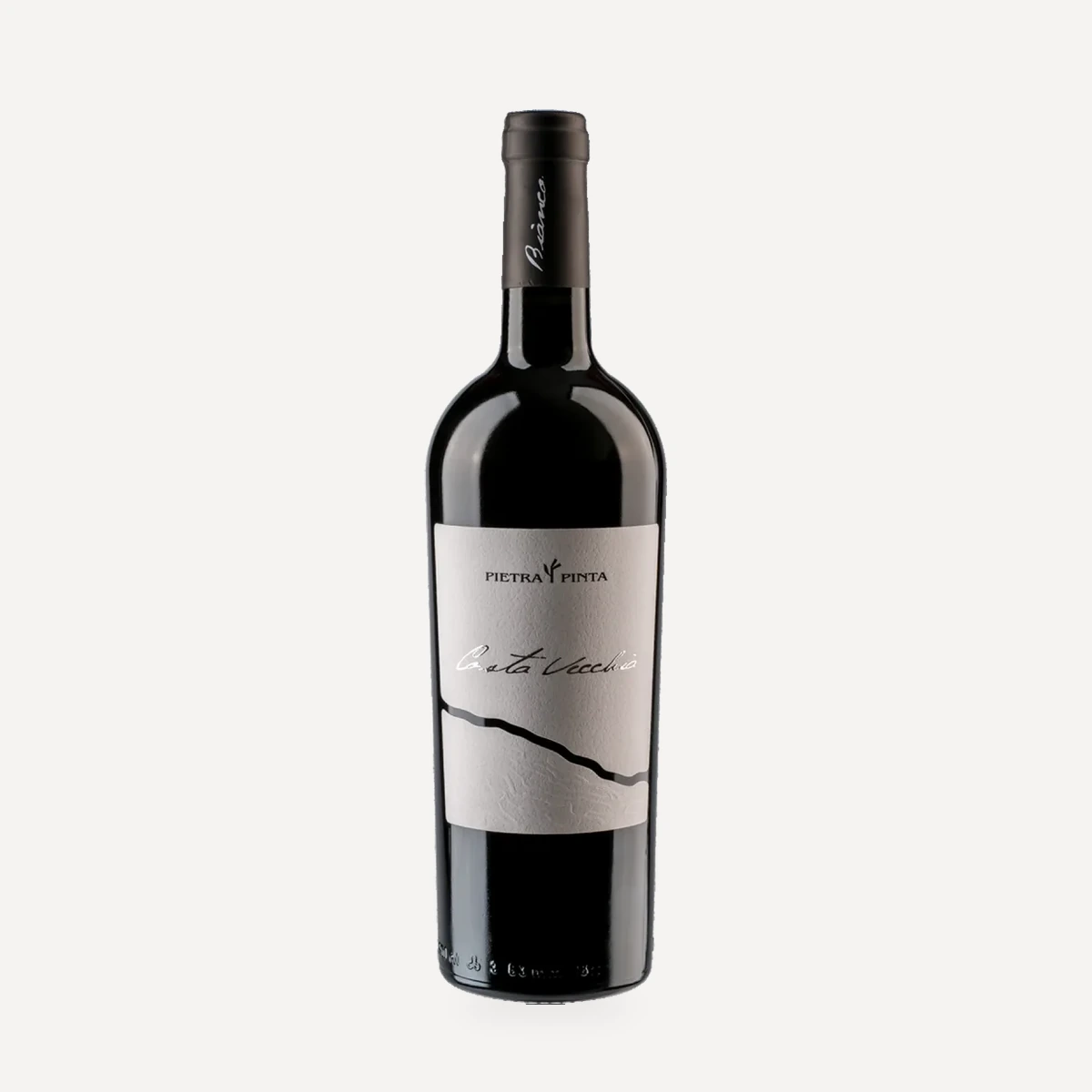
Costa Vecchia White Wine
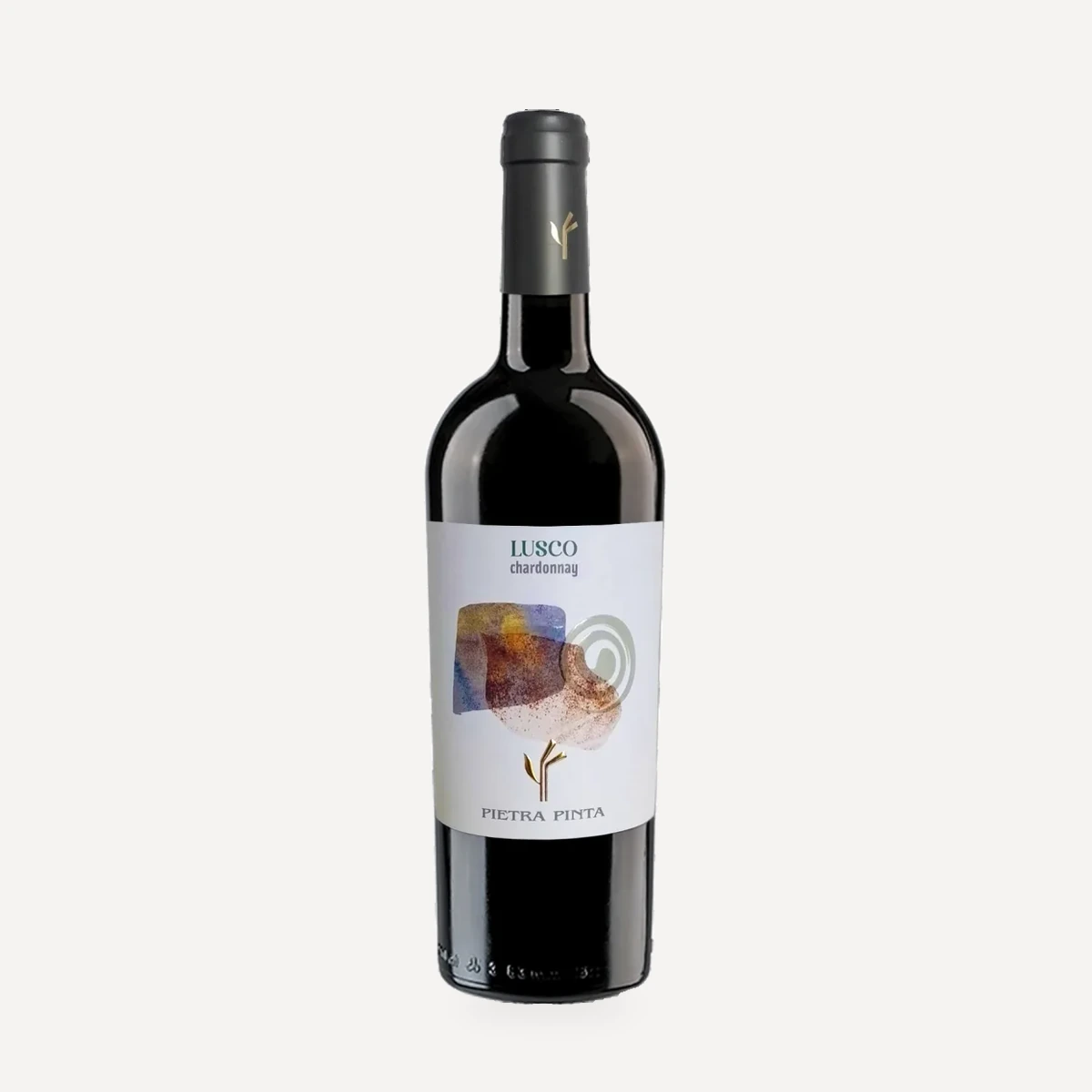
Lusco

Petit Verdot