Storia
Preparation and professional formation
Stefano Pescarmona qualified in 1995 as a specialist in organic and biodynamic agriculture. He graduated in Agricultural Science and Technology and passed the corresponding state examination in 2000, after which he gained practical experience by working with agricultural estates.
In 2004, he organized the first international seminar devoted to biodynamic viticulture in the history of the academy with which he was associated. In 2005, he joined an Agroecology program at Berkeley as a visiting scientist.
Beginning in 2006, Pescarmona spent approximately fifteen years in research and education at the University of Gastronomic Sciences in Pollenzo. His work contributed to the development and communication of a systemic concept of food quality that evaluates different agricultural methods. He also helped develop an educational approach based on direct experience, including the university's garden program.
His professional formation included contact and collaboration with Carlo Petrini, Miguel Altieri, Fritjof Capra, Alice Water, Alex Podolinsky, Claude Bourguignon, Lydia Bourguignon and Stefano Bellotti, as well as with farmers encountered through his work.
First wine project
In 2007, Pescarmona and a friend founded Vinyer de la Ruca in the French Pyrenees overlooking the sea. The project sought to recover the historic, monumental Bac des Allemandes vineyard on a mountaintop and to make a Banyuls without added sulphites.
Foundation of Podere Magia
Pescarmona founded Podere Magia in Emilia in 2013. He conceived the estate as a continuation of his work in cultivation, fermentation and education, with bottle refermentation and sparkling wines at the center of the project and without added sulphites.
He personally planted the estate's single vineyard with massal selections of four varieties: Malvasia Aromatica di Candia, Spergola, Trebbiano Romagnolo and Lambrusco Maestri.
A broader social-farm idea
In 2026, Pescarmona was considering the development of a shared social farm organized around food, wine, cooperation and conviviality, extending Podere Magia's educational and cultural dimension beyond wine production.
Terroir
Podere Magia is based at San Polo d’Enza in Emilia. Its vineyard lies among the high plains and permanent meadows of the Val d’Enza. The estate presents this setting as a still-emerging terroir whose character can be explored through four local varieties grown in the same vineyard and vinified according to the same approach.
Vinificazione
The estate vineyard is farmed biodynamically. Stefano Pescarmona planted four local varieties using massal selections: Malvasia Aromatica di Candia, Spergola, Trebbiano Romagnolo and Lambrusco Maestri. This approach places genetic diversity and the relationship between variety, vineyard and season at the center of the project.
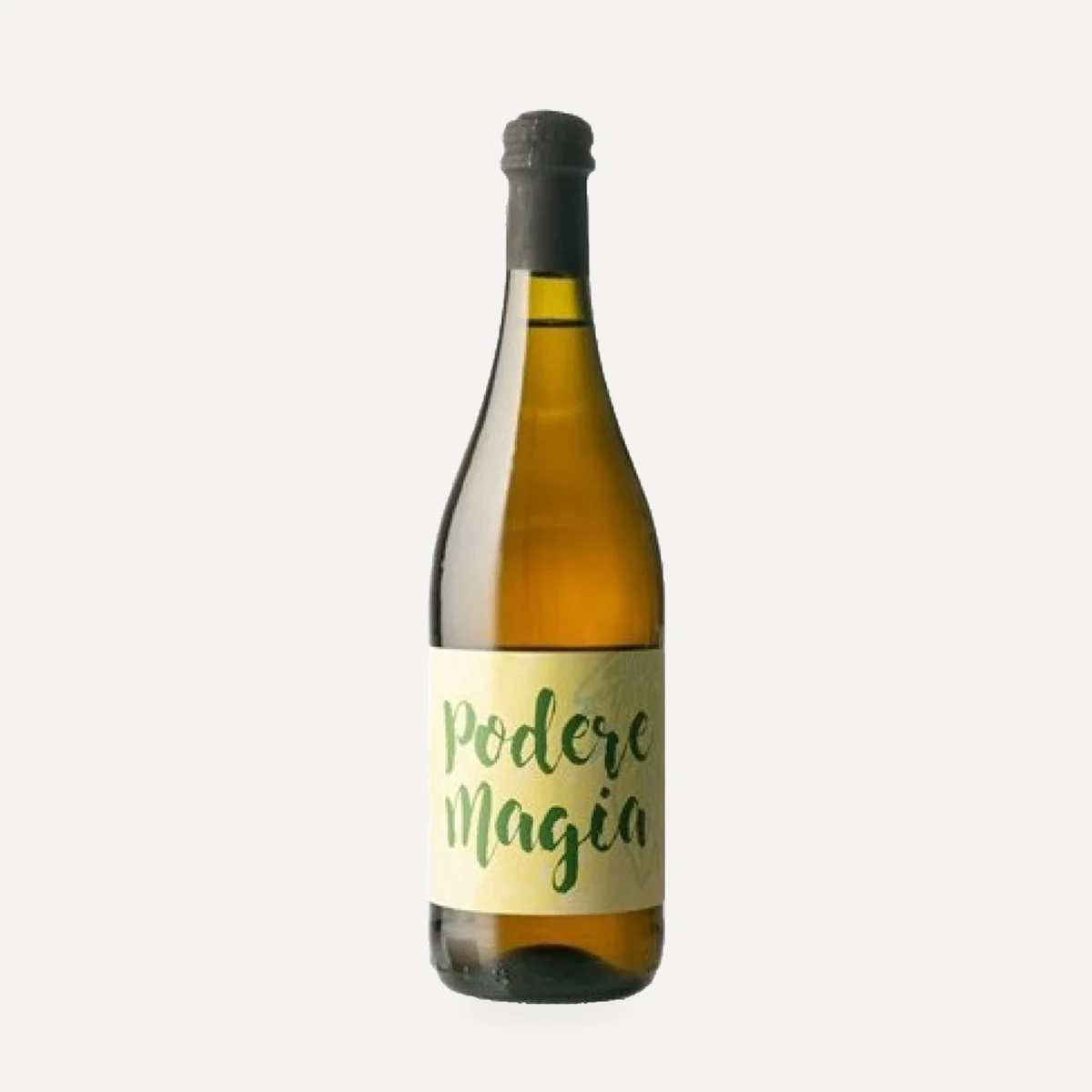
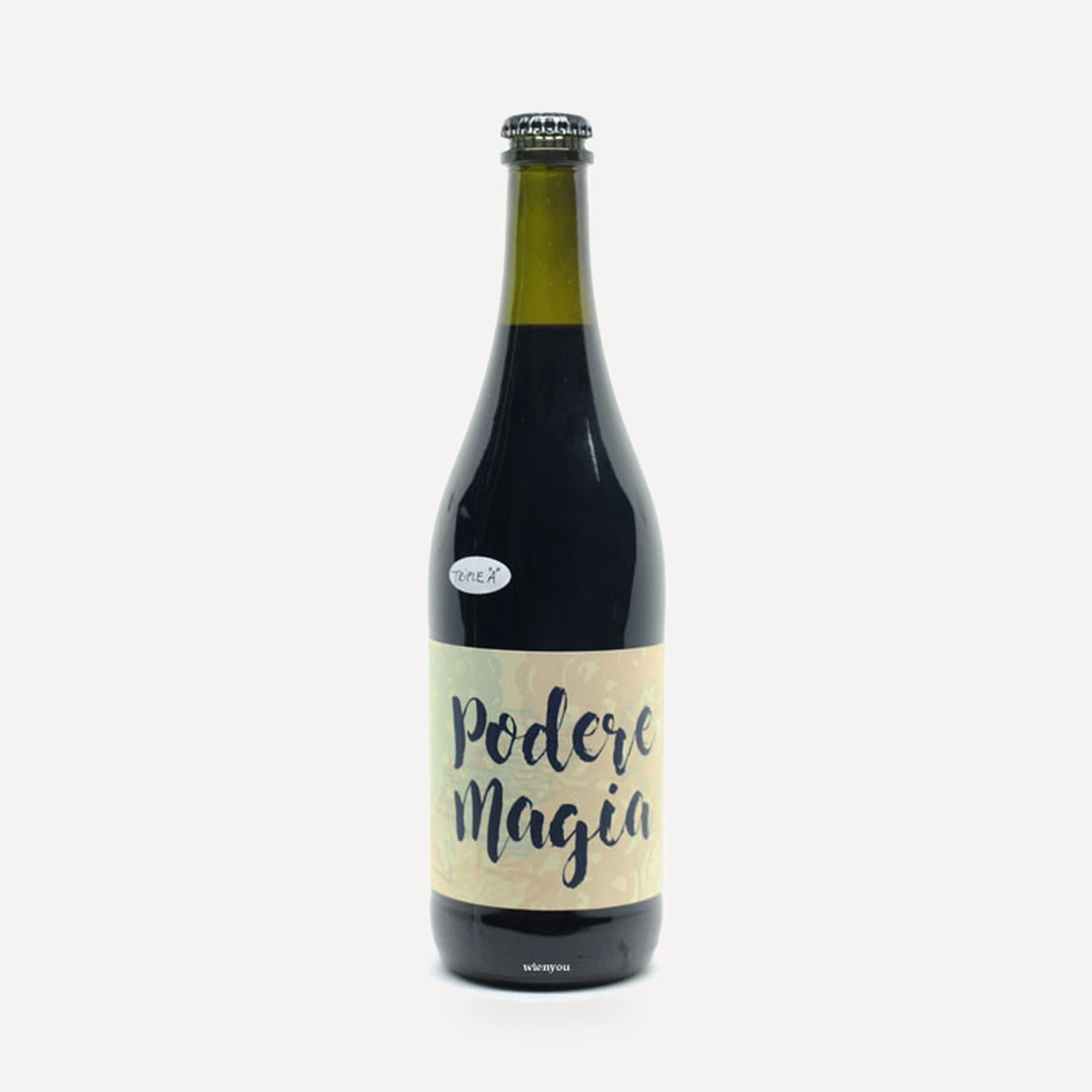
Podere Magia makes dry sparkling wines through fermentation and refermentation in the bottle. The fruit comes entirely from the estate's single vineyard.
The common production approach uses stainless steel and three days of skin maceration. Fermentation is spontaneous, and bottle refermentation is also spontaneous, using the wine's own must. Indigenous yeasts are employed. The wines receive no additions, including no added sulphites, and are not filtered. Bottle maturation lasts two years.
The vinification style is kept consistent across varieties and vintages. Rather than adjusting the method to optimize each grape or season, the objective is to reveal differences attributable to terroir, variety and vintage. This makes it possible to compare four varieties from the same vineyard and vintage or one variety across four different vintages.
Filosofia
Nature occupies the central place in Podere Magia's philosophy. The estate uses the term “natural wine” deliberately, associating it with respect for natural transformations and with a desire for a more ecologically responsible food and farming culture.
The winemaking method remains constant instead of being altered to suit a particular variety or vintage. The aim is the clearest possible expression of terroir and season—not an optimized or standardized version of either. Differences among grapes and years are therefore treated as meaningful rather than corrected.
Pescarmona's broader conception of quality combines agroecology, gastronomic science, production methods, ingredients and their consequences for human and environmental health. Podere Magia's cultural program extends these principles to food, sustainable cultivation and critical consumption. Respect, gentleness, attachment to the land and opposition to unnecessary manipulation and toxic substances in the food system form part of this position.
Vini
Earth