Storia
From journalism to viticulture
Piero Riccardi and Lorella Reale worked as journalists for the Italian broadcaster RAI. Their shared interest in wine began with small-scale vin de garage made for friends and relatives. Piero already had a connection to agriculture: he made his first vegetable garden at the age of six, and his family property in the Roman countryside had previously produced a few thousand bottles of wine.
The couple worked together on Report investigations into the condition of Italian agriculture, including Buon appetito, Il piatto è servito and Carne. That experience preceded their decision to leave television and establish an estate devoted to biodynamic viticulture and natural wine.
Establishment around 2010
The transition took place around 2010. Piero and Lorella planted Cesanese vineyards on the family land, developing the viticultural program with agronomist Ruggero Mazzilli of the Experimental Station for Sustainable Viticulture in Chianti. Their objective was to introduce exacting vineyard criteria that were then unfamiliar in the immediate area.
The resulting estate grew to seven hectares across the adjoining municipalities of Bellegra and Olevano Romano, on the Monte Celeste chain about an hour from Rome. The vineyards occupy the hill known as Colle Pazzo, while the estate premises and tasting room are in Bellegra and the cellar is in Località Colle Pazzo at Olevano Romano.
Organic certification and biodynamic practice
Riccardi Reale secured organic certification through Suolo e Salute Lazio and adopted biodynamic methods alongside its certified-organic farming. Green manure and plant-based organic preparations became central to maintaining soil fertility and vitality. Piero assumed responsibility for the biodynamic vineyards and winemaking, with particular attention to soil biodiversity and pruning; he has continued his pruning education through the Simonit&Sirch Pruning School.
The estate developed a parcel-oriented approach based on Colle Pazzo’s contrasting volcanic and Cretaceous sandstone soils. Grapes are harvested by zone, and each vineyard area is intended to retain its own identity through maturation. A Vitenova Institute study subsequently identified an unusually rich presence of pollinators and the survival in the vineyards of herb species associated with the landscape since Roman times.
Family, art and writing
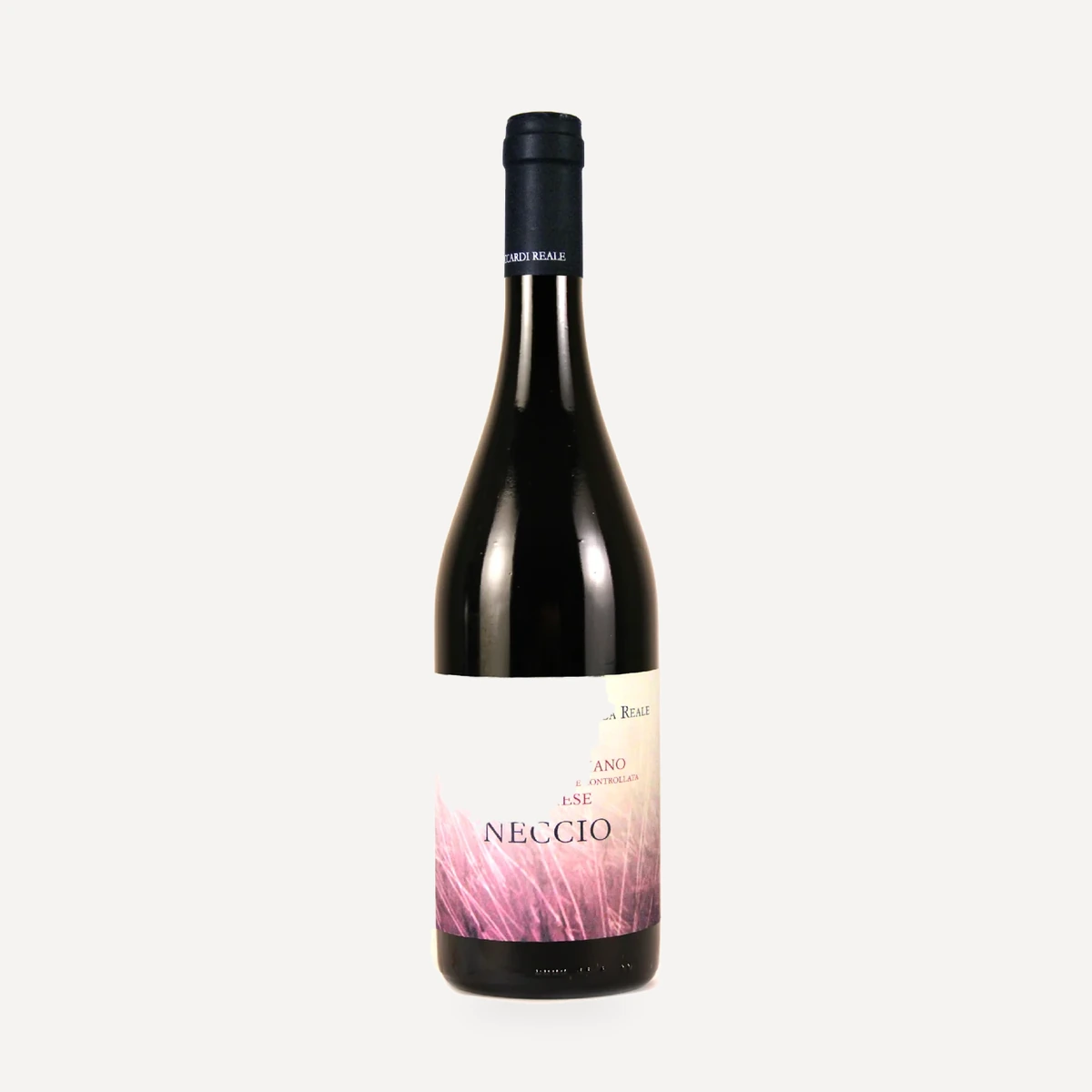
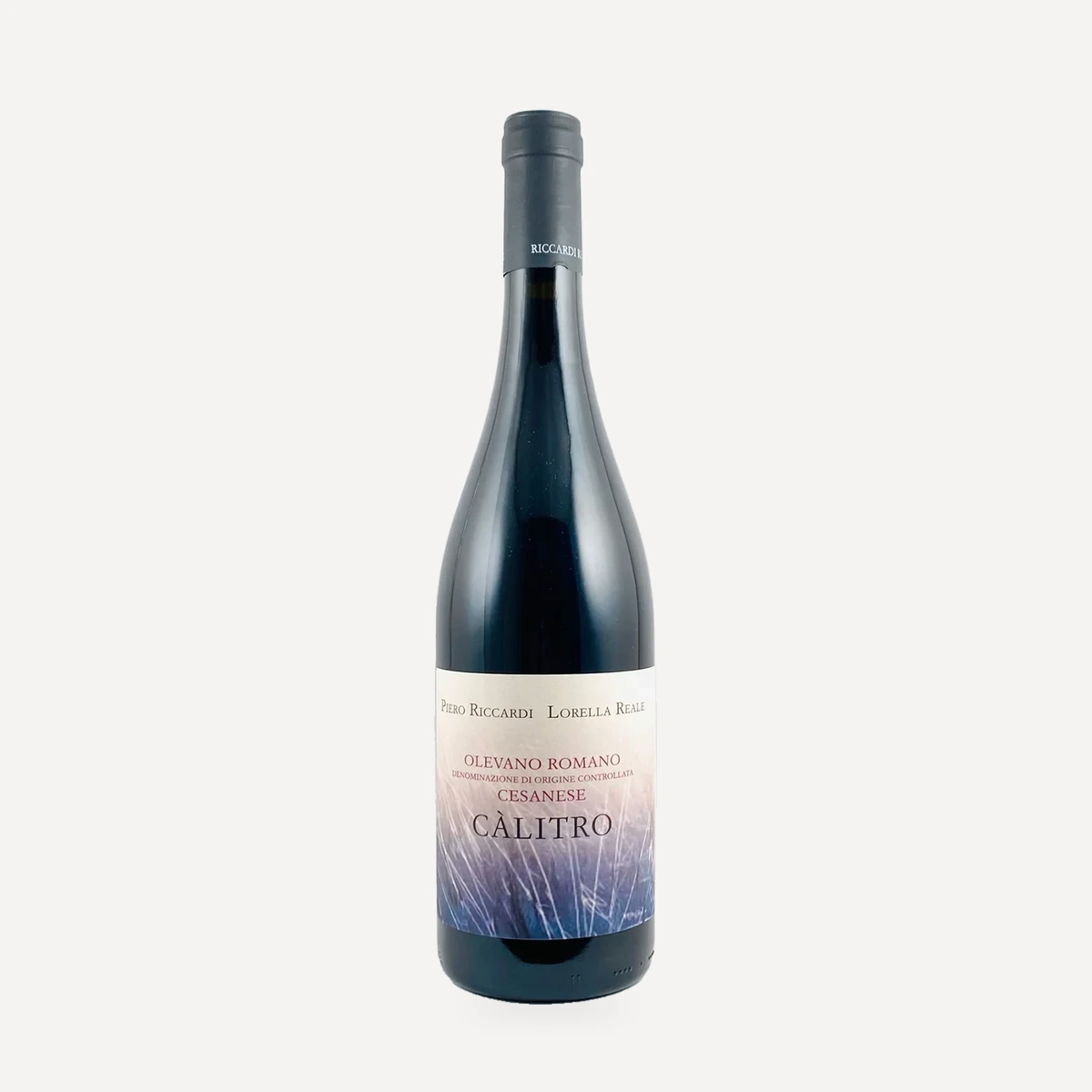
Lorella took responsibility for administration and commercial relationships in Italy and abroad while continuing her work as a writer. Piero likewise combined vineyard and cellar work with writing on agriculture, the environment and Cesanese. Their children Curzio and Cassia designed the wine labels, which were translated into finished graphics by Tiziana Piccone. Piero’s daughter Tullia, a graduate in Ecobiology, is also presented as part of the family.
By 2020, the estate was exporting to several countries and marked approximately a decade since the founders’ change of career. Its activities came to encompass vineyard cultivation, winemaking, tastings, international fairs and the publication of books addressing natural wine, agriculture, literature and environmental responsibility.
Terroir
The seven-hectare estate extends across the neighboring municipalities of Bellegra and Olevano Romano, roughly an hour from Rome on the Monte Celeste chain. Its vineyards occupy Colle Pazzo, the hill that also gives the estate’s principal red wine its name.
Two contrasting geological components define the hill: volcanic ground and Cretaceous sandstone. The volcanic sector also includes mixed volcanic-clay soil in the area used for Riesling. A stream beside that site moderates its immediate growing conditions. The vineyards experience a breeze arriving from the sea.
The contrasting volcanic and sandstone zones are treated separately at harvest. This division underpins the estate’s parcel-based interpretation of Cesanese and its stated aim of preserving complexity and freshness. Ground vegetation includes erba copertina, Neapolitan garlic and radichella di Terrasanta. A Vitenova Institute study found abundant pollinators and the continued presence of herb species associated with the landscape since Roman times.
Vinificazione
Riccardi Reale farms without pesticides and holds organic certification from Suolo e Salute Lazio. Certified-organic cultivation is supplemented by biodynamic methods.
Green manure and plant-based organic preparations are used to sustain soil fertility and biological vitality. The objective is to nourish the soil and allow each plant and vineyard zone to express its own characteristics. Piero Riccardi gives particular attention to biodiversity and pruning, maintaining his pruning training through the Simonit&Sirch Pruning School.
Local chestnut posts are used in the vineyards. Grapes are harvested manually and picked separately by zone, preserving the distinction between Colle Pazzo’s volcanic and sandstone sectors. The vineyard ecosystem supports a notable population of pollinators and retains a diverse cover of long-established herb species.
Riccardi Reale organizes its production around the relationship among vineyard, parcel and finished wine. Grapes are harvested manually by individual zones and undergo gentle crushing.
Fermentations rely on the native yeasts carried into the cellar on the grapes. No winemaking substances are added during vinification or maturation. Fermentation and maceration take place either in cement tanks or in artisanal Italian chestnut vessels. The same parcel-conscious approach continues through maturation, with the different vineyard zones yielding distinct expressions of Cesanese, Malvasia, Rosciola and Riesling.
Filosofia
Riccardi Reale presents wine as both an aesthetic expression and a food, arguing that its value depends on clean agricultural and cellar practices. Its guiding cellar equation is “vineyard–parcel–wine”: each result should remain connected to a defined place rather than being shaped through additives into a standardized product.
The estate’s declared natural-wine approach begins with pesticide-free farming, living soils and grapes capable of fermenting through their own native yeasts. Organic certification provides the formal agricultural framework, while biodynamic practices, green manure and plant-based preparations are intended to restore fertility and help the vines express their individual character.
Its understanding of biodynamics is not framed as a simple return to an earlier rural world. It is presented as a way to interrupt the cycle in which artificial fertilization contributes to soil impoverishment and creates further dependence on inputs. Wine should instead retain the influence of weather, soil, local tradition, time and the grower’s own history.
Care links the estate’s agricultural, ethical and cultural activities. Lorella Reale’s writing connects natural wine with sensory experience, literature, bodily awareness and responsibility toward the earth; Piero Riccardi’s work similarly treats agriculture as an environmental and cultural practice rather than an exclusively technical process.
Vini
Càlitro